Artwork
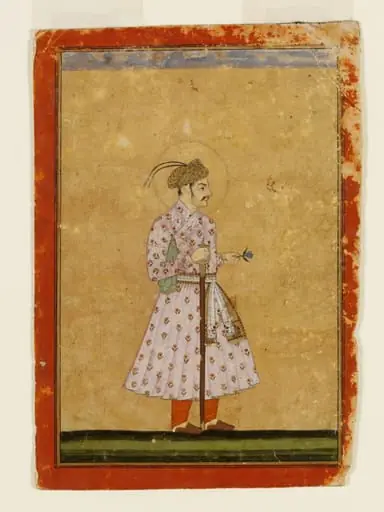
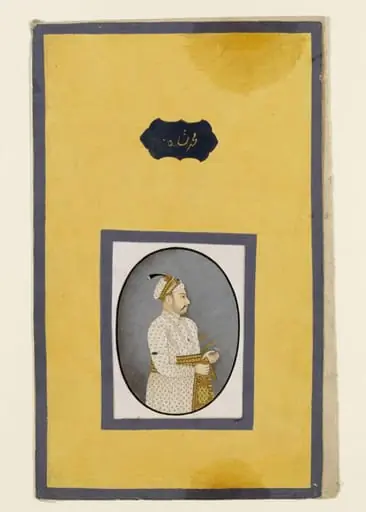
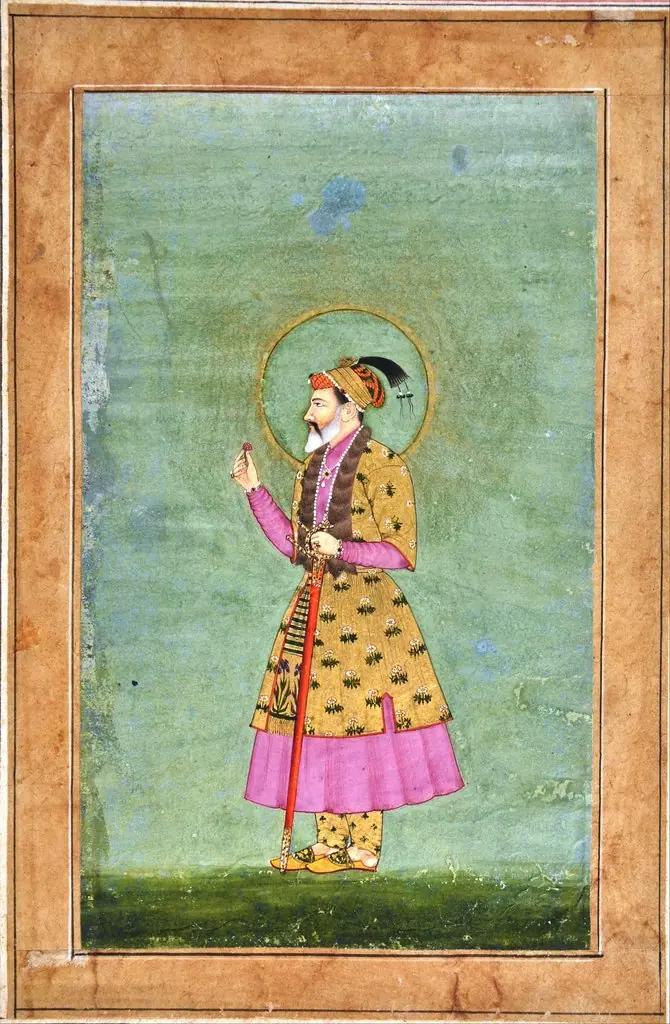
Emperor Ahmad Shah
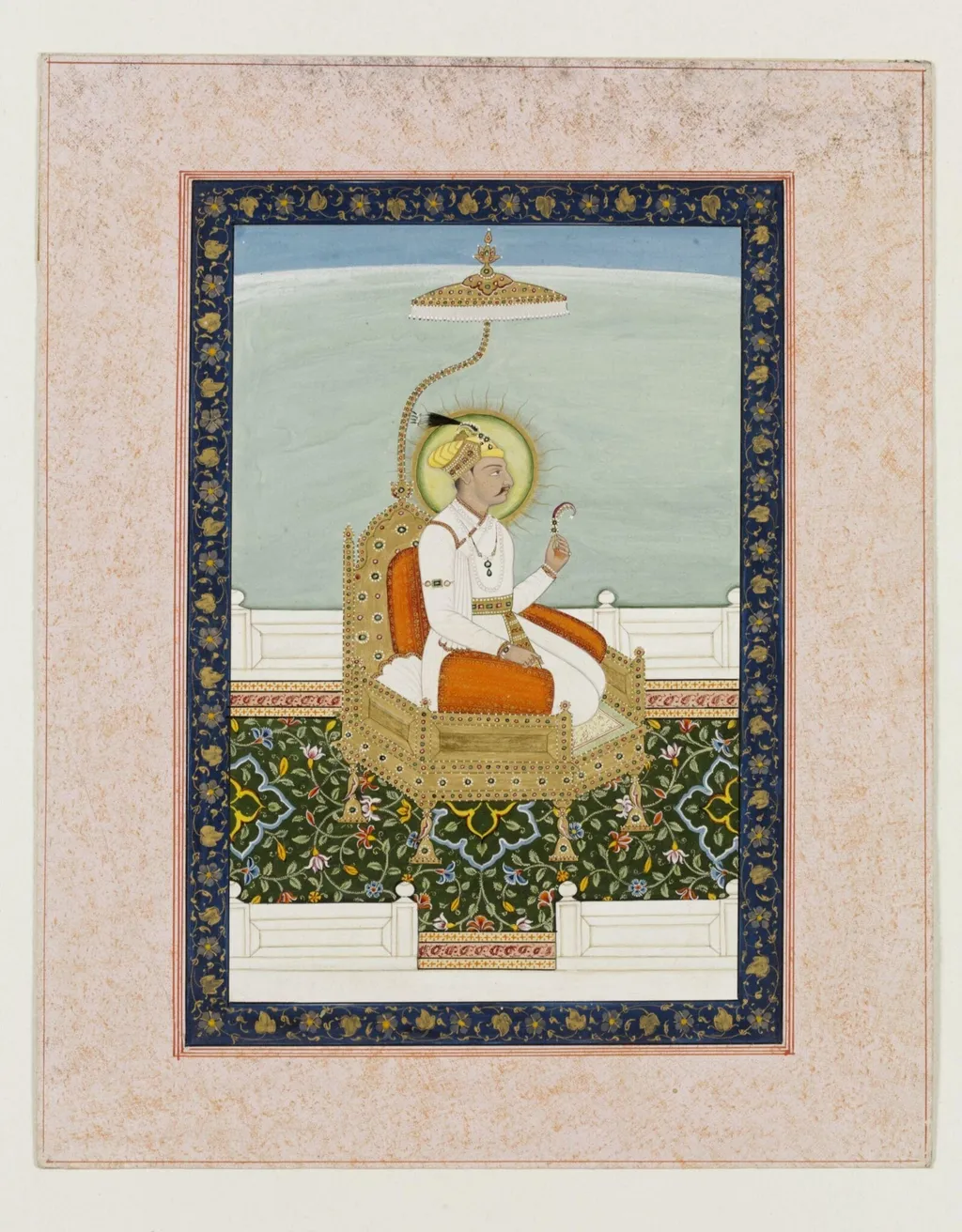
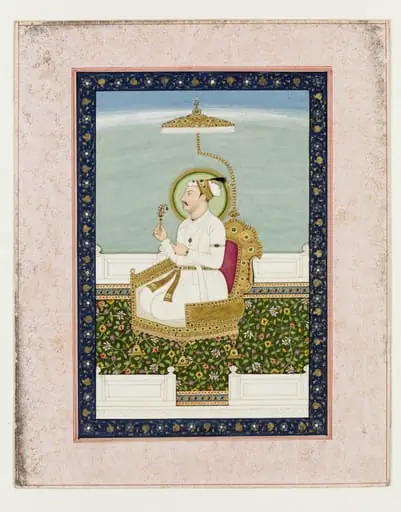
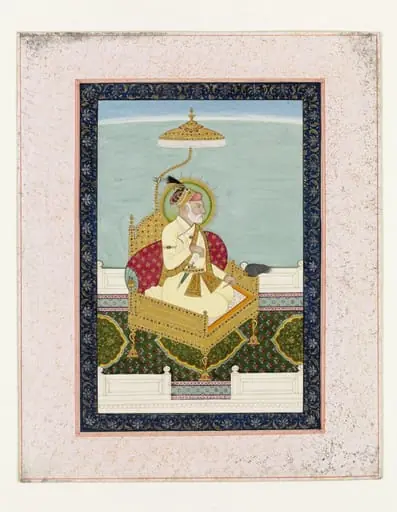
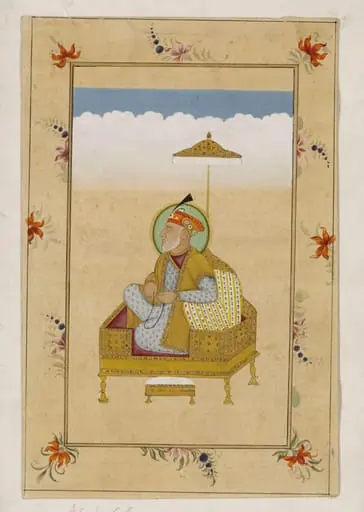
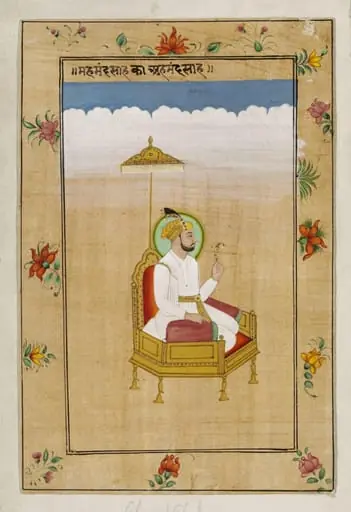
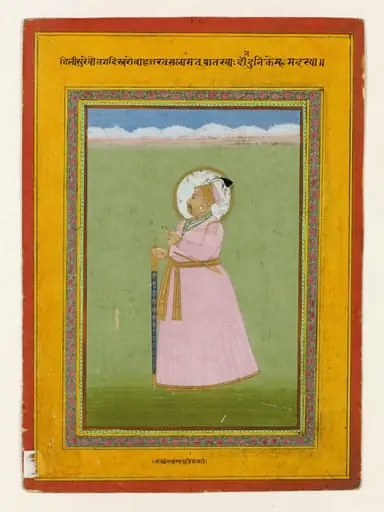
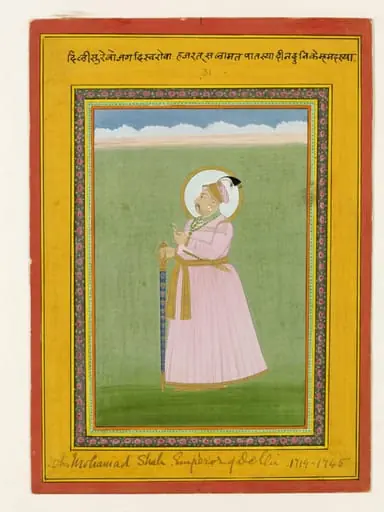
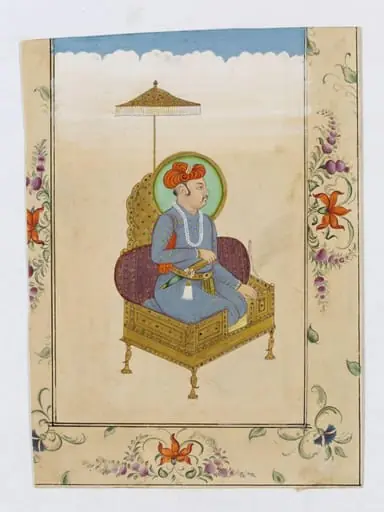
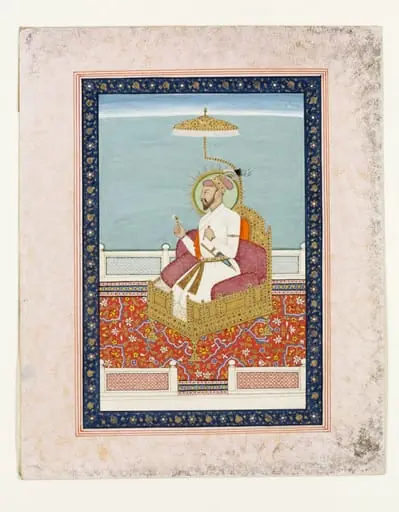
Emperor Ahmad Shah is a paint painting by the Romanticist artist Unknown. It dates from 1840 and is held in the collection of the Victoria and Albert Museum.
About this work
Overview
This 1840 opaque watercolour and gold on paper painting portrays Mughal Emperor Ahmad Shah in a formal, contemplative pose, showcasing intricate details and opulent attire.
Subject & Meaning
The subject, Emperor Ahmad Shah, is depicted in regal yet subdued attire, conveying a sense of introspection. His serious expression and posture suggest a moment of solemnity or deep thought.
Technique & Style
The work employs opaque watercolour and gold leaf on paper, highlighting the artist's attention to detail in rendering textures, patterns, and jewellery. The style blends Mughal miniature traditions with possible European influences in composition.
History & Provenance
Created in 1840 as part of a series on Muslim rulers, the painting was once owned by the Earl of Auckland, Governor General of India from 1836 to 1842, indicating its circulation within colonial-era elite circles.
Context
The painting reflects the cultural exchange and patronage dynamics of the late Mughal period under British colonial rule, with the Earl of Auckland's ownership signifying European interest in Indian royal portraiture.
Legacy
While not directly linked to a broader artistic movement, the painting's detailed style and use of chiaroscuro (though not explicitly mentioned in sources, inferred from the 'lot of details' and possible European influences) might appeal to viewers familiar with artists who emphasized contrasting light and shadow.
Artist & collection

 Domestic Scene
 Giacomo and Cardinal Marco, investing Andrea, Abbot of San Zeno, with his Benefice
 The Nymph of Fontainebleau
 Portrait of a Woman
 Madonna and Child with Saints in the Enclosed Garden
 Venus and Minerva
 Family Group of Four on Sofa
 Wall painting from Room H of the Villa of P. Fannius Synistor at Boscoreale