Artwork
The emperor 'Alamgir (Aurangzeb)
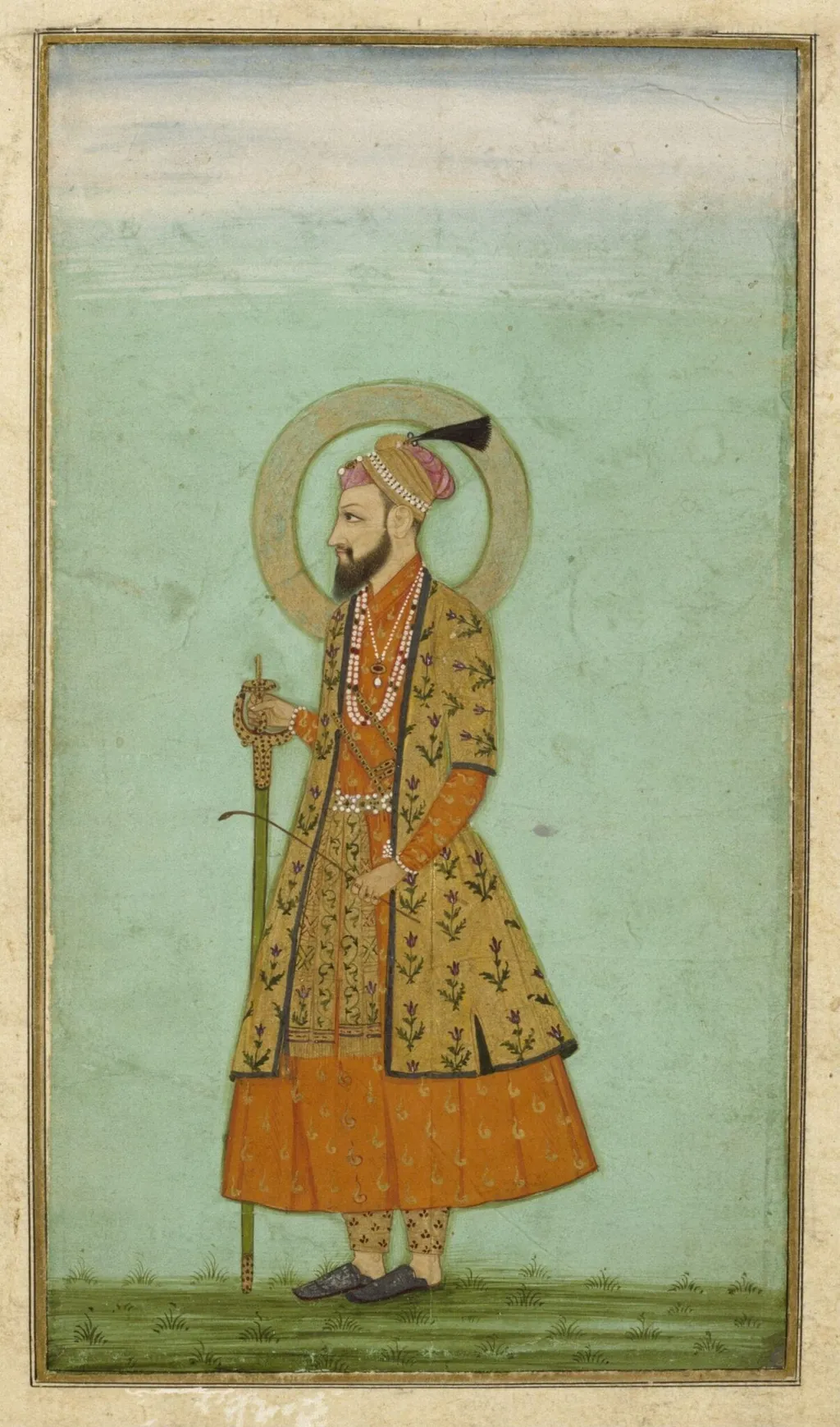
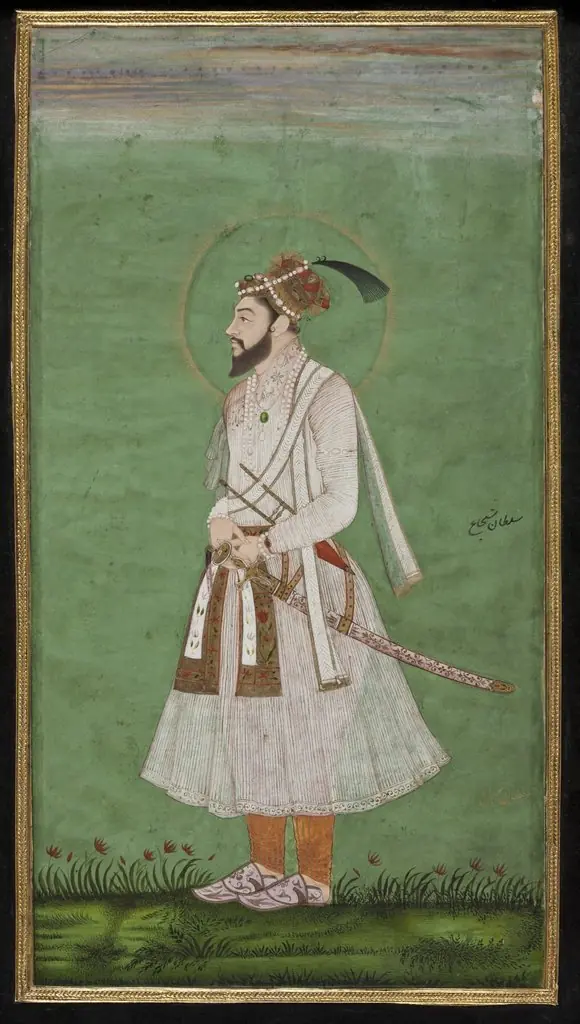
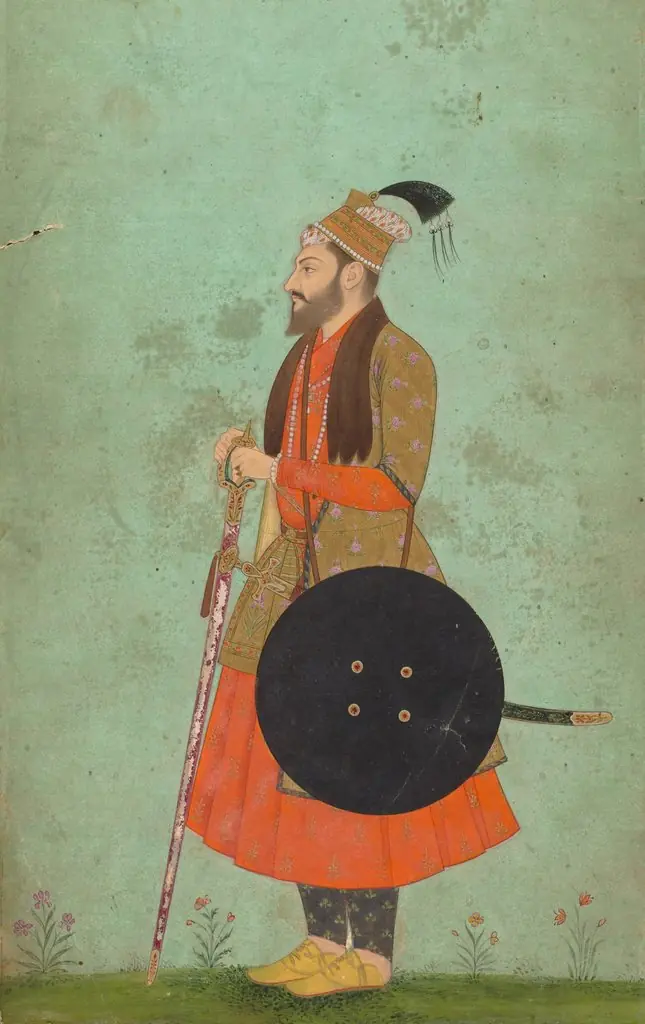
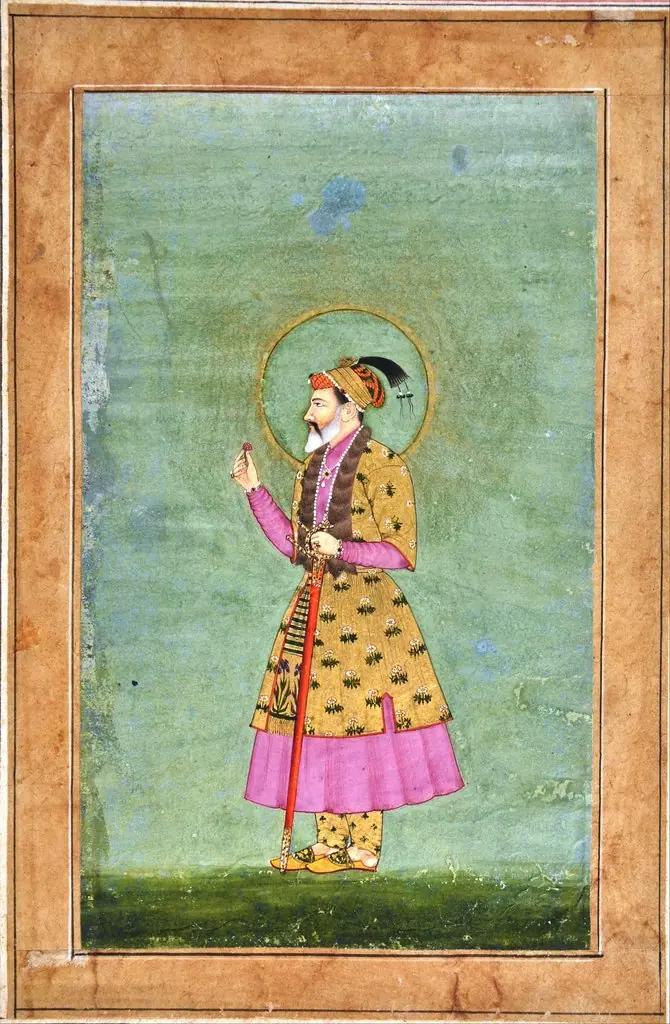
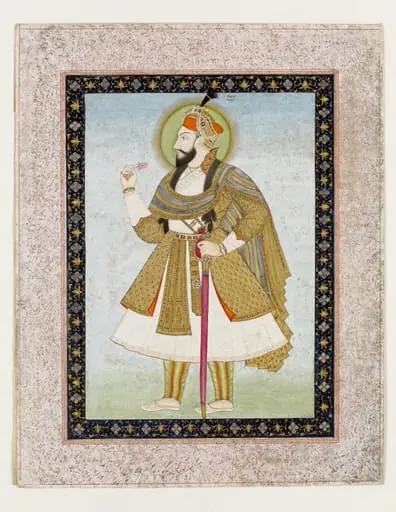
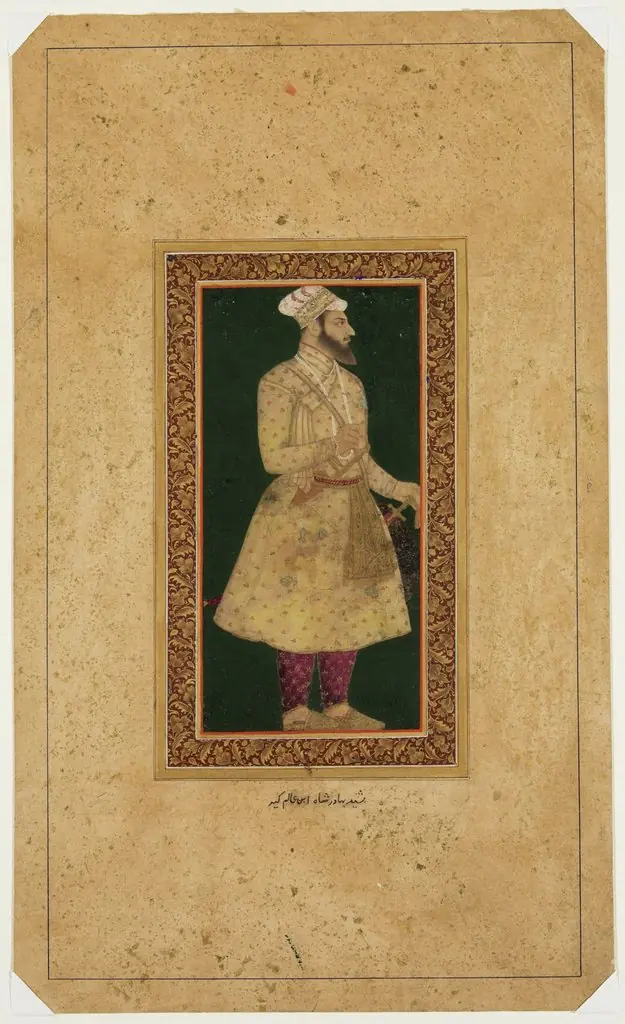
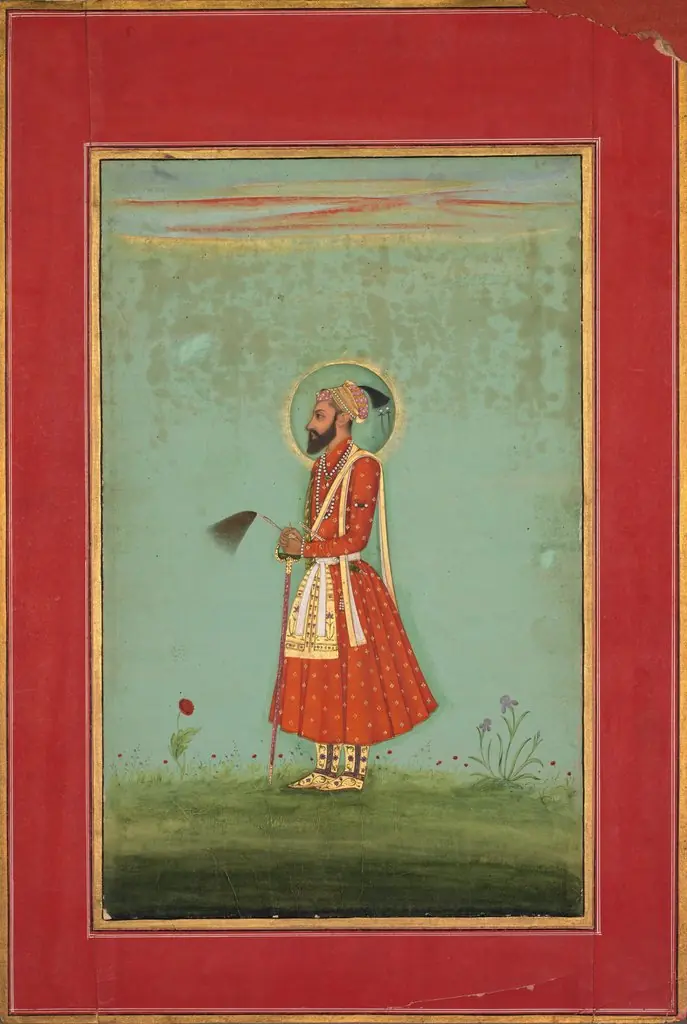
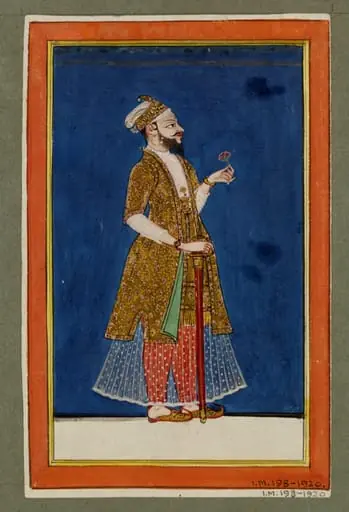
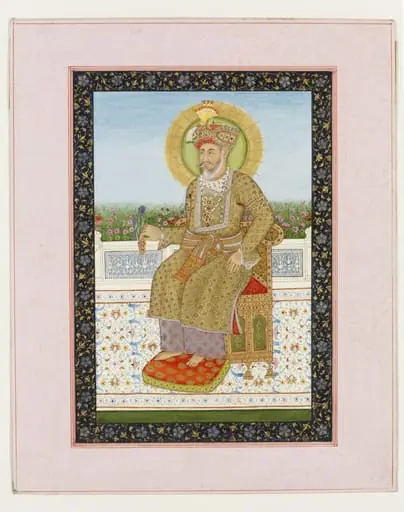
The emperor 'Alamgir (Aurangzeb) is a paint painting by the Baroque artist Unknown. It dates from 1700 and is held in the collection of the Victoria and Albert Museum.
About this work
Overview
This early Mughal portrait, created around 1660, presents the future emperor Aurangzeb shortly after he assumed the title Alamgir, meaning ‘World Seizer.’ The work shows him as a youthful figure, fully clothed and adorned with jewels, standing in profile against a plain pale‑green field.
Subject & Meaning
The painting captures Aurangzeb at the beginning of his reign, before the austere religious stance that later defined his rule. The inclusion of a luminous halo around his head follows a visual convention established by his grandfather Jahangir, signaling imperial authority and divine favor.
Technique & Style
Executed in a full‑length format, the composition follows the Mughal portrait tradition that emerged in the late sixteenth century, emphasizing a clear, frontal silhouette against a neutral background. The artist employs subtle shading to model the figure, a technique that anticipates chiaroscuro, though the overall effect remains restrained rather than dramatic.
History & Provenance
The portrait is unsigned, attributed to an anonymous court painter active during Aurangzeb’s early reign. It was likely produced for a royal archive or as a diplomatic gift, reflecting the empire’s wealth at the time of its creation.
Context
Aurangzeb inherited a vast empire from his father Shah Jahan, but his subsequent decades were dominated by costly campaigns against the Deccan sultanates. Although these wars ultimately expanded Mughal control, they exhausted resources and contributed to the empire’s long‑term decline.
Artist & collection

 Domestic Scene
 Giacomo and Cardinal Marco, investing Andrea, Abbot of San Zeno, with his Benefice
 The Nymph of Fontainebleau
 Portrait of a Woman
 Madonna and Child with Saints in the Enclosed Garden
 Venus and Minerva
 Family Group of Four on Sofa
 Wall painting from Room H of the Villa of P. Fannius Synistor at Boscoreale