Artwork
Emperor Jahangir
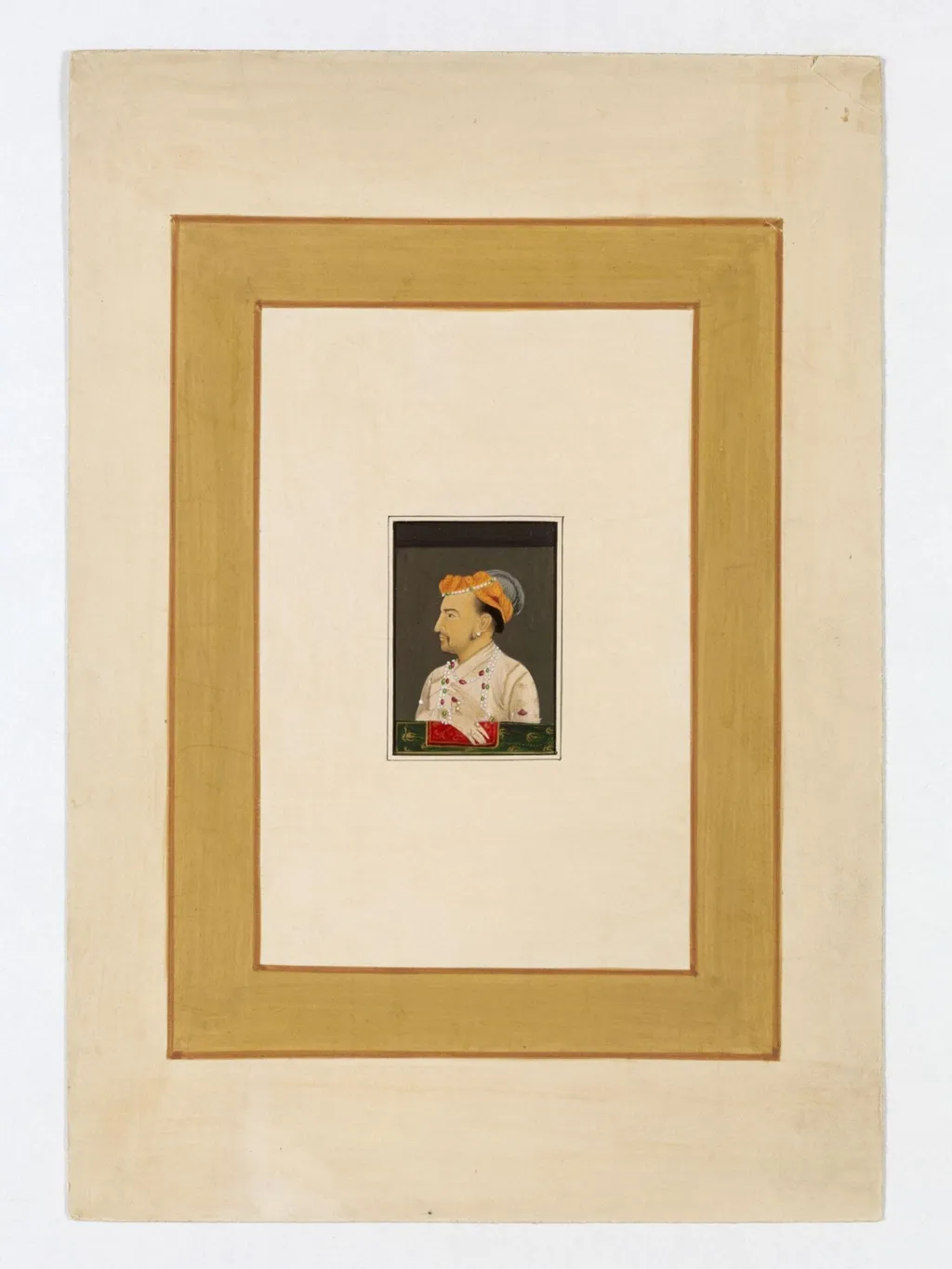
Emperor Jahangir is a paint painting by the Impressionist artist Unknown. It dates from 1890 and is held in the collection of the Victoria and Albert Museum.
About this work
Overview
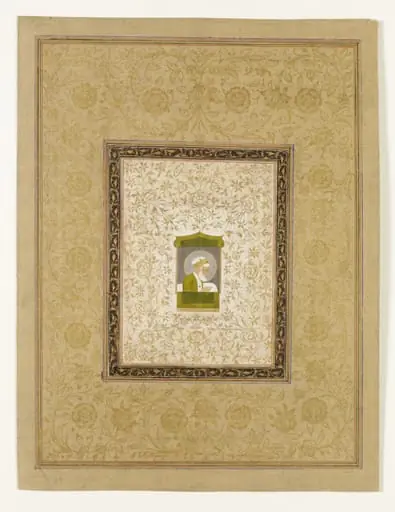
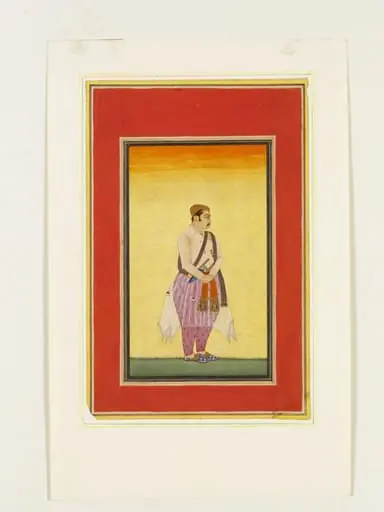
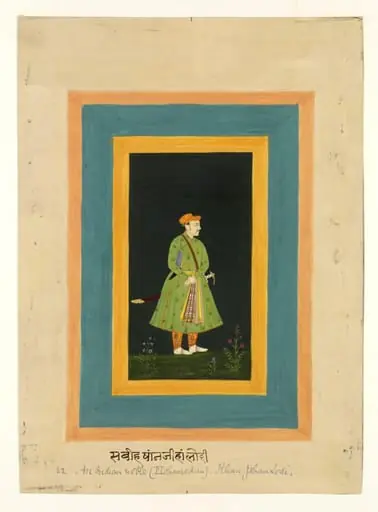
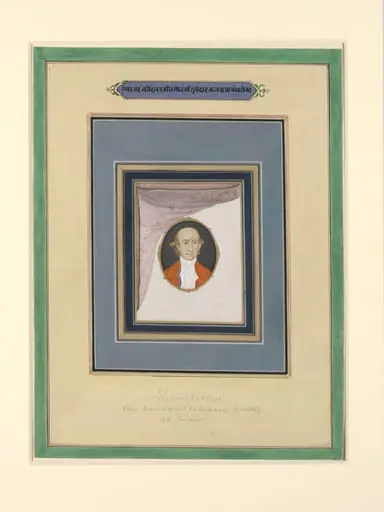
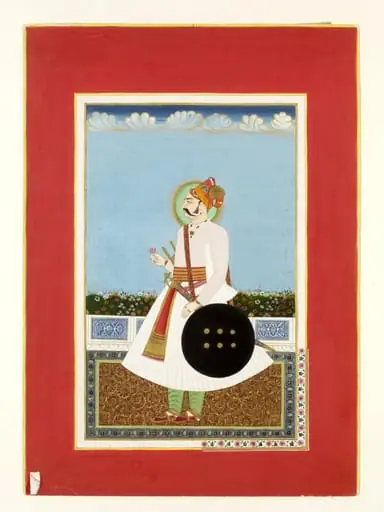
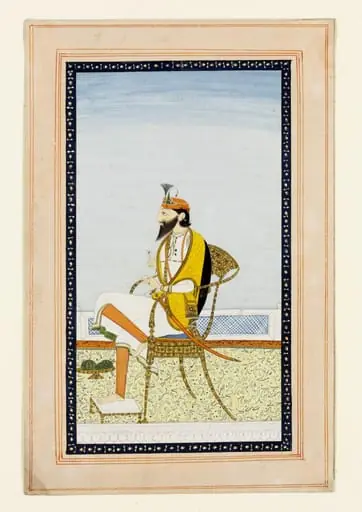
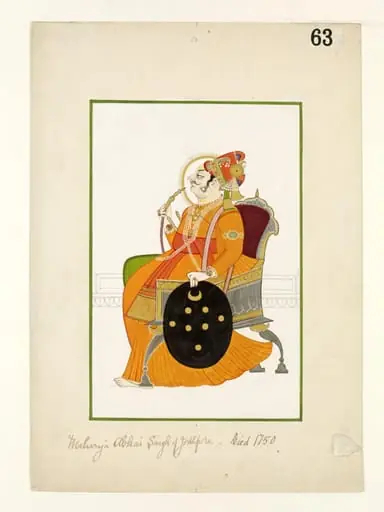
This portrait, executed in opaque watercolor and gold on paper, presents Emperor Jahangir of the Mughal Empire in profile, facing left.
This portrait, executed in opaque watercolor and gold on paper, presents Emperor Jahangir of the Mughal Empire in profile, facing left. The composition is framed by a green border at the base, with the figure set against a dark, unmodulated background. The refined application of pigment and metallic accents reflects the precision of Mughal court painting, distinct from later Western movements like Impressionism.
Subject & Meaning
Jahangir is depicted wearing an orange turban and a white tunic embellished with red floral motifs, symbols of imperial status and refined taste. The abundance of beads and jewelry signifies his wealth and divine authority. His calm, frontal gaze and ornate attire convey a controlled majesty, aligning with Mughal ideals of rulership as both earthly and spiritual.
Technique & Style
The painting employs fine brushwork and layered washes of opaque watercolor to render texture and detail, particularly in the embroidery and jewelry. Gold leaf highlights accentuate surfaces, enhancing luminosity without overt realism. The flat, shallow space and emphasis on pattern over atmospheric depth are hallmarks of Indo-Persian miniature traditions, not Western naturalism.
History & Provenance
Created during Jahangir’s reign (1605–1627), the portrait likely originated in the imperial atelier in Agra or Lahore, where artists documented court life with meticulous detail. Such images served as diplomatic gifts or royal memorials. Its survival suggests preservation within Mughal collections, possibly later acquired by European or Indian collectors in the 18th or 19th century.
Context
Mughal portraiture under Jahangir evolved toward psychological depth and naturalistic detail, influenced by European engravings introduced via Jesuit missions. Yet this work retains traditional Persianate conventions: symbolic adornment, stylized flora, and hierarchical scale. The absence of landscape or narrative elements focuses attention entirely on the emperor’s presence as an emblem of power.
Legacy
This portrait exemplifies the synthesis of indigenous and foreign influences in Mughal art, setting a precedent for later imperial imagery. Its survival offers insight into how rulership was visually constructed in early 17th-century South Asia. Though not widely exhibited in the West, it remains a key reference in studies of South Asian court culture and miniature painting traditions.
Artist & collection

 Domestic Scene
 Giacomo and Cardinal Marco, investing Andrea, Abbot of San Zeno, with his Benefice
 The Nymph of Fontainebleau
 Portrait of a Woman
 Madonna and Child with Saints in the Enclosed Garden
 Venus and Minerva
 Family Group of Four on Sofa
 Wall painting from Room H of the Villa of P. Fannius Synistor at Boscoreale