Artwork
Raja Dhian Singh
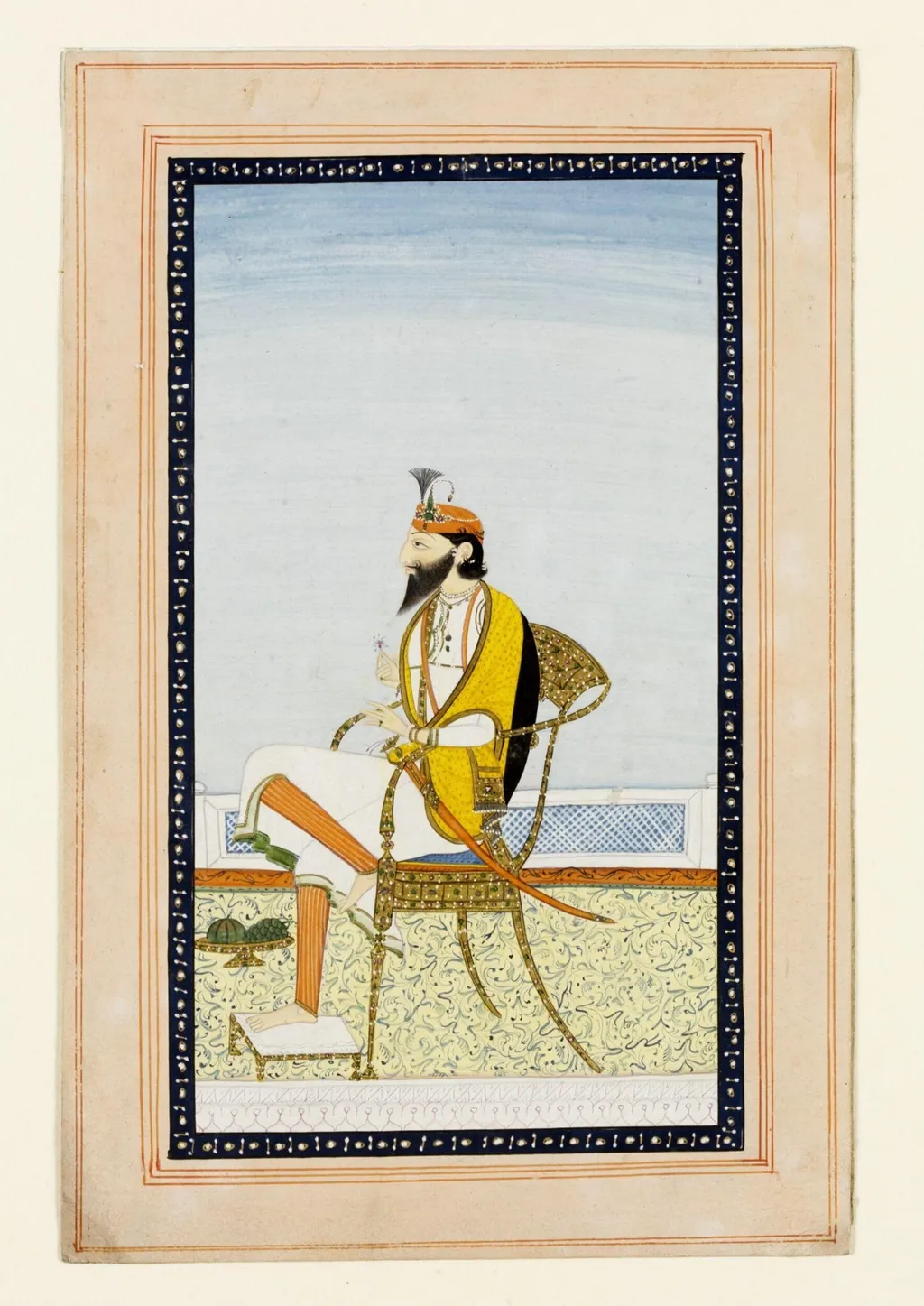
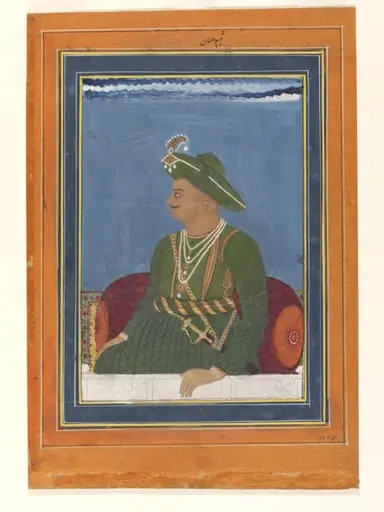
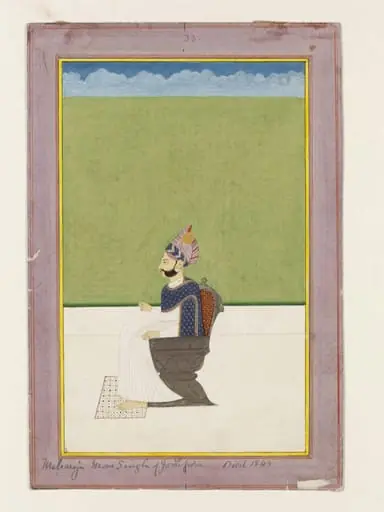
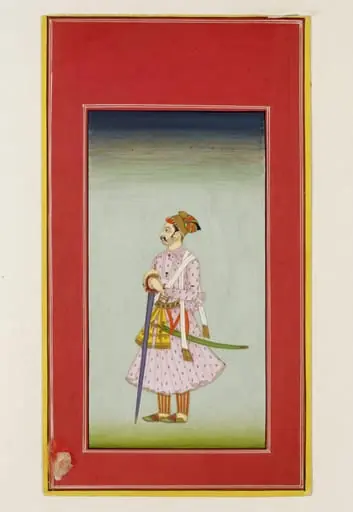
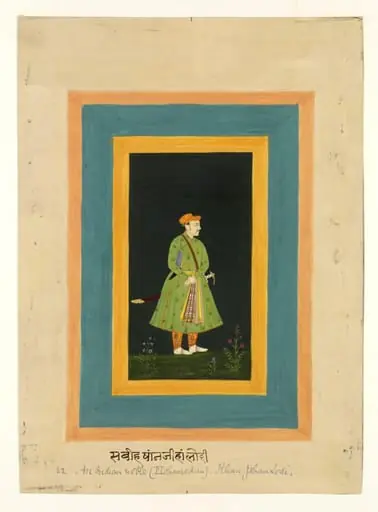
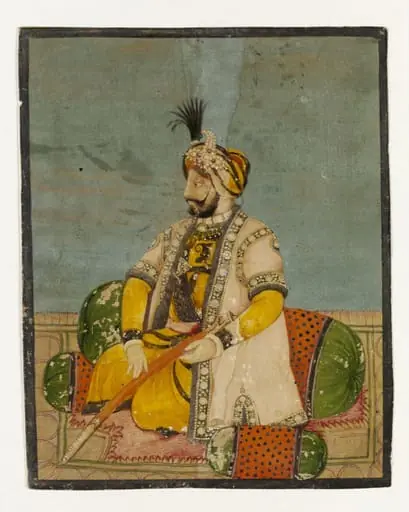
Raja Dhian Singh is a paint painting by the Patna School of Painting artist Unknown. It dates from 1838 and is held in the collection of the Victoria and Albert Museum.
About this work
Overview
The portrait presents Raja Dhian Singh (1796‑1843), a senior court official of the Sikh empire, rendered by an unidentified painter likely active in the Punjab region around 1838. The work is a painted likeness that captures the subject in traditional dress, reflecting the artistic milieu of the early nineteenth‑century Sikh court.
Subject & Meaning
Raja Dhian Singh belonged to the Hindu Dogra lineage and rose to prominence as chamberlain in 1818 before becoming the chief minister to Maharaja Ranjit Singh by 1827. The portrait underscores his high status within a court where Hindu, Muslim, and Sikh elites intermingled, illustrating the pluralistic nature of the empire’s administration.
Technique & Style
Executed in a style that blends influences from Hindu hill‑region painters with Sikh court aesthetics, the portrait employs chiaroscuro to model the figure’s features, creating depth through contrasts of light and shadow. The attire and ornamental details are rendered with careful attention, characteristic of regional portraiture of the period.
History & Provenance
The painting entered the collection of Lord Auckland, Governor‑General of India from 1836 to 1842, who visited the Sikh court in 1838 and acquired the work. He returned it to England in 1842; it later passed to his great‑nephew O. E. Dickinson, who donated it to the museum in 1953.
Context
During Maharaja Ranjit Singh’s reign (1801‑1839), the Punjab region, now split between India and Pakistan, experienced a cultural flourishing that attracted artists from neighboring Hindu kingdoms. This cross‑cultural exchange is evident in the portrait’s synthesis of artistic traditions.
Artist & collection

 Domestic Scene
 Giacomo and Cardinal Marco, investing Andrea, Abbot of San Zeno, with his Benefice
 The Nymph of Fontainebleau
 Portrait of a Woman
 Madonna and Child with Saints in the Enclosed Garden
 Venus and Minerva
 Family Group of Four on Sofa
 Wall painting from Room H of the Villa of P. Fannius Synistor at Boscoreale