Artwork
Emperor Jahangir
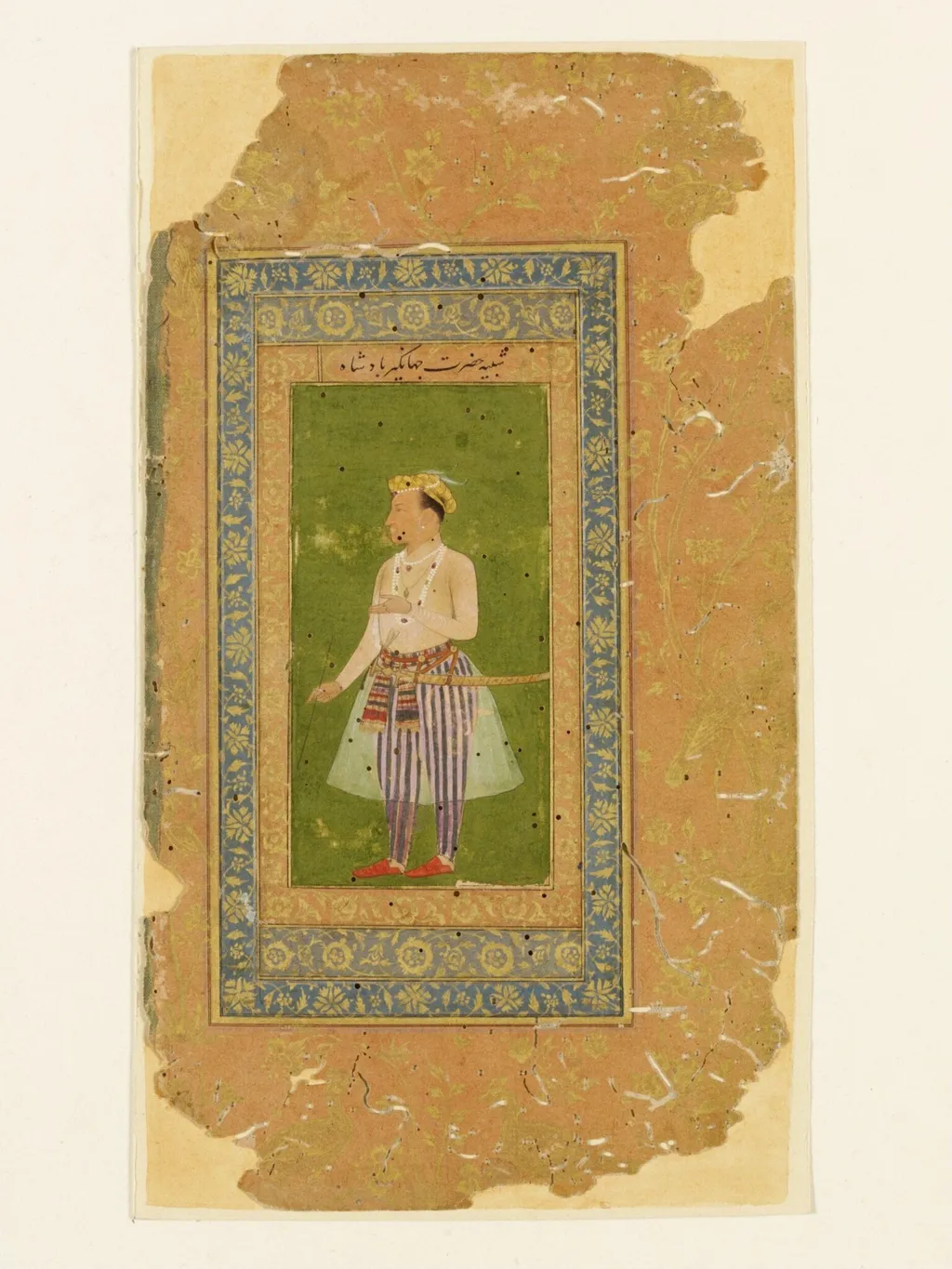
Emperor Jahangir is a paint painting by the Baroque artist Unknown. It dates from 1630 and is held in the collection of the Victoria and Albert Museum.
About this work
Overview
The painting is part of the Victoria and Albert Museum’s collection, acquired as part of a broader archive of South Asian artistic production.
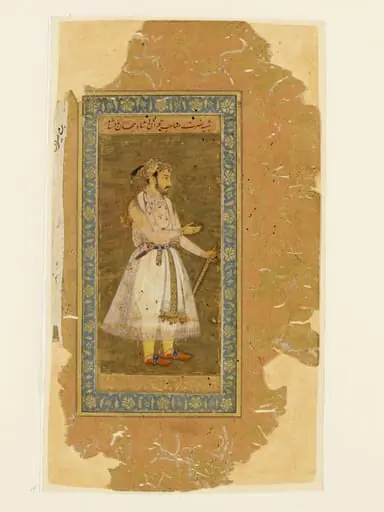
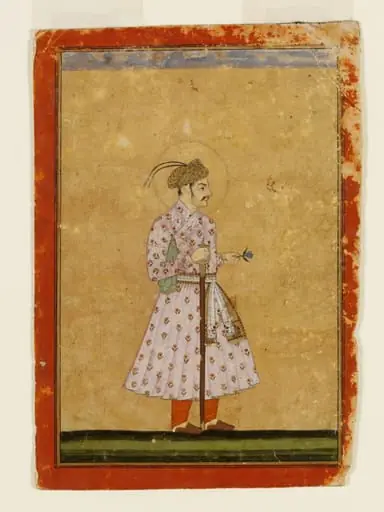
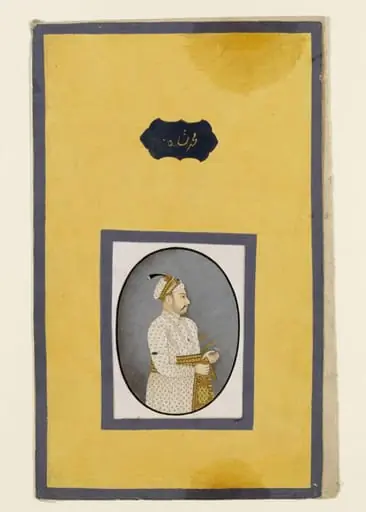
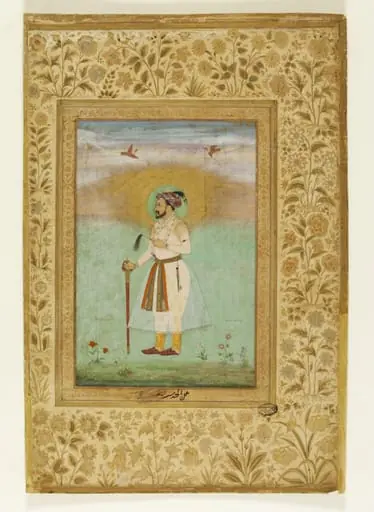
This opaque watercolor on paper portrays Emperor Jahangir of the Mughal Empire, standing in a formal pose facing left. Executed with fine brushwork, the work belongs to the tradition of Mughal court portraiture. It is mounted within an ornate decorative border and retains its original vibrancy despite its age. The painting is part of the Victoria and Albert Museum’s collection, acquired as part of a broader archive of South Asian artistic production.
Subject & Meaning
Jahangir is depicted as a sovereign figure, his attire and posture conveying authority. The gold turban, geometric belt, and flowing garments signify imperial status, while the sword at his side suggests martial sovereignty. The small object in his right hand may represent a symbolic gesture—perhaps a jewel or a scroll—emphasizing his role as both ruler and patron. The composition avoids narrative context, focusing instead on the emperor’s presence as a center of power.
Technique & Style
The painting employs mineral pigments and fine brushwork typical of Mughal ateliers, with meticulous attention to textile patterns and metallic detailing. Transparent layers of paint create the illusion of sheer fabric, while the background’s flat green enhances the figure’s prominence. The style is rooted in Persian and Indian traditions, not European Baroque; its precision and decorative richness reflect the refined aesthetics of early 17th-century Mughal court art.
History & Provenance
Created during Jahangir’s reign (1605–1627), the painting likely originated in the imperial workshop at Agra or Lahore. It was collected by British officials in the 19th century and entered the Victoria and Albert Museum’s holdings through the South Kensington Museum’s acquisitions. Its survival in near-original condition suggests careful preservation within institutional collections since its arrival in Europe.
Context
Mughal portraiture of this era blended Persian miniature techniques with emerging naturalism, often commissioned to affirm imperial identity. Jahangir’s reign saw a flourishing of such imagery, used to project legitimacy and cultural sophistication. Unlike European royal portraits, these works emphasized symbolic attributes over psychological depth, aligning with Islamic artistic conventions that prioritized order and hierarchy.
Legacy
This portrait exemplifies the Mughal court’s investment in visual propaganda through art. It influenced later Indian painting traditions and remains a key reference for scholars studying imperial representation in South Asia. Its preservation in a major Western museum underscores its role in cross-cultural artistic exchange, though its meaning is best understood within its original political and aesthetic context.
Artist & collection

 Domestic Scene
 Giacomo and Cardinal Marco, investing Andrea, Abbot of San Zeno, with his Benefice
 The Nymph of Fontainebleau
 Portrait of a Woman
 Madonna and Child with Saints in the Enclosed Garden
 Venus and Minerva
 Family Group of Four on Sofa
 Wall painting from Room H of the Villa of P. Fannius Synistor at Boscoreale