Artwork
The Emperor Muhammad Shah
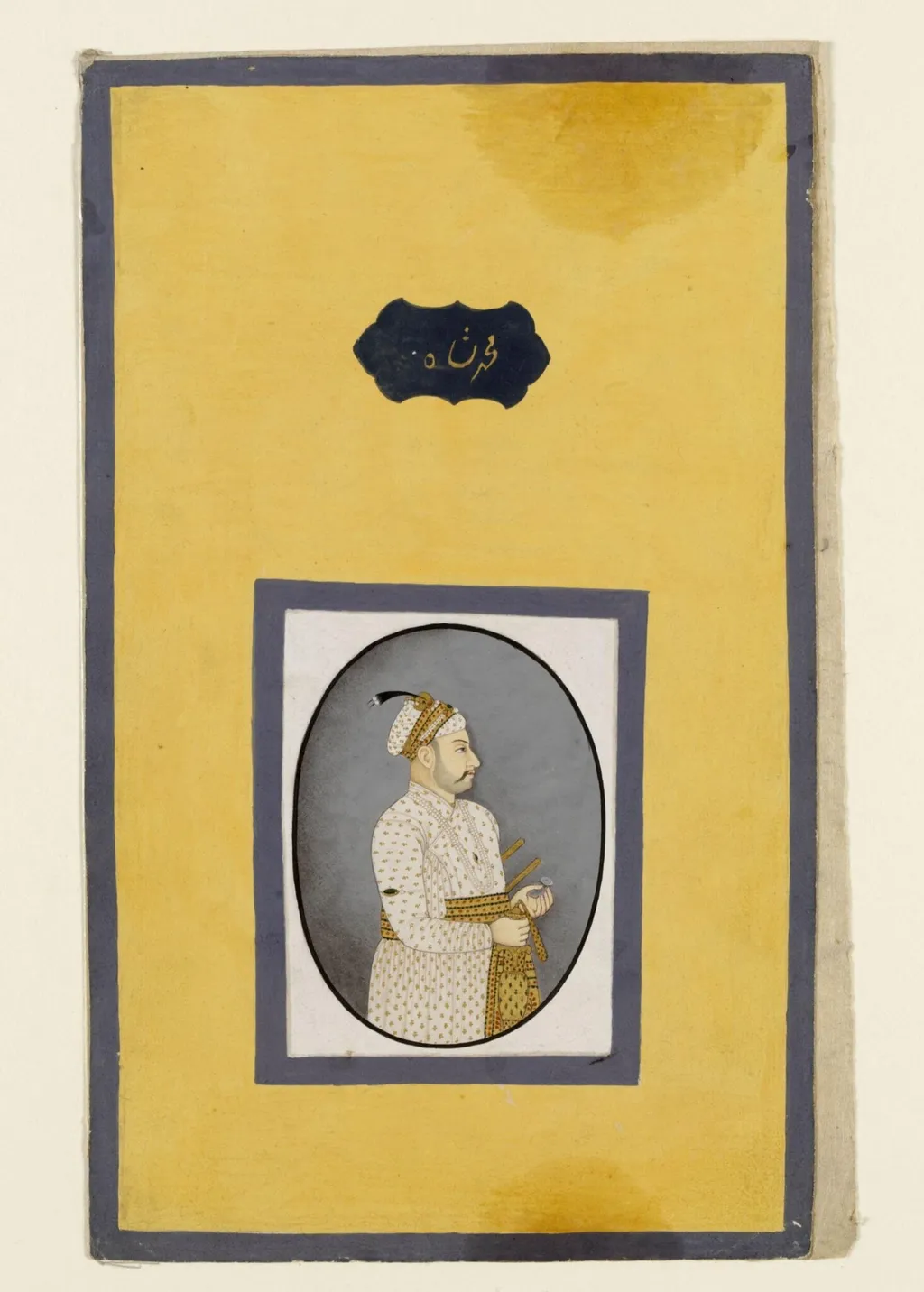
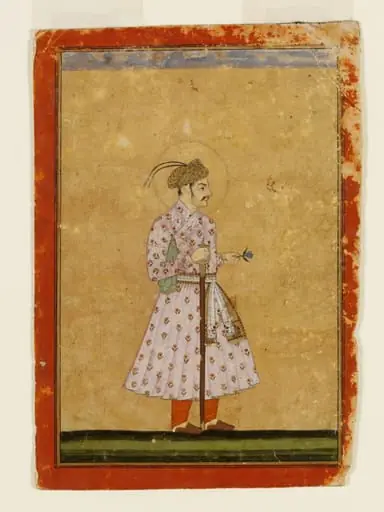
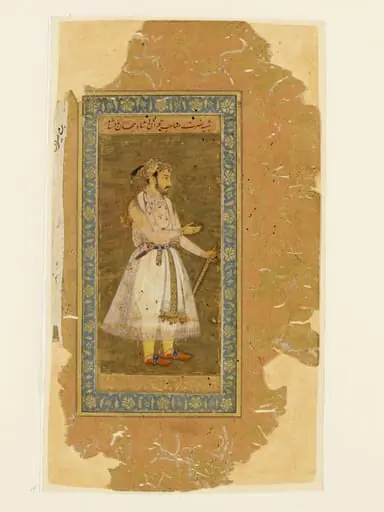
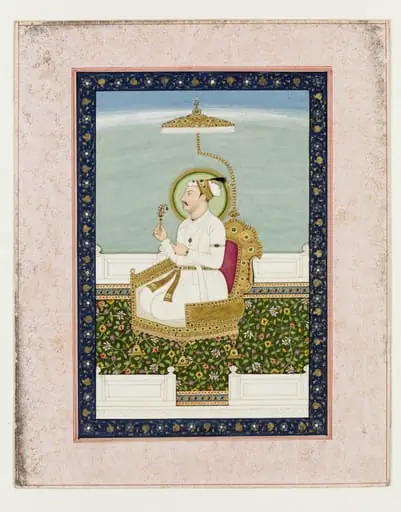
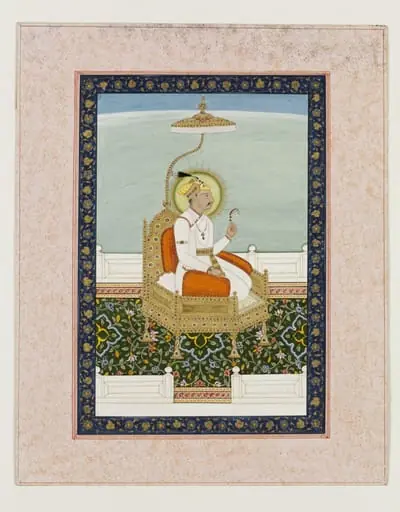
The Emperor Muhammad Shah is a paint painting by the Rococo painting artist Unknown. It dates from 1780 and is held in the collection of the Victoria and Albert Museum.
About this work
Overview
Executed in opaque watercolor on paper, it reflects the hybrid aesthetic of late Mughal painting produced in Murshidabad during the early 18th century.
This portrait depicts Emperor Muhammad Shah in a three-quarter view, framed within an oval composition that echoes European miniature traditions. Executed in opaque watercolor on paper, it reflects the hybrid aesthetic of late Mughal painting produced in Murshidabad during the early 18th century. The work combines Indian iconography with subtle European naturalism, distinguishing it from later Company school styles while indicating cross-cultural patronage.
Subject & Meaning
Muhammad Shah is shown in formal court attire, holding a staff in one hand and a folded cloth in the other, symbols of authority and ceremonial grace. His serious expression and upright posture convey imperial dignity, while the placement of his hand near the sword hilt suggests martial readiness. The composition avoids overt symbolism, instead emphasizing presence and composure, aligning with Mughal ideals of sovereign poise.
Technique & Style
The painting employs fine brushwork and layered pigments to render intricate details of textiles, including gold-dot embroidery on the white robe and turban. The background is a flat, warm yellow, bordered in gray, creating a neutral stage for the figure. Modeling is restrained, avoiding dramatic chiaroscuro; instead, subtle tonal shifts define form. The style bridges Mughal precision with European observational habits, without fully adopting Western perspective.
History & Provenance
The painting entered the collection of the Victoria and Albert Museum in 1954, acquired from Maggs Bros. of London. It is catalogued as IS.10 to 18-1954 and is believed to be part of a series of imperial portraits commissioned during Muhammad Shah’s reign. These portraits were sought by both Indian nobility and European traders, reflecting the shifting political and cultural dynamics of early 18th-century Bengal.
Context
Produced during the decline of centralized Mughal power, this portrait emerged from Murshidabad, a regional court that maintained artistic traditions amid political fragmentation. While European influences were increasingly visible, artists here retained indigenous conventions of portraiture. The work does not belong to Romanticism; rather, it exemplifies the adaptive, syncretic nature of late Mughal painting under regional patronage.
Legacy
This portrait stands as a testament to the resilience of Mughal visual language in provincial courts. It illustrates how Indian artists selectively integrated European techniques without abandoning their own aesthetic priorities. As one of several imperial images from this period, it contributes to understanding the continuity of courtly representation beyond Delhi’s decline, influencing later regional styles in eastern India.
Artist & collection

 Domestic Scene
 Giacomo and Cardinal Marco, investing Andrea, Abbot of San Zeno, with his Benefice
 The Nymph of Fontainebleau
 Portrait of a Woman
 Madonna and Child with Saints in the Enclosed Garden
 Venus and Minerva
 Family Group of Four on Sofa
 Wall painting from Room H of the Villa of P. Fannius Synistor at Boscoreale