Artwork
Emperor Humayun
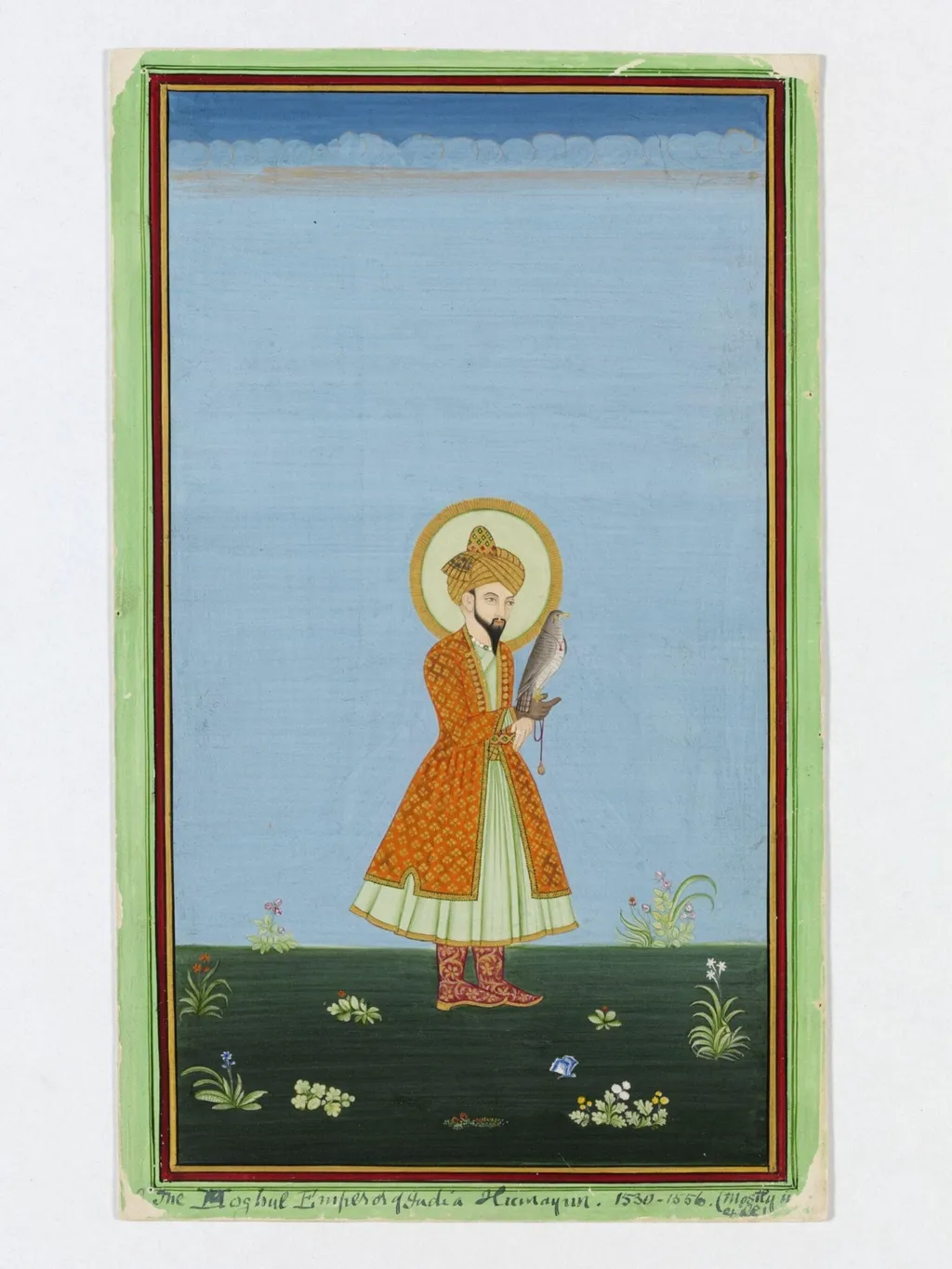
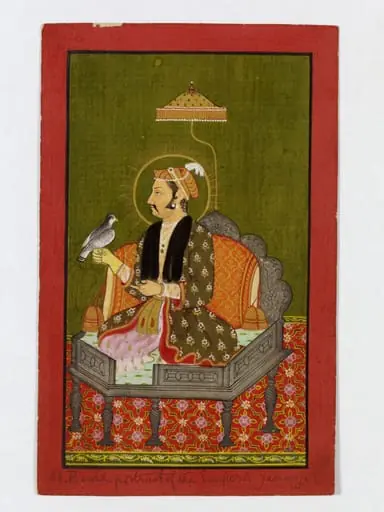
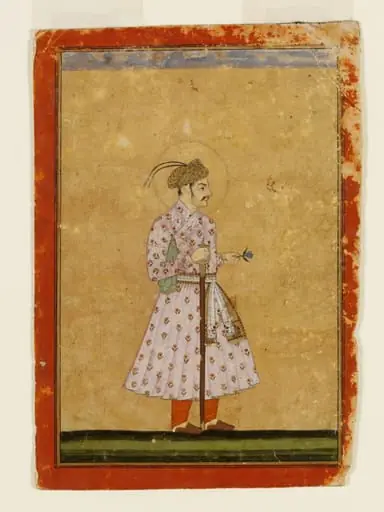
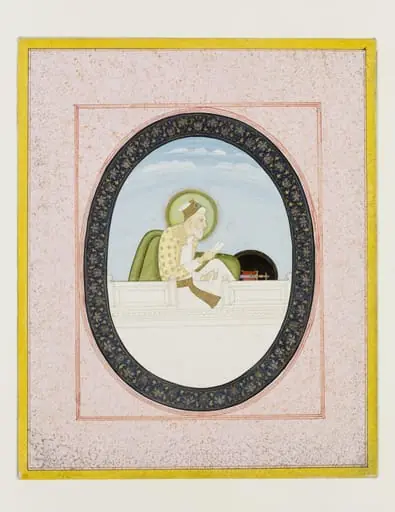
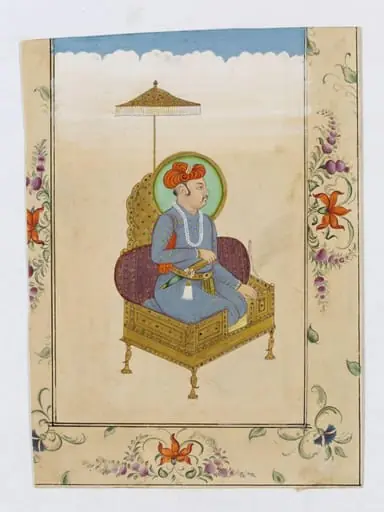
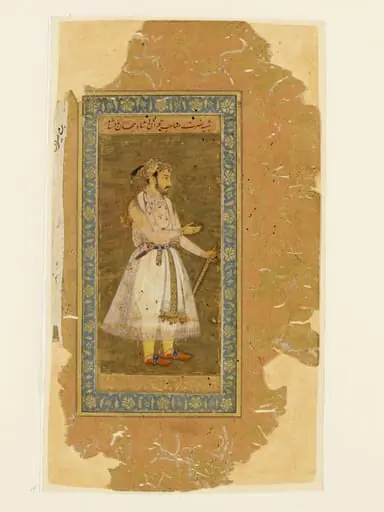
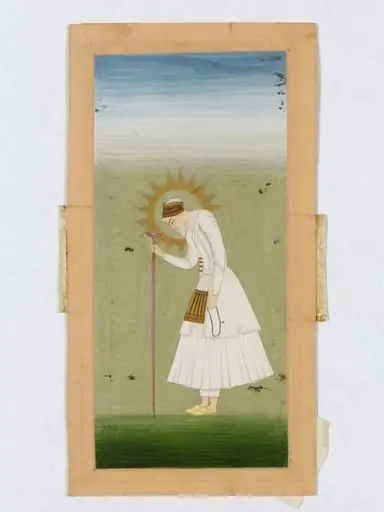
Emperor Humayun is a paint painting by the Impressionist artist Ram Gopal. It dates from 1890 and is held in the collection of the Victoria and Albert Museum. The work is a portrait of the Mughal emperor Humaydoffering a standing figure rendered in opaque watercolour and gold on paper.
About this work
Overview
The work is a portrait of the Mughal emperor Humaydoffering a standing figure rendered in opaque watercolour and gold on paper. The composition places the ruler against a flat green landscape, accented with scattered flora, while a bright blue sky fills the upper space.
Subject & Meaning
Humayun is shown in regal attire, including a patterned orange robe with green trim, red boots, and a tall gold headdress. He holds a falcon on a gloved hand, a traditional symbol of royal authority and hunting prowess, and his calm, bearded visage conveys measured sovereignty.
Technique & Style
The artist employed opaque watercolour combined with gold leaf, producing vivid yet simplified colour fields. The background and border are rendered in flat bands of green, red and gold, giving the image a decorative, almost two‑dimensional quality rather than realistic depth.
History & Provenance
The painting is part of a series of Mughal court portraits that circulated in the 16th‑17th centuries. It now resides in the collection of the Victoria and Albert Museum, where it is displayed alongside comparable works of the period.
Context
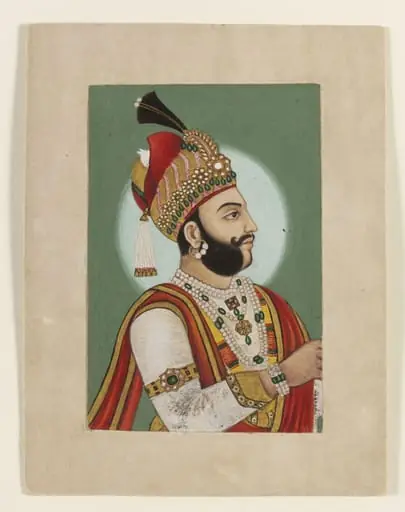
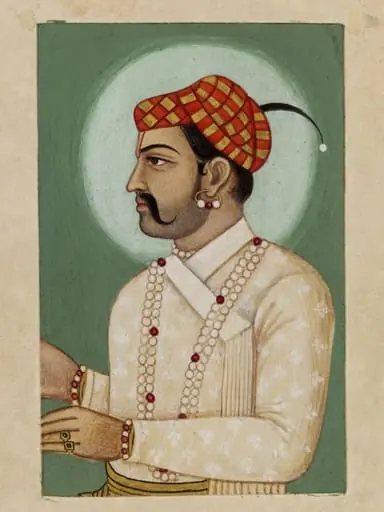
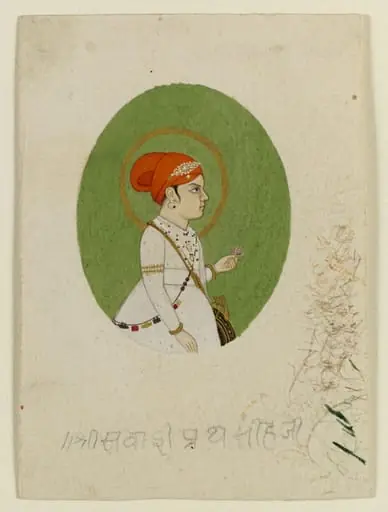
Portraits of Mughal emperors often emphasized imperial power through iconography such as falcons, elaborate dress, and luxurious materials. This piece reflects the artistic conventions of the time, merging Persian miniature influences with local Indian stylistic preferences.
Artist & collection
Artist
Ram Gopal spent his life painting the rulers who ruled him, a quiet rebellion wrapped in regal colors and gold-leaf flourishes.