Artwork
Emperor Muhammed Shah
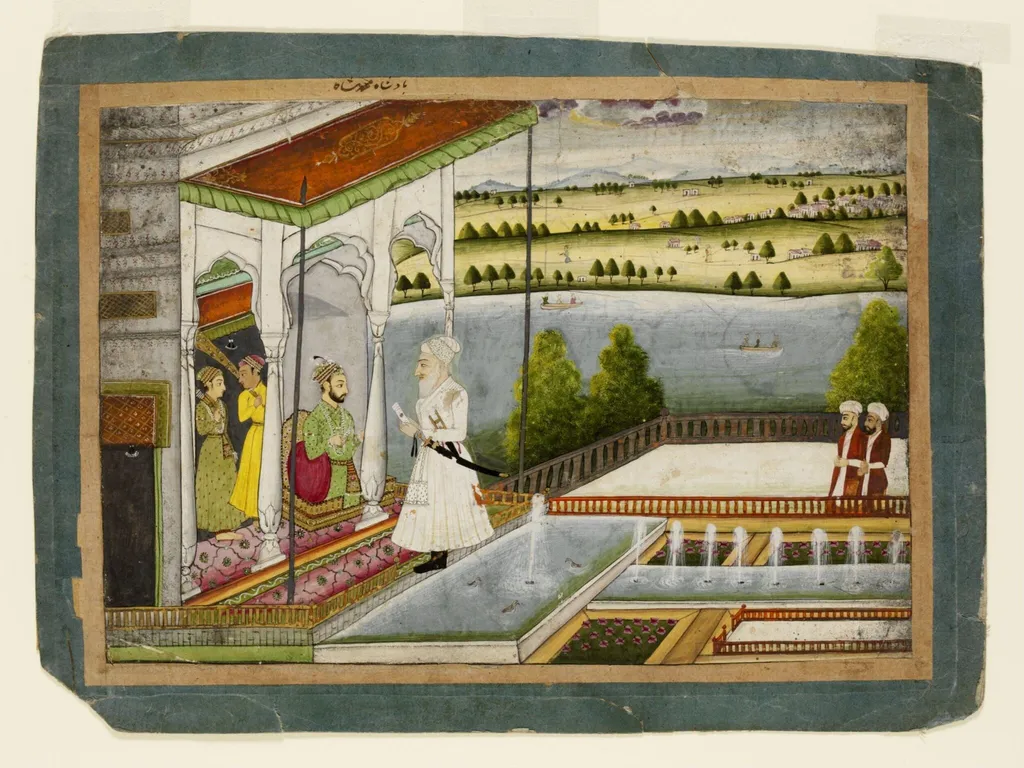
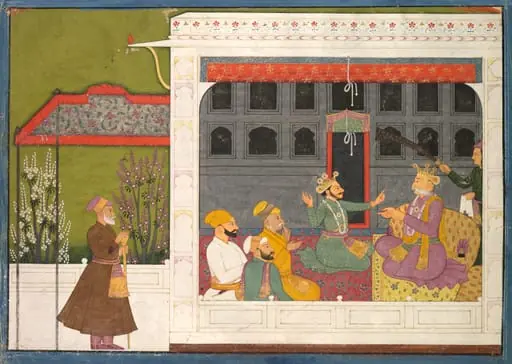
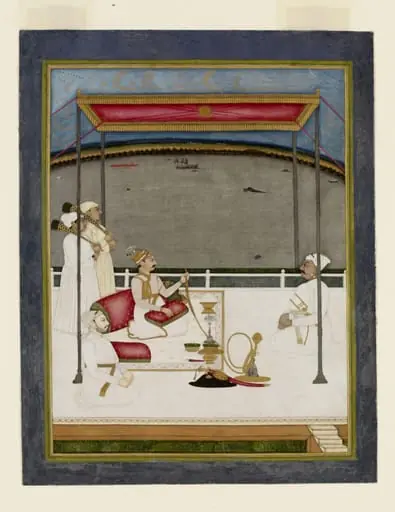
Emperor Muhammed Shah is a paint painting by Unknown. It dates from 1750 and is held in the collection of the Victoria and Albert Museum. This 1750 portrait, executed in opaque watercolour and gold on paper, captures Emperor Muhammad Shah (r.
About this work
Overview
The work is part of the Mughal court painting tradition, notable for its refined detail and decorative richness.
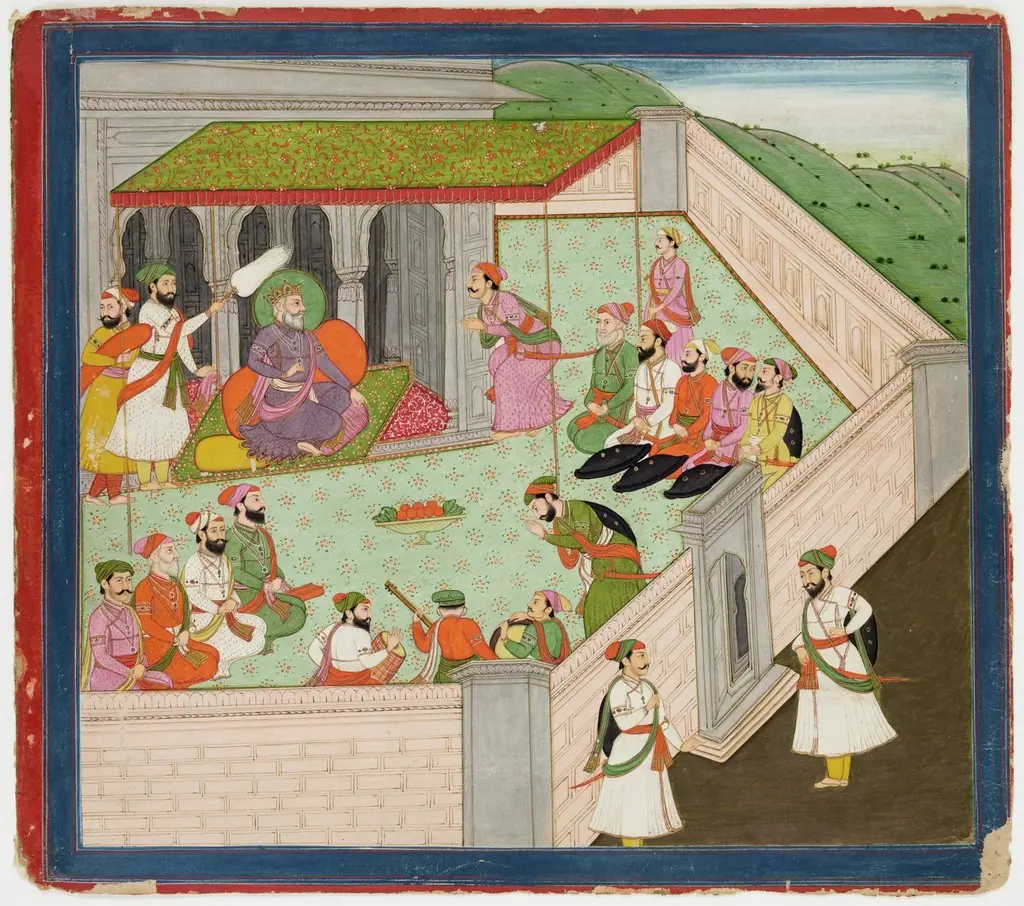
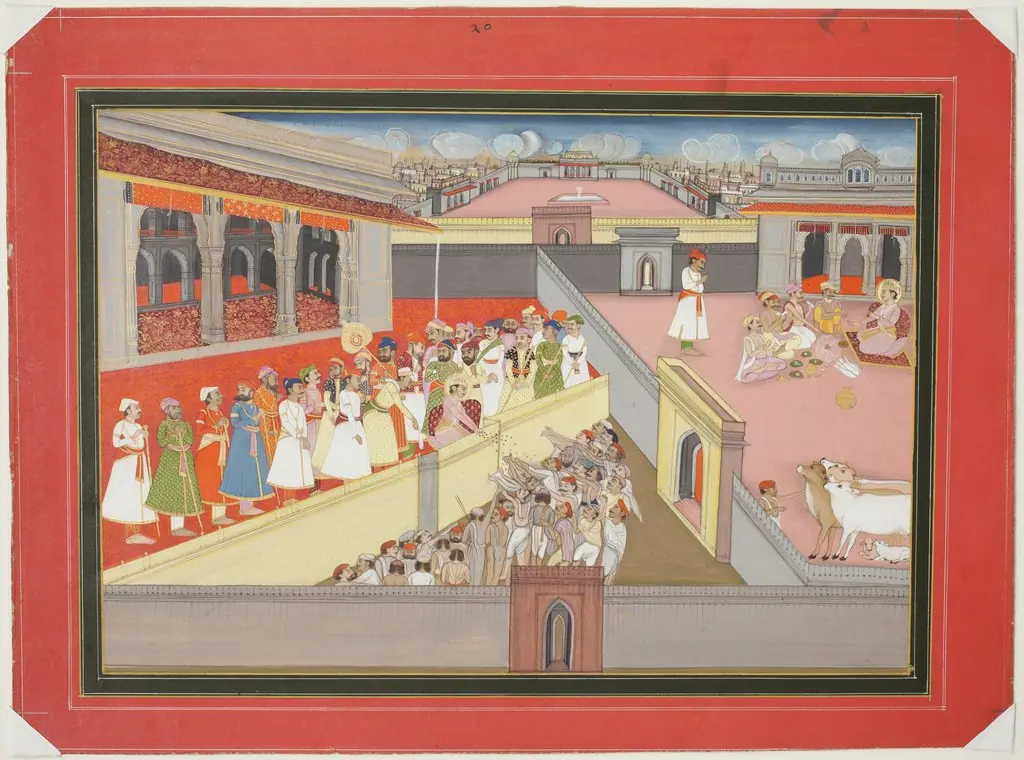
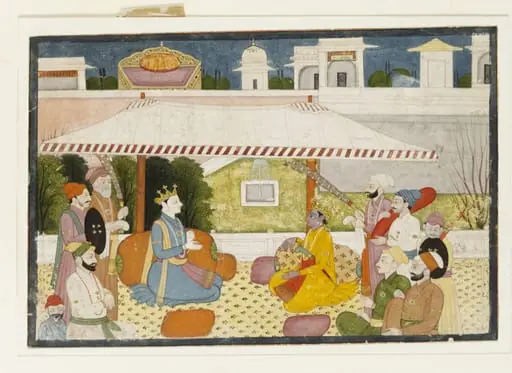
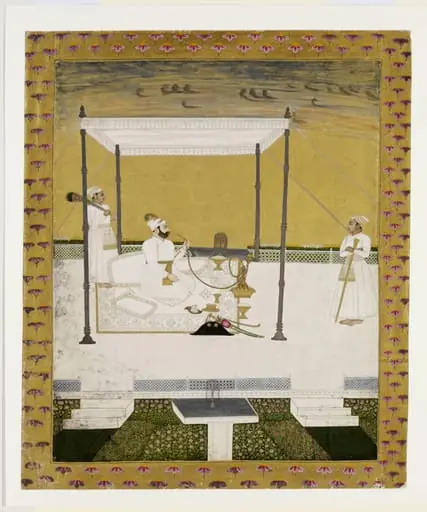
This 1750 portrait, executed in opaque watercolour and gold on paper, captures Emperor Muhammad Shah (r. 1719–1748) in a formal audience on a riverside terrace. The composition includes attendants and a minister, framed by architectural elements and a distant landscape. The inscription 'Padshah Muhammad Shah' at the top affirms his imperial status. The work is part of the Mughal court painting tradition, notable for its refined detail and decorative richness. It entered the Victoria and Albert Museum’s collection in 1911 after acquisition from J. J. Naaman in London.
Subject & Meaning
The scene depicts a private imperial audience, a common motif in Mughal portraiture that emphasized the emperor’s authority and courtly ritual. Muhammad Shah, dressed in white, holds a scroll—symbolizing governance or decree—while his wazir stands nearby, suggesting administrative interaction. Attendants and the pavilion reinforce hierarchy and order. The tranquil river setting and distant bridge imply a controlled, harmonious realm, reflecting ideals of just rule and imperial serenity.
Technique & Style
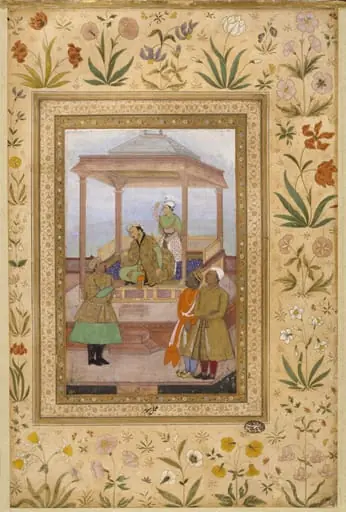
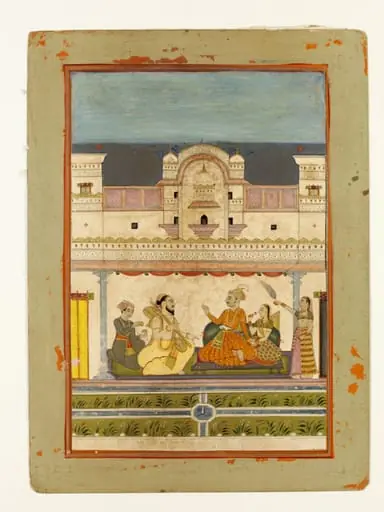
The painting employs fine brushwork in opaque watercolour with gold accents to render textures of fabric, architecture, and foliage. Bold hues of green, red, and yellow create visual rhythm without overwhelming balance. Figures are arranged with deliberate spacing, and perspective is flattened, consistent with Indo-Persian conventions. The wear along the edges suggests handling over time, typical of album pages meant for intimate viewing rather than public display.
History & Provenance
Created during the waning years of Mughal central authority, the painting reflects the continued patronage of court artists despite political decline. It remained in private Indian or colonial hands until 1911, when it was acquired in London by the Victoria and Albert Museum from J. J. Naaman, a known dealer of South Asian art. Its survival and documentation offer insight into the dispersal of Mughal artworks during the 19th century.
Context
This work belongs to a period when Mughal painting evolved under regional influences, blending Persian elegance with local Indian aesthetics. While imperial power was fragmenting, court artists still produced elaborate portraits to affirm legitimacy. Similar compositions appear in albums commissioned by nobles and emperors, serving as both records and symbols of status. The riverside terrace setting was a favored motif, evoking leisure and sovereignty.
Legacy
The painting endures as a representative example of late Mughal court art, illustrating how traditional forms persisted amid political change. Its preservation in a major museum allows ongoing study of technique, iconography, and cross-cultural exchange. Though not widely exhibited, it contributes to broader narratives of South Asian visual culture and the transition from imperial to colonial artistic patronage.
Artist & collection

 Domestic Scene
 Giacomo and Cardinal Marco, investing Andrea, Abbot of San Zeno, with his Benefice
 The Nymph of Fontainebleau
 Portrait of a Woman
 Madonna and Child with Saints in the Enclosed Garden
 Venus and Minerva
 Family Group of Four on Sofa
 Wall painting from Room H of the Villa of P. Fannius Synistor at Boscoreale