Artwork
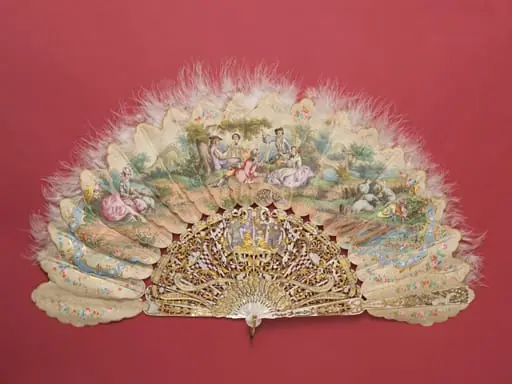
Eventail en plumes d'autruche
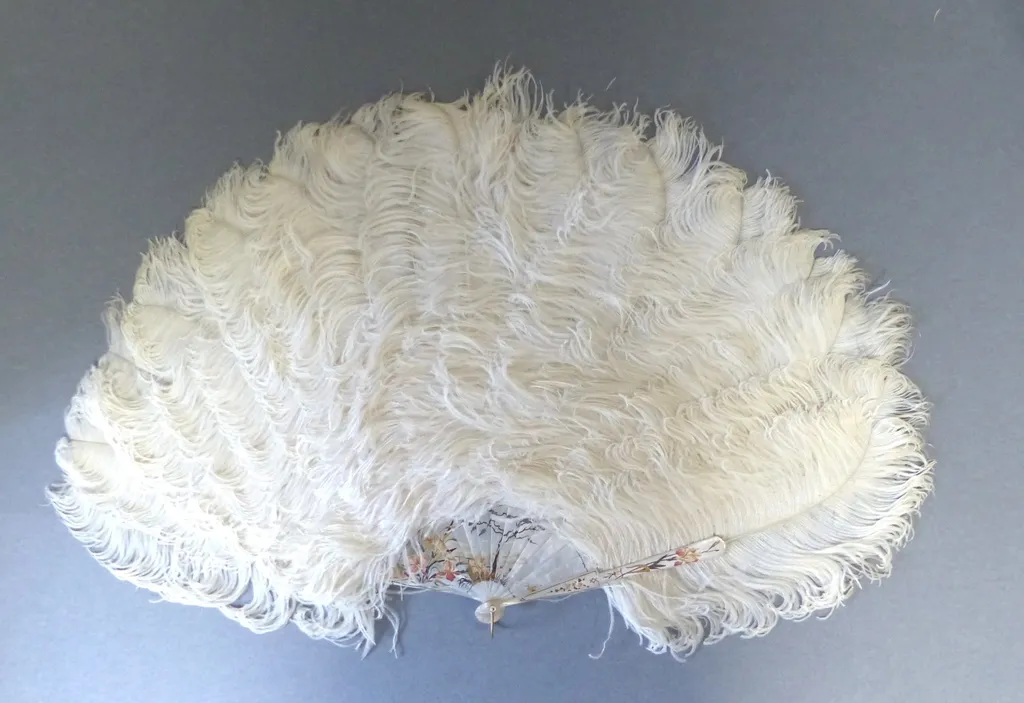
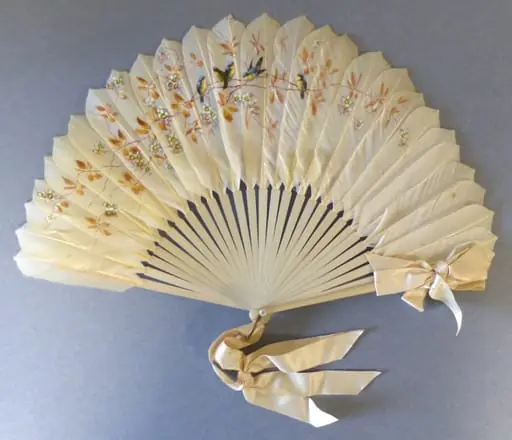
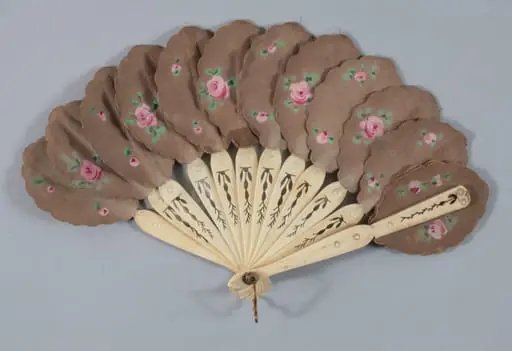
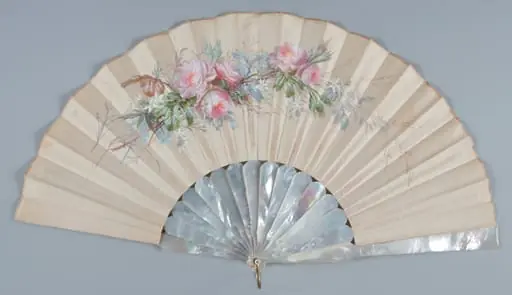
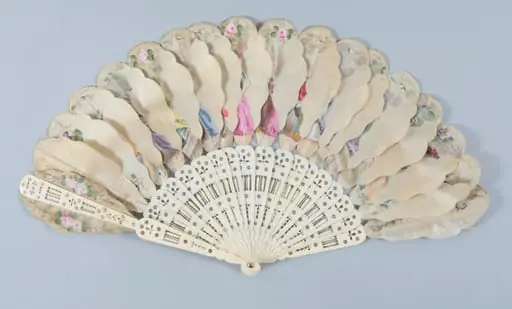
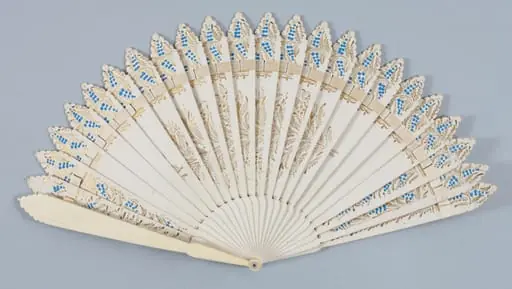
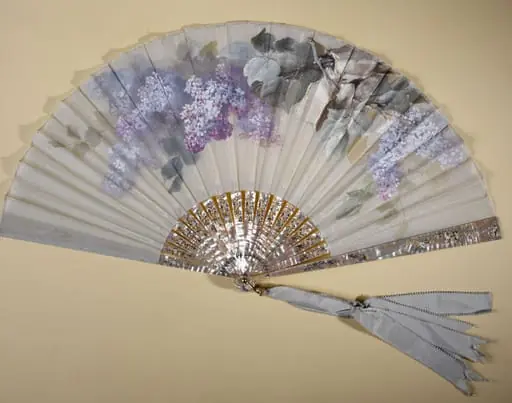
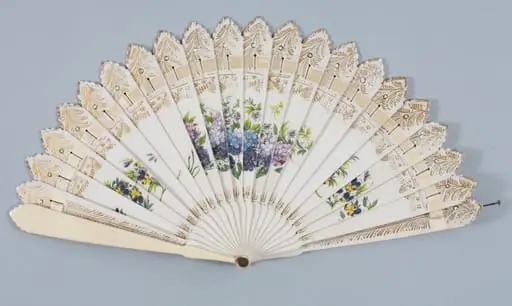
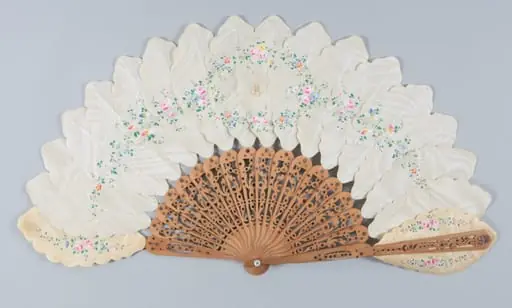
Eventail en plumes d'autruche is an unspecified work on paper by the Post-Impressionist artist Unknown. It dates from 1900 and is held in the collection of the Palais Galliera - Musée de la Mode de la Ville de Paris. This fan is constructed from ostrich feathers, arranged in orderly rows to form a soft, rounded profile.
About this work
Overview
This fan is constructed from ostrich feathers, arranged in orderly rows to form a soft, rounded profile. The feathers, predominantly white with subtle dark tips, are mounted on a slender handle adorned with minimal painted details near the hinge. Designed for folding and unfolding, the structure balances delicacy with durability, reflecting practical craftsmanship suited for regular use.
Subject & Meaning
The fan serves no symbolic or narrative purpose beyond its function as a personal cooling tool. Its materials and restrained decoration suggest utility over ornamentation, aligning with everyday domestic use rather than ceremonial display. The absence of elaborate imagery underscores its role as an object of comfort in daily life.
Technique & Style
Feathers are carefully aligned in concentric layers, secured to a rigid spine that allows smooth articulation. The handle’s painted motifs are sparse and localized, indicating hand-applied decoration without excessive embellishment. The construction prioritizes flexibility and lightness, characteristic of feather fans made for portability and ease of motion.
History & Provenance
No specific origin or ownership record is documented. The materials and design are consistent with 19th-century European or American domestic accessories, where ostrich feathers were commonly imported for fashion accessories. Its simplicity suggests mass production or local artisan making rather than bespoke commission.
Context
In the 19th century, feather fans were widespread among women of various social classes, used to regulate body temperature and as subtle social signals in conversation. Ostrich feathers, prized for their softness and volume, were favored over more exotic alternatives. This fan exemplifies the accessible end of that market, designed for routine use rather than display.
Legacy
Though unremarkable in artistic terms, such fans represent a broader cultural practice of personal adornment and utility. They reflect the intersection of global trade (ostrich feathers from Africa), domestic craftsmanship, and gendered social norms. Surviving examples like this one offer insight into the material culture of everyday life.
Artist & collection

Museum
Palais Galliera - Musée de la Mode de la Ville de Paris
Continue through works from the same source collection.
 Domestic Scene
 Giacomo and Cardinal Marco, investing Andrea, Abbot of San Zeno, with his Benefice
 The Nymph of Fontainebleau
 Portrait of a Woman
 Madonna and Child with Saints in the Enclosed Garden
 Venus and Minerva
 Family Group of Four on Sofa
 Wall painting from Room H of the Villa of P. Fannius Synistor at Boscoreale