Artwork
Eventail à système
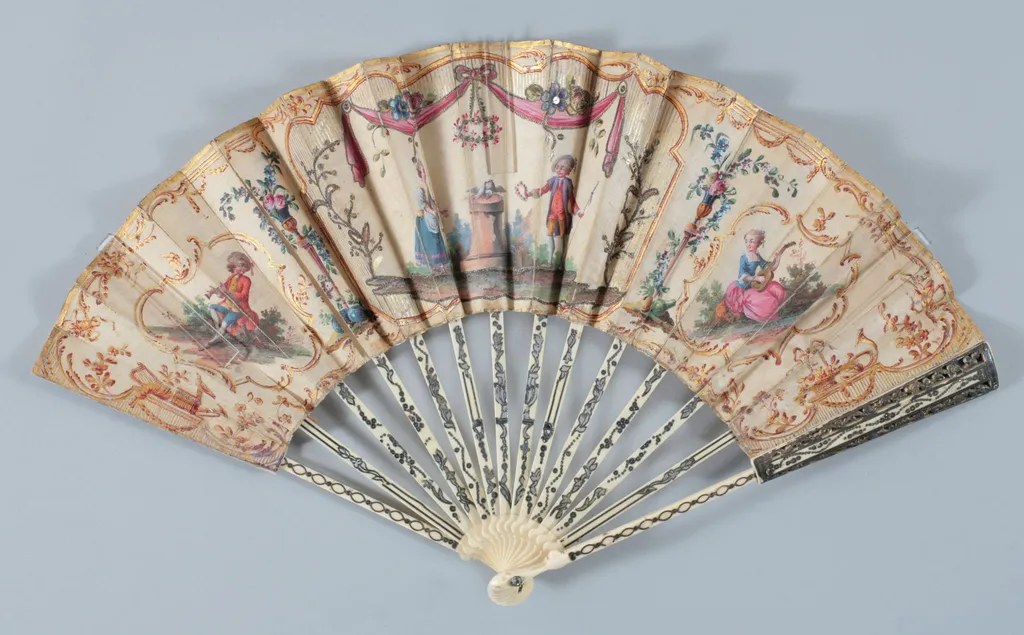
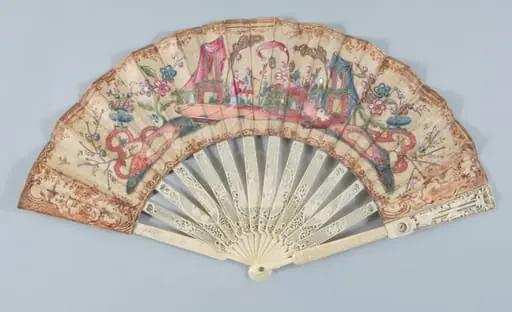
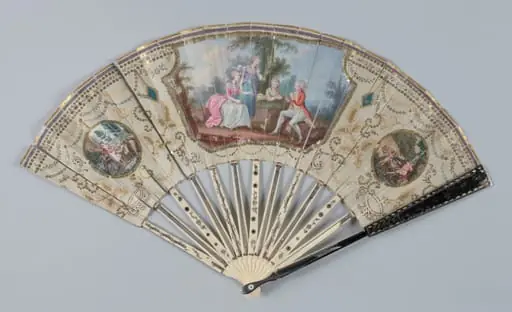
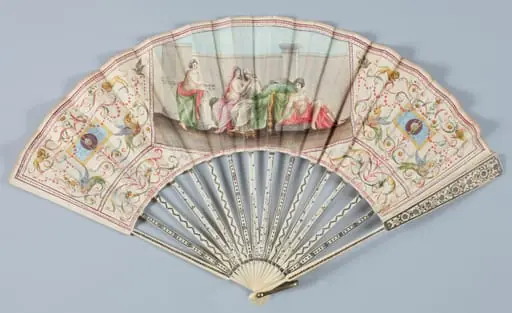
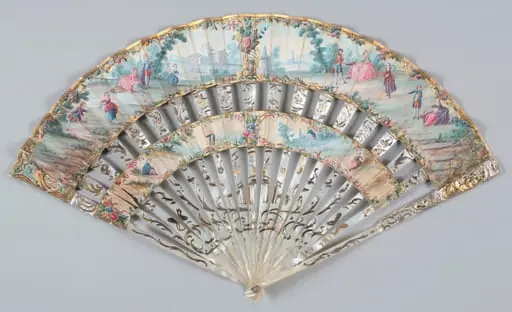
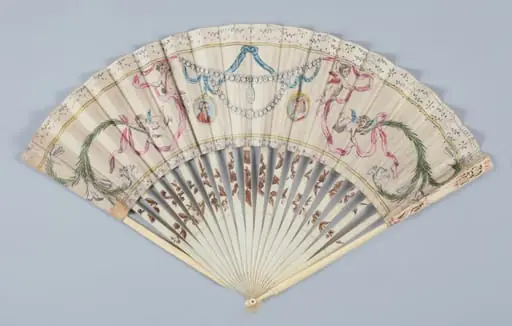
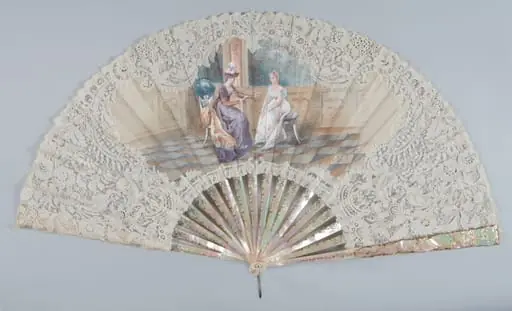
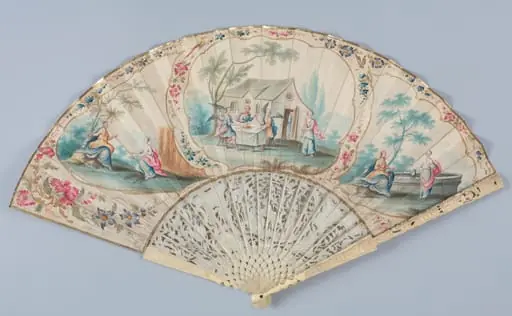
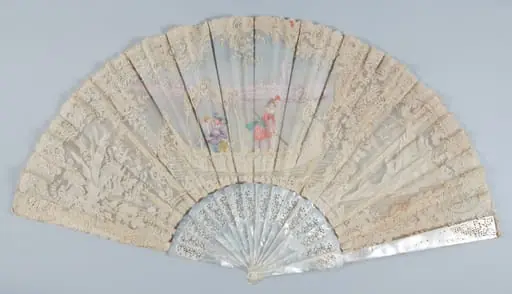
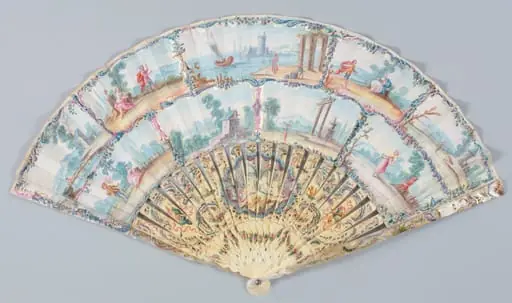
Eventail à système is an unspecified work on paper by Unknown. It dates from 1750 and is held in the collection of the Palais Galliera - Musée de la Mode de la Ville de Paris. This hand fan, crafted as a painted surface, features a delicate composition on a white ground enhanced with gold detailing.
About this work
Overview
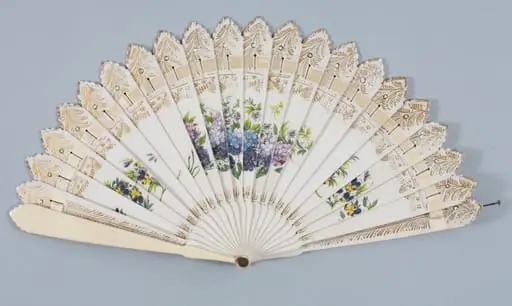
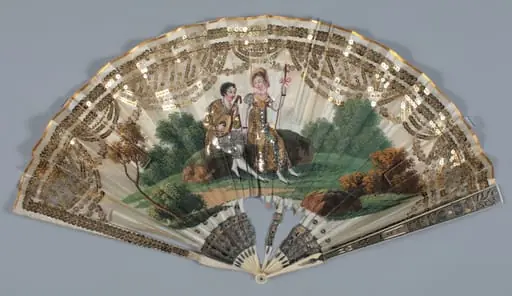
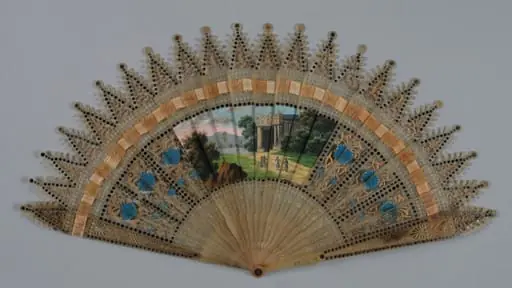
This hand fan, crafted as a painted surface, features a delicate composition on a white ground enhanced with gold detailing. Its design centers on a pastoral scene populated by figures in historical attire, arranged amid stylized flora. The work exemplifies the refined aesthetic of decorative objects intended for personal use, blending artistry with functionality in a portable format.
Subject & Meaning
The scene portrays a group of figures in 18th- or early 19th-century dress, engaged in quiet interaction within a garden. Trees and flowering plants frame the composition, suggesting leisure and social grace. The imagery reflects ideals of polite society, where nature and etiquette converge, reinforcing cultural values of elegance and cultivated refinement through intimate, private adornment.
Technique & Style
The fan’s surface employs fine brushwork to render intricate patterns and subtle tonal shifts, with gold leaf applied to highlight architectural and botanical elements. Colors remain restrained, emphasizing contrast between the pale background and metallic accents. The style aligns with European decorative traditions, prioritizing precision and symmetry over dramatic expression.
History & Provenance
Though specific origins are unrecorded, such fans were commonly produced in Europe during the 18th century, often as luxury items for elite women.
Though specific origins are unrecorded, such fans were commonly produced in Europe during the 18th century, often as luxury items for elite women. The use of gold and detailed narrative scenes suggests commissioning by a wealthy patron. The object likely passed through private collections before entering institutional care, possibly with institutions like the Museum of Ethnography that preserve material culture of daily life.
Context
Hand fans of this type were not merely utilitarian but served as markers of social status and personal taste. Their imagery often drew from contemporary paintings or prints, adapting popular themes to a small, intimate scale. As fashion accessories, they were carried in social settings, making them both private objects and public displays of cultural literacy.
Legacy
This fan represents a broader tradition of decorative arts that elevated everyday objects through artistic craftsmanship. While no longer in common use, such items remain valuable for understanding historical aesthetics, gendered practices, and the intersection of art with personal adornment in pre-industrial societies.
Artist & collection

Museum
Palais Galliera - Musée de la Mode de la Ville de Paris
Continue through works from the same source collection.
 Domestic Scene
 Giacomo and Cardinal Marco, investing Andrea, Abbot of San Zeno, with his Benefice
 The Nymph of Fontainebleau
 Portrait of a Woman
 Madonna and Child with Saints in the Enclosed Garden
 Venus and Minerva
 Family Group of Four on Sofa
 Wall painting from Room H of the Villa of P. Fannius Synistor at Boscoreale