Artwork
Eventail pliant
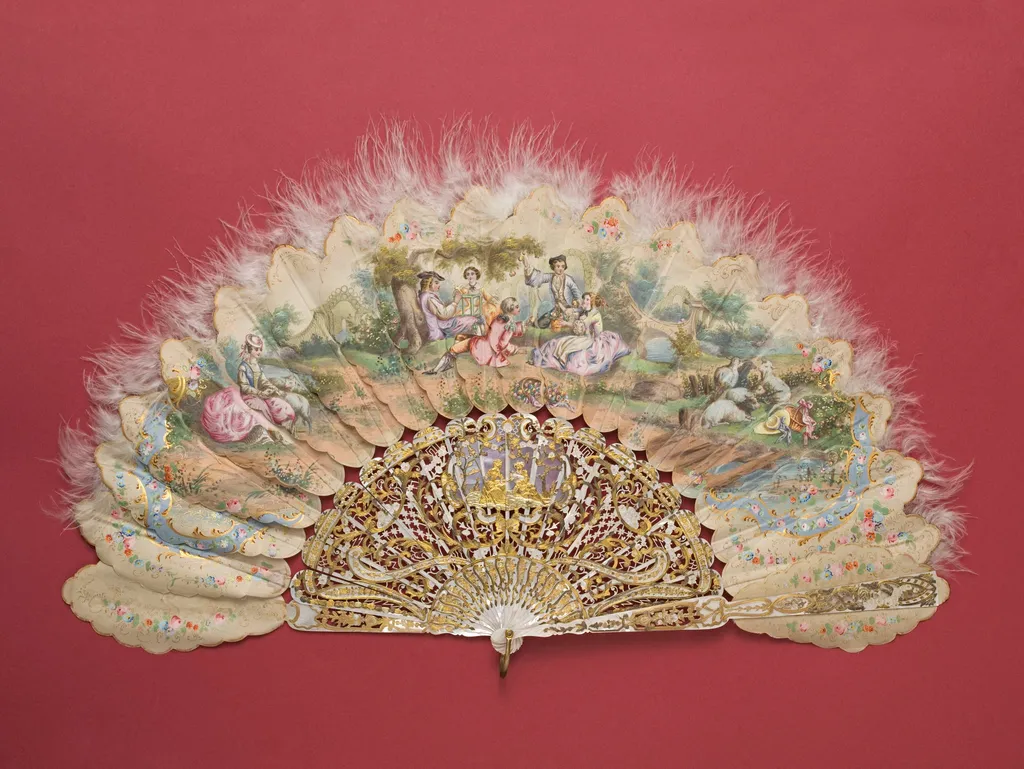
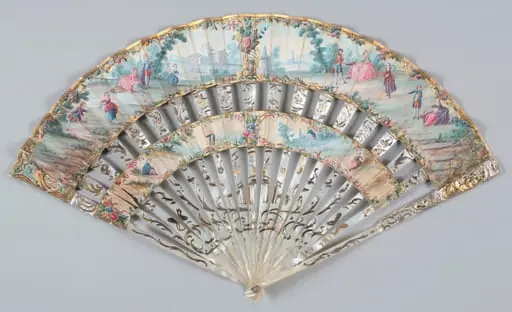
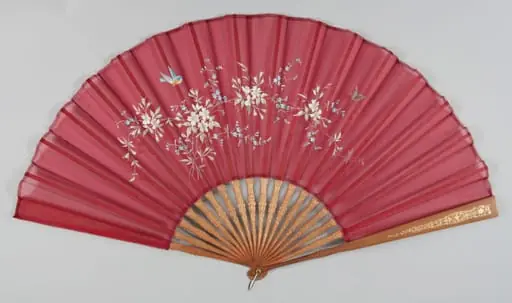
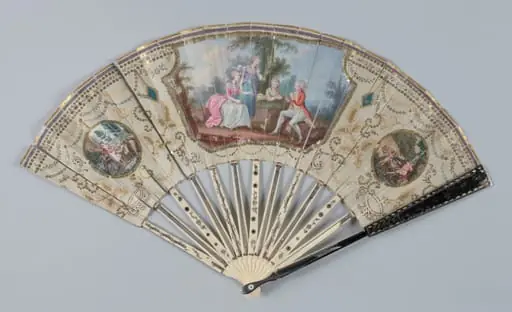
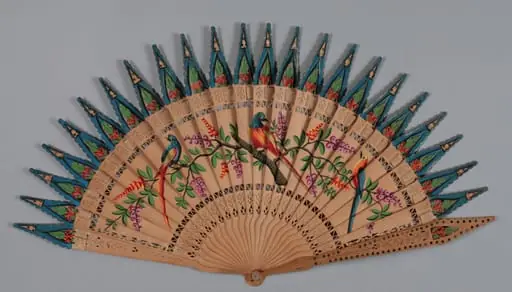
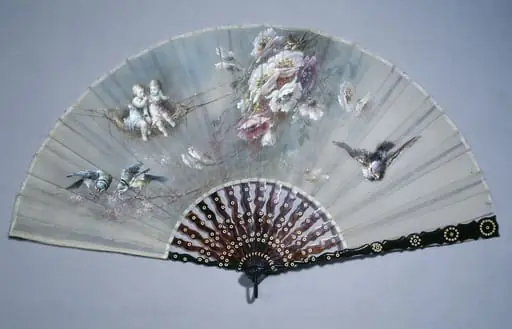
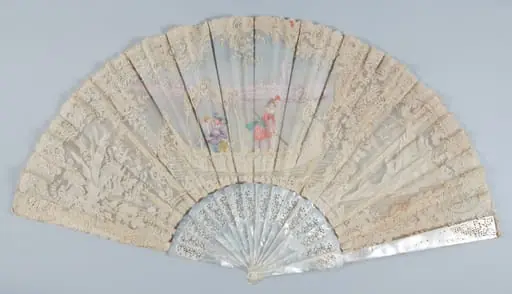
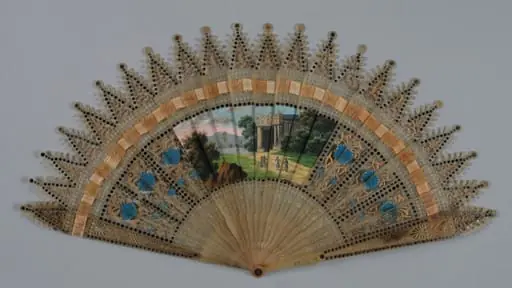
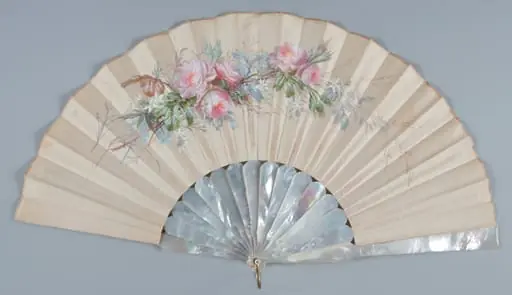
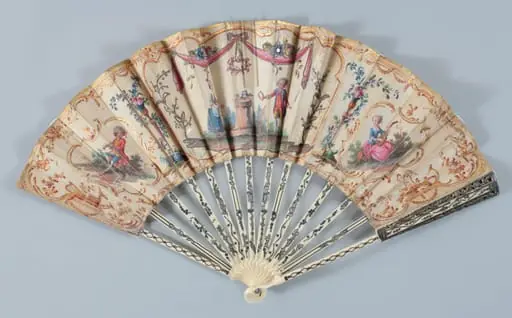
Eventail pliant is an unspecified work on paper by the Romanticist artist Unknown. It dates from 1845 and is held in the collection of the Palais Galliera - Musée de la Mode de la Ville de Paris. This watercolor painting captures a delicate, folding fan as its sole subject.
About this work
Overview
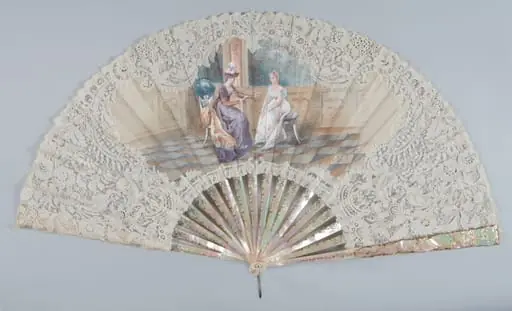
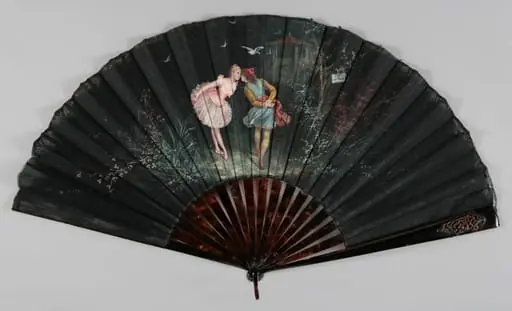
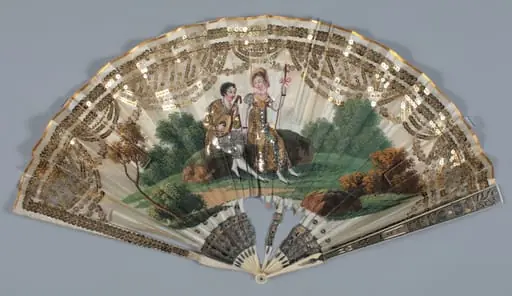
This watercolor painting captures a delicate, folding fan as its sole subject. Rendered with soft brushwork and muted tones, the work focuses on the fan’s ornate design: floral motifs, a miniature garden landscape, and feather trim. The silver handle and taffeta surface are rendered with quiet precision, suggesting an object of personal significance rather than mere ornament.
Subject & Meaning
The fan’s imagery—a tranquil garden with figures, trees, and a pond—evokes an idealized natural retreat. Its inclusion of feathers and fine craftsmanship implies association with aristocratic leisure or romantic sentiment. The painting treats the fan not as a utilitarian item but as a vessel of emotional resonance, possibly symbolizing intimacy, status, or memory.
Technique & Style
Executed in watercolor, the painting employs gentle washes and subtle gradations to convey texture and light. The brushwork is restrained yet precise, emphasizing delicacy over drama. The composition centers the fan against a neutral background, heightening its intimacy and reinforcing the quiet, contemplative mood characteristic of early 19th-century Romantic aesthetics.
History & Provenance
No documented ownership or exhibition history is provided. The work appears to be a standalone study, likely created by an artist interested in domestic objects as subjects of aesthetic contemplation. Its focus on a personal accessory suggests it may have been commissioned or painted within a private, upper-class setting.
Context
In early 19th-century Europe, painted fans were fashionable accessories among women of means, often customized with sentimental or picturesque scenes. This painting reflects a broader cultural trend of elevating everyday objects into subjects of artistic attention, aligning with Romanticism’s interest in emotion, nature, and the refined details of private life.
Legacy
Though not widely known, the work exemplifies a niche genre of still-life painting that honored intimate, hand-held artifacts. Its quiet dignity and technical restraint contribute to a broader understanding of how Romantic artists found meaning in the small, personal, and ephemeral, rather than the monumental or heroic.
Artist & collection

Museum
Palais Galliera - Musée de la Mode de la Ville de Paris
Continue through works from the same source collection.
 Domestic Scene
 Giacomo and Cardinal Marco, investing Andrea, Abbot of San Zeno, with his Benefice
 The Nymph of Fontainebleau
 Portrait of a Woman
 Madonna and Child with Saints in the Enclosed Garden
 Venus and Minerva
 Family Group of Four on Sofa
 Wall painting from Room H of the Villa of P. Fannius Synistor at Boscoreale