Artwork
Falcon
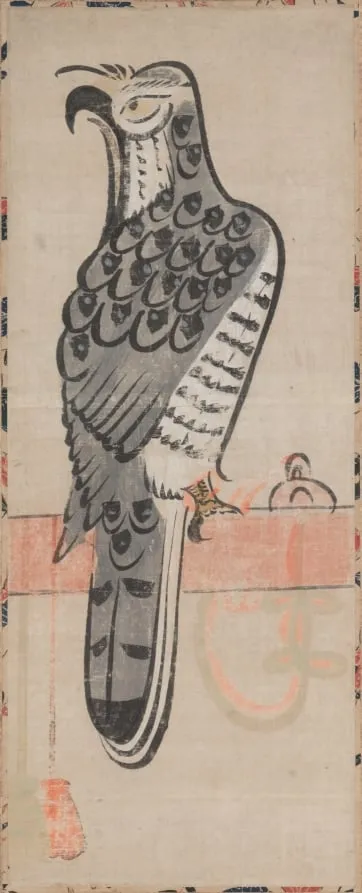
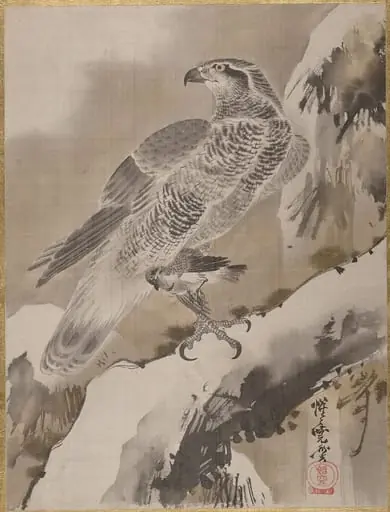
Falcon is an unspecified painting by the Baroque artist Unknown. It dates from 1742 and is held in the collection of the Cleveland Museum of Art.
About this work
This painting was sold by traveling artists in Edo-period Japan as a cheap, lucky charm for farmers.
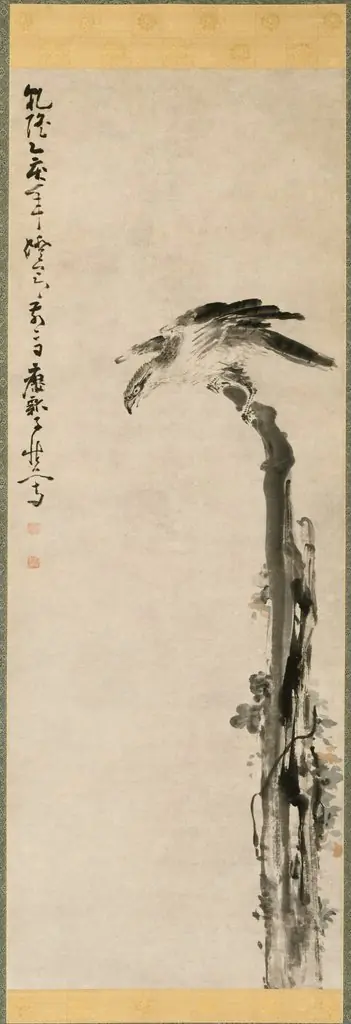
A falcon perches on a bare branch, its feathers fluffed against the cold.
This painting was sold by traveling artists in Edo-period Japan as a cheap, lucky charm for farmers. The bird’s sharp eyes and curved beak feel alive—like it could fly off the paper any second. The artist used quick brushstrokes to keep costs low, but the details still pop.
Look up more paintings from japan, edo period (1615–1868) to see how everyday art like this worked.
Overview
This otsu-e painting features a falcon perched on a bare branch, created during Japan’s Edo period as an affordable devotional object. Produced by itinerant artists for rural buyers, it served not as fine art but as a talisman believed to ensure a good harvest. Its simple materials and rapid execution reflect its function as mass-produced folk imagery, accessible to common farmers rather than elite collectors.
Subject & Meaning
The falcon, a symbol of vigilance and predatory power, was associated with agricultural prosperity in Edo-period folk belief. Farmers viewed its keen eyes and readiness to strike as metaphors for warding off pests and ensuring crop success. The bird’s isolated perch on a winter branch evokes both resilience and the seasonal cycle, reinforcing its role as a protective emblem tied to the land’s fertility.
Technique & Style
Executed with swift, economical brushwork, the painting prioritizes immediacy over refinement. Ink and pigment were applied rapidly to minimize cost, yet the falcon’s form retains expressive vitality—its fluffed feathers, sharp beak, and alert gaze convey lifelike tension. The background is left largely empty, focusing attention on the bird and enhancing its symbolic presence without decorative distraction.
History & Provenance
Created by traveling artists who sold works at temples, markets, and roadside stalls, this painting belonged to a broader tradition of otsu-e—popular prints and paintings distributed widely across Japan. Its survival is rare; most were used until worn out or discarded. Surviving examples like this one offer insight into the visual culture of non-elite communities during the Edo period.
Context
Otsu-e art emerged as a response to rising literacy and urban-rural trade networks in Edo Japan. Unlike courtly ink paintings, these works were made for practical, superstitious, or devotional use. The falcon image fits within a repertoire of animals and deities chosen for their perceived ability to influence fortune, reflecting a blend of Shinto, Buddhist, and folk beliefs held by rural populations.
Legacy
Though dismissed in its time as lowbrow, otsu-e paintings like this falcon image are now recognized as vital records of everyday belief systems. They reveal how ordinary people engaged with visual culture, transforming simple imagery into tools of hope and protection. Contemporary scholars study them to understand the spiritual and social lives of Edo-era commoners beyond official records.
Artist & collection

 Domestic Scene
 Giacomo and Cardinal Marco, investing Andrea, Abbot of San Zeno, with his Benefice
 The Nymph of Fontainebleau
 Portrait of a Woman
 Madonna and Child with Saints in the Enclosed Garden
 Venus and Minerva
 Family Group of Four on Sofa
 Wall painting from Room H of the Villa of P. Fannius Synistor at Boscoreale