Artwork
farfurie
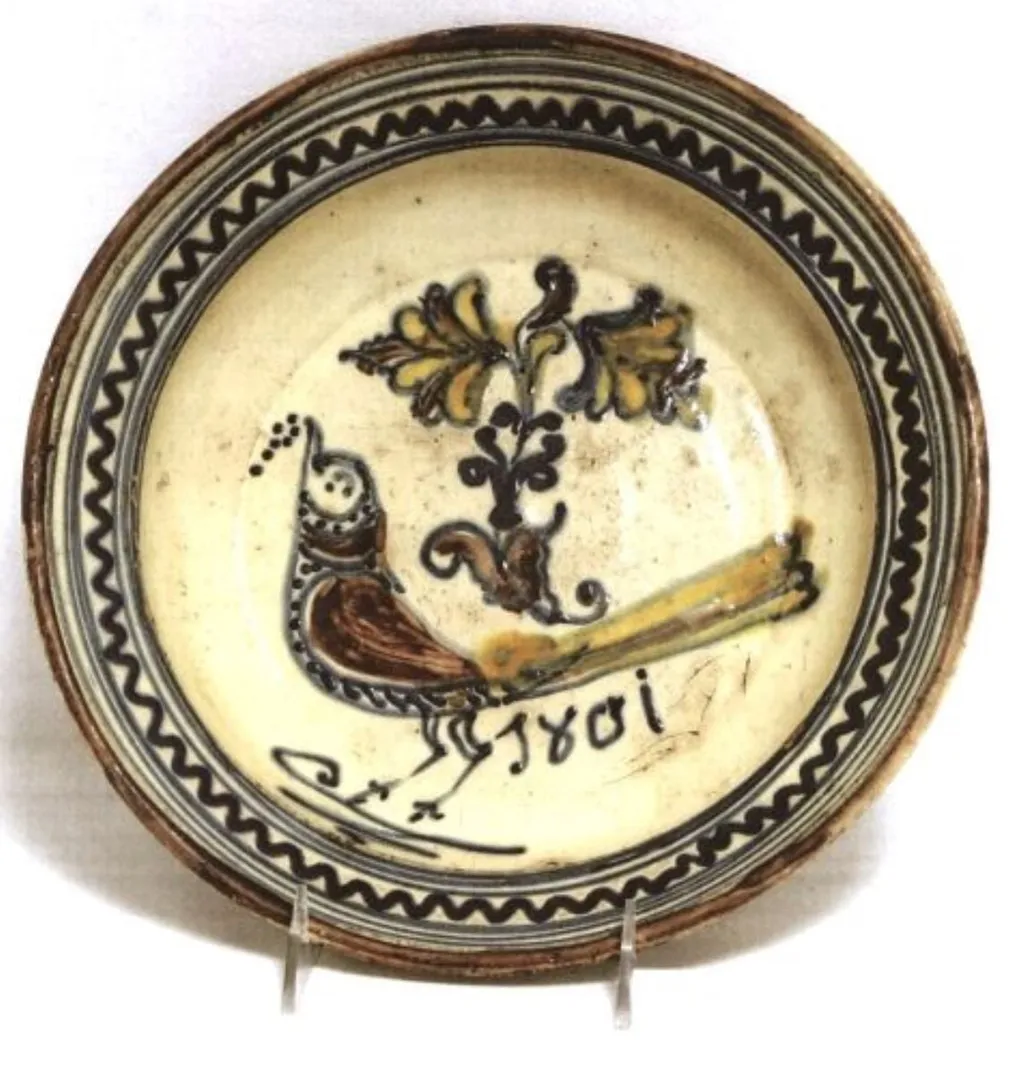
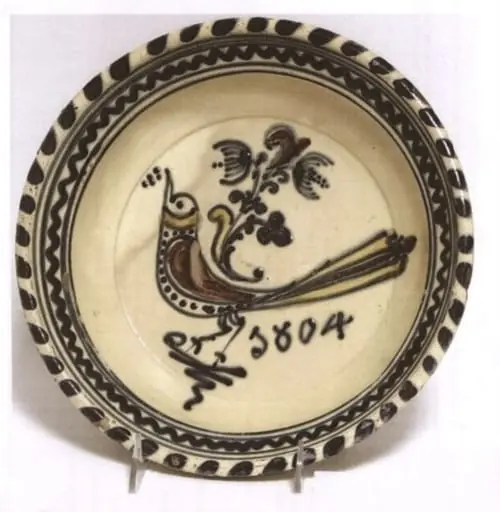
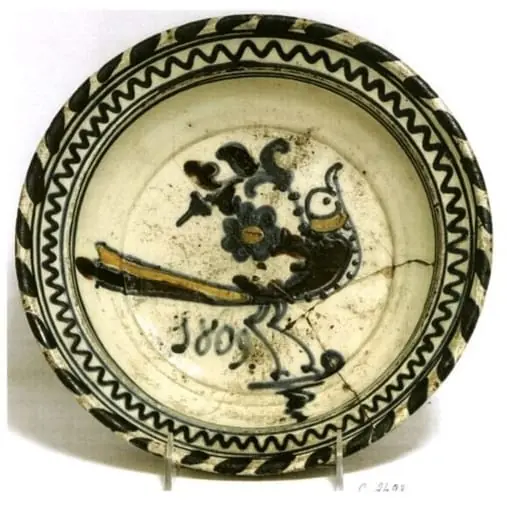
farfurie is a print by the Romanticist artist Unknown. It dates from 1801 and is held in the collection of the Romanian Peasant Museum. The object is a circular ceramic plate dated 1801, featuring a stylized bird perched on a branch.
About this work
This round plate shows a bird with a long neck and tail feathers, perched on a branch with yellow leaves and purple flowers.
This round plate shows a bird with a long neck and tail feathers, perched on a branch with yellow leaves and purple flowers. The bird faces left, and its feathers are painted in dark browns and blacks. A curved branch with a few leaves extends from the bird’s beak, and the whole scene sits inside a thick black border.
The year "1801" is written on the plate, suggesting it was made that year. The colors are simple but bright, with a focus on nature.
Next, look up Romanticism to see how this style used nature in art.
Overview
The object is a circular ceramic plate dated 1801, featuring a stylized bird perched on a branch. The bird, rendered in dark brown and black tones, faces left and displays an elongated neck and tail feathers. Surrounding the bird are yellow leaves and purple blossoms, all framed by a thick black border that defines the composition.
Subject & Meaning
The central motif depicts a solitary bird in a natural setting, emphasizing the relationship between fauna and flora. The use of vivid leaf and flower colors against the bird’s muted palette suggests a focus on the vitality of nature, a theme commonly explored in early nineteenth‑century visual culture.
Technique & Style
The plate’s decoration employs painted enamel on a glazed surface, with broad, flat areas of color and minimal shading. The composition’s simplified forms and bold outlines align with decorative trends of the period, while the contrast between dark bird feathers and bright botanical elements creates visual balance within the limited palette.
History & Provenance
Inscribed with the year 1801, the plate likely originates from a European workshop active during the early Romantic era. No specific maker’s mark is recorded, and the object appears to have been intended for domestic display rather than ceremonial use, reflecting the period’s interest in nature-themed decorative arts.
Context
The early nineteenth century saw a growing fascination with natural subjects, influenced by Romanticism’s emphasis on emotion and the sublime in the natural world. Decorative objects such as this plate incorporated botanical and zoological motifs to bring elements of the outdoors into everyday interiors, mirroring contemporary artistic currents.
Artist & collection

 Domestic Scene
 Giacomo and Cardinal Marco, investing Andrea, Abbot of San Zeno, with his Benefice
 The Nymph of Fontainebleau
 Portrait of a Woman
 Madonna and Child with Saints in the Enclosed Garden
 Venus and Minerva
 Family Group of Four on Sofa
 Wall painting from Room H of the Villa of P. Fannius Synistor at Boscoreale