Artwork
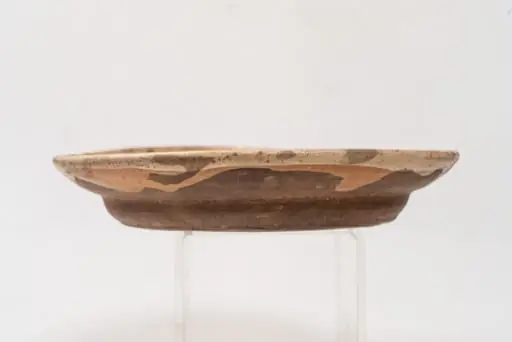
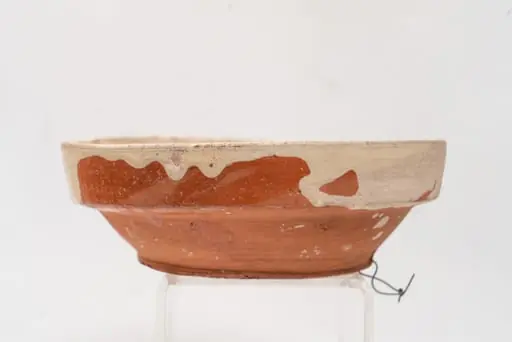
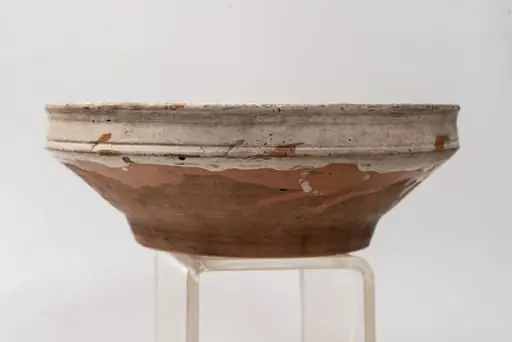
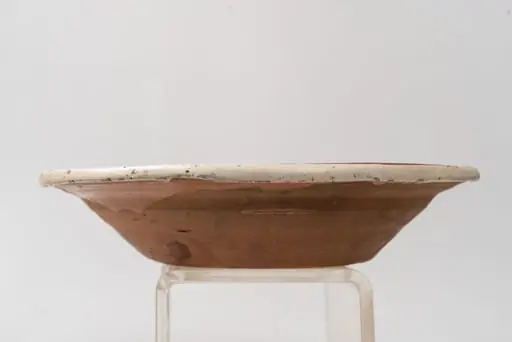
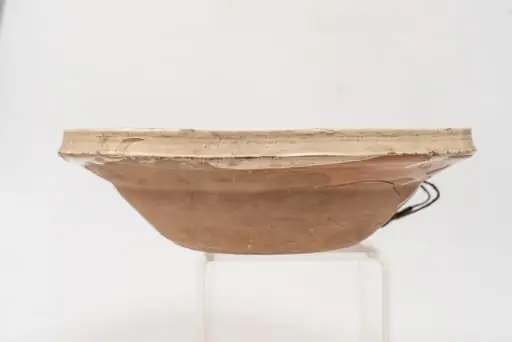
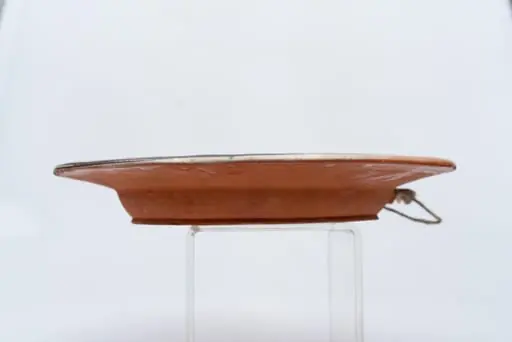
Farfurie adâncă, cu corp tronconic și buza mai îngustă și evazată; este acoperită pe fața interioară cu un strat de abgobă albă, peste care este pictat decorul format din pete neregulate de culoare maro și verde, realizate prin stropire cu pensula. Suprafața ornamentată a farfuriei este acoperită cu un strat de smalț transparent. Cromatica: alb, verde, maro.
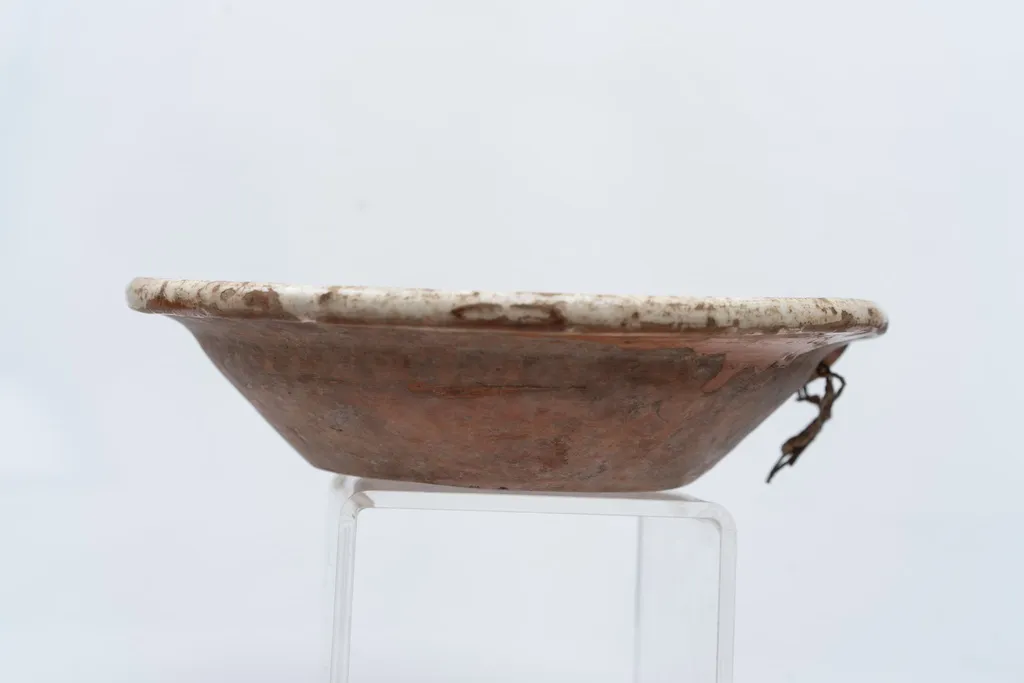
Farfurie adâncă, cu corp tronconic și buza mai îngustă și evazată; este acoperită pe fața interioară cu un strat de abgobă albă, peste care este pictat decorul format din pete neregulate de culoare maro și verde, realizate prin stropire cu pensula. Suprafața ornamentată a farfuriei este acoperită cu un strat de smalț transparent. Cromatica: alb, verde, maro. is a photography by Unknown. It dates from 1850 and is held in the collection of the Ethnographical Museum of Transylvania. This ceramic dish features a conical body with a narrow, flared rim, crafted from coarse clay and fired to a reddish-brown hue.
About this work
Overview
This ceramic dish features a conical body with a narrow, flared rim, crafted from coarse clay and fired to a reddish-brown hue. Its interior is coated with a thin white slip, over which irregular splashes of brown and green pigment were applied by brushing and dripping. A clear glaze seals the surface, preserving the pigment while allowing the texture of the clay to remain visible.
Subject & Meaning
The decoration lacks figurative elements, consisting instead of spontaneous, unstructured stains. This suggests an emphasis on materiality and process rather than symbolic representation. The irregular patterning may reflect a functional or ritual use where aesthetic unpredictability was valued, possibly tied to everyday or communal practices rather than elite artistic conventions.
Technique & Style
The absence of outlines or deliberate composition points to a handcrafted, intuitive approach, contrasting with later, more controlled decorative traditions.
The decoration was executed through direct application—pigment was likely dripped or flicked from a brush onto the wet slip, creating organic, uncontrolled marks. The use of slip and transparent glaze indicates familiarity with basic ceramic finishing methods. The absence of outlines or deliberate composition points to a handcrafted, intuitive approach, contrasting with later, more controlled decorative traditions.
History & Provenance
The object’s worn surface, with chipping and fading, suggests prolonged use or burial. Its simple form and unrefined decoration align with regional pottery traditions from the late antiquity or early medieval period in Southeastern Europe. No documented provenance exists, but similar fragments have been found in rural settlement contexts across the Balkans.
Context
This piece belongs to a broader category of utilitarian ceramics produced outside urban workshops, where decoration was secondary to function. The use of locally sourced clay and limited pigments reflects resource constraints and a lack of access to specialized kilns or imported materials. Such vessels were likely used for storage or serving in domestic or agrarian settings.
Legacy
Though not part of a known artistic lineage, the piece exemplifies pre-industrial ceramic practices where imperfection was inherent and accepted. Its aesthetic, defined by chance and material response, anticipates later modernist interests in rawness and process. It remains a quiet testament to the quiet creativity of anonymous craft traditions.
Artist & collection
Museum
Ethnographical Museum of Transylvania
Continue through works from the same source collection.
 Domestic Scene
 Giacomo and Cardinal Marco, investing Andrea, Abbot of San Zeno, with his Benefice
 The Nymph of Fontainebleau
 Portrait of a Woman
 Madonna and Child with Saints in the Enclosed Garden
 Venus and Minerva
 Family Group of Four on Sofa
 Wall painting from Room H of the Villa of P. Fannius Synistor at Boscoreale
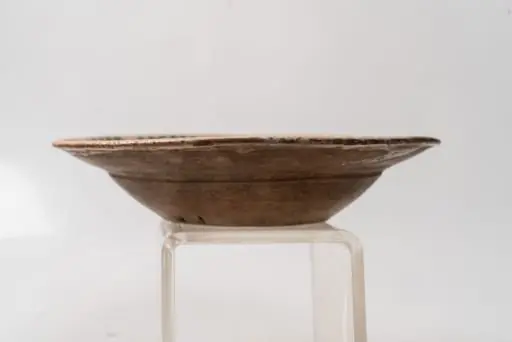 Farfurie adâncă, cu corp tronconic ușor rotunjit și buză evazată; piesa este modelată din lut la roata olarului și angobată pe interior cu humă albă. Decorul este realizat prin pictare cu cornul și se compune din motive geometrice și florale geometrizate (registrul decorativ central de pe fundul farfuriei conține o floare cu petale conturate cu câte patru linii paralele de culori diferite și cu mijlocul umplut cu linii hașurate; buza farfuriei este decorată cu grupuri de linii ondulate paralele. Cromatica: alb cu halouri maro, verde, galben-ocru, maro, gri. Fața ornamentată a farfuriei este acoperită cu un strat de smalț transparent.
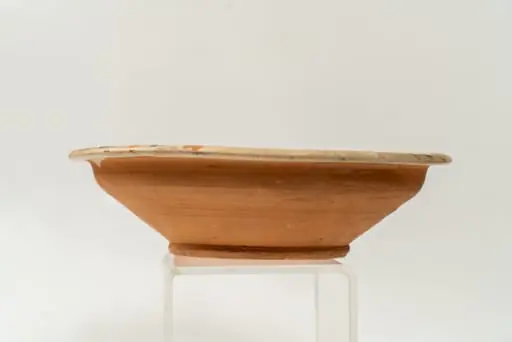 Farfurie adâncă, de formă tronconică, cu buză îngustă, răsfrântă. Piesa este modelată la roata olarului, angobată cu humă albă pe fața interioară. Decorul este unul simplu, realizat prin pictare cu pensula și constă într-un motiv floral (floare cu frunze) dispus central, pe fundul farfuriei și un decor geometric, pe buza acesteia (trei grupuri de câte șapte linii groase, paralele, de culoare verde și siena naturală). Cromatica: alb, verde, siena naturală. Farfuria este smălțuită pe fața ornamentată cu un strat de smalț transparent.
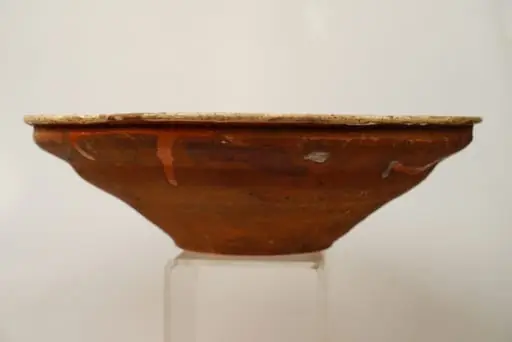
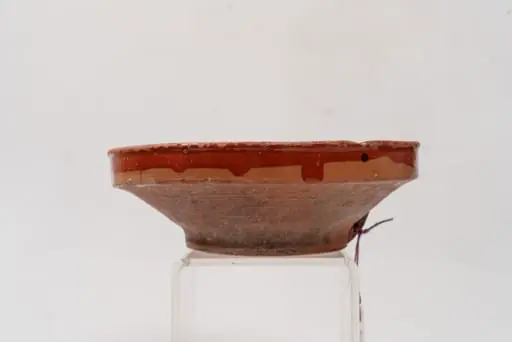 Farfurie adâncă, de tip castron, cu corp tronconic și buză dreaptă; farfuria nu este angobată. Decorul este compus din pete neregulate de culoare albă, realizate prin stropire pe suprafața interioară a farfuriei. Cromatica: alb, pe fondul roșu-închis al lutului ars. Suprafața ornamentată a farfuriei este acoperită cu un strat de smalț transparent.
 Farfurie semi-adâncă, cu fund larg, buză evazată și muchia buzei ușor ridicată. Piesa este angobată pe fața interioară cu un strat de humă albă, peste care este realizat prin sgrafitare și prin pictare cu pensula decorul format din motive vegetale stilizate: o tulpină cu frunze și elemente vegetale de culoare verde și maro, regăsite pe fundul farfuriei. Buza acesteia este decorată cu un șir de linii ovale sgrafitate, umplute cu culoare (verde și maro). Suprafața ornamentată este acoperită cu un strat de smalț transparent. Cromatica: alb, maro, verde.
 Farfurie adâncă de tip castron, cu corp tronconic și buză dreaptă verticală. Piesa este angobată pe suprafața interioară și parțial pe exteriorul buzei cu un strat de humă albă. Decorul este realizat prin pictare cu cornul și cu pensula cu motive geometrice (un cerc central pe fundul farfuriei și o linie circulară ce marchează partea inferioară a buzei, ambele de culoare maro-închis) și vegetale (trei flori cu petale de culoare roșu-cărămiziu, cu tulpină maro-închis și frunze verzi, dispuse pe peretele farfuriei). Suprafața ornamentată a farfuriei este acoperită cu un strat de smalț transparent. Cromatica: alb, verde, maro-închis, roșu-cărămiziu.
 Farfurie adâncă de tip castron, cu corp tronconic și buză verticală cu o ușoară concavitate pe exterior; piesa este modelată din lut la roata olarului și angobată cu humă albă pe fața interioară și pe exterior pe suprafața buzei. Decorul este realizat prin pictare cu cornul și cu pensula și se compune din motive florale geometrizate, realizate cu decor maro și umplute cu pigmeți verde și galben (un buchet cu trei flori cu petale alungite și frunze, dispus central pe fundul vasului), două grupuri de motive sugerând motive vegetale, așezate diametral opus pe peretele farfuriei și intercalate de alte două grupuri de motive formate de linii paralele umplute cu puncte colorate. Câteva linii subțiri de culoare maro, dispuse sub formă de cerc, completează decorul. Cromatica: alb, verde, galben, maro. Farfuria este acoperită pe fața ornamentată și pe exterior, pe suprafața buzei, cu un strat de smalț transparent.
 Farfurie adâncă de tip castron, cu corp tronconic și buză verticală îngustă, cu muchia buzei răsfrântă; este acoperită pe suprafața interioară cu un strat de angobă albă peste care este pictat cu cornul decorul monocromatic format din motive geometrice și florale, dispuse pe întreaga suprafață a farfuriei: tulpină cu trei flori (cea centrală de crin, cele două laterale de lalea), dispuse central pe fundul farfuriei; cinci flori cu petale rotunde și centrul format din linii hașurate intersectat; linii circulare simple, ondulate, sub formă de zigzag; spirale mici; motive formate din linii paralele crescătoare și descrescătoare dispuse sub formă de triunghi; grupuri de linii hașurate intersectat. Suprafața ornamentată a farfuriei este acoperită cu un strat de smalț transparent. Cromatica: alb, albastru.
 Farfurie adâncă, cu buza răsfrântă; piesa este modelată din lut la roata olarului și angobată cu humă albă pe fața interioară. Decorul este realizat prin pictare cu cornul și constă în motive geometrice (linii hașurate, puncte, linii circulare, linii dispuse sub formă de raze, linii în V). Cromatica: alb, albastru, verde, siena arsă. Fața ornamentată a farfuriei este acoperită cu un strat de smalț transparent.
 Farfurie adâncă de tip castron, cu corp tronconic, buză evazată și muchia buzei verticală. Piesa este acoperită pe fața interioară și pe exteriorul buzei cu un strat de angobă albă peste care este pictat cu pensula și cu cornul decorul format din motive florale și fitomorfe stilizate: zona centrală a farfuriei este decorată cu o floare cu petale alungite de culoare albastră, mijloc marcat printr-un punct maro, frunze verzi și elemente vegetale de culoare maro-închis. Buza este decorată cu cinci flori de culoare maro cu frunze, aproximativ identice, înscrise între două linii circulare de culoare maro. Suprafața ornamentată a farfuriei este acoperită cu un strat de smalț transparent. Cromatica: alb, maro, verde, albastru, maro-închis.
 Farfurie semi-adâncă, cu buza dreaptă evazată; este acoperită pe fața interioară cu un strat de angobă albă. Decorul este pictat cu cornul și cu pensula și este format din motive geometrice și figurative stilizate: central pe fundul farfuriei sunt reprezentate, cu contur de culoare maro-închis și în manieră naivă, o siluetă umană (bărbat, purtând pălărie și cizme maro), în stânga căreia se află un animal (greu de identificat cu exactitate, posibil pasăre) iar în dreapta o masă cu două obiecte pe ea. Buza farfuriei este decorată cu o dungă de culoare maro-roșcat, mărginită de câte o linie de culoare maro-închis, peste care s-au pictat puncte maro. Suprafața ornamentată a farfuriei este acoperită cu un strat de smalț transparent. Cromatica: alb, maro-roșcat, maro-închis, verde.