Museum
Ethnographical Museum of Transylvania
Ethnographical Museum of Transylvania is a museum.
About Ethnographical Museum of Transylvania
Founding & Early History
The Ethnographic Museum of Transylvania was established on June 16, 1922, marking the beginning of its over century-long operation. The initiative for its creation led to the first research campaigns in 1922-1923, which resulted in the acquisition of 1,230 objects and 160 photographs. These initial ethnographic materials formed the foundation for the first permanent exhibition, which opened in the spring of 1923. Until 1925, the museum operated provisionally in the building of the former Reduta, before moving to other locations until 1957.
Institutional Evolution & Locations
Until 1957, the museum was housed in various locations around the city of Cluj-Napoca. Preparations for the current building began in 1957, following a period where the institution functioned in the Reduta building between 1935 and 1957, with an interruption during the years 1940-1945. The Reduta building, which now houses the pavilion section, takes its name from the main hall, a French term for a dance hall that historically hosted significant political and cultural events in Transylvania.
The Romulus Vuia Open-Air Park
The National Ethnographic Park 'Romulus Vuia' serves as the open-air section of the museum and was founded on June 1, 1929, as the first open-air museum in Romania. It was established as a section of the museum by a decision of the Ministry of Culture and Arts and officially acknowledged by law in 1932. The park was founded by ethnologist Romulus Vuia, who chose an organizational model where rural farmsteads were inhabited by peasants engaged in traditional economic activities. The initial surface area of the park was 75 hectares.
Collection & Holdings
The museum possesses a collection of more than 50,000 objects that reflect the occupations, habits, and lifestyle of the Transylvanian rural population. In addition to physical artifacts, the institution maintains a collection of approximately 50,000 photographs and 5,000 diapositives. The library houses some 12,000 scholarly journals and specialized magazines. Over its history, the museum has gathered tens of thousands of artifacts, some displayed in permanent exhibitions and others shown during temporary events.
Exhibition Themes & Accessibility
The current permanent exhibition is entitled 'Folk culture in Transylvania - 18th – 20th centuries' and covers various aspects of life including birth, childhood, youth, and the life cycle events such as weddings and funerals. The exhibition also features traditional harvest wreaths, Jewish cult pieces, and elements related to seasonal celebrations like Christmas, Easter, and Sângiorzul. To ensure accessibility, the museum includes podotactile bands for the blind and a permanent tactile exhibition titled 'Touch and Understand – the Tactile Message of the Traditional Peasant Objects,' created in 2009.
Park Sectors & Architectural Features
The National Ethnographic Park is divided into two main sectors: the technical installations sector and the farmsteads sector. The technical sector includes workshops and installations from the 18th to 20th centuries illustrating traditional techniques for working wood, iron, gold, wool, clay, stone, cereals, and olive oil. The farmsteads sector contains traditional peasant houses from the 17th to 20th centuries, representative of distinct ethnographic areas of Transylvania, equipped with household inventory. The park also features three traditional churches that serve as monuments of folk architecture.
What to see at Ethnographical Museum of Transylvania
Start with Icoana îi reprezintă pe Sfinții Împărați Constantin și Elena, pictați frontal, în picioare, ținând împreună în mână Crucea Răstignirii, ce domină central compoziția. Împărăteasa Elena ține în mâna stângă o ramură, îar împăratul Constantin are în mâna dreaptă un sceptru. Fondul icoanei e pictat integral doar în partea superioară unde apar în colțuri două ornamente din registrul vegetal, în rest e pictat cu laviuri colorate și decorat cu flori realizate din puncte, fiind vizibil fondul din hârtie argintată. Cromatica icoanei se compune din tonuri de roșu, alb, albastru, maro și gri. Rama icoanei e profilată, bicromă (latura interioară roșie, iar cea exterioară verde, decorată cu motive florale și geometrice) și e formată din îmbinarea a patru baghete de lemn. Sticla are un fragment lipsă, de mici dimensiuni, în partea stângă-sus. by 1850.
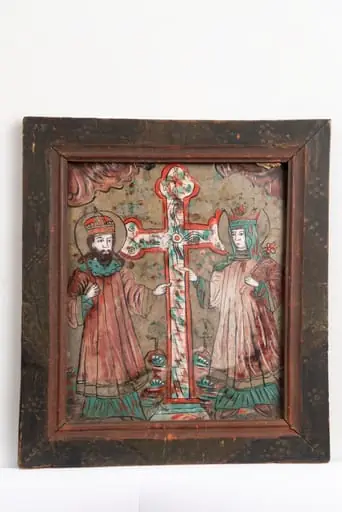 Icoana îi reprezintă pe Sfinții Împărați Constantin și Elena, pictați frontal, în picioare, ținând împreună în mână Crucea Răstignirii, ce domină central compoziția. Împărăteasa Elena ține în mâna stângă o ramură, îar împăratul Constantin are în mâna dreaptă un sceptru. Fondul icoanei e pictat integral doar în partea superioară unde apar în colțuri două ornamente din registrul vegetal, în rest e pictat cu laviuri colorate și decorat cu flori realizate din puncte, fiind vizibil fondul din hârtie argintată. Cromatica icoanei se compune din tonuri de roșu, alb, albastru, maro și gri. Rama icoanei e profilată, bicromă (latura interioară roșie, iar cea exterioară verde, decorată cu motive florale și geometrice) și e formată din îmbinarea a patru baghete de lemn. Sticla are un fragment lipsă, de mici dimensiuni, în partea stângă-sus.
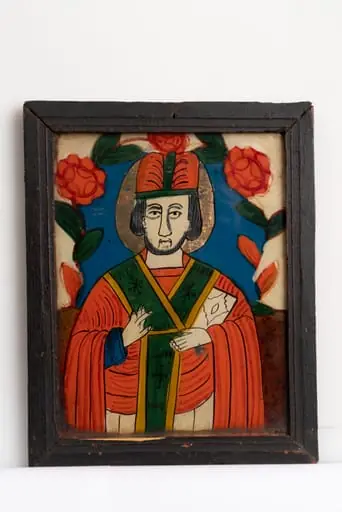 Sfinții Apostoli Petru și Pavel sunt reprezentați frontal, în picioare. În stânga compoziției e pictat sfântul Apostol Petru, ținând cheia raiului în mâna dreaptă, în timp ce mâna stângă o ține la piept. Sfântul Apostol Pavel, pictat în dreapta scenei, are în mâna stângă o sabie, simbolizând probabil "sabia duhului", iar mâna dreaptă o ține la piept. Între cei doi sfinți apare pictat un ornament cu rujel. Cromatica se compune din tonuri de roșu vermillon, verde, albastru, ocru galben, gri, maro și foiță aurie. Rama icoanei e profilată, băițuită, și e formată din îmbinarea a patru baghete de lemn.
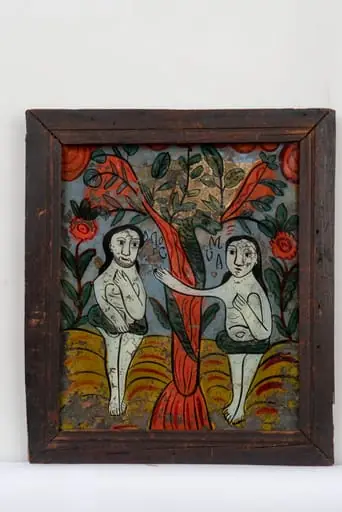 În stânga și-n dreapta pomului cunoștinței binelui și răului sunt reprezentați în picioare Adam și Eva. Scena imortalizează momentul în care Eva îi întinde mărul lui Adam. Șarpele, care e pictat încolăcit în jurul pomului, are capul îndreptat către urechea Evei, ispitind-o . Adam are mână stângă la gât, evidențiind locul unde s-a oprit înghițitura neascultării. Icoana e ornată pe margini cu ruje. Cromatica se compune din tonuri de roșu vermillon, verde, albastru, ocru galben, gri și negru. Rama icoanei e profilată, băițuită, și e formată din îmbinarea a patru baghete de lemn.
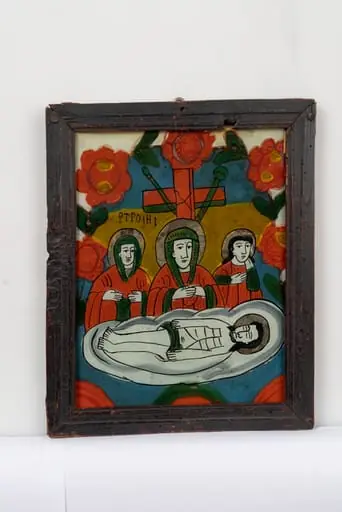 Tema icoanei face parte din ciclul Patimilor Mântuitorului și înfățișează Prohodul Domnului. Alături de Hristos așezat pe piatră sunt reprezentate doar trei personaje. Maica Domnului, în centru, cu mâinile împreunate la piept, are de-o parte un apostol, iar de cealaltă parte una dintre femeile mironosițe, probabil Maria Magdalena. În spate se profilează crucea lui Hristos și însemnele patimilor - sulița și buretele. Un șirag de rozete ornamentează fondul icoanei. Cromatica icoanei se compune din tonuri de roșu vermillon, ocru galben, alb, verde, albastru, negru și gri. Rama icoanei e profilată, băițuită și e formată din îmbinarea a patru baghete de lemn.
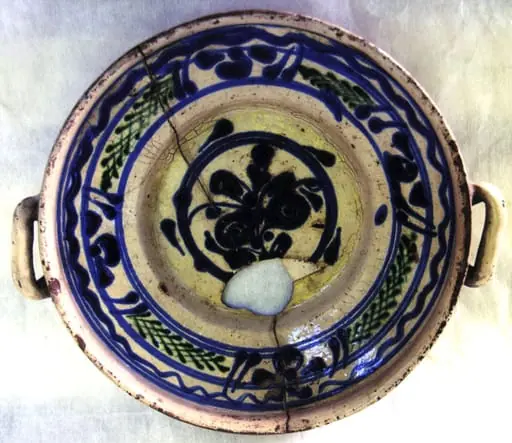 Blid cu toarte
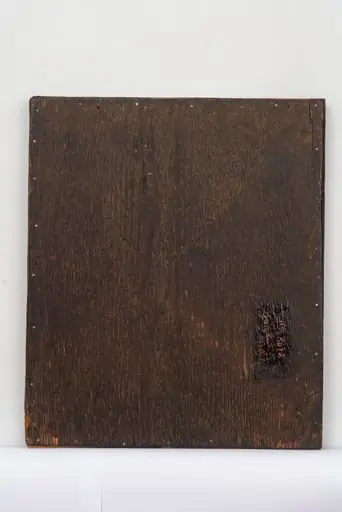 Tema icoanei face parte din ciclul Pascal și înfățișează Pogorârea la Iad a Domnului. În plan central apare reprezentat biruitor Iisus Hristos, ținând în mâna stângă un steag cu cruce, iar cu dreapta îl prinde pe Adam. În dreapta lui Hristos e pictat sfântul Ioan Botezătorul, arătând cu mâna dreaptă spre Mântuitorul. Compoziția e încadrată în partea superioară cu un brâu ornat cu motivul torsadei. Cromatica icoanei se compune din tonuri de roșu vermillon, alb, verde, albastru, maro și gri. Rama icoanei e profilată, băițuită și e formată din îmbinarea a patru baghete de lemn. Sticla este spartă, iar din suport lipsește colțul din stânga-sus și colțul din dreapta-jos.