Artwork
Farfurie de formă semi-adâncă, cu fund larg și buză evazată; este angobată pe fața interioară cu un strat de humă albă, peste care este pictat cu pensula și cu cornul decorul format din motive florale stilizate și din motive geometrice: registrul central de pe fundul farfuriei conține o linie spiralată de culoare maro pe exteriorul căreia sunt pictate opt flori de lalea cu petale în culorile albastru, galben, maro. Buza este decorată cu un șir de linii drepte de culoare verde și albastră. Muchia buzei este marcată cu o dungă albastră și o linie circulară maro, subțire iar bordura interioară a farfuriei este decorată cu trei linii circulare de culoare maro. Cromatica: alb, albastru, verde, galben, maro. Farfuria este acoperită pe fața ornamentată cu un strat de smalț transparent.
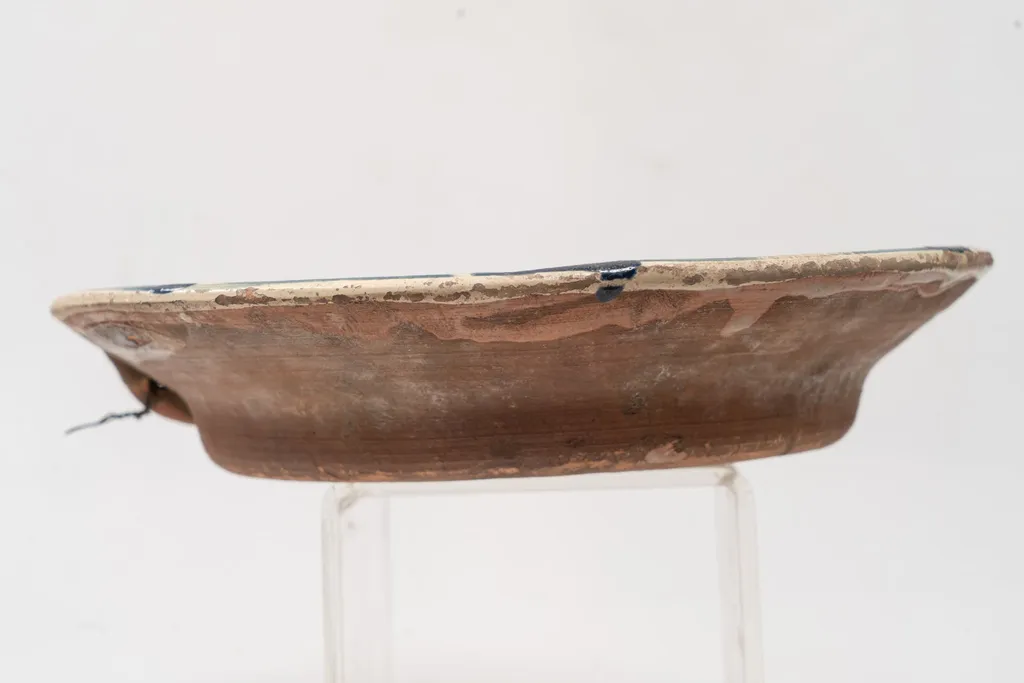
Farfurie de formă semi-adâncă, cu fund larg și buză evazată; este angobată pe fața interioară cu un strat de humă albă, peste care este pictat cu pensula și cu cornul decorul format din motive florale stilizate și din motive geometrice: registrul central de pe fundul farfuriei conține o linie spiralată de culoare maro pe exteriorul căreia sunt pictate opt flori de lalea cu petale în culorile albastru, galben, maro. Buza este decorată cu un șir de linii drepte de culoare verde și albastră. Muchia buzei este marcată cu o dungă albastră și o linie circulară maro, subțire iar bordura interioară a farfuriei este decorată cu trei linii circulare de culoare maro. Cromatica: alb, albastru, verde, galben, maro. Farfuria este acoperită pe fața ornamentată cu un strat de smalț transparent. is a print by Unknown. It dates from 1850 and is held in the collection of the Ethnographical Museum of Transylvania. This shallow ceramic dish features a broad base and a flared rim, crafted from coarse clay and coated internally with a faded white slip.
About this work
Overview
This shallow ceramic dish features a broad base and a flared rim, crafted from coarse clay and coated internally with a faded white slip. A transparent glaze covers the painted surface, preserving traces of pigment despite significant wear. Decorative elements are applied with a brush and possibly a hollow bone tool, suggesting handcrafted precision within a utilitarian tradition.
Subject & Meaning
The central motif consists of a brown spiral encircled by eight stylized tulip flowers rendered in blue, yellow, and brown.
The central motif consists of a brown spiral encircled by eight stylized tulip flowers rendered in blue, yellow, and brown. These floral forms, arranged symmetrically, are paired with geometric lines along the rim and inner border. The repetition of spirals and floral patterns may reflect symbolic associations with growth, cycles, or natural order, common in regional ceramic traditions of the period.
Technique & Style
Pigments were applied directly onto the white slip using fine brushes and possibly a hollowed bone for crisp linear details. The palette—white, muted blue, green, yellow, and brown—was limited but deliberately coordinated. The spiral and concentric bands demonstrate a methodical approach to spatial organization, with decoration confined to specific zones: center, rim, and inner edge, each serving a distinct visual function.
History & Provenance
The object originates from a cultural context where ceramic vessels were both functional and symbolically charged. Its wear patterns and faded pigments indicate prolonged use or exposure. While exact provenance is unverified, comparable pieces are documented in the collection of the Museum of Ethnography, suggesting regional production and shared decorative conventions across nearby communities.
Context
This dish aligns with ceramic traditions in which domestic ware was adorned with abstracted natural forms, often derived from local flora and ancestral motifs. The use of geometric borders and radial symmetry reflects a broader aesthetic shared among rural potters in the region, where decoration served not only ornamental but also cultural and possibly ritual purposes, embedded in everyday life.
Legacy
Though not signed or dated, the vessel contributes to an understanding of pre-modern craft practices in which artistry was integrated into utilitarian objects. Its preservation offers insight into the technical skills and symbolic language of communities that prioritized functional beauty. Similar pieces continue to inform ethnographic studies of material culture in Eastern Europe.
Artist & collection
Museum
Ethnographical Museum of Transylvania
Continue through works from the same source collection.
 Domestic Scene
 Giacomo and Cardinal Marco, investing Andrea, Abbot of San Zeno, with his Benefice
 The Nymph of Fontainebleau
 Portrait of a Woman
 Madonna and Child with Saints in the Enclosed Garden
 Venus and Minerva
 Family Group of Four on Sofa
 Wall painting from Room H of the Villa of P. Fannius Synistor at Boscoreale
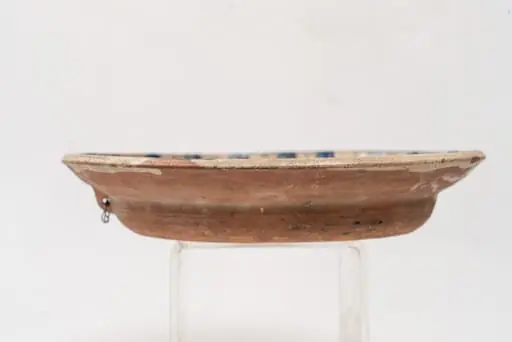 Farfurie de formă semi-adâncă, cu fund larg și buză răsfrântă; este angobată pe fața interioară cu un strat de humă albă, peste care este pictat cu cornul și cu pensula decorul monocromatic, format din motive florale și fitomorfe stilizate și din motive geometrice: registrul central de pe fundul farfuriei conține o linie spiralată ce are pe exterior, de o parte și de alta, câte un semicerc dublu decorat cu linii mici albastre și două motive vegetale. Buza este decorată cu un șir continuu de frunze duble între linii punctate. Muchia buzei este marcată cu o linie de culoare albastră iar bordura interioară a farfuriei cu două linii subțiri circulare. Cromatica: alb, albastru. Farfuria este acoperită pe fața ornamentată cu un strat de smalț transparent.
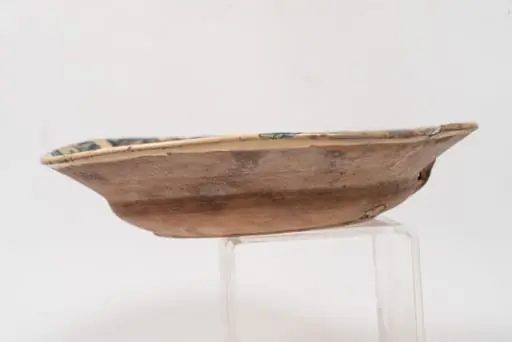 Farfurie semi-adâncă, cu buza dreaptă, evazată; este angobată pe suprafața interioară cu un strat de humă albă peste care este pictat cu cornul și cu pensula decorul format din motive geometrice și motive vegetale și florale stilizate: registrul central de pe fundul farfuriei cuprinde patru flori de lalea de culoare albastră, așezate în formă de cruce în colțurile unui romb ce conține în interior un motiv format din linii albastre hașurate intersectat, motiv ce se regăsește și între florile de lalea. Registrul marginal de pe buza farfuriei este format dintr-o succesiune alternantă a două motive decorative vegetale, de culoare verde și albastră (un motiv format din două vrejuri albastre în formă de inimă, ce închid în interior un grup de linii hașurate intersectat de culoare verde; al doilea motiv este format dintr-un grup de frunze ce conțin în mijloc o floare ovală, cu interiorul format din linii hașurate intersectat). Suprafața ornamentată a farfuriei este acoperită cu un strat de smalț transparent. Cromatica: alb, albastru, verde.
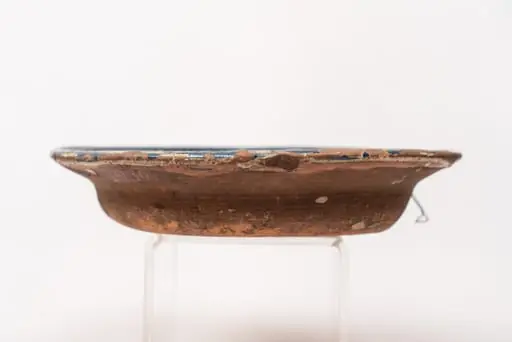 Farfurie semi-adâncă, cu buza răsfrântă; piesa este modelată la roata olarului și angobată cu humă albă pe fața interioară. Decorul monocromatic este realizat prin pictare cu cornul și cu pensula și se compune din motive florale și vegetale stilizate (o tulpină cu două flori de lalea și o floare centrală cu zece petale și frunze, pictate în zona centrală a farfuriei) și motive geometrice (grupuri de linii crescătoare și descrescătoare, șiruri de puncte, linii sub formă de spirală mică, linii hașurate). Câte o linie groasă albastră marchează muchia buzei și bordura interioară a farfuriei. Cromatica: alb, albastru. Fața ornamentată a farfuriei este acoperită cu un start de smalț transparent.
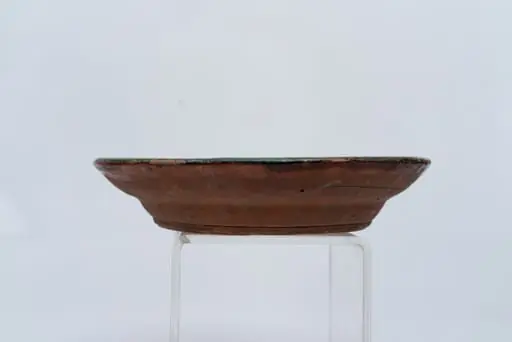 Farfurie adâncă, cu buză evazată; este angobată pe fața interioară cu un strat de angobă maro, peste care este pictat cu cornul, pensula și cu gaița decorul format din motive geometrice: central pe fundul farfuriei este pictată o linie spiralată rotundă de culoare albă; bordura interioară a farfuriei este decorată cu linii circulare concentrice de culoare albă trase cu gaița și cu puncte verzi, iar buza farfuriei cu o linie ondulată circulară și puncte groase de culoare albă. Muchia buzei este marcată cu o dungă verde. Suprafața ornamentată a farfuriei este acoperită cu un strat de smalț transparent. Cromatica: maro, alb, verde.
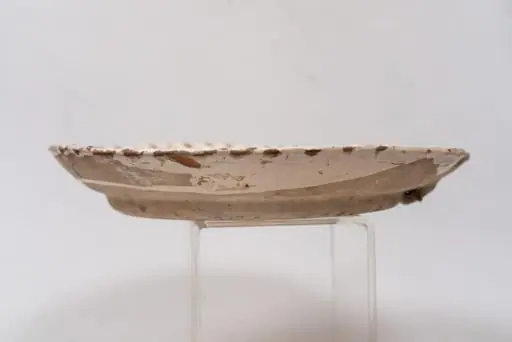 Farfurie de formă aplatizată, cu buza ușor concavă spre interior și muchia buzei ondulată; este acoperită pe ambele fețe cu un strat de angobă albă. Decorul este realizat prin pictare cu cornul și cu pensula cu motive florale și fitomorfe stilizate: central pe fundul farfuriei este pictată, cu contur subțire albastru, o tulpină cu două flori de culoare maro și frunze verzi, înscrisă în trei cercuri subțiri de culoare albastră. Buza farfuriei este decorată cu patru motive vegetale aproximativ identice (două frunze verzi ce au în mijloc un boboc de culoare maro), plasate diametral opus, în formă de cruce și separate de patru motive formate din puncte de culoare maro. Suprafața ornamentată a farfuriei este acoperită cu un strat de smalț transparent. Cromatica: alb, verde, albastru, maro.
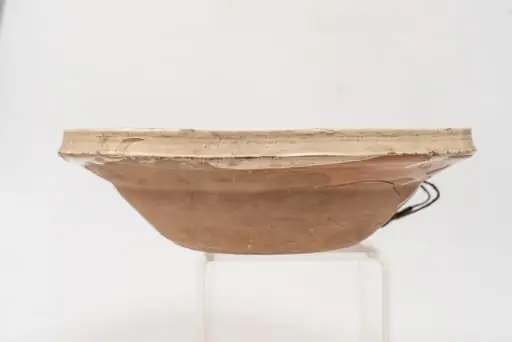 Farfurie adâncă de tip castron, cu corp tronconic, buză evazată și muchia buzei verticală. Piesa este acoperită pe fața interioară și pe exteriorul buzei cu un strat de angobă albă peste care este pictat cu pensula și cu cornul decorul format din motive florale și fitomorfe stilizate: zona centrală a farfuriei este decorată cu o floare cu petale alungite de culoare albastră, mijloc marcat printr-un punct maro, frunze verzi și elemente vegetale de culoare maro-închis. Buza este decorată cu cinci flori de culoare maro cu frunze, aproximativ identice, înscrise între două linii circulare de culoare maro. Suprafața ornamentată a farfuriei este acoperită cu un strat de smalț transparent. Cromatica: alb, maro, verde, albastru, maro-închis.
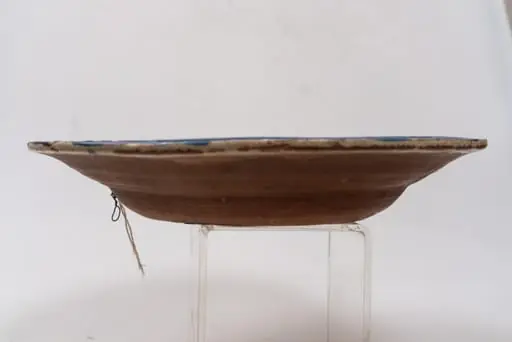 Farfurie de formă semi-adâncă, cu buză lată, evazată; este angobată pe fața interioară cu un strat de humă albă, peste care este pictat cu pensula, cu linii groase, decorul monocromatic, format din motive florale și fitomorfe stilizate: o tulpină cu trei flori de lalea și frunze, reprezentate central pe fundul farfuriei. Buza acesteia este decorată cu un șir de motive formate din linii spiralate aproximativ rotunde. Bordura interioară a farfuriei și muchia buzei sunt marcate cu câte o linie ușor ondulată. Cromatica: alb, albastru. Farfuria este acoperită pe fața decorată cu un strat de smalț transparent.