Artwork
Farfurie de formă tronconică adâncită, cu buza foarte înaltă și ușor ieșită în afară în partea exterioară. Este smălțuit interior și exterior (doar buza). Pe margine este decorat cu o linie, iar în centru cu motive fitomorfe și florale. Pe fund are marca ”Granitul No 10”; Cromatică: fond interior crem; fond exterior cărămiziu; motive: mov închis; verde; maro.
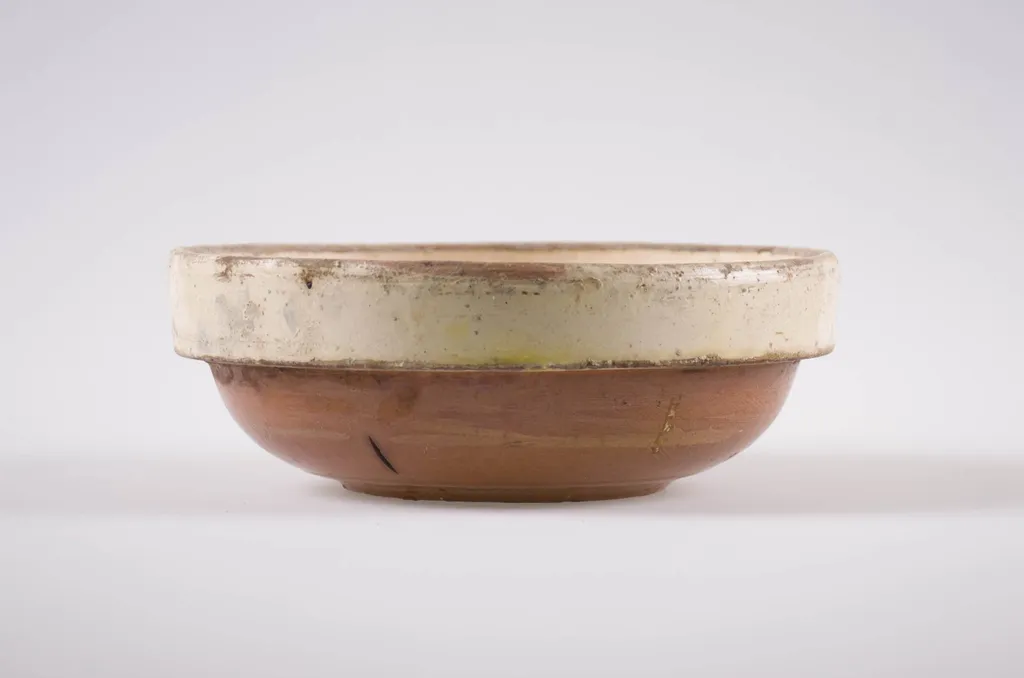
Farfurie de formă tronconică adâncită, cu buza foarte înaltă și ușor ieșită în afară în partea exterioară. Este smălțuit interior și exterior (doar buza). Pe margine este decorat cu o linie, iar în centru cu motive fitomorfe și florale. Pe fund are marca ”Granitul No 10”; Cromatică: fond interior crem; fond exterior cărămiziu; motive: mov închis; verde; maro. is a photography by Unknown. It dates from 1850 and is held in the collection of the ASTRA National Museum Complex. This ceramic vessel is a conical bowl with a tall, outward-flaring rim, hand-formed from coarse clay and fired to a durable finish.
About this work
Overview
This ceramic vessel is a conical bowl with a tall, outward-flaring rim, hand-formed from coarse clay and fired to a durable finish.
This ceramic vessel is a conical bowl with a tall, outward-flaring rim, hand-formed from coarse clay and fired to a durable finish. Both interior and exterior surfaces are glazed, though only the rim retains visible coloration. A single dark line encircles the upper edge, while the base bears a stamped mark: 'Granitul No 10.' Its form and decoration suggest utilitarian use, likely for storage or serving in a domestic setting.
Subject & Meaning
The bowl’s decoration features stylized floral and vegetal motifs centered on its interior, rendered in dark purple, green, and brown. These patterns, though simplified, reflect a tradition of embedding natural forms into everyday objects, possibly symbolizing abundance or seasonal cycles. The absence of figurative imagery points to a focus on organic rhythm rather than narrative, aligning with regional craft conventions that prioritize harmony with the environment.
Technique & Style
The vessel was wheel-thrown or hand-built from locally sourced clay, then coated in a slip glaze applied to both surfaces. The exterior glaze has faded to a brick-red hue, while the interior remains creamy. The rim’s pale yellowish-white glaze is worn, indicating frequent handling. Decorative lines and motifs were painted freehand with mineral pigments, showing slight irregularities typical of non-industrial production. The stamped 'Granitul No 10' suggests batch identification, possibly from a workshop or cooperative.
History & Provenance
The bowl originates from a Romanian ceramic tradition, likely produced in the early to mid-20th century. The 'Granitul No 10' mark corresponds to a known producer of utilitarian pottery in the region. It entered the collection of the Museum of Ethnography as part of a broader effort to document rural domestic life. Its condition—chipped rim, faded glaze—reflects years of practical use before being preserved as a cultural artifact.
Context
This bowl belongs to a category of everyday ceramics produced in Romanian villages during a period of limited industrialization. Similar vessels were used for storing food, liquids, or grains in households without access to mass-produced goods. Its modest decoration and sturdy form reflect functional priorities, while the glazing technique indicates regional knowledge of kiln control and mineral pigments. It stands alongside other items in the museum’s collection that illustrate self-sufficient domestic economies.
Legacy
As a representative of vernacular pottery, the bowl contributes to understanding pre-industrial material culture in Romania. Its preservation highlights efforts to document crafts that declined with urbanization and industrial manufacturing. Though unremarkable in form, its survival offers insight into the aesthetics and labor of everyday life, serving as a quiet testament to the skill embedded in utilitarian objects.
Artist & collection

 Domestic Scene
 Giacomo and Cardinal Marco, investing Andrea, Abbot of San Zeno, with his Benefice
 The Nymph of Fontainebleau
 Portrait of a Woman
 Madonna and Child with Saints in the Enclosed Garden
 Venus and Minerva
 Family Group of Four on Sofa
 Wall painting from Room H of the Villa of P. Fannius Synistor at Boscoreale
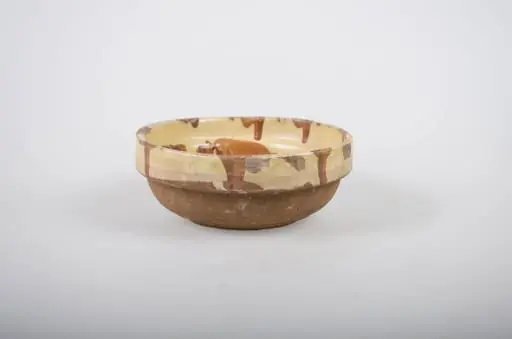 Recipientul are formă circulară, adâncită, tronconică, cu gura mai largă decât baza, având buza dreaptă și înaltă. Vasul este pictat atât pe fund cât și pe pereții interiori cu decorații neregulate (pete prelinse, valuri,etc.) Strachina este smălțuită doar la interior. Din punct de vedere al cromaticii se observă fondul galben pe care sunt realizate niște maro la interior și culoarea cărămiziu la exterior.
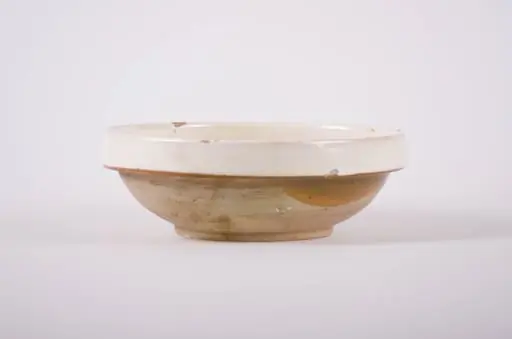 Vas de formă circulară, adâncit, cu gura foarte înaltă; pe fund are găuri pentru agățare. Este smălțuit la interior și exterior (buza). Este decorat cu motive geometrice: linie, linie ondulată; motive fitomorfe: frunze; motive florale. Cromatică: fond: alb; motive: maro; verde; albastru.
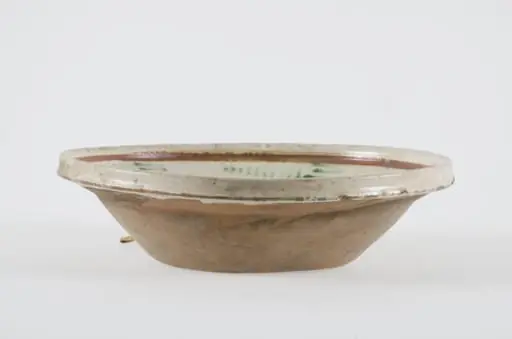 Blid de formă tronconică, adâncit, lucrat la roata rapidă și smălțuit la interior. Smalțul interior este alb iar pe exterior se identifică scurgeri de smalț alb și maroniu. Farfuria este decorată cu motive vegetale și florale stilizate dispuse în zona centrală a vasului dar și într-un registru geometric pe buza interioară a vasului. Cromatică: alb; motive: verde; maro.
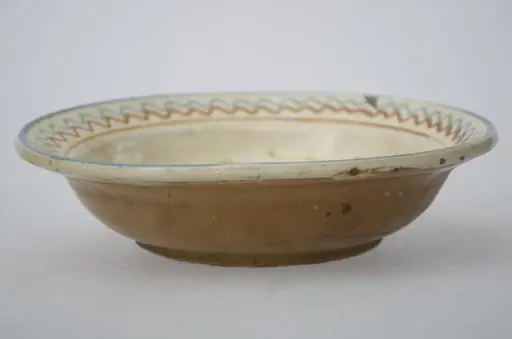 Farfurie de formă tronconică, mult adâncită cu marginile evazate. Smălțuită pe ambele fețe. Central decor floral cu "floarea soarelui" și "nu mă uita"; pe margine două cercuri ce încadrează două linii în val. Cromatică: fond: alb; motive: verde, albastru, bej, maro, brun, galben.
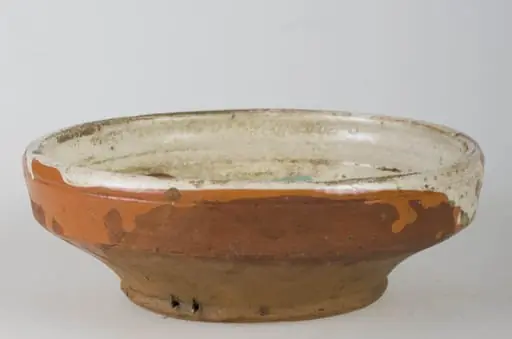 Blidul de formă tronconică este adânc, smălțuit la interior. Acesta este ornamentat cu motive florale, având cu buza înaltă. Totuși, este neornamentat la exterior, fiind smălțuit (la exterior) doar pe buză. Pe exteriorul buzei este incizată o linie. Fundul obiectului are formă circulară, fiind prevăzut cu două orificii pentru prindere. Cromatică: fond: cărămiziu (exterior); alb (interior); decor: verde; albastru; cărămiziu.
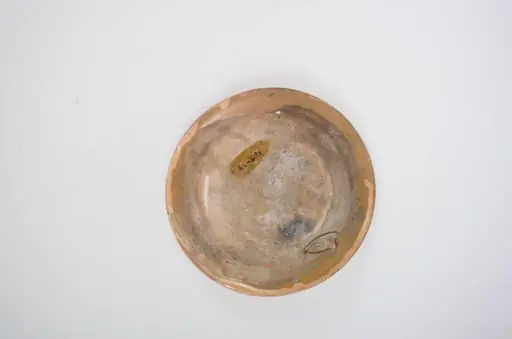 Blid de formă tronconică cu buza îngustă, smălțuit, cu decor floral stilizat amplasat pe fund și motive geometrice formate din două cercuri poziționate la baza buzei și perimetral, la partea interioară a fundului. Cromatică: fond: cărămiziu; decor: alb; verde; maro deschis.