Artwork
Farfurie semi-adâncă, cu buză răsfrântă; piesa este modelată la roata olarului și este angobată pe fața interioară cu humă albă. Decorul monocromatic este pictat cu pensula și se compune din motive decorative florale și vegetale stilizate (o floare de crin cu doi boboci și cu frunze, plasate central pe fundul farfuriei; buza farfuriei este acoperită cu un șir continuu de motive vegetale). Muchia buzei este marcată de o linie albastră iar bordura interioară a farfuriei de o linie vălurită. Cromatica: alb, albastru. Fața ornamentată a farfuriei este acoperită cu un strat de smalț transparent.
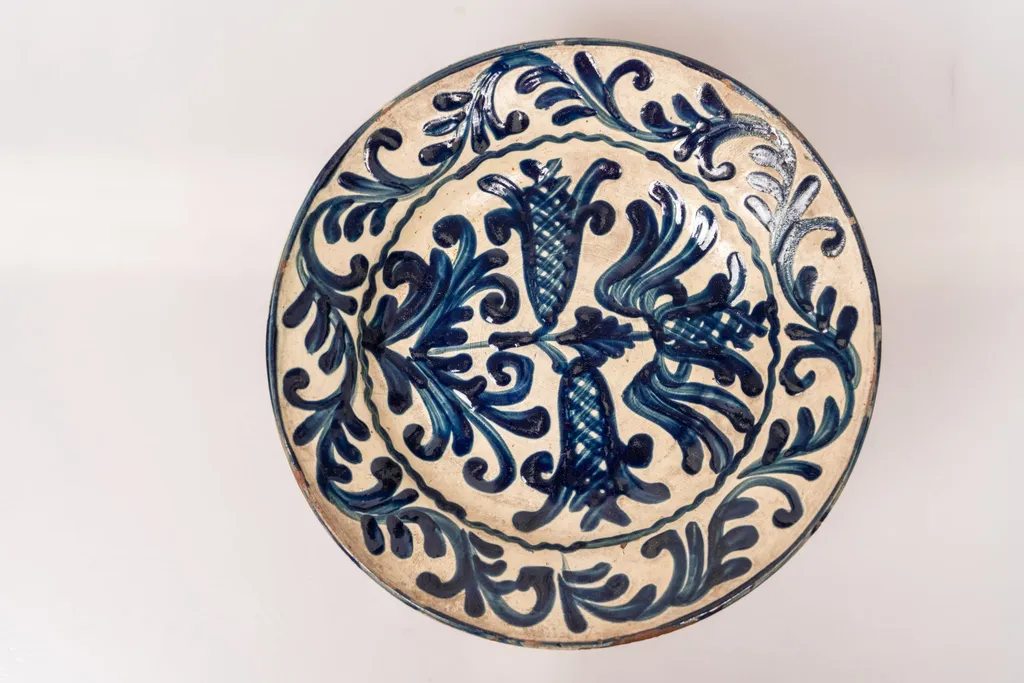
Farfurie semi-adâncă, cu buză răsfrântă; piesa este modelată la roata olarului și este angobată pe fața interioară cu humă albă. Decorul monocromatic este pictat cu pensula și se compune din motive decorative florale și vegetale stilizate (o floare de crin cu doi boboci și cu frunze, plasate central pe fundul farfuriei; buza farfuriei este acoperită cu un șir continuu de motive vegetale). Muchia buzei este marcată de o linie albastră iar bordura interioară a farfuriei de o linie vălurită. Cromatica: alb, albastru. Fața ornamentată a farfuriei este acoperită cu un strat de smalț transparent. is a print by Unknown. It dates from 1850 and is held in the collection of the Ethnographical Museum of Transylvania.
About this work
Overview
This shallow decorative plate features a raised rim and a flat interior, crafted on a potter's wheel and finished with a white slip on the inner surface. The glazed surface is covered by a transparent enamel, giving it a smooth, reflective sheen. The overall palette is limited to white and blue, creating a restrained yet striking visual effect.
Subject & Meaning
The central motif consists of a stylized lily with two buds and accompanying leaves, positioned prominently on the plate's base. Encircling the rim, a continuous band of vegetal designs extends around the edge, emphasizing the harmony between flora and functional form.
Technique & Style
The decorative elements were applied with brushwork, employing a monochrome scheme of blue pigments on a white background. A thin blue line delineates the rim, while a wavy inner border adds subtle movement. The use of a transparent glaze over the painted surface enhances the depth of the blue tones.
History & Provenance
The plate is part of the collection of the Museum of Ethnography, where it is displayed as an example of traditional ceramic decoration. Its origin and date of manufacture are not specified, but its stylistic attributes align with regional folk pottery traditions.
Context
Such plates were typically produced for everyday use as well as ceremonial occasions, reflecting a cultural emphasis on decorative simplicity. The blue‑and‑white palette echoes broader ceramic trends that spread across Europe and Asia, adapted here into local aesthetic conventions.
Artist & collection
Museum
Ethnographical Museum of Transylvania
Continue through works from the same source collection.
 Domestic Scene
 Giacomo and Cardinal Marco, investing Andrea, Abbot of San Zeno, with his Benefice
 The Nymph of Fontainebleau
 Portrait of a Woman
 Madonna and Child with Saints in the Enclosed Garden
 Venus and Minerva
 Family Group of Four on Sofa
 Wall painting from Room H of the Villa of P. Fannius Synistor at Boscoreale
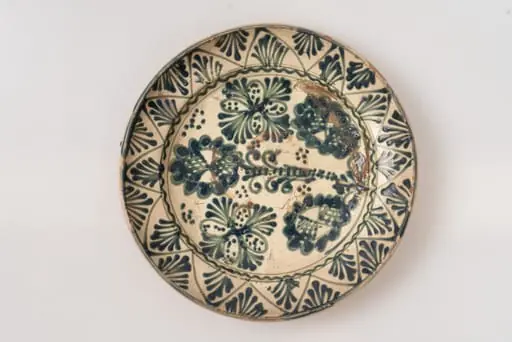 Farfurie de formă semi-adâncă, cu buză lată, răsfrântă; este angobată pe fața interioară cu un strat de humă albă, peste care este pictat cu cornul decorul monocromatic, format din motive florale și fitomorfe foarte stilizate (tulpină cu cinci flori și frunze, reprezentate pe centrul farfuriei) și geometrice (o linie în formă de zig-zag, pe toată lungimea buzei, completată cu motive formate din linii verticale, dispuse în formă de triunghi; linii circulare simple și linie circulară ondulată ce marchează bordura interioară a farfuriei; puncte, linii hașurate). Buza farfuriei este marcată cu o dungă de culoare albastră. Cromatica: alb, albastru. Farfuria este acoperită pe fața decorată cu un strat de smalț transparent.
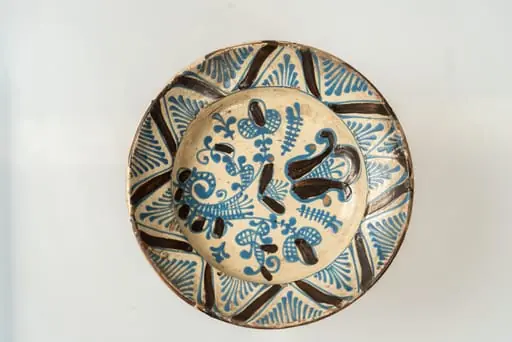 Farfurie adâncă, cu buză răsfrântă; piesa este modelată la roata olarului și este angobată cu humă albă pe fața interioară. Decorul este realizat prin pictare cu pensula și cu cornul și se compune din motive decorative florale stilizate (amplasate central, pe fundul farfuriei) și motive decorative geometrice, pe buza farfuriei (dungi de culoare maro, grupuri de linii paralele sub forma motivului de brăduț, linii hașurate). Cromatica: alb, maro, albastru. Fața farfuriei este acoperită cu un strat de smalț transparent.
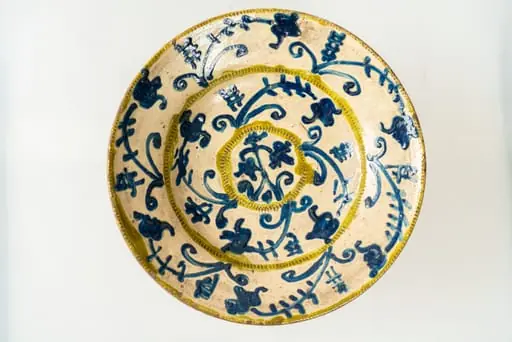 Farfurie mare, semi-adâncă, cu corp scund și buză lată, răsfrântă. Piesa este modelată la roata olarului, angobată cu humă albă pe fața interioară a acesteia. Decorul este realizat prin pictare cu pensula și cu cornul și constă în motive decorative florale și vegetale stilizate (flori și frunze), dispuse pe toată suprafața farfuriei, încadrate în trei registre separate de cercuri concentrice formate dintr-o linie verde și un șir continu de linii mici, paralele, incizate (cercuri localizate: central - pe fundul farfuriei; pe bordura interioară a buzei și pe muchia acesteia). Cromatica decorului: alb, albastru, verde. Farfuria este smălțuită pe interior, cu smalț transparent.
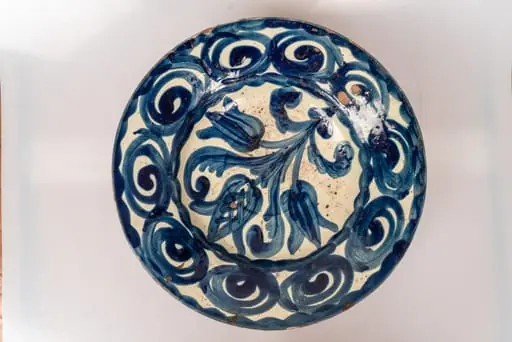 Farfurie mare, adâncă, cu buza răsfrântă; piesa este modelată la roata olarului și angobată pe fața interioară cu humă albă. Decorul monocromatic, este realizat prin pictare cu pensula, cu linii groase, și se compune din motive florale stilizate (trei flori de lalele cu frunze, dispuse central, pe fundul farfuriei) și motivul spiralei, ce acoperă întreaga suprafață a buzei, într-un șir continuu. Bordura interioară a farfuriei și muchia buzei sunt marcate de câte o linie vălurită. Pe fața ornamentată farfuria este acoperită cu un strat de smalț transparent. Cromatica: alb, albastru.
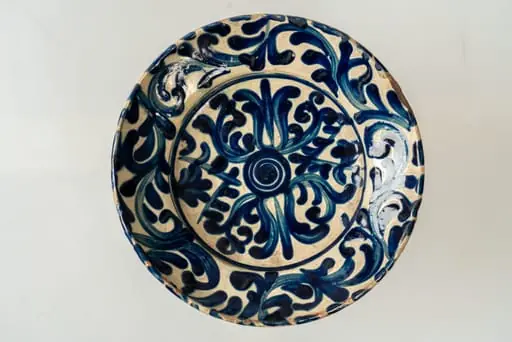 Farfurie semi-adâncă, cu corp scund și buză lată, răsfrântă. Piesa este modelată la roata olarului, angobată cu humă albă pe fața interioară a acesteia. Decorul este unul bogat, realizat prin pictare cu pensula, cu linii groase, și constă în motive decorative florale și vegetale stilizate (flori și frunze), dispuse pe toată suprafața farfuriei. Cromatica decorului: alb, albastru. Farfuria este smălțuită pe interior, cu smalț transparent.
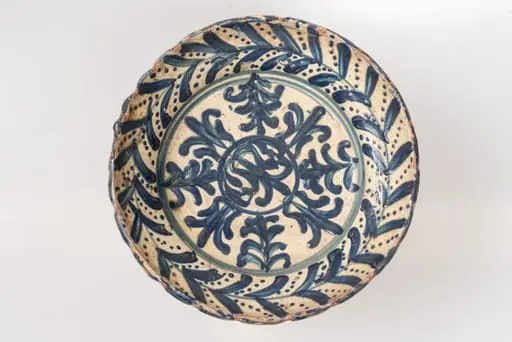 Farfurie de formă semi-adâncă, cu buză lată, evazată și muchia buzei ușor ondulată (mici alveole). Farfuria este angobată pe fața interioară cu un strat de humă albă, peste care este pictat cu cornul și cu pensula decorul monocromatic, format din motive florale și vegetale stilizate (o floare de lalea, înscrisă într-un cerc, pe exteriorul căruia se desfășoară un decor format din patru flori de lalea alternând cu patru brăduți - motive reprezentate central, pe fundul farfuriei, și un șir continuu de frunze duble între linii punctate - pe buza farfuriei). Bordura interioară a farfuriei este marcată de două linii circulare albastre iar buza farfuriei de o dungă, de asemena de culoare albastră. Cromatica: alb, albastru. Farfuria este acoperită pe fața ornamentată cu un strat de smalț transparent.
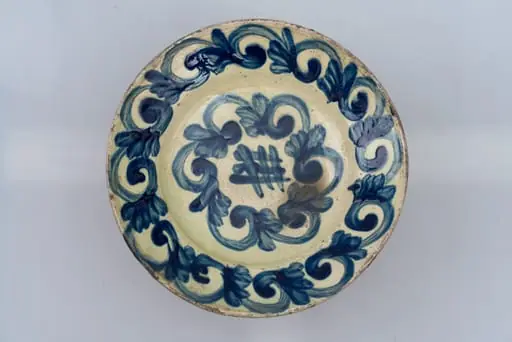 Farfurie adâncă, cu buză lată, evazată; este acoperită pe suprafața interioară cu un strat de angobă albă, peste care este pictat cu pensula, cu linii groase, decorul monocromatic format din motive vegetale stilizate: două ghirlande de formă circulară, una centrală pe fundul farfuriei și una pe buza acesteia, formate din frunze și vrejuri albastre. In centrul farfuriei se găsesște un motiv format din linii hașurate intersectat. Suprafața ornamentată a farfuriei este acoperită cu un strat de smalț transparent. Cromatica: alb, albastru.
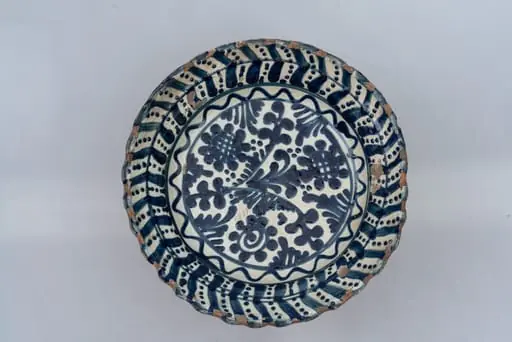 Farfurie semi-adâncă, cu fund larg, buză evazată și muchia buzei ondulată. Este acoperită pe suprafața interioară cu un strat de angobă albă peste care este pictat cu pensula și cu cornul decorul monocromatic format din motive geometrice și florale stilizate: registrul central de pe fundul farfuriei conține un buchet format din trei flori cu petale rotunde și mijlocul umplut cu linii hașurate intersectat, una dintre flori având mijlocul dintr-o linie spiralată, și din frunze; acest registru este încadrat între două linii circulare simple și o linie circulară ondulată și este completat cu șase motive formate din grupuri de linii crescătoare și descrescătoare, dispuse sub formă de triunghi și cu puncte. Registrul decorativ marginal de pe buza farfuriei este decorat cu un șir continuu de frunze duble între care se găsesc motive punctate (linii). Muchia buzei este marcată cu o dungă albastră. Suprafața ornamentată a farfuriei este acoperită cu un strat de smalț transparent. Cromatica: alb, albastru.
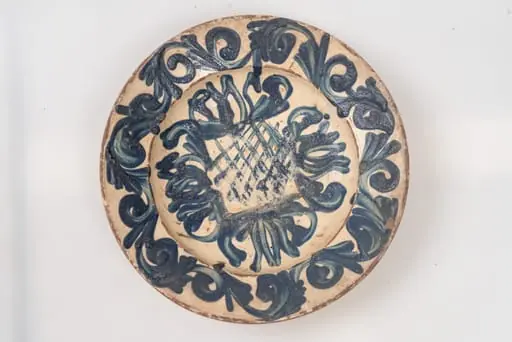 Farfurie adâncă, angobată pe fața interioară cu un strat de humă albă, peste care este pictat cu cornul și cu pensula, cu linii groase, decorul monocromatic format din motive florale și fitomorfe stilizate: pe fundul farfuriei se regăsesc patru flori de lalea dispuse pe exteriorul laturilor unui pătrat umplut cu linii hașurate intersectat de culoare albastră; buza farfuriei este decorată cu un șir continuu de elemente vegetale. Cromatica: alb, albastru. Farfuria este acoperită pe fața decorată cu un strat de smalț transparent.
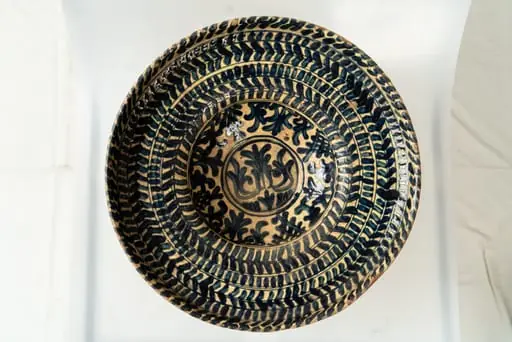 Farfurie mare, adâncă, cu corp tronconic și buză foarte lată, răsfrântă și cu muchia buzei dreaptă. Piesa este modelată la roata olarului, angobată cu humă albă pe fața interioară a acesteia. Decorul este unul foarte bogat, acoperă întreaga suprafață a piesei și este realizat prin pictare cu pensula, cu linii groase. Motivele decorative sunt florale și vegetale stilizate (flori și frunze, dispuse în zona centrală a farfuriei) și geometrice (șiruri de linii paralele și oblice, înscrise în cercuri concentrice, pe buza și muchia farfuriei). Cromatica decorului: alb, albastru. Farfuria este smălțuită pe interior, cu smalț transparent.