Artwork
Fecioara cu Pruncul
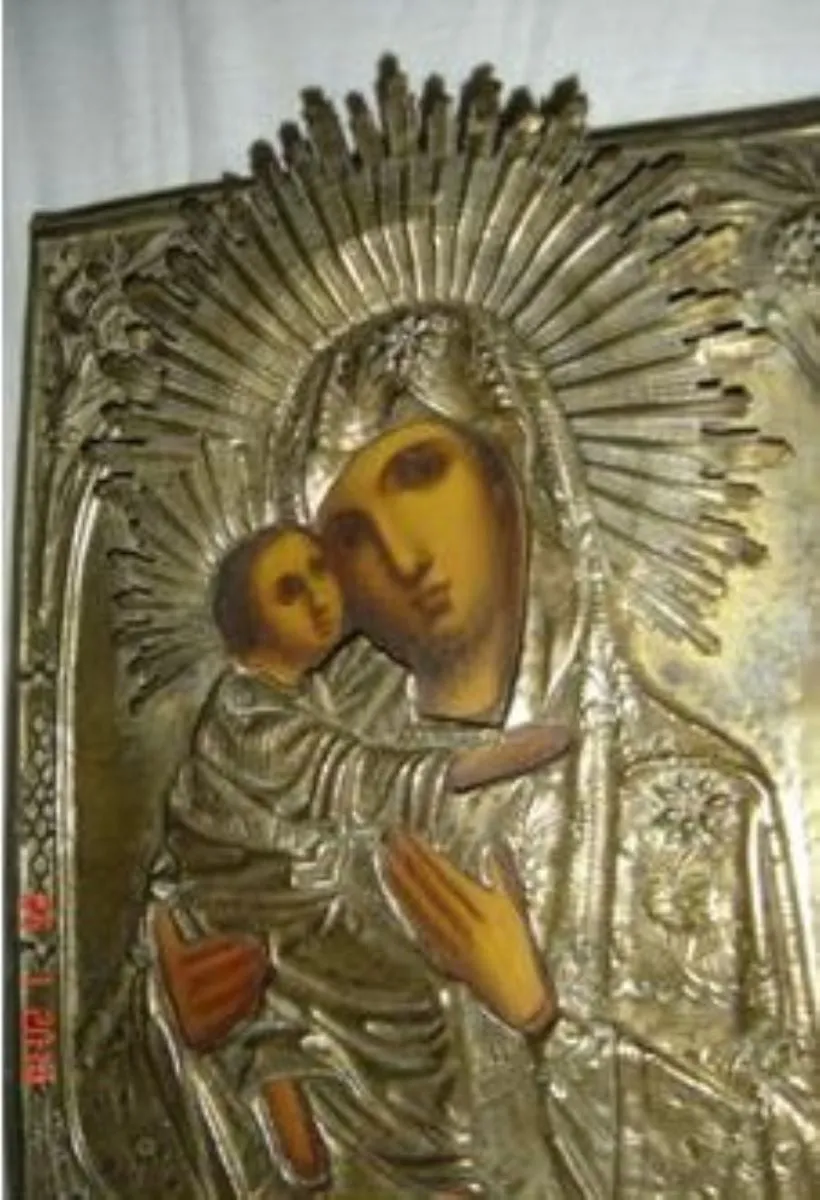
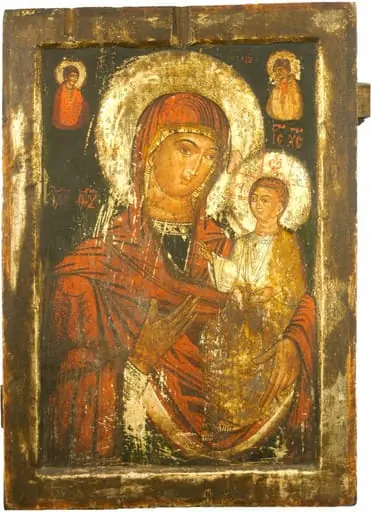
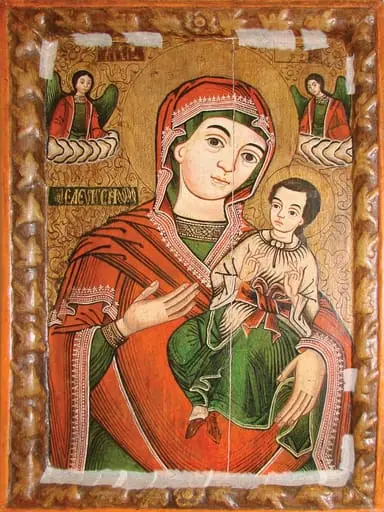
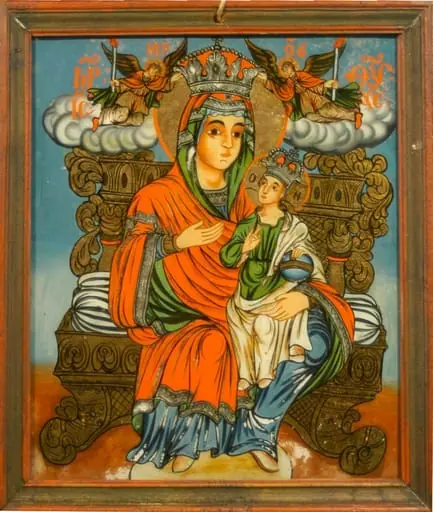
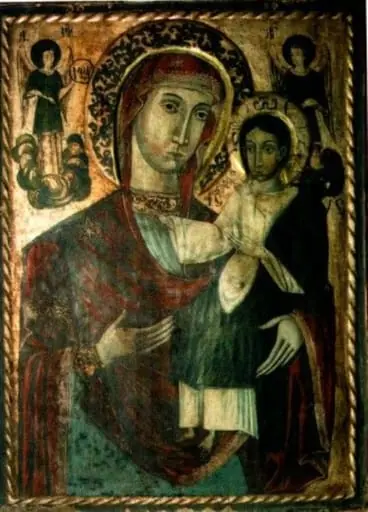
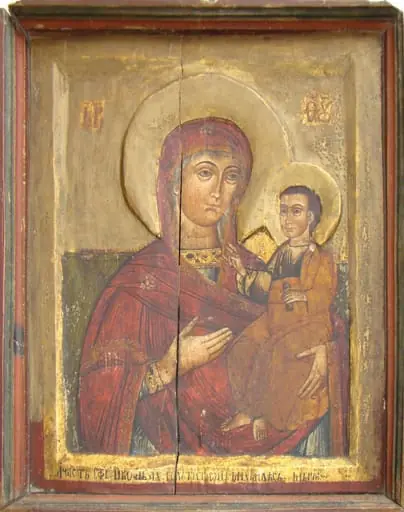
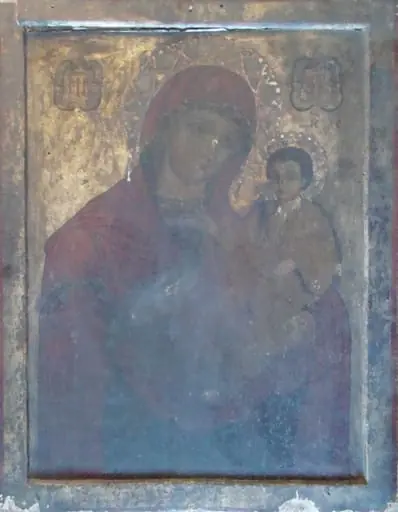
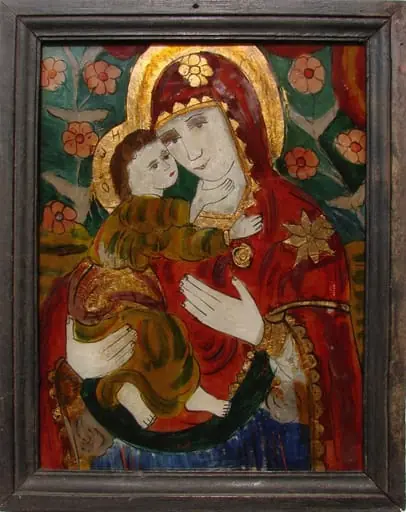
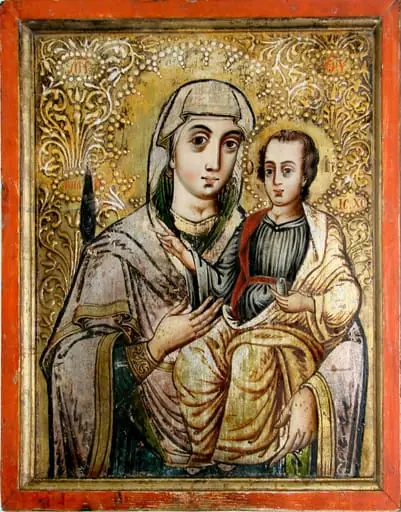
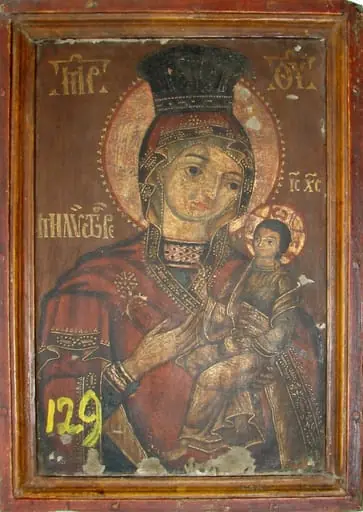
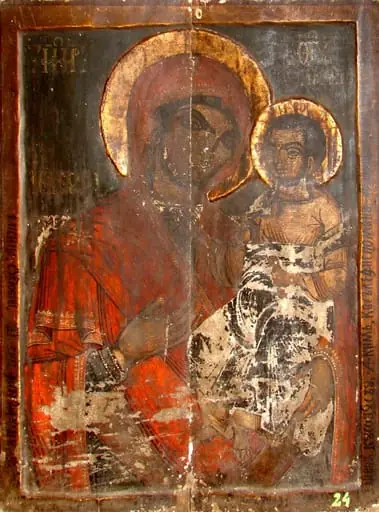
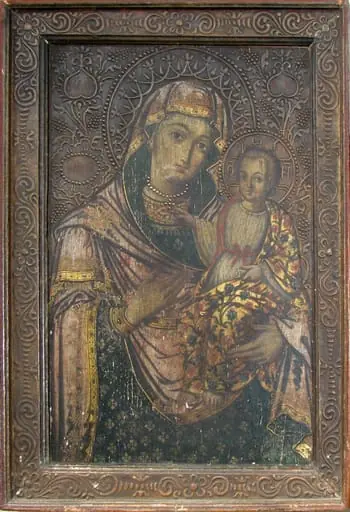
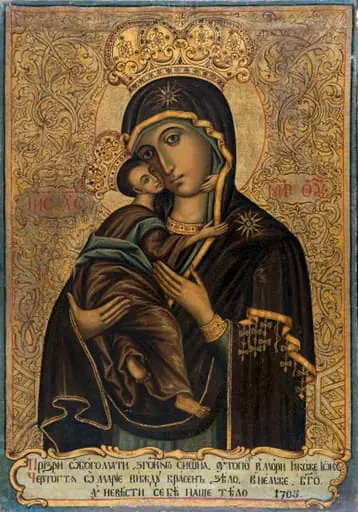
Fecioara cu Pruncul is a drawing by the Impressionist artist Unknown. It dates from 1895 and is held in the collection of the Botoșani County Museum. This metalwork depicts a woman holding a child, rendered in repoussé technique with a hammered, textured surface.
About this work
Overview
The work’s tactile quality and portable form indicate it was intended for devotional use, possibly carried or handled during ritual practice.
This metalwork depicts a woman holding a child, rendered in repoussé technique with a hammered, textured surface. The figures are distinguished by warm gold-toned faces and hands against a cooler silver background. A broad, radiating halo encircles the woman’s head, suggesting sacred status. The work’s tactile quality and portable form indicate it was intended for devotional use, possibly carried or handled during ritual practice.
Subject & Meaning
The figures represent the Virgin Mary with the infant Jesus, a common subject in Eastern Christian iconography. The halo’s sharp, fan-like rays emphasize divine presence, while the intimate gesture of holding the child conveys maternal tenderness within a sacred context. The work’s physical accessibility suggests it served as a focus for personal prayer or procession, bridging the earthly and the divine through touch.
Technique & Style
Crafted using repoussé, the metal was shaped from the reverse side with hand tools to create raised forms, leaving visible hammer marks and an irregular, organic surface. This method prioritized expressive form over smooth refinement, aligning with regional traditions that valued spiritual immediacy over idealized beauty. The contrast between gold and silver tones enhances the figures’ luminosity against the darker metal field.
History & Provenance
The object likely originated in a Byzantine or post-Byzantine workshop, possibly in the Balkans or Anatolia, during the late medieval period. Its portable size and devotional function suggest it was made for private worship or liturgical use in small communities. Surviving examples of this type are rare, often preserved in church treasuries or passed through generations as family heirlooms.
Context
In medieval Orthodox Christianity, metal icons were valued for their durability and portability, especially in regions where frescoes were impractical. Repoussé icons like this one were often carried in processions or kept in homes for daily veneration. The emphasis on tactile presence reflects a theological view that the divine could be encountered through physical objects, not merely visual representation.
Legacy
This work exemplifies a regional tradition of devotional metalwork that persisted into the early modern era, influencing later folk icon-making practices. Though overshadowed by panel paintings in scholarly attention, such objects remain vital to understanding how ordinary believers engaged with sacred imagery through touch, movement, and material presence rather than distant contemplation.
Artist & collection
 Domestic Scene
 Giacomo and Cardinal Marco, investing Andrea, Abbot of San Zeno, with his Benefice
 The Nymph of Fontainebleau
 Portrait of a Woman
 Madonna and Child with Saints in the Enclosed Garden
 Venus and Minerva
 Family Group of Four on Sofa
 Wall painting from Room H of the Villa of P. Fannius Synistor at Boscoreale