Artwork
Maica Domnului cu Pruncul
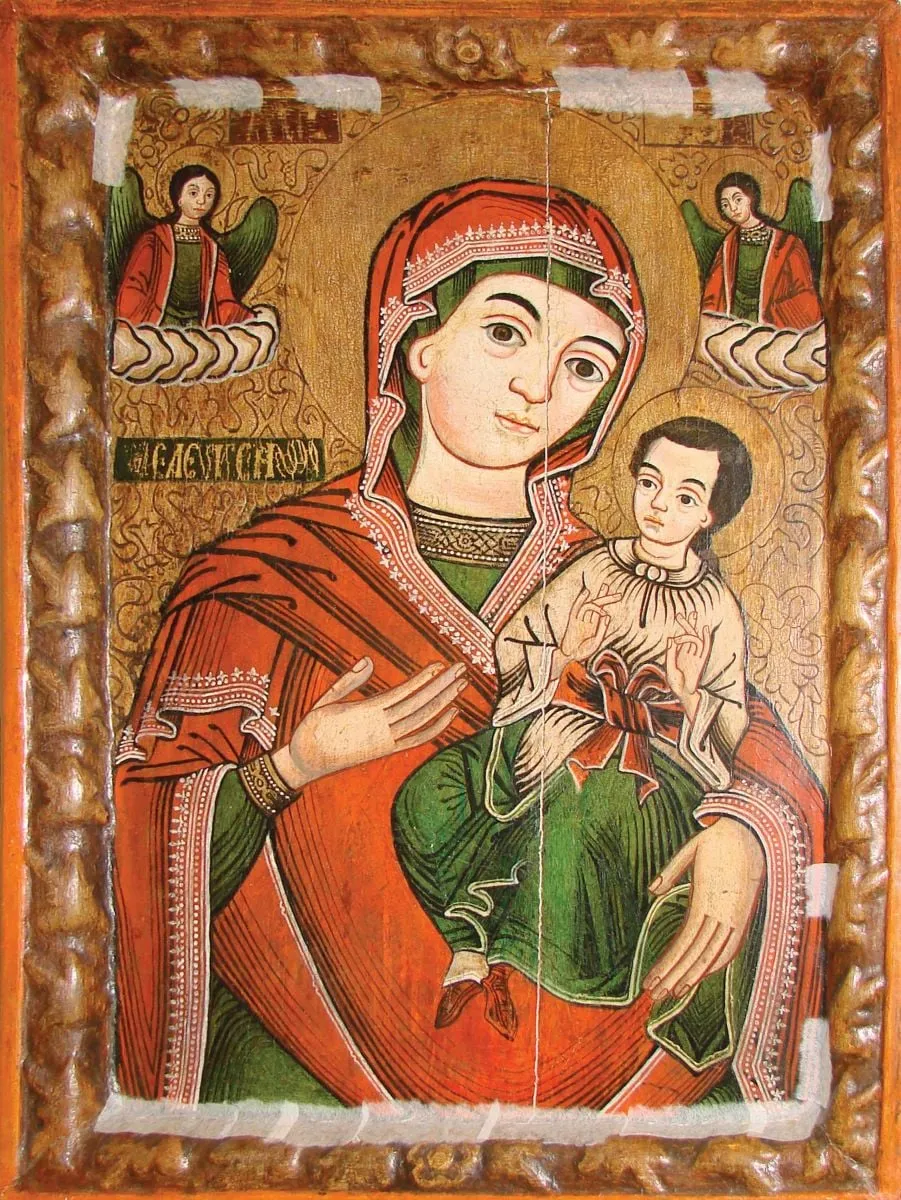
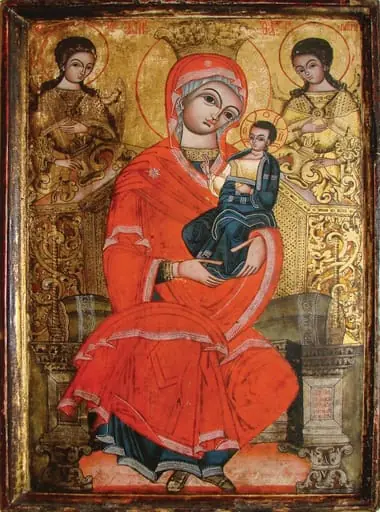
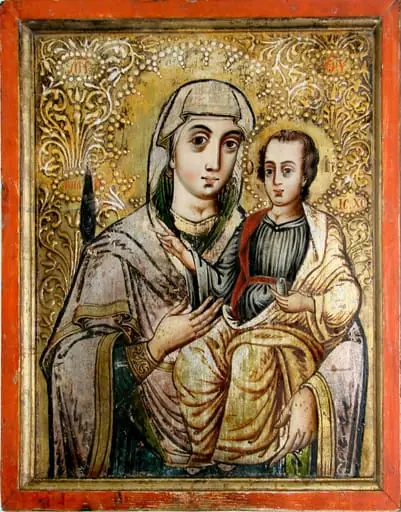
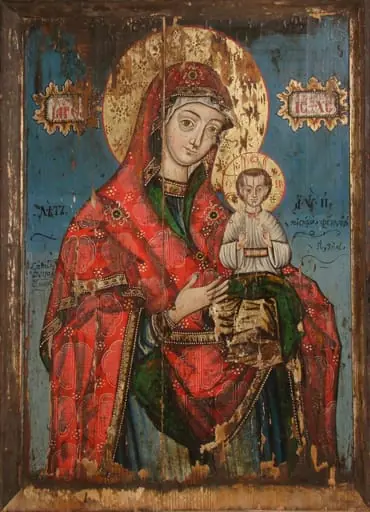
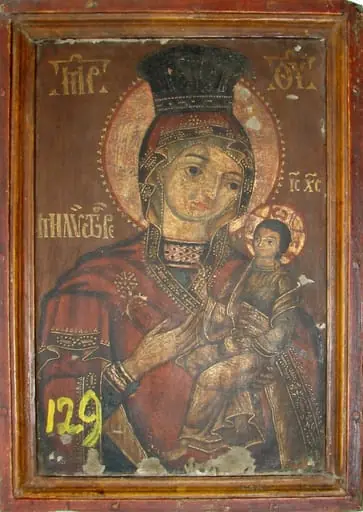
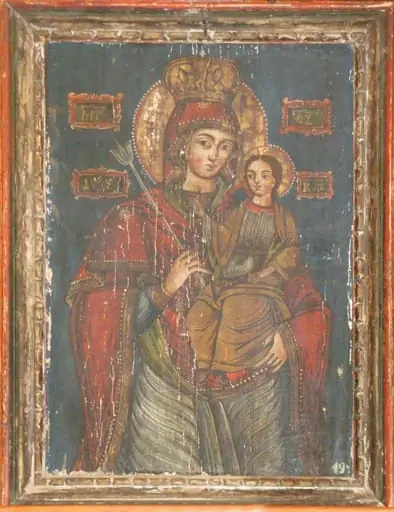
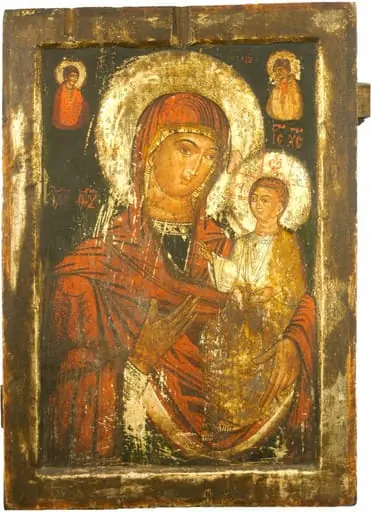
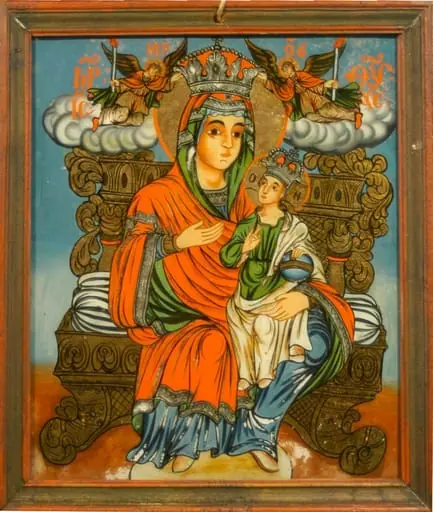
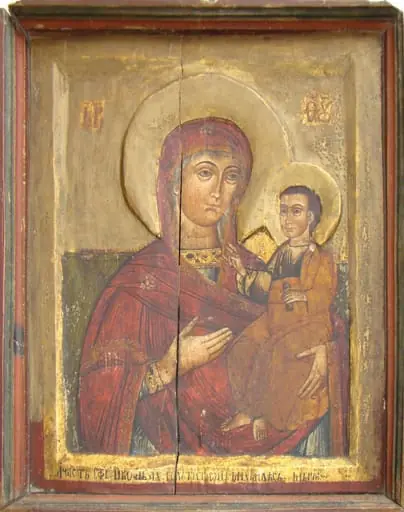
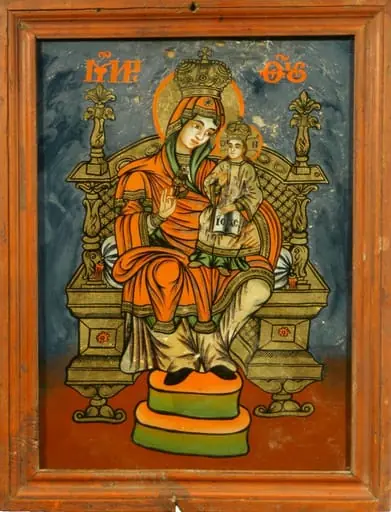
Maica Domnului cu Pruncul is an unspecified painting by the Byzantine icon painting artist Iacov Zugravul. It is held in the collection of the Alba Iulia Orthodox Archdiocese. This devotional panel depicts the Virgin Mary holding the Christ Child, rendered in a traditional Byzantine style.
About this work
Overview
This devotional panel depicts the Virgin Mary holding the Christ Child, rendered in a traditional Byzantine style.
This devotional panel depicts the Virgin Mary holding the Christ Child, rendered in a traditional Byzantine style. Both figures are outlined in black against a luminous gold ground, with minimal modeling and flat, symbolic forms. The composition is rigidly frontal, emphasizing spiritual presence over naturalism. Two angels flank the scene, each bearing inscribed scrolls, reinforcing the sacred nature of the subject.
Subject & Meaning
The Virgin Mary, dressed in a red mantle over a green tunic, holds the Christ Child, who clutches a small cross—a symbol of his future sacrifice. The calm expressions and still postures convey divine serenity rather than human emotion. The angels with scrolls suggest heavenly testimony, aligning the image with liturgical traditions that honored Mary as Theotokos, the God-bearer, central to Orthodox Christian devotion.
Technique & Style
The painting employs tempera on wood, with pigments applied in thin, even layers. Outlines in black define forms, while the gold background, richly tooled with aged patterns, reflects light to suggest divine radiance. There is no attempt at perspective or chiaroscuro; depth is implied through hierarchical scale and symbolic color rather than spatial realism, consistent with medieval iconographic conventions.
History & Provenance
The work’s worn surface and patina indicate prolonged veneration, likely in a private chapel or monastery. Its stylistic features—gold ground, rigid posture, and symbolic coloration—point to a production date between the 12th and 14th centuries, possibly from the Byzantine sphere or a region under its cultural influence. Its survival suggests continuous religious use and careful preservation.
Context
This image belongs to a broader tradition of Eastern Orthodox icons, where visual formulas were preserved across centuries to ensure doctrinal accuracy. Such panels were not merely decorative but served as aids to prayer and vessels of divine presence. The use of gold and specific color symbolism—red for divinity, green for life—followed established theological codes, distinguishing them from emerging Western naturalism.
Legacy
Though later Renaissance artists moved toward illusionistic space and emotional expression, this icon retained its influence in Eastern Christian communities. Its enduring visual language shaped devotional practices and inspired later iconographers who sought to maintain spiritual continuity. The work stands as a testament to the power of ritualized imagery in sustaining religious identity across generations.
Artist & collection
Artist
Iacov Zugravul’s small surviving body of work shows biblical scenes painted on wood or drawn in ink, made in the mid-1700s.