Artwork
Maica Domnului cu Pruncul
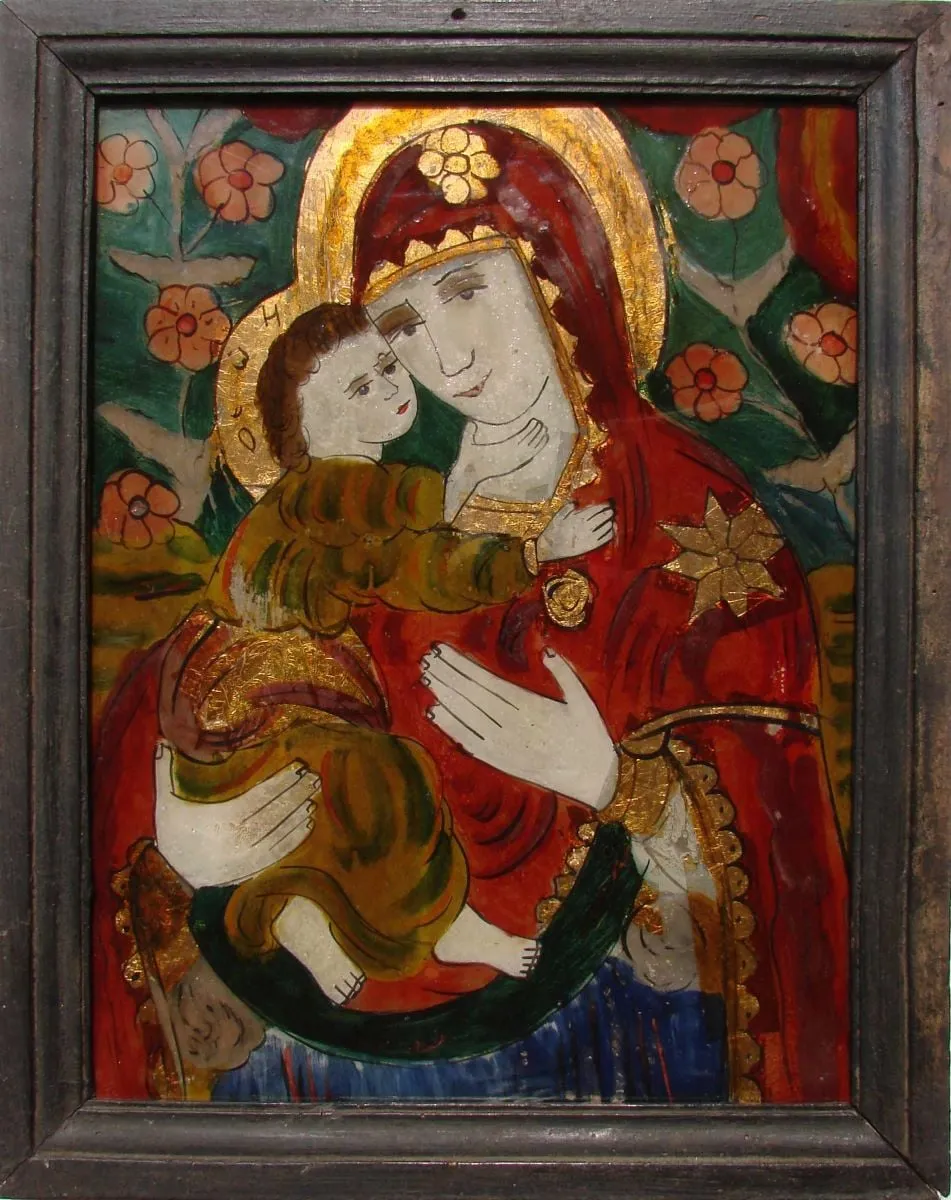
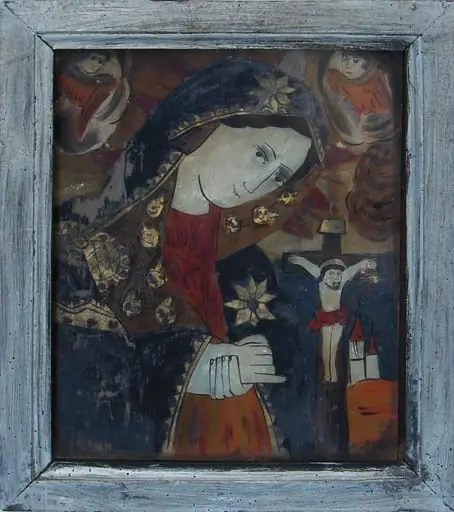
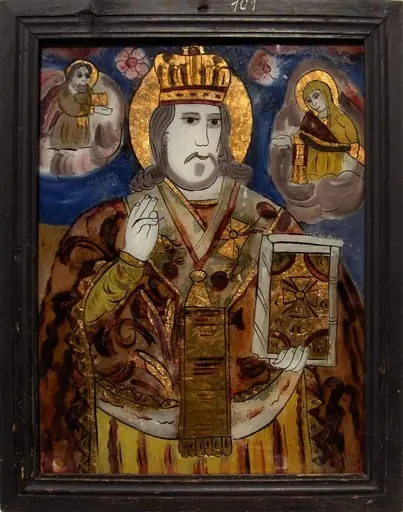
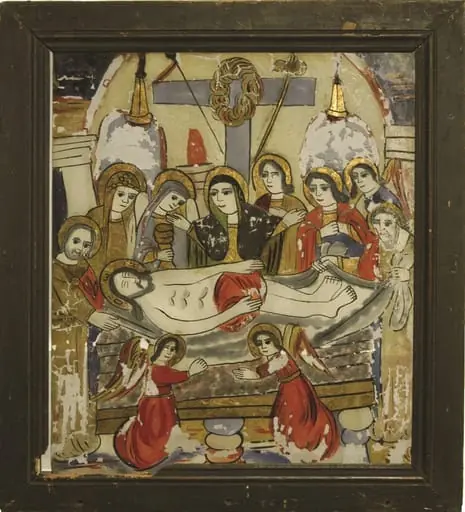
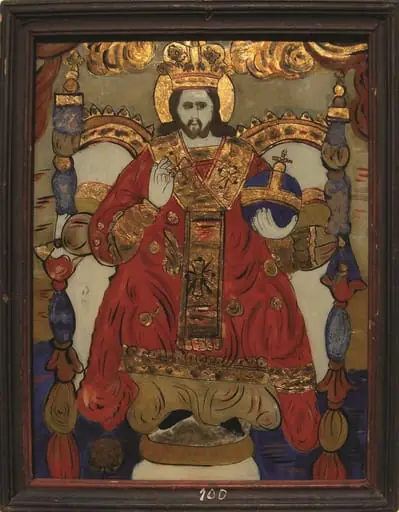
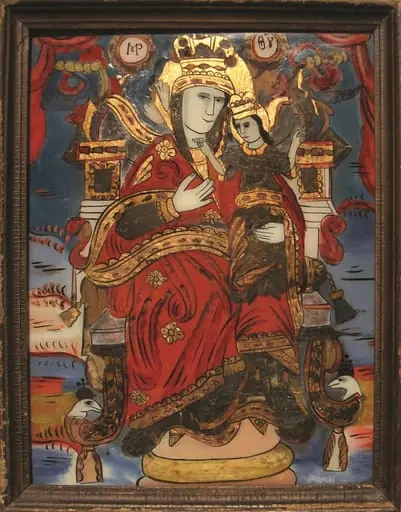
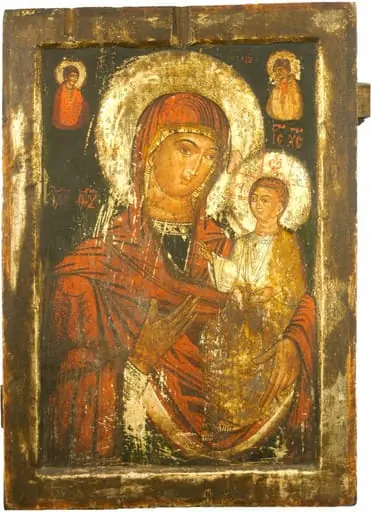
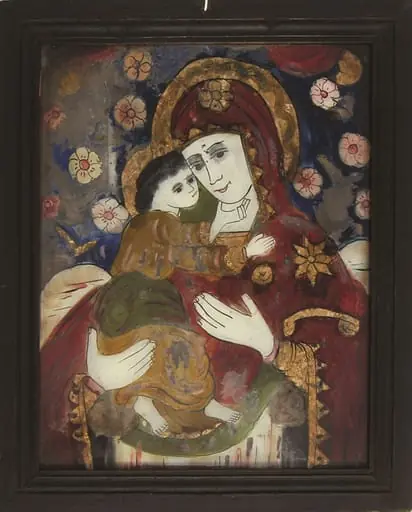
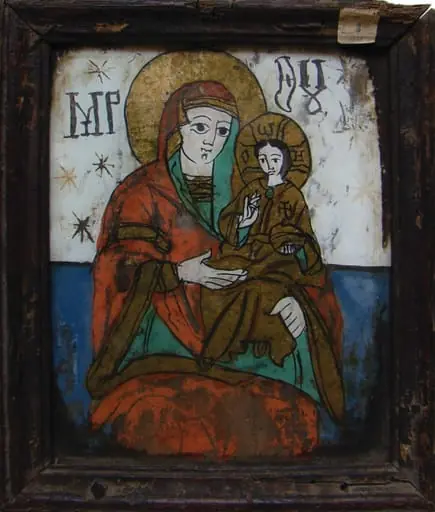
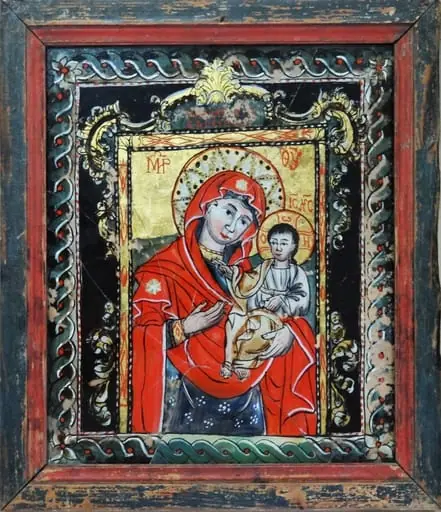
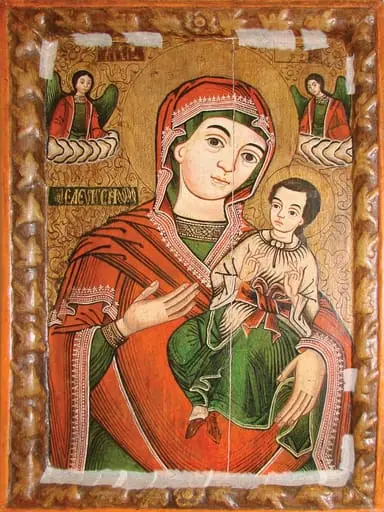
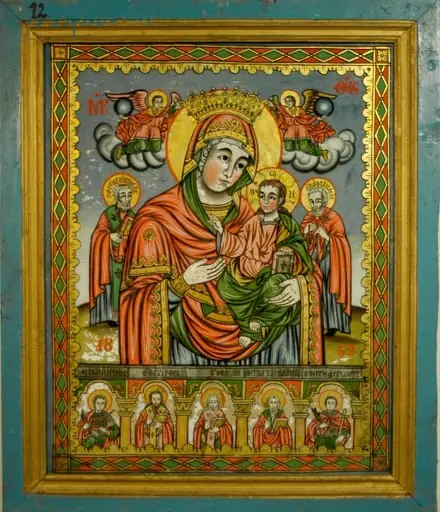
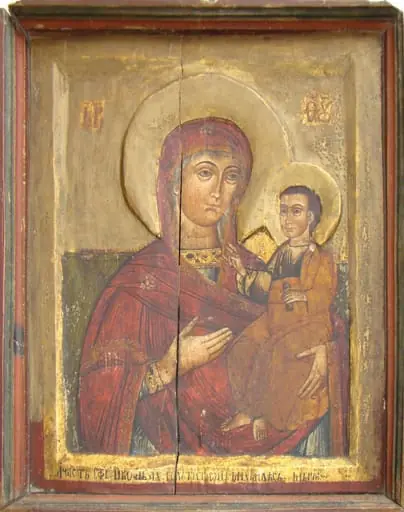
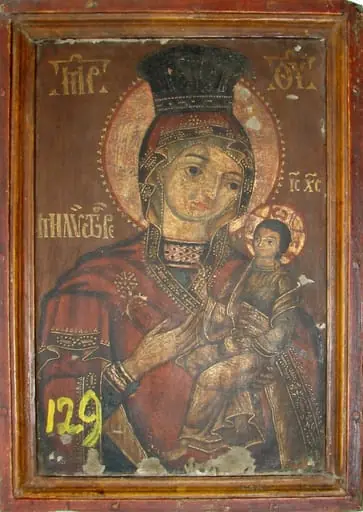
Maica Domnului cu Pruncul is an unspecified painting by the Byzantine icon painting artist Petru Prodan. It is held in the collection of the Alba Iulia Orthodox Archdiocese. This devotional panel portrays the Virgin Mary cradling the infant Jesus in a quiet, intimate moment.
About this work
Overview
The composition emphasizes tenderness rather than grandeur, focusing on the physical and emotional closeness between mother and child within a sacred context.
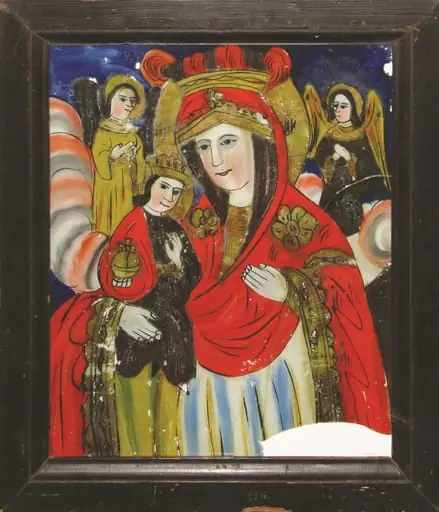
This devotional panel portrays the Virgin Mary cradling the infant Jesus in a quiet, intimate moment. Rendered with careful attention to color and texture, the figures are set against a naturalistic backdrop of green foliage and red blossoms. The composition emphasizes tenderness rather than grandeur, focusing on the physical and emotional closeness between mother and child within a sacred context.
Subject & Meaning
The image represents the Theotokos, the Mother of God, a central figure in Eastern Christian devotion. Her tender hold on the Christ Child underscores both divine incarnation and human maternal care. The gold halos affirm their sacred status, while the domestic setting—free of architectural or celestial symbols—grounds the divine in the familiar, inviting personal contemplation.
Technique & Style
The painting employs rich, saturated hues—particularly the crimson of Mary’s robe and the gold detailing—to convey holiness and warmth. The figures are rendered with soft contours and minimal modeling, avoiding dramatic chiaroscuro. Background foliage is painted with loose, decorative strokes, enhancing the serene, otherworldly atmosphere without distracting from the central figures.
History & Provenance
The work originates from a Byzantine or post-Byzantine tradition, likely produced in the Balkans or Anatolia during the late medieval period. Its preservation suggests it was used in private worship, possibly within a household or small chapel. No definitive record of its early ownership exists, but its style aligns with icons created for domestic devotion in the 14th to 16th centuries.
Context
In Orthodox Christian practice, icons like this served as aids to prayer and meditation, not merely decorative objects. The emphasis on maternal tenderness reflected theological ideas of Christ’s humanity and Mary’s role as intercessor. Such images were commonly venerated in homes, especially during times of personal or communal crisis, reinforcing spiritual connection through intimate imagery.
Legacy
This painting exemplifies the enduring influence of Byzantine iconography in regional Christian art. Its quiet emotional resonance influenced later devotional works across Eastern Europe, where similar compositions continued to be produced for centuries. Though stylistically restrained, its focus on human tenderness within sacred narrative remains a distinctive feature of its tradition.
Artist & collection
Artist
Petru Prodan painted religious scenes in the icon tradition. His works include *Sf. Nicolae* and *Prohodul lui Iisus*, showing saints and biblical figures in gold-leaf settings. The figures are stiff and frontal,…