Artwork
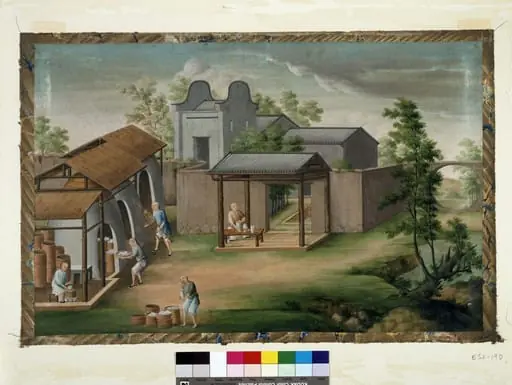
Firing Enamelled Ware in Muffle Kiln
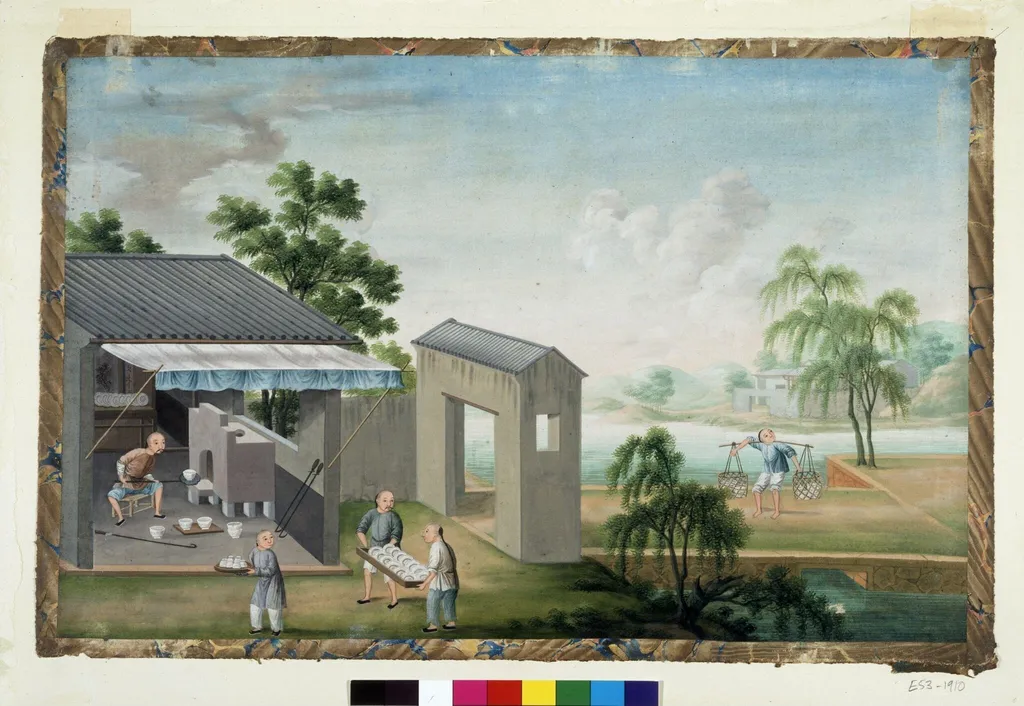
Firing Enamelled Ware in Muffle Kiln is a paint painting by the Rococo painting artist Unknown. It dates from 1780 and is held in the collection of the Victoria and Albert Museum.
About this work
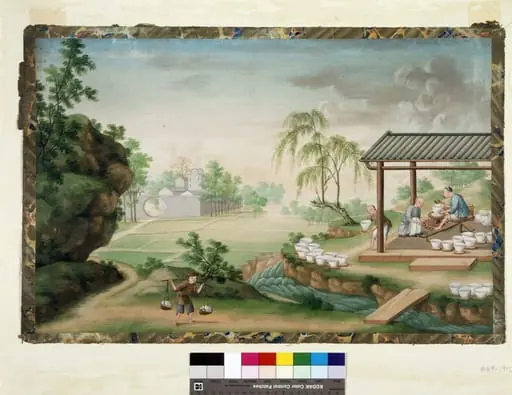
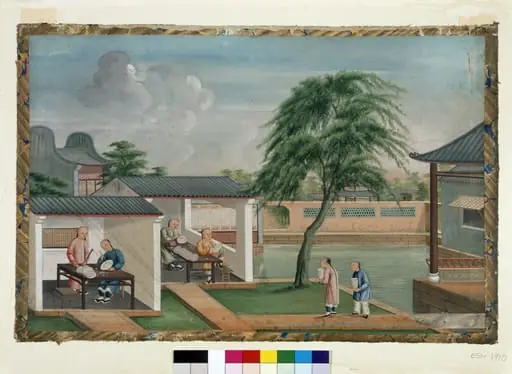
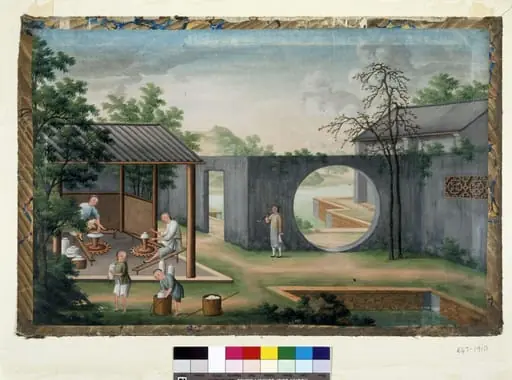
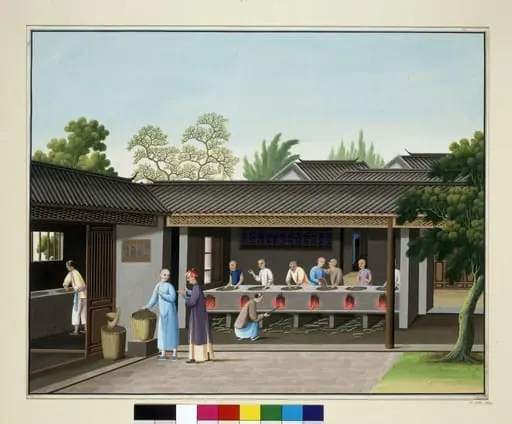
The painting shows potters firing enamelled ware in a muffle kiln.
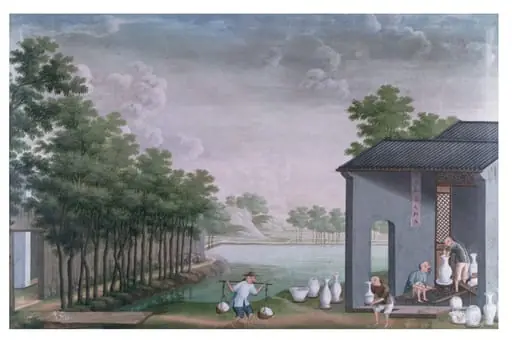
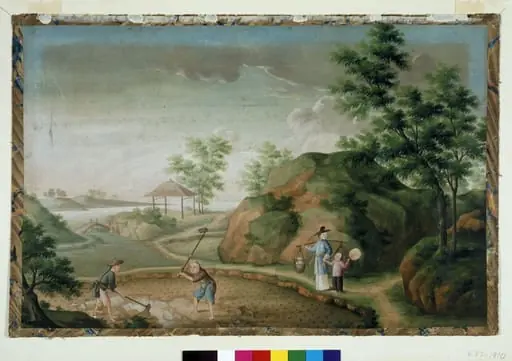
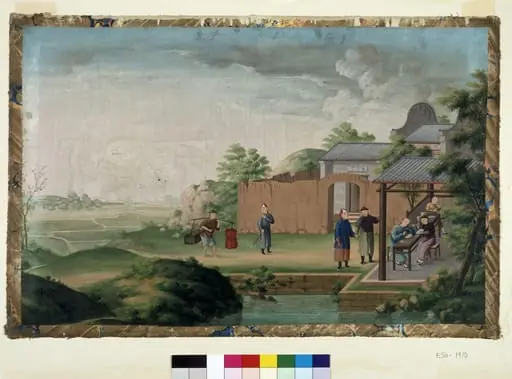
This scene is interesting because it's part of a set of 24 paintings about the porcelain industry in China. Europe couldn't make true porcelain before the 18th century, so these paintings were made to show Europeans how it was done.
To learn more about this kind of art, look up the technique of sfumato.
Overview
This painting is one of twenty-four in a series documenting the Chinese porcelain industry, specifically focusing on the firing of enamelled ceramics in a muffle kiln. Created for European audiences unfamiliar with porcelain production, the work serves as a visual record of Chinese manufacturing techniques that remained elusive in Europe until the 1700s.
Subject & Meaning
The scene depicts laborers carefully loading and monitoring enamelled pottery within a muffle kiln, a specialized furnace that isolates the ware from direct flame to preserve delicate glazes. The painting’s purpose was explanatory: to reveal the intricate, controlled processes behind Chinese porcelain, which Europeans sought to replicate but could not yet achieve.
Technique & Style
Rendered in a detailed, observational style, the painting emphasizes spatial clarity and human activity over dramatic expression. Figures are arranged to illustrate workflow, with tools and kiln architecture rendered with precision. The absence of idealized forms or theatrical lighting suggests a documentary intent rather than artistic embellishment.
History & Provenance
The series was likely commissioned in the early 18th century, possibly for export or private European collections interested in industrial secrets. These images circulated among collectors, artisans, and scientists seeking to decode Chinese ceramic methods, contributing to the eventual European breakthrough in porcelain production at Meissen and elsewhere.
Context
Before the 18th century, European potters could only produce soft-paste ceramics, unable to replicate the hardness and translucency of Chinese porcelain. This series emerged amid growing European fascination with Asian goods and a competitive drive to master their production, making such images both scientific and commercially valuable.
Legacy
The series stands as an early example of industrial documentation in art, bridging craft knowledge and visual culture. While not widely exhibited today, these works remain important historical records of pre-industrial manufacturing and cross-cultural transmission of technical knowledge between China and Europe.
Artist & collection

 Domestic Scene
 Giacomo and Cardinal Marco, investing Andrea, Abbot of San Zeno, with his Benefice
 The Nymph of Fontainebleau
 Portrait of a Woman
 Madonna and Child with Saints in the Enclosed Garden
 Venus and Minerva
 Family Group of Four on Sofa
 Wall painting from Room H of the Villa of P. Fannius Synistor at Boscoreale