Artwork
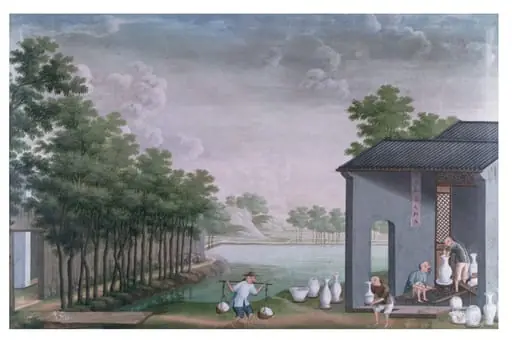
Potters Painting in Underglaze Blue
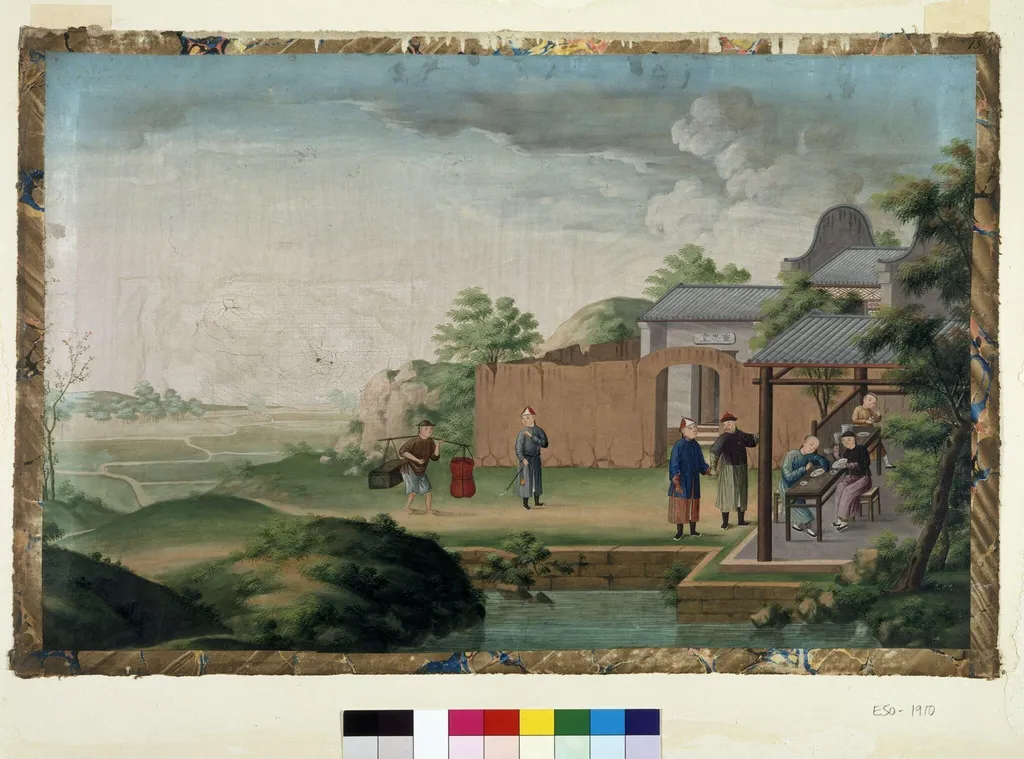
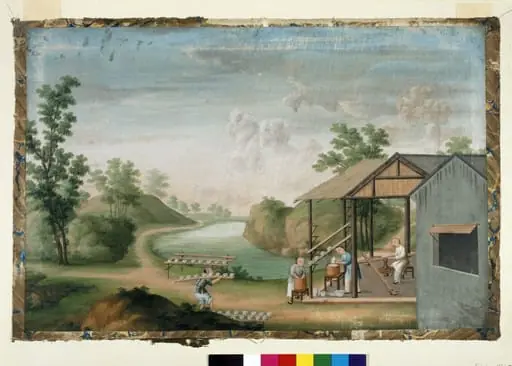
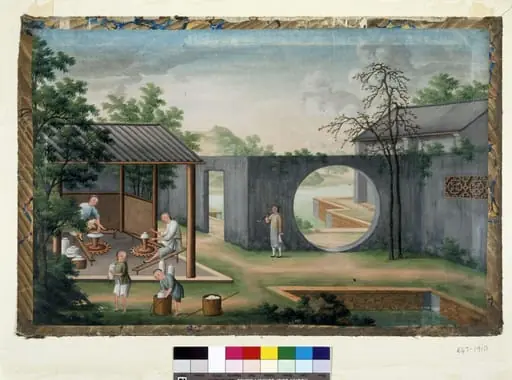
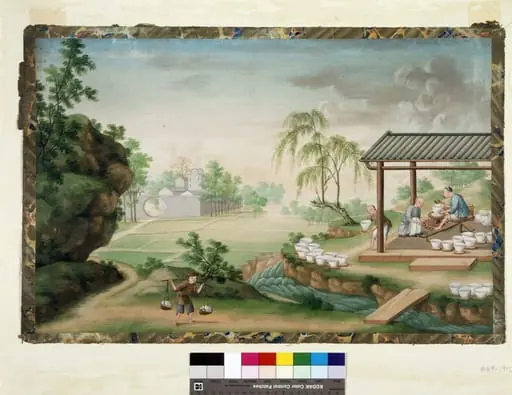
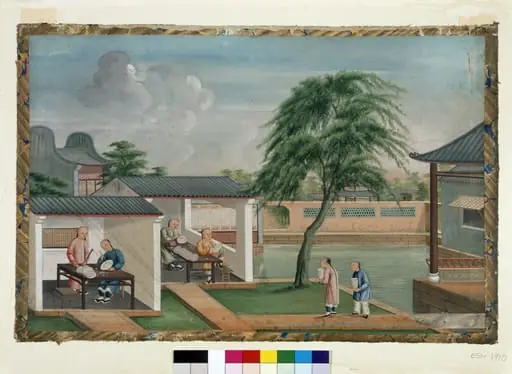
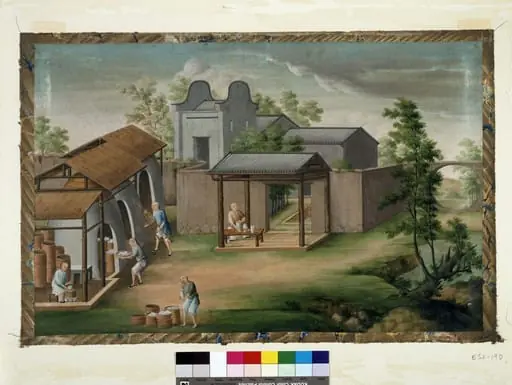
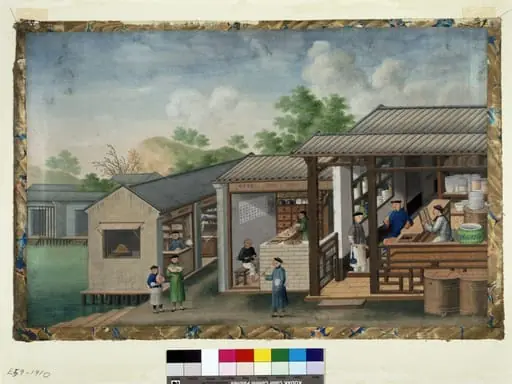
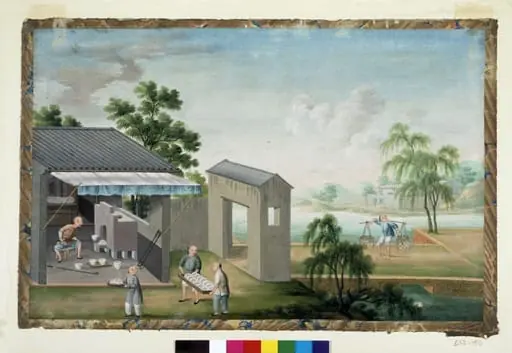
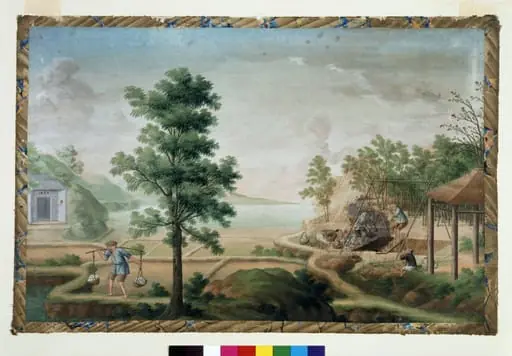
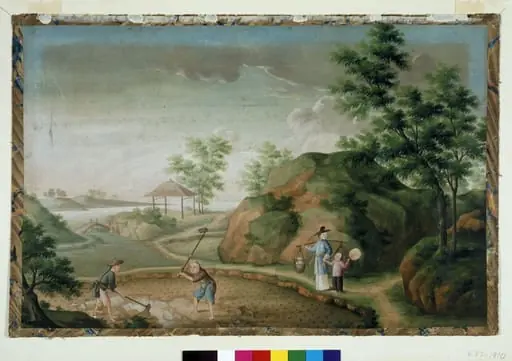
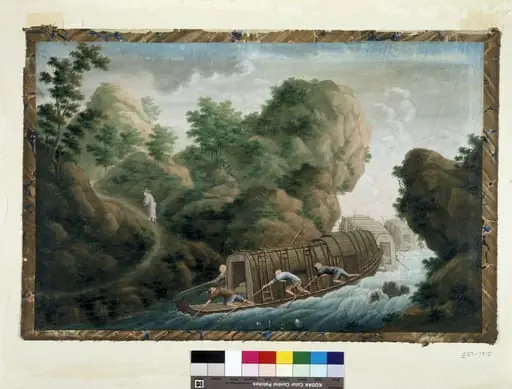
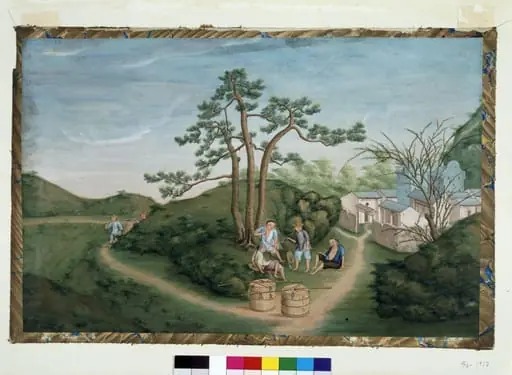
Potters Painting in Underglaze Blue is a watercolor painting by the Romanticist artist Unknown. It dates from 1780 and is held in the collection of the Victoria and Albert Museum. This watercolour on paper is one of twenty-four works documenting China’s porcelain production.
About this work
Overview
Created for European audiences, it captures artisans applying underglaze blue decoration to ceramic forms in a workshop setting.
This watercolour on paper is one of twenty-four works documenting China’s porcelain production. Created for European audiences, it captures artisans applying underglaze blue decoration to ceramic forms in a workshop setting. The scene was designed to reveal the technical processes behind Chinese porcelain, a subject of intense curiosity in Europe prior to the discovery of true porcelain manufacturing in the 18th century.
Subject & Meaning
The painting portrays ceramic workers engaged in hand-painting designs with cobalt pigment beneath the glaze, while a merchant observes. This moment underscores the specialized labor and commercial exchange central to the porcelain trade. The presence of the outsider suggests an intent to educate foreign viewers, framing the workshop as both a site of craft and a symbol of China’s industrial secrecy.
Technique & Style
Executed in watercolour, the work employs subtle tonal contrasts to suggest volume and spatial depth. Light falls selectively on figures and tools, guiding the viewer’s eye through the composition. The delicate handling of pigment reflects a documentary intent, prioritizing clarity of detail over dramatic expression, aligning with the genre’s purpose as an instructional visual record.
History & Provenance
The painting originated in a series commissioned to satisfy European demand for knowledge about Chinese porcelain-making. Likely produced in Guangzhou for export, these images circulated among collectors and manufacturers seeking to replicate the technique. Their survival offers rare insight into how Chinese industry was visually represented to foreign markets during the Qing dynasty.
Context
In the 17th and 18th centuries, European powers struggled to produce hard-paste porcelain, relying on imports from China. Paintings like this served as visual manuals, demystifying processes such as clay preparation, glazing, and underglaze painting. They reflect a broader cultural fascination with Asian manufacturing and the desire to replicate its success through observation and imitation.
Legacy
These watercolours remain valuable as historical records of pre-industrial ceramic production. They document techniques later adapted in European factories such as Meissen and Sèvres. While not artistic innovations in themselves, they played a role in the global transfer of technical knowledge, bridging Eastern craftsmanship and Western industrial development.
Artist & collection

 Domestic Scene
 Giacomo and Cardinal Marco, investing Andrea, Abbot of San Zeno, with his Benefice
 The Nymph of Fontainebleau
 Portrait of a Woman
 Madonna and Child with Saints in the Enclosed Garden
 Venus and Minerva
 Family Group of Four on Sofa
 Wall painting from Room H of the Villa of P. Fannius Synistor at Boscoreale