Artwork
Folio 141, from a Kalpa-sutra and Story of Kalakacharya: Text (recto); Monk Holding a Flower Venerated by a Lay disciple (verso)
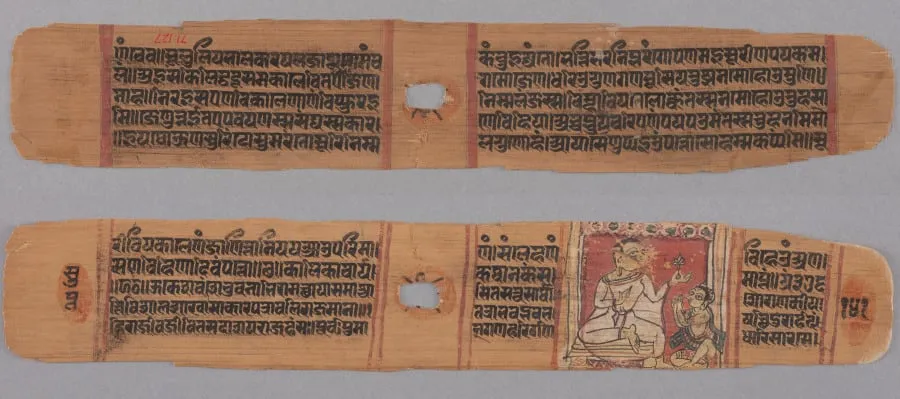
Folio 141, from a Kalpa-sutra and Story of Kalakacharya: Text (recto); Monk Holding a Flower Venerated by a Lay disciple (verso) is an unspecified painting by the Mughal Painting artist Unknown. It dates from 1287 and is held in the collection of the Cleveland Museum of Art. This illuminated folio, numbered 141, forms part of a Jain manuscript dated to 1287.
About this work
Palm leaves were the usual writing material for sacred texts in India before paper took over.
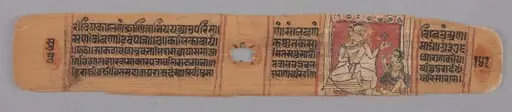
You see a monk in white robes holding a flower while a layperson kneels before him.
This tiny painting is on the back of a palm-leaf page from a Jain holy book written in 1287. The white robes tell us the monk belongs to the Shvetambara branch of Jainism. Palm leaves were the usual writing material for sacred texts in India before paper took over.
To see more works like this, look up western india, gujarat.
Overview
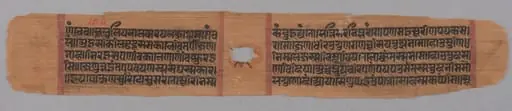
This illuminated folio, numbered 141, forms part of a Jain manuscript dated to 1287. The leaf is made of palm, the customary medium for sacred writings in pre‑modern India, and contains a brief narrative on its recto side. The verso bears a miniature depicting a monk in white robes holding a flower, attended by a kneeling lay disciple.
Subject & Meaning
The scene illustrates a moment from the Kalpa‑sutra, recounting the life of the Jain teacher Kalaka, a former prince who attained magical abilities after renouncing worldly life. The monk’s white attire identifies him with the Shvetambara tradition, while the offering of a flower signifies reverence and the transmission of spiritual knowledge from teacher to devotee.
Technique & Style
Executed in pigment on a palm‑leaf surface, the miniature employs delicate line work and limited colour, characteristic of 13th‑century western Indian manuscript art. The figure’s drapery is rendered with fine strokes that suggest the flowing quality of white cloth, and the composition is compact, fitting the limited space of the leaf’s reverse side.
History & Provenance
The folio belongs to a larger Kalpa‑sutra manuscript, traditionally appended to Jain canonical texts. The colophon, beginning on this page, records the place and date of production, confirming its origin in western India during the late 13th century.
Context
Palm‑leaf codices were the dominant format for Jain scriptures before the introduction of paper in the 15th century. The Shvetambara sect, distinguished by its white monastic garments, produced many such illustrated manuscripts in Gujarat, reflecting regional artistic conventions and devotional practices.
Artist & collection

 Domestic Scene
 Giacomo and Cardinal Marco, investing Andrea, Abbot of San Zeno, with his Benefice
 The Nymph of Fontainebleau
 Portrait of a Woman
 Madonna and Child with Saints in the Enclosed Garden
 Venus and Minerva
 Family Group of Four on Sofa
 Wall painting from Room H of the Villa of P. Fannius Synistor at Boscoreale
 Monk Holding a Flower Venerated by a Lay Disciple: Folio 141 (verso), from a Kalpa-sutra and Story of Kalakacharya
 Folio 141 (recto), from a Kalpa-sutra and Story of Kalakacharya
 Folio 167, from a Kalpa-sutra and Story of Kalakacharya: two nuns teaching lay women (recto); genealogical text (verso)
 Leaf from a Jain Manuscript: Kalpa-sutra: Text (verso)
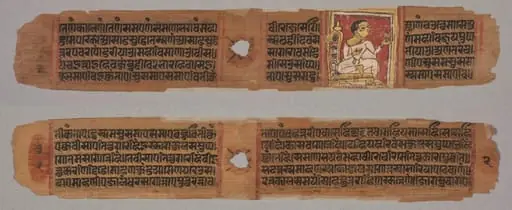 Folio 2, from a Kalpa-sutra and Story of Kalakacharya: Monk Holding a Flower (recto); text (verso)
 Leaf from a Jain Manuscript: The Story of Kalakacharya of Devachandra: Text (recto)
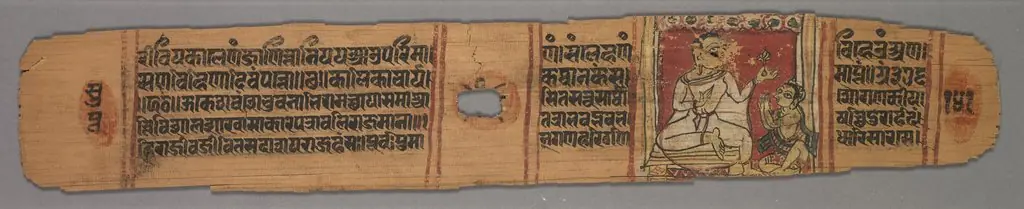 Leaf from a Jain Manuscript: The Story of Kalakacharya: Colophon Page, Text (recto)
 Leaf from a Jain Manuscript: The Story of Kalakacharya of Devachandra: Text (recto); Leaf from a Jain Manuscript: The Story of Kalakacharya of Devachandra: Brahmanshanti Yaksha (verso)
 Folio (recto) from a Kalpa-sutra and Story of Kalakacharya of Devachandra: Text
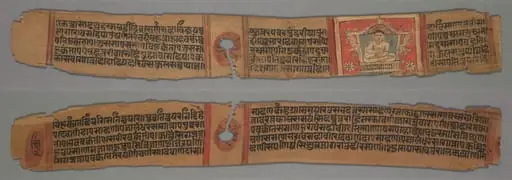 Folio 2, from a Kalpa-sutra and Story of Kalakacharya of Devachandra: Enthroned Monk Gautama (recto); Text (verso)
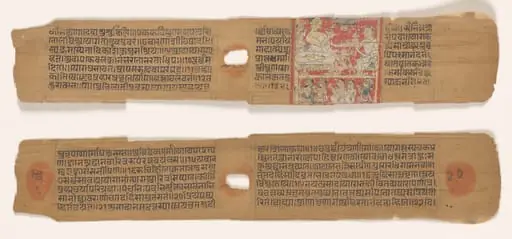 Folio 22 from a Yoga-shastra of Hemachandra: Jain Monk with disciple and two laymen, two Nuns, and a laywoman (recto); Text (verso)
 Leaf from a Jain Manuscript: Kalpa-sutra (verso)