Artwork
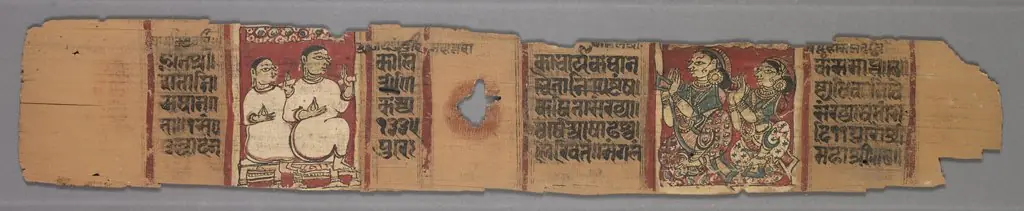
Folio 167, from a Kalpa-sutra and Story of Kalakacharya: two nuns teaching lay women (recto); genealogical text (verso)
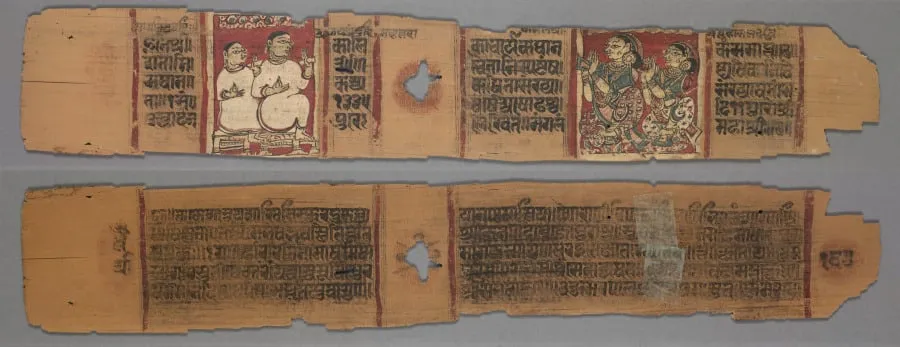
Folio 167, from a Kalpa-sutra and Story of Kalakacharya: two nuns teaching lay women (recto); genealogical text (verso) is an unspecified painting by the Mughal Painting artist Unknown. It dates from 1278 and is held in the collection of the Cleveland Museum of Art. Folio 167 originates from a Jain manuscript compiled in 1278, combining the Kalpa-sutra and the Story of Kalakacharya.
About this work
If you like this style, look up more works from western india, gujarat, palanpur (prahladanapura).
You see two nuns in white robes teaching a group of women in colorful saris under a tree.
This page comes from a Jain manuscript made in 1278. The women listening may have paid for the book—like donors in Christian art. The bright, flat colors and sharp outlines are typical of Jain painting from Gujarat.
If you like this style, look up more works from western india, gujarat, palanpur (prahladanapura).
Overview
Folio 167 originates from a Jain manuscript compiled in 1278, combining the Kalpa-sutra and the Story of Kalakacharya. The recto depicts a scene of spiritual instruction, while the verso contains genealogical records. Produced in Gujarat, likely in Palanpur, the folio reflects the devotional and textual traditions of Śvetāmbara Jainism, where illustrated manuscripts served both religious and commemorative functions.
Subject & Meaning
Two Jain nuns, dressed in white, instruct a group of laywomen beneath a tree, their postures conveying quiet reverence. The scene may represent the donors who commissioned the manuscript, visually linking their piety to the act of textual preservation. The narrative context draws from the Kalakacharya legend, where spiritual authority supersedes worldly power, reinforcing the value of monastic teaching in Jain cosmology.
Technique & Style
The painting employs flat, saturated pigments with bold, clean outlines characteristic of 13th-century Gujarati Jain illustration. Figures are rendered with minimal shading, emphasizing symbolic clarity over naturalism. The composition centers the nuns and their audience within a simplified landscape, focusing attention on the transmission of doctrine rather than environmental detail.
History & Provenance
Created in 1278 in the region of Palanpur, Gujarat, this folio was part of a larger manuscript tradition among Śvetāmbara Jains. Its survival suggests careful preservation, likely within monastic or lay communities. The pairing of doctrinal and genealogical texts indicates its use in both ritual and lineage documentation, reflecting the manuscript’s dual role in spiritual and social memory.
Context
Jain manuscript painting in western India flourished between the 12th and 16th centuries, supported by merchant and lay patrons who commissioned texts as acts of merit. The emphasis on nuns teaching women aligns with Jain communities’ recognition of female spiritual agency. Such illustrations reinforced doctrinal teachings while affirming the social roles of donors within the religious economy.
Legacy
This folio exemplifies a regional style that influenced later Jain and Rajasthani painting traditions. Its preservation offers insight into the visual language of Jain devotion and the role of women as both subjects and patrons. Surviving manuscripts like this one remain key to understanding the material culture of medieval Jainism in Gujarat.
Artist & collection

 Domestic Scene
 Giacomo and Cardinal Marco, investing Andrea, Abbot of San Zeno, with his Benefice
 The Nymph of Fontainebleau
 Portrait of a Woman
 Madonna and Child with Saints in the Enclosed Garden
 Venus and Minerva
 Family Group of Four on Sofa
 Wall painting from Room H of the Villa of P. Fannius Synistor at Boscoreale
 Folio 167, from a Kalpa-sutra and Story of Kalakacharya: two nuns teaching lay women (recto); genealogical text (verso)
 Genealogical text, folio 167 (verso) from a Kalpa-sutra and Story of Kalakacharya
 Folio 141, from a Kalpa-sutra and Story of Kalakacharya: Text (recto); Monk Holding a Flower Venerated by a Lay disciple (verso)
 Folio 2, from a Kalpa-sutra and Story of Kalakacharya of Devachandra: Enthroned Monk Gautama (recto); Text (verso)
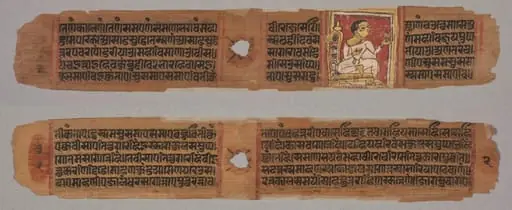 Folio 2, from a Kalpa-sutra and Story of Kalakacharya: Monk Holding a Flower (recto); text (verso)
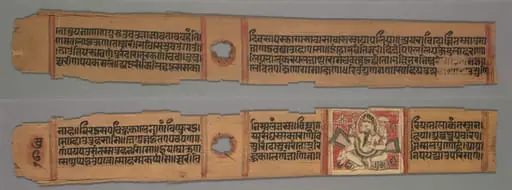 Folio from a Kalpa-sutra and Story of Kalakacharya of Devachandra: Text (recto); Brahmanshanti Yaksha (verso)
 Two nuns teaching lay women, colophon page of folio 167 (recto) from a Kalpa-sutra and Story of Kalakacharya
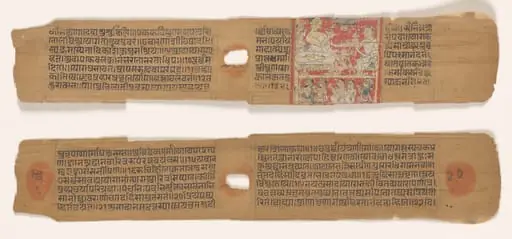 Folio 22 from a Yoga-shastra of Hemachandra: Jain Monk with disciple and two laymen, two Nuns, and a laywoman (recto); Text (verso)
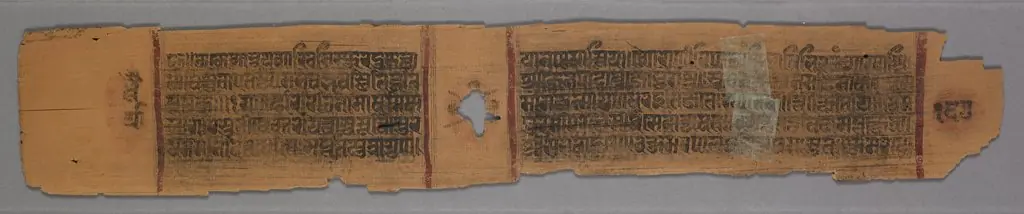 Two nuns teaching lay women, colophon page of folio 167 (recto) from a Kalpa-sutra and Story of Kalakacharya
 Leaf from a Jain Manuscript: Kalpa-sutra: Text (verso)
 Folio (recto) from a Kalpa-sutra and Story of Kalakacharya of Devachandra: Text
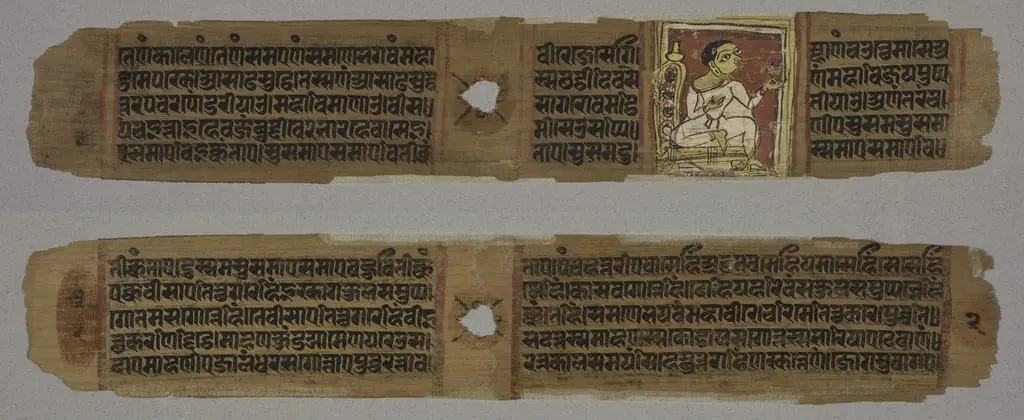 Folio 2, from a Kalpa-sutra and Story of Kalakacharya: Monk Holding a Flower (recto); text (verso)