Artwork
Folio 20 from a Gandavyuha-sutra (Scripture of the Supreme Array): Sudhana and a parrot (recto); Text (verso)
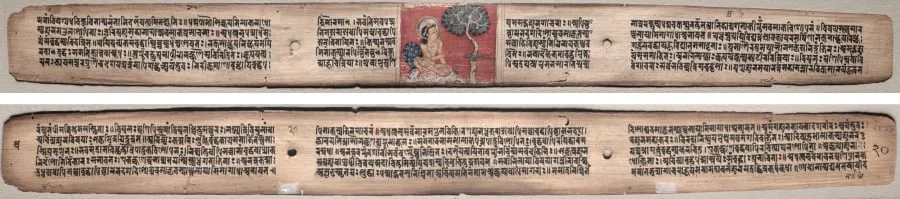
Folio 20 from a Gandavyuha-sutra (Scripture of the Supreme Array): Sudhana and a parrot (recto); Text (verso) is an unspecified painting by Unknown. It dates from 1104 and is held in the collection of the Cleveland Museum of Art.
About this work
Overview
Each page contains a single painting on the recto, with script on the verso.
This folio is one of 355 illustrated pages from a manuscript of the Gandavyuha-sutra, a Mahayana Buddhist text detailing the spiritual journey of the pilgrim Sudhana. Each page contains a single painting on the recto, with script on the verso. The composition focuses on a quiet, intimate moment between Sudhana and a parrot, rendered with delicate brushwork and gold leaf accents, characteristic of Nepalese Buddhist manuscript art from the 11th to 12th century.
Subject & Meaning
Sudhana, depicted as a young male figure seated in meditation, gestures gently toward a bright green parrot perched on a tree branch. The bird’s half-open wings suggest alertness, not flight. The gesture conveys reassurance, symbolizing the cultivation of compassion and non-threatening presence on the path to enlightenment. The parrot, an uncommon companion in such scenes, serves as a living emblem of trust and the quiet wisdom found in all beings.
Technique & Style
The painting employs fine ink lines and mineral pigments on paper, with gold leaf used sparingly to highlight the background and subtle details. The figures are rendered with soft contours and minimal shading, emphasizing stillness over motion. The tree’s trunk and foliage are stylized, not naturalistic, reflecting a convention of Nepalese manuscript illustration that prioritizes symbolic clarity over spatial depth.
History & Provenance
The manuscript was likely produced in the Kathmandu Valley during the late medieval period, a time when Buddhist textual traditions flourished under Newar patronage. Over centuries, the folios became dispersed across collections worldwide. This page, like many others, was separated from its original binding, with its paired text now lost. Its survival reflects the enduring value placed on these devotional objects.
Context
Nepalese Buddhist artists of this era specialized in illustrating sutras for monastic use, often under royal or aristocratic patronage. The Gandavyuha-sutra, recounting Sudhana’s quest for wisdom through encounters with 53 spiritual teachers, was particularly favored for its narrative richness. Each folio’s single image functioned as a meditative aid, condensing complex teachings into accessible visual moments.
Legacy
This folio exemplifies a tradition of Buddhist manuscript painting that influenced later Himalayan art. Its emphasis on quiet interaction between human and animal, framed within spiritual symbolism, continues to inform devotional imagery in Nepal and Tibet. Though the full manuscript is fragmented, surviving folios remain vital sources for understanding medieval Buddhist visual culture and its ethical dimensions.
Artist & collection

 Domestic Scene
 Giacomo and Cardinal Marco, investing Andrea, Abbot of San Zeno, with his Benefice
 The Nymph of Fontainebleau
 Portrait of a Woman
 Madonna and Child with Saints in the Enclosed Garden
 Venus and Minerva
 Family Group of Four on Sofa
 Wall painting from Room H of the Villa of P. Fannius Synistor at Boscoreale
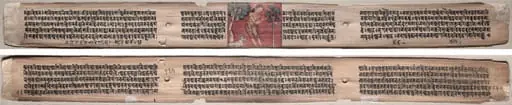 Folio 115 from a Gandavyuha-sutra (Scripture of the Supreme Array): Sudhana and a buffalo (recto); text (verso)
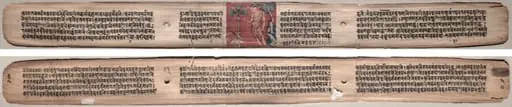 Folio 73 from a Gandavyuha-sutra (Scripture of the Supreme Array): Sudhana and an antelope (recto); text (verso)
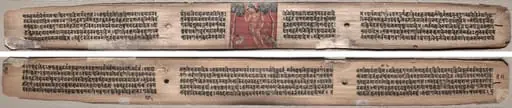 Folio 37 from a Gandavyuha-sutra (Scripture of the Supreme Array): Sudhana and a pair of antelopes (recto); text (verso)
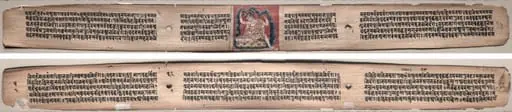 Folio 22 from a Gandavyuha-sutra (Scripture of the Supreme Array): Samantabhadra spinning clouds of things (recto); Text (verso)
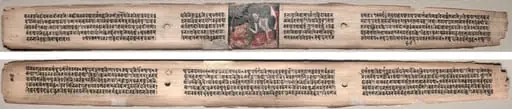 Folio 94 from a Gandavyuha-sutra (Scripture of the Supreme Array): Sudhana and the rishi Bhishmottaranirgosha (recto); text (verso)
 Text, folio 20 (verso) from a Gandavyuha-sutra (Scripture of the Supreme Array)
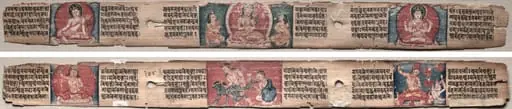 Folio 348 from a Gandavyuha-sutra (Scripture of the Supreme Array): Bodhisattva Manjushri with two forms of Avalokiteshvara (recto); Bodhisattva Samantabhadra purifies the path to enlightenment, with Manjushri (verso)