Artwork
Folio 94 from a Gandavyuha-sutra (Scripture of the Supreme Array): Sudhana and the rishi Bhishmottaranirgosha (recto); text (verso)
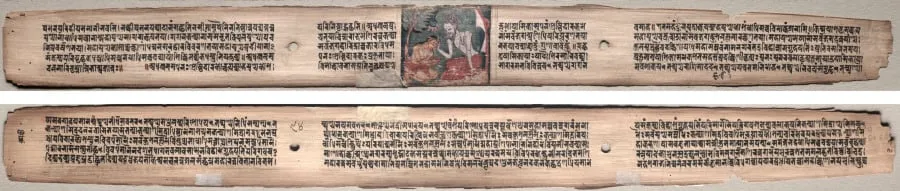
Folio 94 from a Gandavyuha-sutra (Scripture of the Supreme Array): Sudhana and the rishi Bhishmottaranirgosha (recto); text (verso) is an unspecified painting by Unknown. It dates from 1104 and is held in the collection of the Cleveland Museum of Art. Folio 94, a painted page from a manuscript of the Gandavyuha‑sutra, presents a compact scene on a vivid orange folio.
About this work
Overview
Folio 94, a painted page from a manuscript of the Gandavyuha‑sutra, presents a compact scene on a vivid orange folio. At the top, a youthful figure in a white robe kneels before an elderly sage seated beneath a tree, his long white hair and beard marking his ascetic status. The composition occupies a limited space, with a sparse backdrop of foliage and a glimpse of sky.
Subject & Meaning
The illustration visualizes an episode from the sutra in which the pilgrim Sudhana encounters a Hindu rishi who has attained enlightenment. This meeting underscores the text’s teaching that true guidance can arise from diverse sources—friends and teachers beyond the Buddhist monastic community, including Hindu sages, thereby highlighting the universal pursuit of wisdom.
Technique & Style
Executed with mineral pigments on paper, the painting employs bold orange ground and restrained line work. Figures are rendered in a stylized manner typical of Nepalese manuscript art, with emphasis on gesture and facial expression rather than detailed realism. The limited palette and flat spatial treatment focus attention on the relational dynamic between disciple and master.
History & Provenance
The folio originates from a Buddhist manuscript tradition that flourished in the Himalayan region during the medieval period. Though the exact date and place of production are not recorded, the stylistic traits align with Nepalese courtly manuscripts of the 14th–16th centuries, suggesting it was created for a learned audience familiar with both Buddhist and Hindu iconography.
Context
Within the Gandavyuha‑sutra, Sudhana’s journey involves seeking instruction from a series of masters, many of whom are laypersons or non‑Buddhist figures. This folio illustrates that narrative strategy, reflecting the syncretic cultural milieu of Nepal where Buddhist and Hindu traditions intermingled, allowing artists to depict cross‑religious encounters without doctrinal conflict.
Artist & collection

 Domestic Scene
 Giacomo and Cardinal Marco, investing Andrea, Abbot of San Zeno, with his Benefice
 The Nymph of Fontainebleau
 Portrait of a Woman
 Madonna and Child with Saints in the Enclosed Garden
 Venus and Minerva
 Family Group of Four on Sofa
 Wall painting from Room H of the Villa of P. Fannius Synistor at Boscoreale
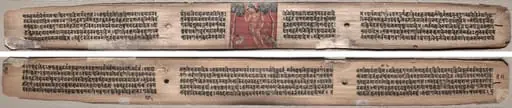 Folio 37 from a Gandavyuha-sutra (Scripture of the Supreme Array): Sudhana and a pair of antelopes (recto); text (verso)
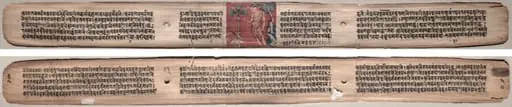 Folio 73 from a Gandavyuha-sutra (Scripture of the Supreme Array): Sudhana and an antelope (recto); text (verso)
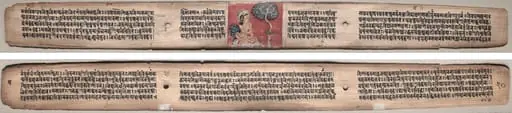 Folio 20 from a Gandavyuha-sutra (Scripture of the Supreme Array): Sudhana and a parrot (recto); Text (verso)
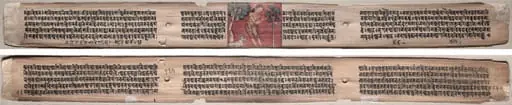 Folio 115 from a Gandavyuha-sutra (Scripture of the Supreme Array): Sudhana and a buffalo (recto); text (verso)
 Text, folio 94 (verso) from a Gandavyuha-sutra (Scripture of the Supreme Array)
 Text, folio 20 (verso) from a Gandavyuha-sutra (Scripture of the Supreme Array)
 Text, folio 20 (verso) from a Gandavyuha-sutra (Scripture of the Supreme Array)
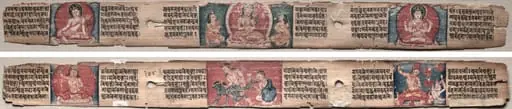 Folio 348 from a Gandavyuha-sutra (Scripture of the Supreme Array): Bodhisattva Manjushri with two forms of Avalokiteshvara (recto); Bodhisattva Samantabhadra purifies the path to enlightenment, with Manjushri (verso)
 Text, folio 22 (verso) from a Gandavyuha-sutra (Scripture of the Supreme Array)
 Text, folio 37 (verso) from a Gandavyuha-sutra (Scripture of the Supreme Array)
 Text, folio 73 (verso) from a Gandavyuha-sutra (Scripture of the Supreme Array)