Artwork
Folio 348 from a Gandavyuha-sutra (Scripture of the Supreme Array): Bodhisattva Manjushri with two forms of Avalokiteshvara (recto); Bodhisattva Samantabhadra purifies the path to enlightenment, with Manjushri (verso)
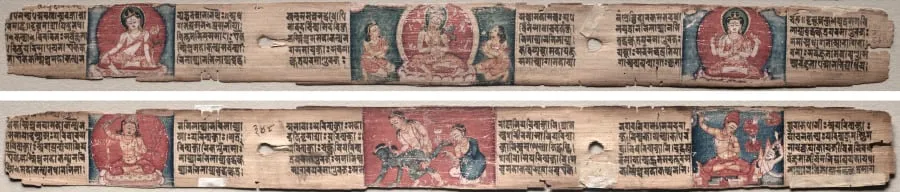
Folio 348 from a Gandavyuha-sutra (Scripture of the Supreme Array): Bodhisattva Manjushri with two forms of Avalokiteshvara (recto); Bodhisattva Samantabhadra purifies the path to enlightenment, with Manjushri (verso) is an unspecified painting by Unknown. It dates from 1104 and is held in the collection of the Cleveland Museum of Art. Folio 348 is a double‑sided painted leaf from a medieval Buddhist manuscript of the Gandavyuha‑sutra.
About this work
Overview
Folio 348 is a double‑sided painted leaf from a medieval Buddhist manuscript of the Gandavyuha‑sutra. The page carries six small-scale figures: three on the front (recto) and three on the back (verso). It belongs to the concluding section of the codex, where the visual program becomes denser than on the earlier pages, which typically featured a single illustration per leaf.
Subject & Meaning
The recto depicts a blue‑skinned bodhisattva, identified as Manjushri, brandishing a sword and positioned between two attendants holding lotus blossoms.
The recto depicts a blue‑skinned bodhisattva, identified as Manjushri, brandishing a sword and positioned between two attendants holding lotus blossoms. The verso shows a white elephant traversing a rainbow, attended by diminutive monks bowing in reverence. These images echo the sutra’s closing hymn, which vows to remove erroneous views and harmful influences obstructing the path to enlightenment.
Technique & Style
The paintings are executed in opaque mineral pigments on a thin paper support, characteristic of Himalayan manuscript illumination. Figures are rendered with bold outlines and flat areas of color, while the rainbow and background employ subtle gradations to suggest movement. The composition’s compact grouping of three figures per side reflects a shift toward more dynamic, narrative scenes in the manuscript’s final folios.
History & Provenance
The folio originates from a Nepalese production center, as indicated by stylistic parallels with other late‑medieval Buddhist codices from the region. The manuscript’s later leaves, including this one, were likely assembled in the same workshop that added the additional illustrations to emphasize the sutra’s concluding doctrinal themes.
Context
In the Gandavyuha‑sutra, the concluding passages celebrate the bodhisattvas’ vows to purify the spiritual path. The visual intensification on folio 348 mirrors this textual climax, employing more aggressive and symbolic imagery—such as the sword‑wielding Manjushri and the celestial elephant—to convey the active removal of obstacles.
Artist & collection

 Domestic Scene
 Giacomo and Cardinal Marco, investing Andrea, Abbot of San Zeno, with his Benefice
 The Nymph of Fontainebleau
 Portrait of a Woman
 Madonna and Child with Saints in the Enclosed Garden
 Venus and Minerva
 Family Group of Four on Sofa
 Wall painting from Room H of the Villa of P. Fannius Synistor at Boscoreale
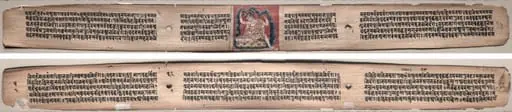 Folio 22 from a Gandavyuha-sutra (Scripture of the Supreme Array): Samantabhadra spinning clouds of things (recto); Text (verso)
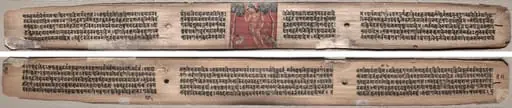 Folio 37 from a Gandavyuha-sutra (Scripture of the Supreme Array): Sudhana and a pair of antelopes (recto); text (verso)
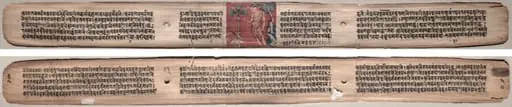 Folio 73 from a Gandavyuha-sutra (Scripture of the Supreme Array): Sudhana and an antelope (recto); text (verso)
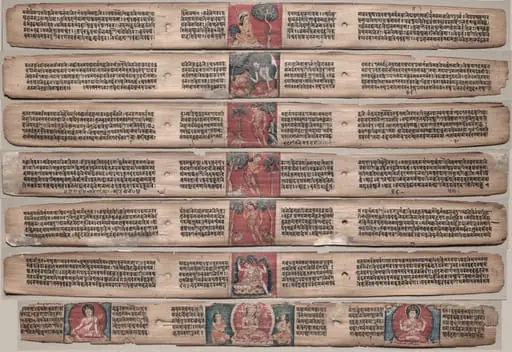 Seven Leaves from a Manuscript of the Gandavyuha-sutra (Scripture of the Supreme Array)
 Folio 348 from a Gandavyuha-sutra (Scripture of the Supreme Array): Bodhisattva Manjushri with two forms of Avalokiteshvara (recto); Bodhisattva Samantabhadra purifies the path to enlightenment, with Manjushri (verso)
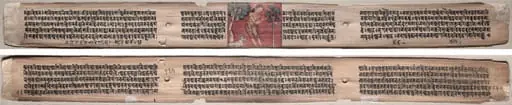 Folio 115 from a Gandavyuha-sutra (Scripture of the Supreme Array): Sudhana and a buffalo (recto); text (verso)
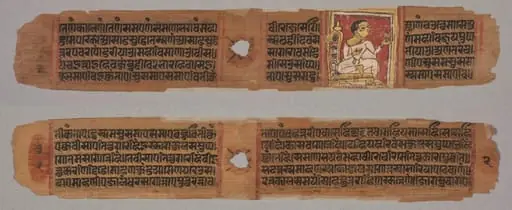 Folio 2, from a Kalpa-sutra and Story of Kalakacharya: Monk Holding a Flower (recto); text (verso)
 Text, folio 20 (verso) from a Gandavyuha-sutra (Scripture of the Supreme Array)
 Text, folio 20 (verso) from a Gandavyuha-sutra (Scripture of the Supreme Array)
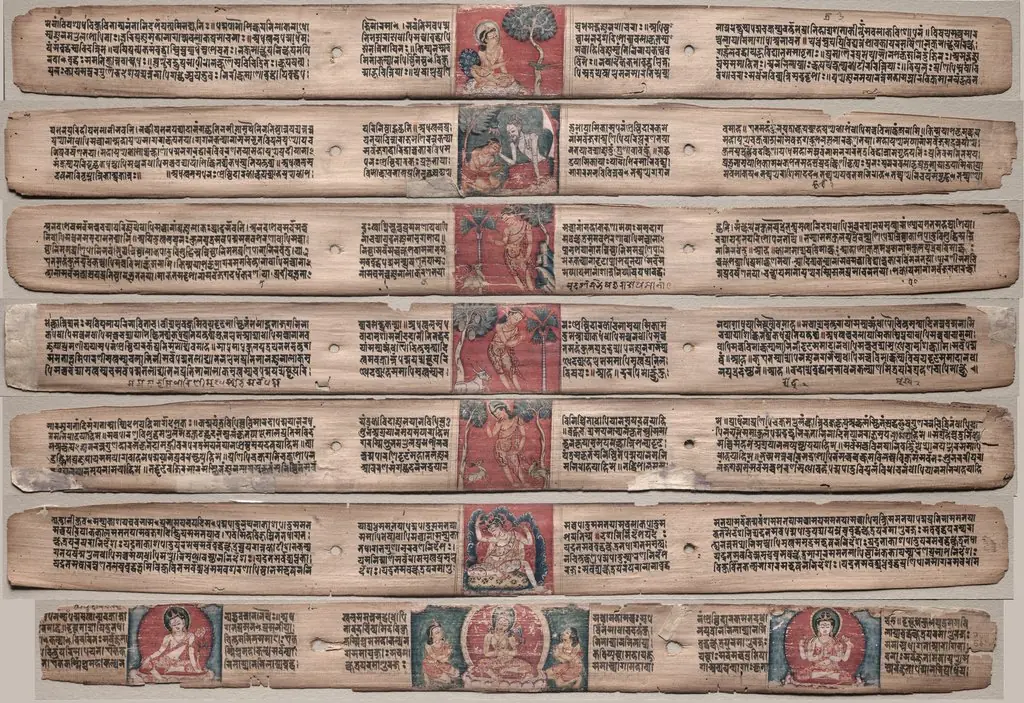 Seven Leaves from a Manuscript of the Gandavyuha-sutra (Scripture of the Supreme Array)
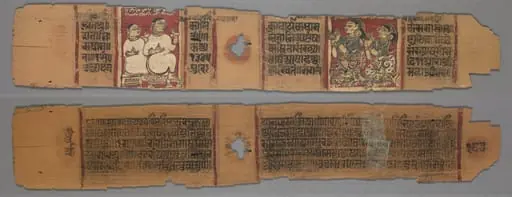 Folio 167, from a Kalpa-sutra and Story of Kalakacharya: two nuns teaching lay women (recto); genealogical text (verso)
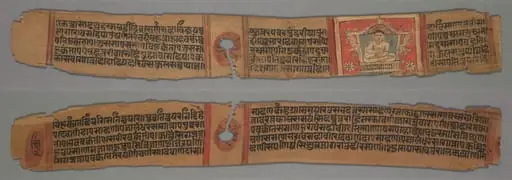 Folio 2, from a Kalpa-sutra and Story of Kalakacharya of Devachandra: Enthroned Monk Gautama (recto); Text (verso)