Artwork
異国人交易図屏風|Foreign Merchants in Japanese Trade Port
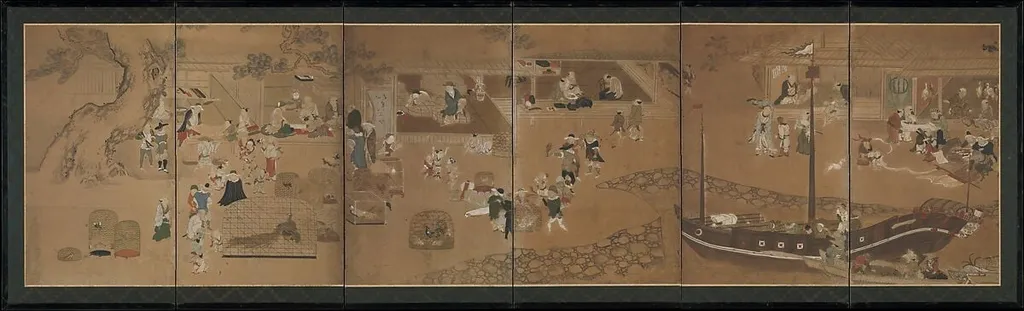
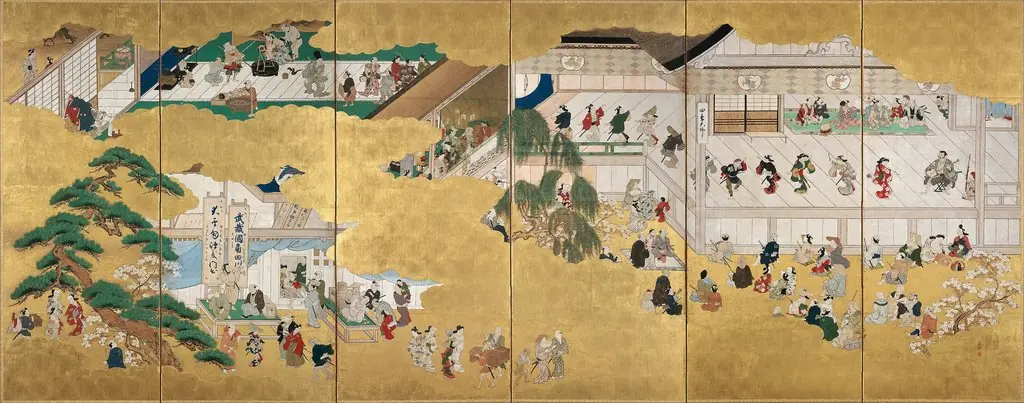
異国人交易図屏風|Foreign Merchants in Japanese Trade Port is an ink painting by the Romanticist artist Unknown. It dates from 1816 and is held in the collection of the Metropolitan Museum of Art. The six‑panel folding screen depicts a bustling Japanese port where foreign merchants conduct trade.
About this work
Overview
The six‑panel folding screen depicts a bustling Japanese port where foreign merchants conduct trade. Across the panels, activity unfolds from the rocky shoreline where cargo is off‑loaded, through interior market spaces crowded with tables of goods, to the harbor where European‑style ships are moored and sailors mingle with traders.
Subject & Meaning
The composition juxtaposes Japanese and foreign elements, highlighting the exchange of commodities and cultures. A solitary peacock, rendered in vivid colour, stands amid the crowd, a conventional emblem of exotic wealth and prestige that underscores the screen’s focus on international commerce.
Technique & Style
Executed in ink and color on paper, the work employs the traditional byōbu format, allowing narrative progression across panels. Brushwork combines delicate line drawing for figures with broader washes for architectural and maritime details, while the palette accentuates textiles, cargo, and the peacock’s plumage.
Context
The screen reflects a period when Japanese ports, such as Nagasaki, served as gateways for European traders. The inclusion of European‑styled vessels and hybrid architecture mirrors the visual vocabulary artists used to convey the presence of foreign merchants in Japan’s coastal towns.
Legacy
By integrating symbolic fauna like the peacock with realistic depictions of trade activity, the screen contributes to a visual record of early modern cross‑cultural interaction, informing both contemporary viewers and later scholars of Japan’s mercantile history.
Artist & collection

 Domestic Scene
 Giacomo and Cardinal Marco, investing Andrea, Abbot of San Zeno, with his Benefice
 The Nymph of Fontainebleau
 Portrait of a Woman
 Madonna and Child with Saints in the Enclosed Garden
 Venus and Minerva
 Family Group of Four on Sofa
 Wall painting from Room H of the Villa of P. Fannius Synistor at Boscoreale
 南蛮屏風|Arrival of the Europeans
 Untitled
 Literary Gathering in the Orchid Pavilion
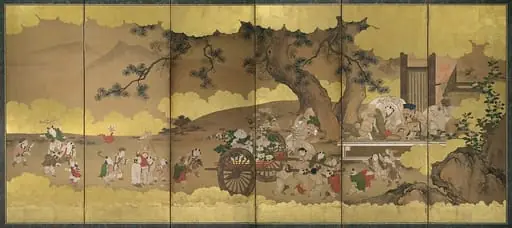 狩野周信筆 七福神唐子図屏風|Seven Gods of Good Fortune and Chinese Children
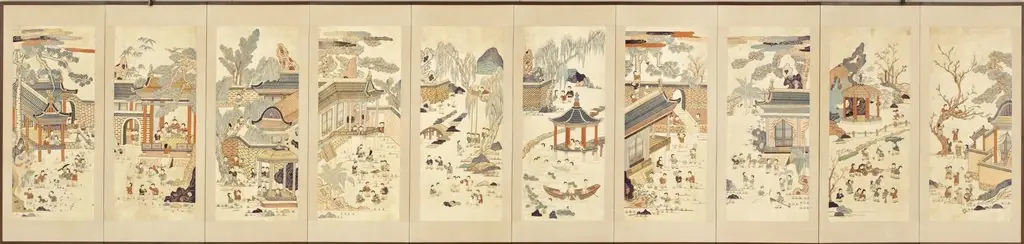 One Hundred Boys at Play
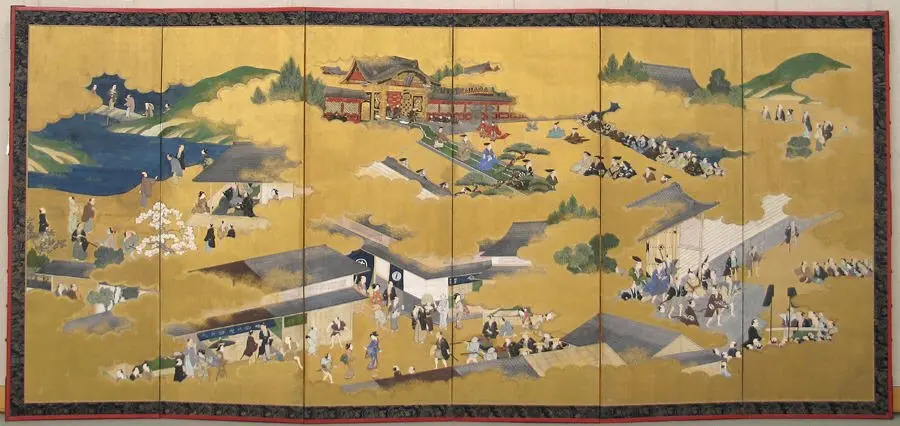 Daimyo Procession from Yūshō-in
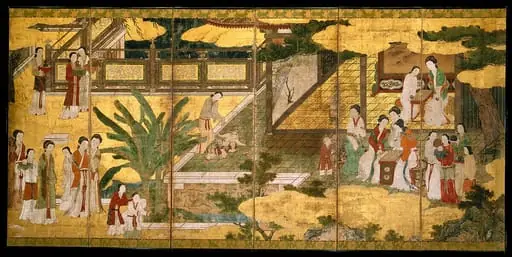 伝狩野永徳筆 唐美人唐子図屏風|Chinese Women and Children in a Palace Garden
 Untitled
 Untitled
 Untitled
 The Tale of Taishokan
 Scenes from the Nakamura Kabuki Theater