Artwork
Formă tronconică; fond alb; culori: cărămiziu; albastru; verde; în centru vasului este dispus un vrej circular cu frunze de culoare verde, cărămizie și albastră alternînd cromatic, înscris într-un cerc de culoare cărămizie; pe peretele vasului este amplasată o stea, spațiul dintre raze este decorat cu linii verticale, paralele, grupate sub forma unor triunghiuri cu vărful orientat către centru. Sub buza vasului este amplasat un cerc.
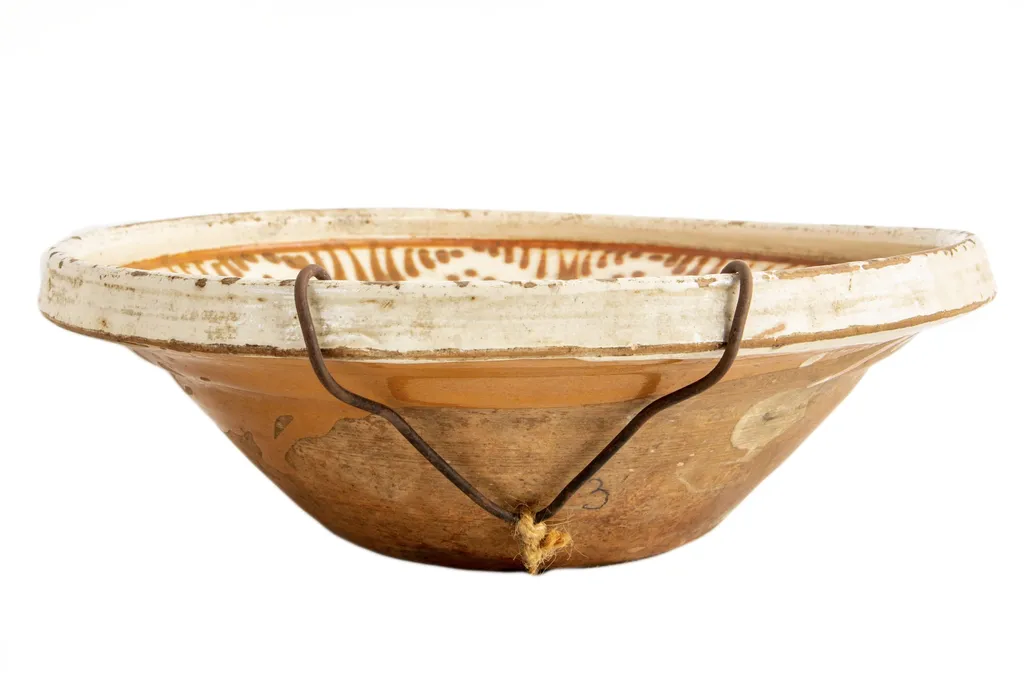
Formă tronconică; fond alb; culori: cărămiziu; albastru; verde; în centru vasului este dispus un vrej circular cu frunze de culoare verde, cărămizie și albastră alternînd cromatic, înscris într-un cerc de culoare cărămizie; pe peretele vasului este amplasată o stea, spațiul dintre raze este decorat cu linii verticale, paralele, grupate sub forma unor triunghiuri cu vărful orientat către centru. Sub buza vasului este amplasat un cerc. is a print by Unknown. It dates from 1850 and is held in the collection of the Romanian Peasant Museum. This is a modest clay vessel, likely utilitarian in origin, with a worn surface and a simple handle secured by a frayed cord.
About this work
Overview
This is a modest clay vessel, likely utilitarian in origin, with a worn surface and a simple handle secured by a frayed cord.
This is a modest clay vessel, likely utilitarian in origin, with a worn surface and a simple handle secured by a frayed cord. Its exterior bears a faded reddish-brown hue, while the interior rim is lined with white pigment. A narrow red band encircles the upper edge, framing the central decorative elements within the bowl's interior. The form suggests everyday use, possibly for storage or serving, with decoration concentrated on the inner surface.
Subject & Meaning
The interior features a circular arrangement of stylized leaves in alternating shades of red, blue, and green, centered within a reddish ring. A star motif, with rays divided into small triangular patterns pointing inward, appears on the vessel’s wall. These geometric and botanical symbols may reflect local cosmological or seasonal beliefs, though their precise symbolic function remains undocumented. Their placement suggests ritual or ceremonial significance tied to the vessel’s use.
Technique & Style
The decoration was applied using pigment on fired clay, with careful attention to symmetry and repetition. The leaves and star are rendered in flat, unmodulated colors, arranged with deliberate radial balance. Triangular patterns between the star’s rays are formed by parallel vertical lines, creating a structured, almost textile-like rhythm. The style is minimalist, avoiding naturalism in favor of abstract, repetitive forms typical of regional ceramic traditions.
History & Provenance
The object lacks documented excavation or collection history, but its form and decoration align with pottery traditions from Eastern Europe, particularly among rural communities in the 19th or early 20th century. Its worn condition and simple construction suggest prolonged domestic use. It was likely acquired by the Museum of Ethnography as part of a broader effort to preserve everyday material culture from agrarian societies.
Context
This vessel belongs to a category of handmade ceramics produced in small-scale, non-industrial settings, where decoration often carried cultural meaning beyond aesthetics. Similar objects from the region feature geometric motifs linked to protection, fertility, or cosmic order. The presence of a handle and cord implies portability, possibly for use in rituals, travel, or seasonal ceremonies within household or communal life.
Legacy
Though not signed or attributed to a known artisan, the vessel contributes to the understanding of vernacular ceramic practices in Eastern Europe. Its preservation in a museum setting underscores efforts to document ordinary objects that reflect communal identity and craft continuity. It stands as a quiet testament to the visual language embedded in utilitarian objects before industrial mass production.
Artist & collection

 Domestic Scene
 Giacomo and Cardinal Marco, investing Andrea, Abbot of San Zeno, with his Benefice
 The Nymph of Fontainebleau
 Portrait of a Woman
 Madonna and Child with Saints in the Enclosed Garden
 Venus and Minerva
 Family Group of Four on Sofa
 Wall painting from Room H of the Villa of P. Fannius Synistor at Boscoreale
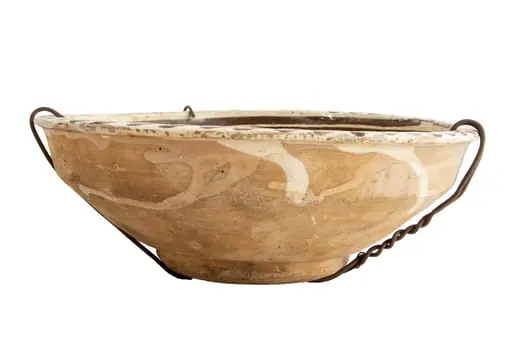 Formă tronconică; fond alb fildeșiu; pe fundul vasului este amplasată o spirală de culoare maro închis încadrată de semicercuri cu contur maro și interior de culoare verde; pe peretele vasului este amplasată o bandă circulară mai lată decorată cu motivul specific centrului: pînza de păianjen - realizată prin tehnică jirăvirii cu gaița. Întreaga compoziție este încadrată de un soare stilizat cu raze de culoare galben - portocaliu. Buza este decorată cu un val circular de culoare brună. Piesa reprezintă una dintre primele achiziții ale lui Alexandru Tzigara Samurcaș. Folosită la decorarea interiorului țărănesc în așa numita - cameră bună
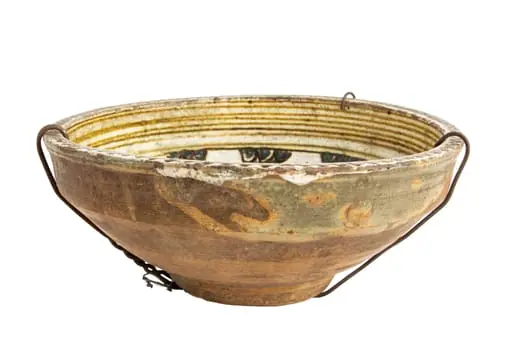 Formă tronconică; fond alb. Decorul, pictat pe fond alb și amplasat în centrul farfuriei, este reprezentat de o spirală dispusă central, de culoare maro încadrată de un soare stilizat cu șase raze. Pe peretele vasului este amplasat un soare de culoare albă cu nouă raze. Între razele soarelui sînt amplasate triunghiuri de culoare maro închis formate din alăturarea unor semicercuri. Sub buza vasului sînt amplasate mai multe cercuri concentrice de culoare maro. Buza farfuriei este decorată cu un val de culoare maro Folosită la decorarea interiorului țărănesc în așa numita - cameră bună.
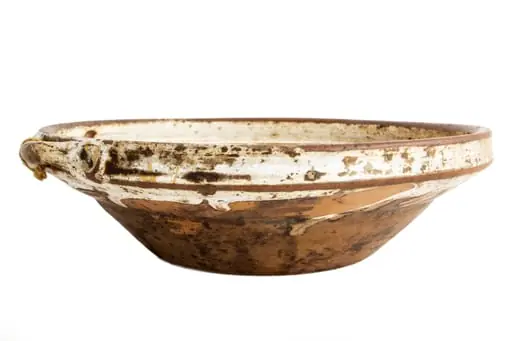 Formă tronconică; fond alb; în centrul vasului este amplasat un buchet de flori format din trei flori de floarea soarelui și doi boboci de culoare albastră încadrat de un vrej cu frunze de culoare verde și albastră dispus circular într-o bandă de culoare cărămizie; în planul următor este amplasată o bandă circulară de culoare albă. Sub buza vasului într-o bandă circulară delimitată de două cercuri de culoare albă este amplasat un vrej similar cu cel descris mai sus. Folosită la decorarea interiorului țărănesc în așa numita - cameră bună.
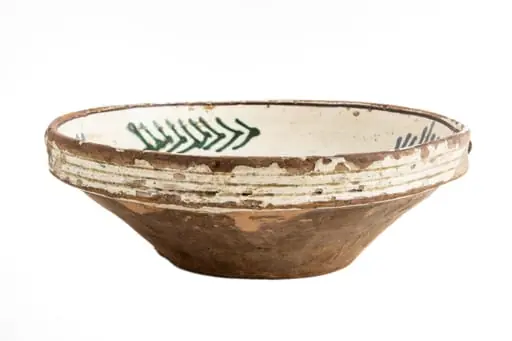 Formă tronconică; fond alb fildeșiu; în centrul vasului este dispusă orizontal o ramură de brad cu frunze de de culoare verde și albastră înscrisă într-un cerc. Pe peretele vasului sînt amplasate patru ramuri de brad, două de culoare albastră și două de culoare verde alternînd cromatic. Sub buza vasului este amplasat un cerc de culare maro.
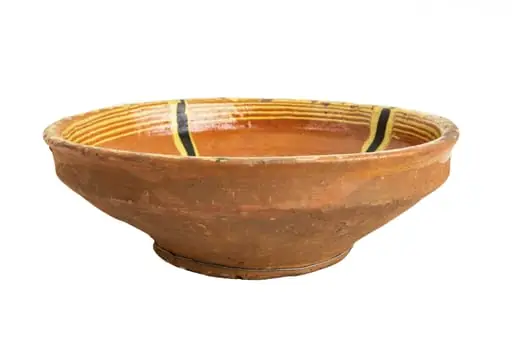 Formă tronconică; fond cărămiziu. Pe fundul vasului, în centru este amplasată o spirală de culoare galbenă încadrată de o serie de cercuri concentrice subțiri de aceeași culoare. Pe peretele vasului sînt dispuse vertical patru linii de culoare brună cu contururi galbene. Buza vasului este decorată cu un val circular de culoare galbenă.
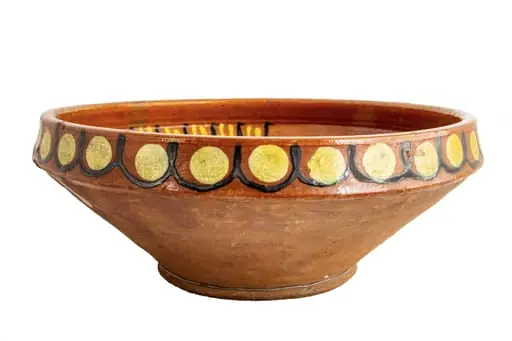 Formă tronconică; fond cărămiziu. Decorul constă într-o spirală de culoare galbenă amplasată central pe fundul vasului, o bandă circulară de culoare galbenă încadrată de două cercuri de culoare brun închis și o linie circulară în zig -zag de culoare galbenă. Pe peretele vasului sub buză sînt dispuse trei grupuri de semicercuri cu conturul exterior de culoare brun închis; cel înterior fiind de culoare galbenă. La exterior sub buză este amplasat un șir de semicercuri de culoare brun închis; fiecare semicerc are în interior un cerc de culoare galbenă. Folosită la decorarea interiorului țărănesc în așa numita - cameră bună.
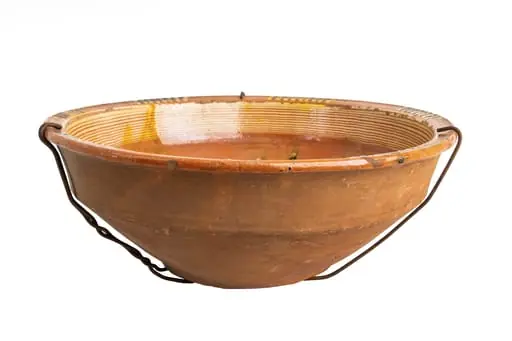 Formă tronconică; fond cărămiziu; pe fundul vasului, în centru este dispusă o serie de cercuri concentrice de culoare albă încadrate de un vrej circular cu frunze de culoare brun închis. Pe peretele farfuriei este amplasat un registru compus din cercuri concentrice de culoare albă, subțiri ,decorat cu linii verticale de culoare albă cu puncte brun închis. Pe umărul vasului sînt dispuse vrejuri semicirculare de culoare albă, respectiv galbenă cu frunze brune. Buza vasului decorată cu vrejuri similare alternînd cromatic. Folosită la decorarea interiorului țărănesc în așa numita - cameră bună.
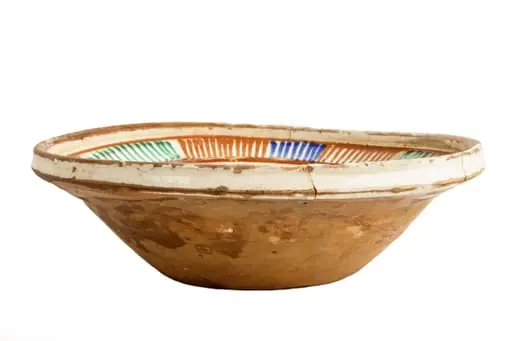 Formă tronconică; fond alb; în centrul vasului sînt amplasate nouă flori cu petale triunghiulare: patru de culoare cărămizie, două albastre, două verzi, una cu petale albastre și verzi. Sub buza vasului într-o bandă circulară delimitată de două cercuri cărămizii sînt amplasate grupuri de linii oblice paralele colorate cărămiziu, verde și albastru ce alternează cromatic. Folosită la decorarea interiorului țărănesc în așa numita - cameră bună.
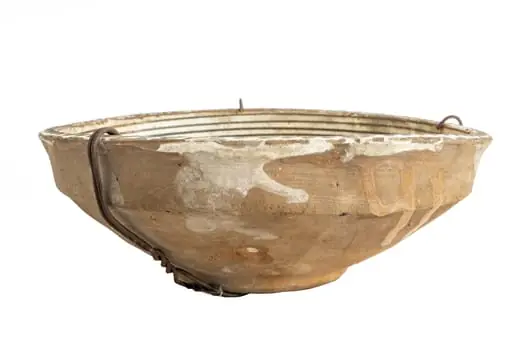 Formă tronconică; fond alb; în centrul vasului este amplasat un un cerc de culoare maro înscris în altul de culoare similară. Pe peretele vasului sînt dispuse câteva registre decorative: unul circular în care sînt plasate segmente de val de culoare verde, un altul mai lat decorat cu semicercuri cu contururi duble de culoare maro și verde, punctate la exterior; sub buza vasului în alt registru circular sînt amplasate linii vălurite de culoare cărămizie; buza vasului decorată cu un val circular de culoare maro închis. Folosită la decorarea interiorului țărănesc în așa numita - cameră bună.