Artwork
Formă tronconică; fond alb. Decorul, pictat pe fond alb și amplasat în centrul farfuriei, este reprezentat de o spirală dispusă central, de culoare maro încadrată de un soare stilizat cu șase raze. Pe peretele vasului este amplasat un soare de culoare albă cu nouă raze. Între razele soarelui sînt amplasate triunghiuri de culoare maro închis formate din alăturarea unor semicercuri. Sub buza vasului sînt amplasate mai multe cercuri concentrice de culoare maro. Buza farfuriei este decorată cu un val de culoare maro Folosită la decorarea interiorului țărănesc în așa numita - cameră bună.
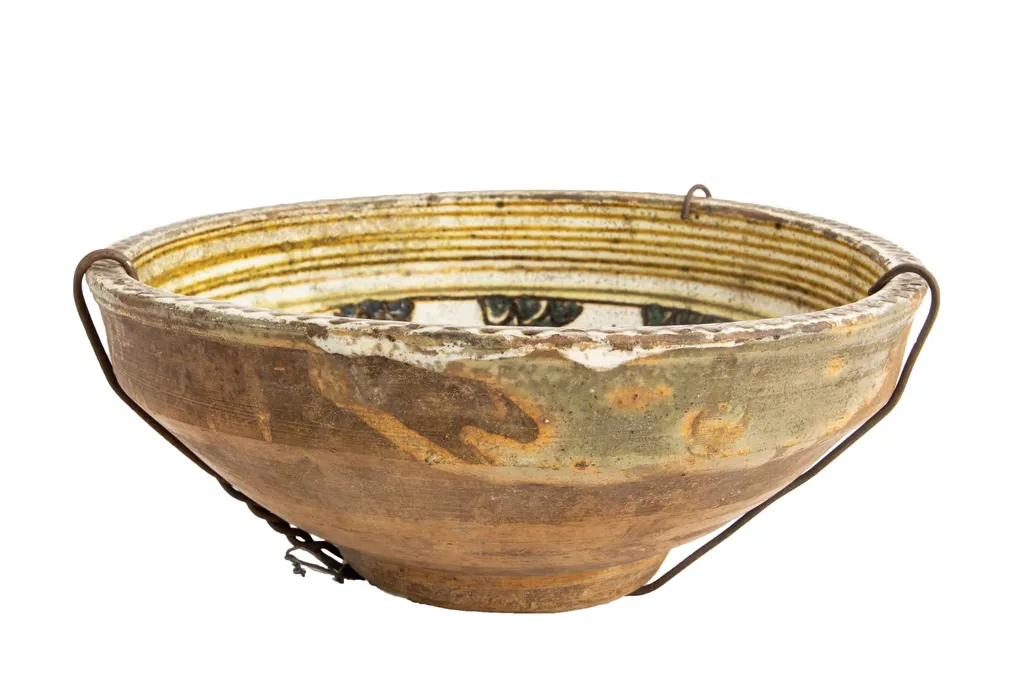
Formă tronconică; fond alb. Decorul, pictat pe fond alb și amplasat în centrul farfuriei, este reprezentat de o spirală dispusă central, de culoare maro încadrată de un soare stilizat cu șase raze. Pe peretele vasului este amplasat un soare de culoare albă cu nouă raze. Între razele soarelui sînt amplasate triunghiuri de culoare maro închis formate din alăturarea unor semicercuri. Sub buza vasului sînt amplasate mai multe cercuri concentrice de culoare maro. Buza farfuriei este decorată cu un val de culoare maro Folosită la decorarea interiorului țărănesc în așa numita - cameră bună. is a print by Unknown. It dates from 1850 and is held in the collection of the Romanian Peasant Museum. The object is a shallow, earthenware bowl with two side handles, featuring a white interior painted with a central brown spiral.
About this work
Overview
The object is a shallow, earthenware bowl with two side handles, featuring a white interior painted with a central brown spiral. The rim and exterior display a series of brown decorative motifs, including a wavy line, concentric circles, and stylized sun motifs. The piece shows signs of wear, such as chipped rim edges and a greenish patina on the outer surface.
Subject & Meaning
The central design consists of a brown spiral surrounded by a stylized sun with six rays, while the outer rim bears a white sun with nine rays. Dark brown triangles, formed by adjoining semicircles, fill the spaces between the sun’s rays. These geometric elements reflect traditional folk symbolism, often associated with solar motifs and protective imagery in rural decorative arts.
Technique & Style
The decoration was applied with pigment on a white ground, creating a contrast between the brown motifs and the faded white background. The use of repeated geometric patterns—spirals, rays, triangles, and concentric circles—demonstrates a folk aesthetic that emphasizes symmetry and stylization rather than naturalistic representation.
History & Provenance
The bowl was employed in a domestic setting, specifically within a "cameră bună," a traditional rural room used for communal gatherings. Its functional role in everyday life, combined with its decorative scheme, illustrates the integration of art and utility in the region’s material culture.
Context
Objects of this type belong to a broader category of household ceramics that were both utilitarian and ornamental in rural communities. Similar bowls are documented in ethnographic collections, where they serve as examples of vernacular design and regional craft traditions.
Artist & collection

 Domestic Scene
 Giacomo and Cardinal Marco, investing Andrea, Abbot of San Zeno, with his Benefice
 The Nymph of Fontainebleau
 Portrait of a Woman
 Madonna and Child with Saints in the Enclosed Garden
 Venus and Minerva
 Family Group of Four on Sofa
 Wall painting from Room H of the Villa of P. Fannius Synistor at Boscoreale
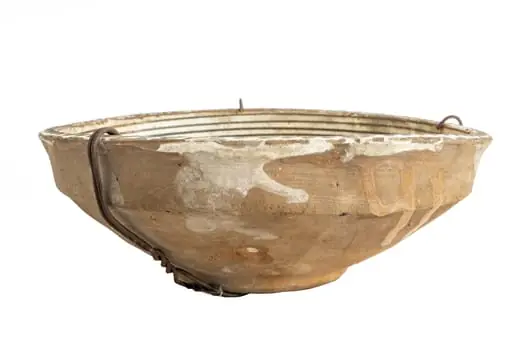 Formă tronconică; fond alb; în centrul vasului este amplasat un un cerc de culoare maro înscris în altul de culoare similară. Pe peretele vasului sînt dispuse câteva registre decorative: unul circular în care sînt plasate segmente de val de culoare verde, un altul mai lat decorat cu semicercuri cu contururi duble de culoare maro și verde, punctate la exterior; sub buza vasului în alt registru circular sînt amplasate linii vălurite de culoare cărămizie; buza vasului decorată cu un val circular de culoare maro închis. Folosită la decorarea interiorului țărănesc în așa numita - cameră bună.
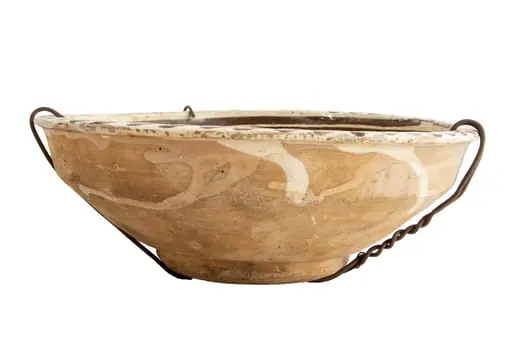 Formă tronconică; fond alb fildeșiu; pe fundul vasului este amplasată o spirală de culoare maro închis încadrată de semicercuri cu contur maro și interior de culoare verde; pe peretele vasului este amplasată o bandă circulară mai lată decorată cu motivul specific centrului: pînza de păianjen - realizată prin tehnică jirăvirii cu gaița. Întreaga compoziție este încadrată de un soare stilizat cu raze de culoare galben - portocaliu. Buza este decorată cu un val circular de culoare brună. Piesa reprezintă una dintre primele achiziții ale lui Alexandru Tzigara Samurcaș. Folosită la decorarea interiorului țărănesc în așa numita - cameră bună
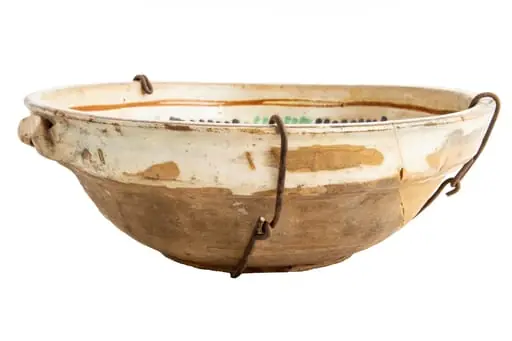 Formă tronconică; fond alb; pe fundul vasului este amplasată o spirală de culoare cărămizie încadrată de patru ramuri de brad; două de culoare albastră, una cărămizie și una verde. Sub buza vasului într-o bandă circulară delimitată de cercuri de culoare cărămizie sînt amplasate grupuri de linii de culoare albastră, verde, cărămizie, dispuse oblic, alternînd cromatic. Folosită la decorarea interiorului țărănesc în așa numita - cameră bună.
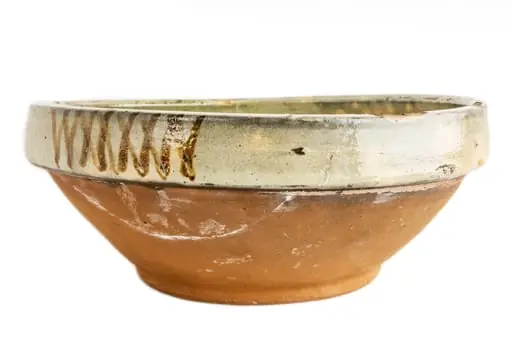 Formă tronconică; fond alb - cenușiu; în centru este amplasată o floare cu petale verzi peste care a fost suprapusă o alta cu petale de culoare cărămizie; sub buza vasului este dispus un cerc de culoare maro. În exterior sub buza vasului pe un fond alb sînt amplasate romburi de culoare maro cu galben. Folosită la decorarea interiorului țărănesc în așa numita - cameră bună.
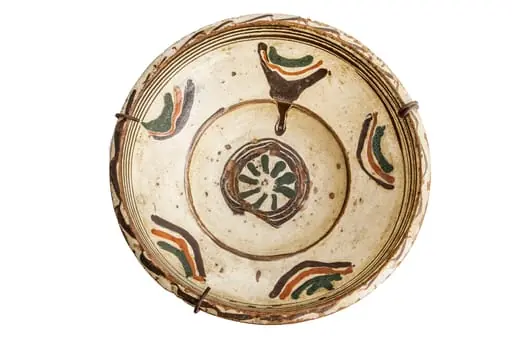 Formă tronconică; fond alb fildeșiu; pe fundul vasului dispusă central o floare cu petale de culoare verde înscrisă într-o bandă circulară formată din mai multe cercuri de culoare maro. Pereții vasului sînt decorați cu cinci grupe de semicercuri; fiecare grup format din trei semicercuri colorate în verde, maro și portocaliu neglijent realizate (în cazul unuia culoarea s-a scurs). Buza este decorată cu un val circular de culoare maro închis. Piesa reprezintă una dintre primele achiziții ale lui Alexandru Tzigara Samurcaș. Folosită la decorarea interiorului țărănesc în așa numita - cameră bună.
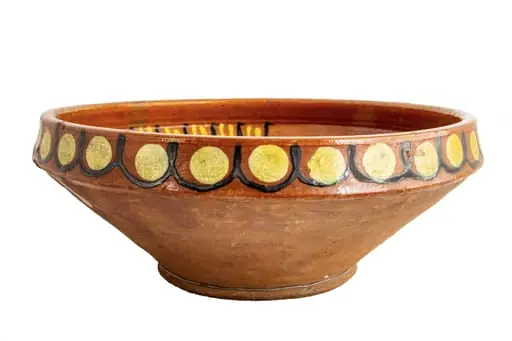 Formă tronconică; fond cărămiziu. Decorul constă într-o spirală de culoare galbenă amplasată central pe fundul vasului, o bandă circulară de culoare galbenă încadrată de două cercuri de culoare brun închis și o linie circulară în zig -zag de culoare galbenă. Pe peretele vasului sub buză sînt dispuse trei grupuri de semicercuri cu conturul exterior de culoare brun închis; cel înterior fiind de culoare galbenă. La exterior sub buză este amplasat un șir de semicercuri de culoare brun închis; fiecare semicerc are în interior un cerc de culoare galbenă. Folosită la decorarea interiorului țărănesc în așa numita - cameră bună.
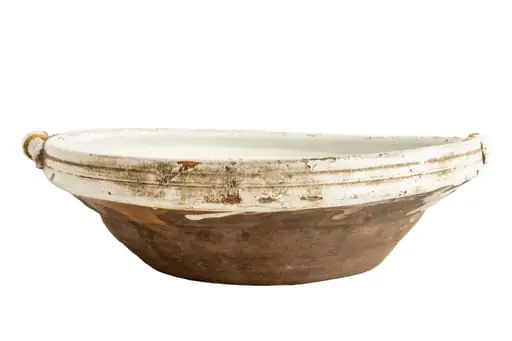 Formă tronconică; fond alb. Decorul amplasat în centrul farfuriei, este reprezentat de trei flori stilizate și două frunze, de culoare albastră. Pe umărul vasului într-un registru circular delimitat de linii albastre sînt amplasate ramuri de brad de culoare albastră și verde alternînd cromatic. Pe laterale se disting două toarte. Folosită la decorarea interiorului țărănesc în așa numita - cameră bună.
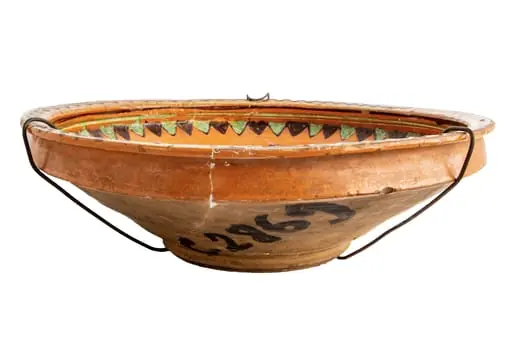 Formă tronconică; fond cărămiziu. În centrul farfuriei este amplasat un soare stilizat cu raze de culoare maro închis și vernil, alternînd cromatic, înscris într-un altul de culoare vernil cu raze de culoare maro închis. Sub buza vasului este dispus un șir circular de triunghiuri de culoare verde si maro închis alternînd cromatic, cu vârful orientat în jos. Buza vasului decorată cu un val circular de culoare maro închis. Folosită la decorarea interiorului țărănesc în așa numita - cameră bună.
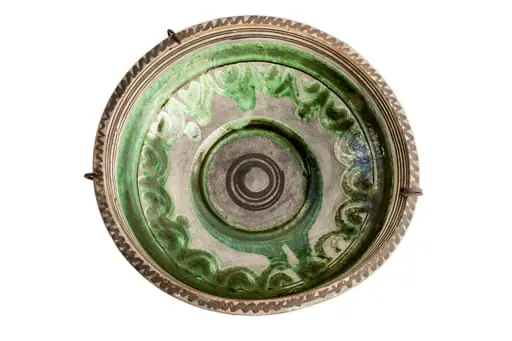 Formă tronconică; fond alb; culori: verde, maro; în centrul farfuriei este amplasată o spirală de culoare maro înscrisă într-un cerc de culoare verde cu culoare intinsă, scursă. Pe perete sînt amplasate semicercuri de culoare verde, cu contur dublu orientate către centrul farfuriei. Sub buză sînt amplasate două cercuri de culoare maro; buza decorată cu un zig -zag de culoare similară. Culorile sînt scurse.
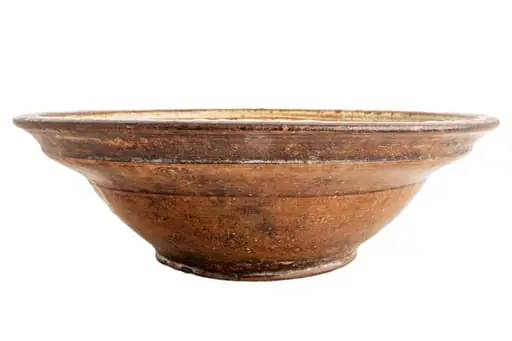 Formă tronconică; fond cărămiziu. În partea centrală sînt dispuse puncte de culoare albă (majoritatea cu smalțul sărit) sub forma unei flori, încadrate de o spirală de culoare maro închis și o bandă circulară de culoare albă. Pe peretele vasului sînt amplasate cinci frunze de culoare albă și o bandă circulară de culoare maro închis decorată cu puncte de culoare albă. Buza vasului prezintă grupuri de puncte de culoare albă pe un fond maro închis. Folosită la decorarea interiorului țărănesc în așa numita - cameră bună.