Artwork
Formă tronconică; fond alb; culori: verde; roșu - cărămiziu; maro; În centrul farfuriei este amplasată o cruce în X de culoare verde, între brațele crucii sînt amplasate patru petale sub formă de inimă de culoare roșie - cărămiziu care sugerează o floare. Pe perete într-o bandă circulară de culoare maro sînt dispuse grupuri de puncte de culoare roșu - cărămiziu, albe și verzi alternînd cromatic. Sub buza vasului este amplasat un cerc de culoare cărămizie.
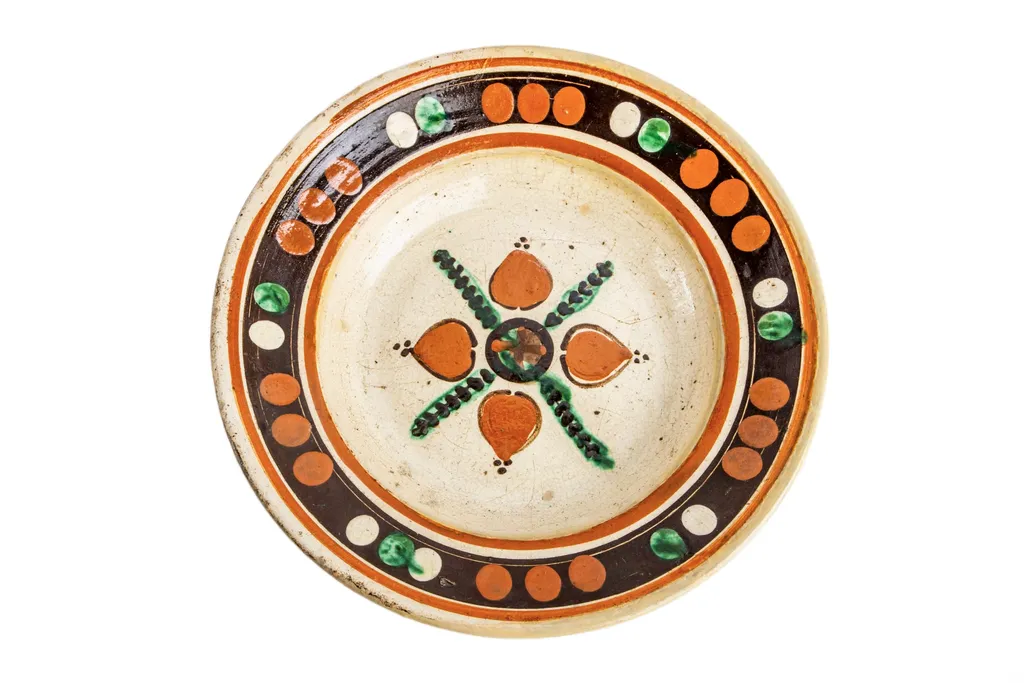
Formă tronconică; fond alb; culori: verde; roșu - cărămiziu; maro; În centrul farfuriei este amplasată o cruce în X de culoare verde, între brațele crucii sînt amplasate patru petale sub formă de inimă de culoare roșie - cărămiziu care sugerează o floare. Pe perete într-o bandă circulară de culoare maro sînt dispuse grupuri de puncte de culoare roșu - cărămiziu, albe și verzi alternînd cromatic. Sub buza vasului este amplasat un cerc de culoare cărămizie. is a print by Unknown. It dates from 1850 and is held in the collection of the Romanian Peasant Museum. This ceramic plate features a minimalist white ground with geometric and organic motifs arranged in concentric bands.
About this work
Overview
This ceramic plate features a minimalist white ground with geometric and organic motifs arranged in concentric bands.
This ceramic plate features a minimalist white ground with geometric and organic motifs arranged in concentric bands. A central green X-shaped cross is surrounded by four heart-shaped red-brown petals, forming a stylized floral symbol. A narrow brown rim encircles the base, while a decorative band near the edge contains alternating dots of white, red-brown, and green, creating a rhythmic, repetitive pattern.
Subject & Meaning
The central motif combines a cross with heart-shaped petals, suggesting a fusion of symbolic forms—possibly religious and natural. The arrangement implies a deliberate balance between structure and organic growth, though no definitive cultural or spiritual interpretation is recorded. The repetition of dots may reflect communal or ritual patterns, common in folk traditions where pattern signifies order or continuity.
Technique & Style
The design is executed with precise hand-painted lines and controlled application of pigments on a flat, circular surface. Colors are limited to earth tones and white, applied in uniform fields and small, evenly spaced dots. The style emphasizes clarity and symmetry, avoiding shading or perspective, characteristic of traditional ceramic decoration rooted in regional craft practices.
History & Provenance
The object originates from a folk ceramic tradition, likely produced in Eastern Europe during the late 19th or early 20th century. Its form and decoration align with regional pottery styles documented in ethnographic collections, particularly those associated with domestic or ceremonial tableware. It was acquired by the Museum of Ethnography as part of a broader effort to preserve vernacular material culture.
Context
Similar ceramic plates from the same region often feature symbolic motifs tied to seasonal cycles, protection, or communal identity. The use of dots in rhythmic bands is a widespread decorative device in rural pottery, serving both aesthetic and mnemonic functions. The combination of cross and floral elements may reflect syncretic beliefs blending Christian iconography with older agrarian symbols.
Legacy
This plate contributes to the understanding of how everyday objects carried cultural meaning beyond utility. Its preservation in ethnographic collections highlights the value placed on regional craftsmanship and the transmission of visual language through generations. It remains a reference point for studies on folk symbolism and ceramic design in Eastern European material culture.
Artist & collection

 Domestic Scene
 Giacomo and Cardinal Marco, investing Andrea, Abbot of San Zeno, with his Benefice
 The Nymph of Fontainebleau
 Portrait of a Woman
 Madonna and Child with Saints in the Enclosed Garden
 Venus and Minerva
 Family Group of Four on Sofa
 Wall painting from Room H of the Villa of P. Fannius Synistor at Boscoreale
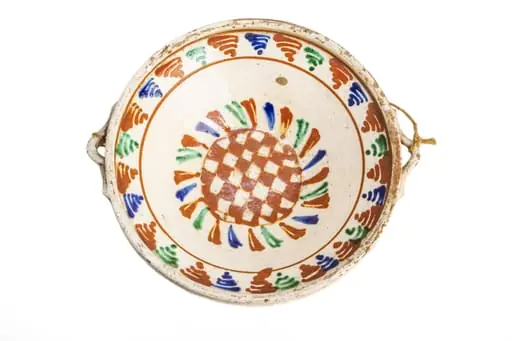 Formă tronconică; fond alb; culori: cărămiziu, albastru, verde. În centru vasului este amplasată o floare stilizată cu o corolă sub forma unei rețele de romburi de culoare albă și cărămizie, cu petale albastre, verzi și cărămizii alternînd cromatic. Sub buza vasului este dispusă o bandă circulară decorată cu triunghiuri cu vîrful orientat spre centru formate dintr-o serie de semicercuri paralele, colorate în cărămiziu, verde și albastru alternînd cromatic. Prevăzută cu două toarte pentru prinderea pe perete, în vederea unei expuneri mai ușoare. Folosită la decorarea interiorului țărănesc în așa numita - cameră bună.
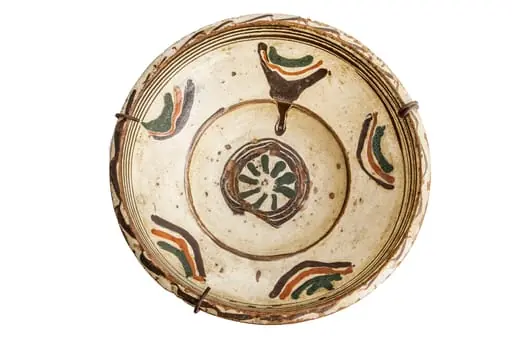 Formă tronconică; fond alb fildeșiu; pe fundul vasului dispusă central o floare cu petale de culoare verde înscrisă într-o bandă circulară formată din mai multe cercuri de culoare maro. Pereții vasului sînt decorați cu cinci grupe de semicercuri; fiecare grup format din trei semicercuri colorate în verde, maro și portocaliu neglijent realizate (în cazul unuia culoarea s-a scurs). Buza este decorată cu un val circular de culoare maro închis. Piesa reprezintă una dintre primele achiziții ale lui Alexandru Tzigara Samurcaș. Folosită la decorarea interiorului țărănesc în așa numita - cameră bună.
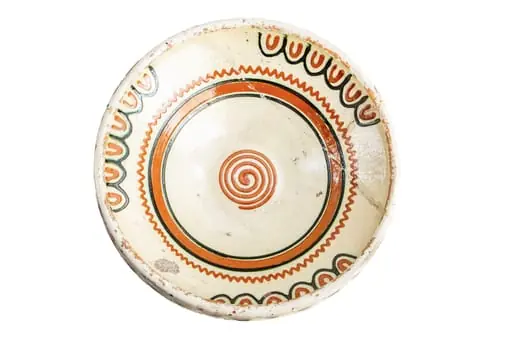 Formă tronconică; fond alb. În centru vasului este amplasată o spirală de culoare cărămizie încadrată de o bandă și un val circular de aceeași culoare. Sub buza vasului sînt amplasate trei grupuri de semicercuri de culoare verde închis, fiecare semicerc are în interior un altul, mai mic de culoare cărămizie. Sub buza vasului, la exterior este amplasat un val circular de culoare verde decorat cu cercuri de culoare cărămizie. Folosită la decorarea interiorului țărănesc în așa numita - cameră bună.
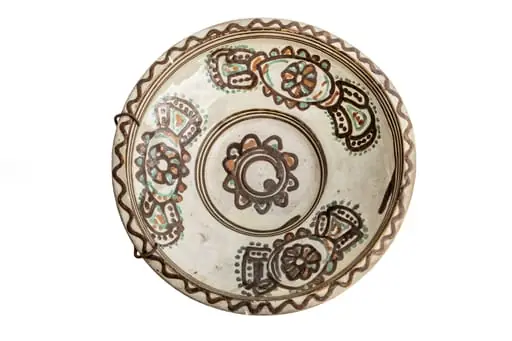 Formă tronconică; fond alb fildeșiu; pe fundul vasului este amplasată o floare stilizată cu petale cărămizii și verzi înscrisă într-o spirală de culoare maro. Pe pereții vasului sînt amplasate trei compoziții florale compuse dintr-o floare circulară cu petale cărămizii și verzi încadrată de doi boboci de floare stilizați. Buza este decorată cu un val circular de culoare maro închis. Piesa reprezintă una dintre primele achiziții ale lui Alexandru Tzigara Samurcaș. Folosită la decorarea interiorului țărănesc în așa numita - cameră bună.
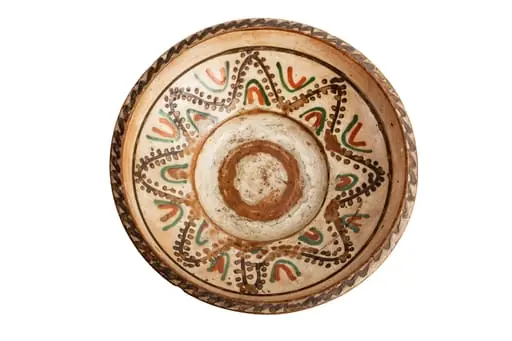 Formă tronconică; fond alb fildeșiu; pe fundul vasului, în centru este amplasată o bandă circulară de culoare cărămizie; pe umerii vasului, este reprezentată o stea cu opt raze, de culoare maro cu contururile dublate de puncte de culoare similară; între razele stelei sînt amplasate unghiuri cu contur dublu: verde și cărămiziu; întreaga compoziție este înscrisă într-un cerc. Buza vasului este decorată cu val circular de culoare brun închis. Piesa reprezintă una dintre primele achiziții ale lui Alexandru Tzigara Samurcaș. Folosită la decorarea interiorului țărănesc în așa numita - cameră bună.
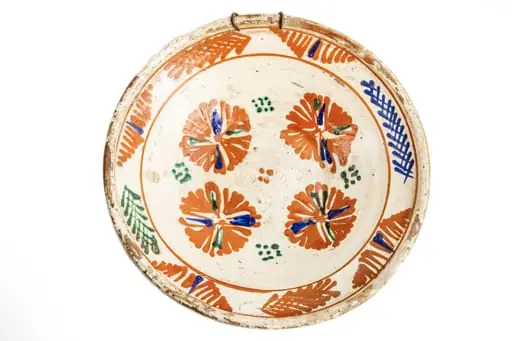 Formă tronconică; fond alb; culori: cărămiziu; albastru; verde; în centru vasului sînt amplasate patru puncte de culoare cărămizie încadrate de patru flori cu petale cărămizii, verzi și albastre; între flori sînt intercalate puncte verzi dispuse sub forma unor romburi, întreaga compoziție este înscrisă într-un cerc de culoare cărămizie; pe peretele farfuriei sînt amplasate ramuri de brad de culoare, verde, albastră și cărămizie, între care sînt intercalate linii de culoare cărămizie, paralele sub forma unor triunghiuri cu vîrful orientat spre centru. Sub buză este amplasat un cerc de culoare cărămizie.
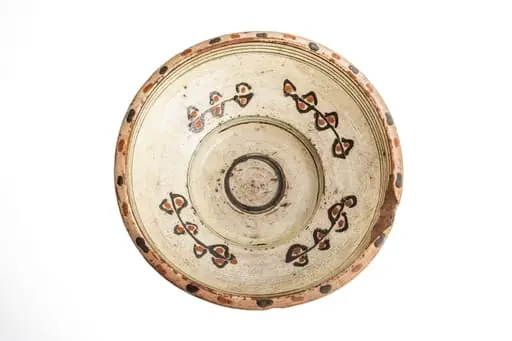 Formă tronconică; fond alb fildeșiu; în centrul farfuriei în partea centrală este amplasat un cerc de culoare brună; pe peretele vasului sînt dispuse patru vrejuri de culoare brună cu frunze portocalii; sub buză sînt amplasate cercuri concentrice de culoare brună; buza decorată cu pete de culoare brun și cărămiziu alternînd cromatic.
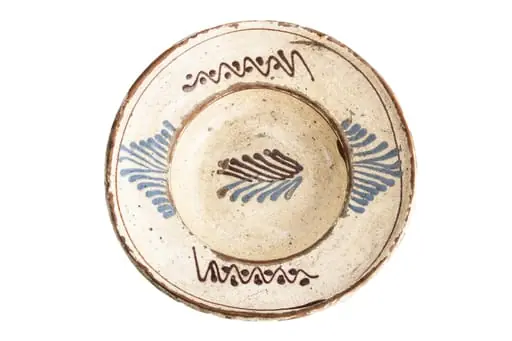 Formă tronconică; fond alb fildeșiu; în centrul vasului încadrată de un cerc de culoare maro este dispusă o ramură de brad colorată pe o parte maro, pe cealaltă în albastru. Pe peretele vasului sînt amplasate două grupuri de frunze stilizate de culoare albastră dispuse sub forma unor unghiuri între care sînt intecalate două linii vălurite de culoare maro cu puncte de culoare similară. Sub buza vasului este amplasat un cerc de culare maro.
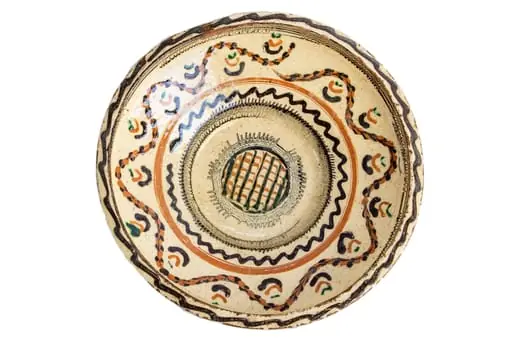 Formă tronconică; fond alb fildeșiu; pe fundul vasului este amplasat un cerc cu contur brun cu suprafața acoperită cu o rețea de romburi de culoare portocalie. Compoziția este încadrată de un val circular de culoare brun închis și un cerc de culoare portocalie. Pe umărul vasului este amplasat un vrej circular portocaliu cu mici accente de culoare brun închis; semicercuri grupate cîte trei colorate: brun, portocaliu și verde care sugerează frunzele vrejului. Buza decorată cu un val de culoare brună.
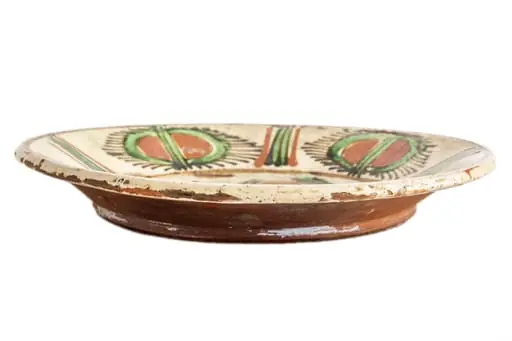 Formă tronconică; fond allb; în centrul farfuriei este amplasată o floare cruciformă cu două frunze de culoare cărămizie supradimensionate, înscrisă într-un cerc de culoare cărămizie. Pe peretele vasului sînt dispuse patru flori cu corole ovoidale colorate în roșu - cărămiziu și verde, cu petale de culoare maro, separate de grupuri de linii paralele de culoare verde și cărămizie. Sub buza vasului este amplasat un cerc de culoare cărămizie.
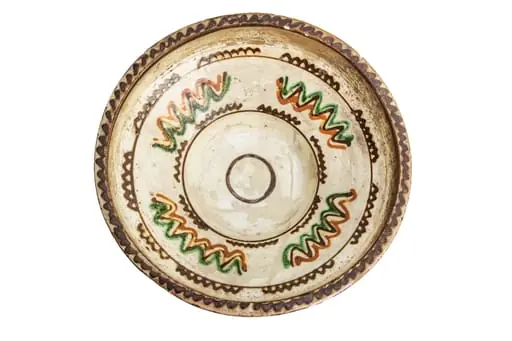 Formă tronconică; fond alb fildeșiu; pe fundul vasului este amplasat un cerc de culoare maro; pereții sînt decorați cu patru segmente de linii în zig - zag cu contururi triple: verde, maro și cărămiziu; întreaga compoziție este înscrisă într-un cerc de culoare maro care are în exterior nouă segmente de linie vălurită de culoare maro. Buza este decorată cu un val circular de culoare maro închis. Piesa reprezintă una dintre primele achiziții ale lui Alexandru Tzigara Samurcaș. Folosită la decorarea interiorului țărănesc în așa numita - cameră bună.
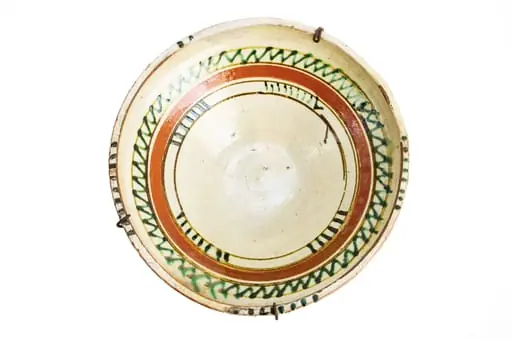 Formă tronconică; fond alb; decorul amplasat pe pereții vasului constă într-un cerc de culoare maro care are în exterior grupuri de linii verzi dispuse oblic; în planul următor o bandă circulară de culoare cărămizie încadrată de o linie circulară în zig-zag de culoare verde. Folosită la decorarea interiorului țărănesc în așa numita - cameră bună.