Artwork
Formă tronconică; fond alb fildeșiu; în centrul farfuriei în partea centrală este amplasat un cerc de culoare brună; pe peretele vasului sînt dispuse patru vrejuri de culoare brună cu frunze portocalii; sub buză sînt amplasate cercuri concentrice de culoare brună; buza decorată cu pete de culoare brun și cărămiziu alternînd cromatic.
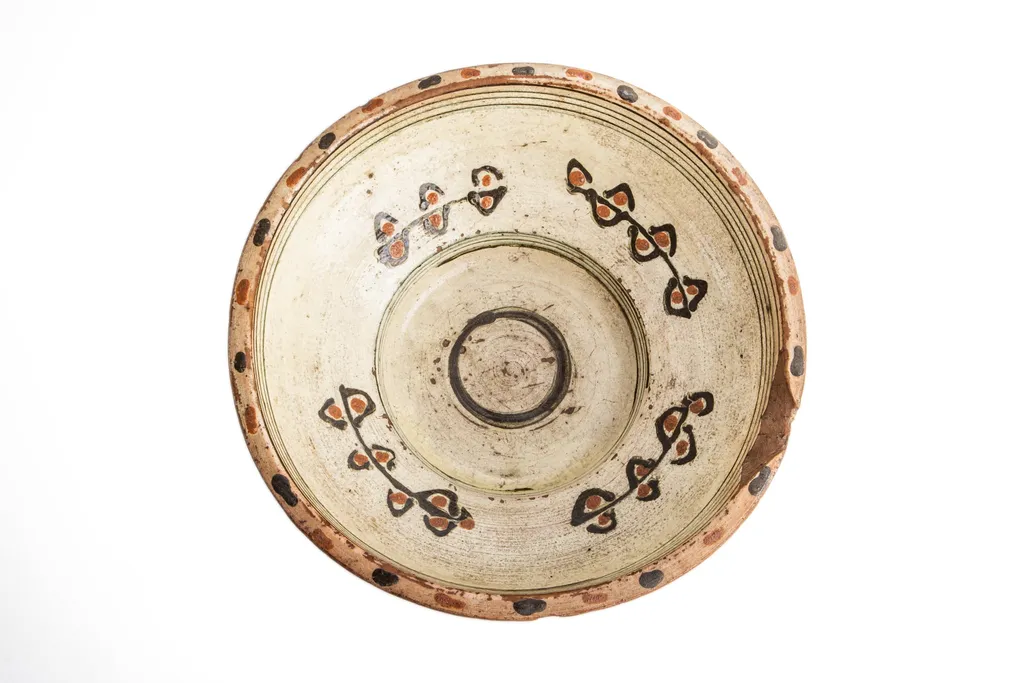
Formă tronconică; fond alb fildeșiu; în centrul farfuriei în partea centrală este amplasat un cerc de culoare brună; pe peretele vasului sînt dispuse patru vrejuri de culoare brună cu frunze portocalii; sub buză sînt amplasate cercuri concentrice de culoare brună; buza decorată cu pete de culoare brun și cărămiziu alternînd cromatic. is a print by Unknown. It dates from 1850 and is held in the collection of the Romanian Peasant Museum. A circular ceramic dish with a pale, ivory-toned surface, showing signs of wear consistent with prolonged use.
About this work
Overview
A circular ceramic dish with a pale, ivory-toned surface, showing signs of wear consistent with prolonged use. Its design is minimal and functional, featuring subtle decorative elements arranged with deliberate asymmetry. The overall aesthetic suggests utility tempered by intentional ornamentation, typical of handmade vessels from cultures that valued both practicality and visual rhythm.
Subject & Meaning
Four upright forms with orange leaf-like appendages radiate outward, possibly evoking plant growth or seasonal cycles.
The central brown circle may symbolize a focal point, perhaps representing earth or a celestial body. Four upright forms with orange leaf-like appendages radiate outward, possibly evoking plant growth or seasonal cycles. The alternating brown and brick-red dots along the rim could indicate a rhythmic pattern tied to ritual or daily use, though no explicit narrative is conveyed—meaning remains abstract and open to interpretation.
Technique & Style
The vessel was likely hand-thrown and painted with mineral-based pigments, applied unevenly to suggest organic variation. The concentric rings near the base and the sparse leaf motifs reflect a preference for repetition and naturalistic forms over rigid symmetry. The use of muted earth tones against a light ground creates quiet contrast, emphasizing texture over detail and favoring tactile presence over illusionistic depth.
History & Provenance
No documented origin or maker is known. The style and material suggest a pre-industrial ceramic tradition, possibly from a rural or regional workshop where functional ware was decorated with locally available pigments. Its worn surface implies extended use, possibly in domestic or communal settings, before being preserved as an artifact of everyday life rather than ceremonial display.
Context
This dish aligns with broader traditions in pre-modern ceramics where decoration served both aesthetic and symbolic purposes without overt iconography. Similar patterns appear in Neolithic and early agrarian pottery across Eurasia, where geometric and botanical motifs were used to mark ownership, seasonality, or spiritual beliefs. Its simplicity reflects a cultural emphasis on harmony with natural materials and processes.
Legacy
Though not widely recognized in major art historical narratives, this object contributes to understanding how ordinary objects carried visual language in non-literate societies. Its enduring presence in collections highlights a growing interest in vernacular craftsmanship and the quiet dignity of utilitarian art, offering insight into lives often absent from written records.
Artist & collection

 Domestic Scene
 Giacomo and Cardinal Marco, investing Andrea, Abbot of San Zeno, with his Benefice
 The Nymph of Fontainebleau
 Portrait of a Woman
 Madonna and Child with Saints in the Enclosed Garden
 Venus and Minerva
 Family Group of Four on Sofa
 Wall painting from Room H of the Villa of P. Fannius Synistor at Boscoreale
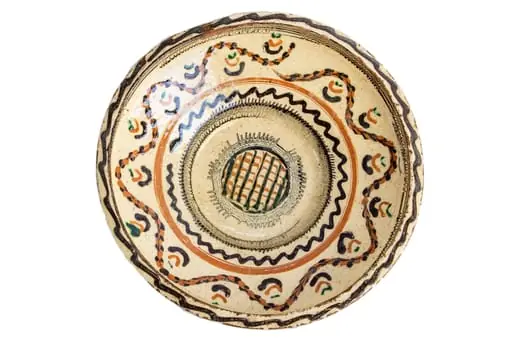 Formă tronconică; fond alb fildeșiu; pe fundul vasului este amplasat un cerc cu contur brun cu suprafața acoperită cu o rețea de romburi de culoare portocalie. Compoziția este încadrată de un val circular de culoare brun închis și un cerc de culoare portocalie. Pe umărul vasului este amplasat un vrej circular portocaliu cu mici accente de culoare brun închis; semicercuri grupate cîte trei colorate: brun, portocaliu și verde care sugerează frunzele vrejului. Buza decorată cu un val de culoare brună.
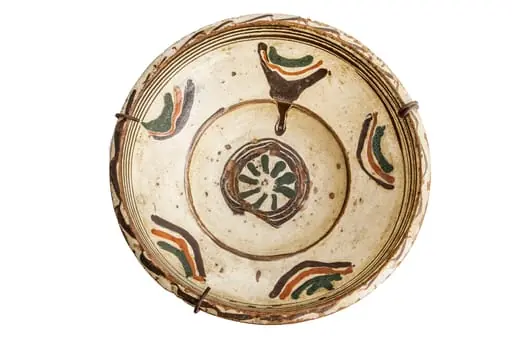 Formă tronconică; fond alb fildeșiu; pe fundul vasului dispusă central o floare cu petale de culoare verde înscrisă într-o bandă circulară formată din mai multe cercuri de culoare maro. Pereții vasului sînt decorați cu cinci grupe de semicercuri; fiecare grup format din trei semicercuri colorate în verde, maro și portocaliu neglijent realizate (în cazul unuia culoarea s-a scurs). Buza este decorată cu un val circular de culoare maro închis. Piesa reprezintă una dintre primele achiziții ale lui Alexandru Tzigara Samurcaș. Folosită la decorarea interiorului țărănesc în așa numita - cameră bună.
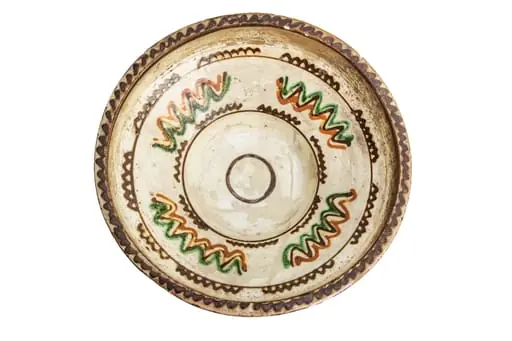 Formă tronconică; fond alb fildeșiu; pe fundul vasului este amplasat un cerc de culoare maro; pereții sînt decorați cu patru segmente de linii în zig - zag cu contururi triple: verde, maro și cărămiziu; întreaga compoziție este înscrisă într-un cerc de culoare maro care are în exterior nouă segmente de linie vălurită de culoare maro. Buza este decorată cu un val circular de culoare maro închis. Piesa reprezintă una dintre primele achiziții ale lui Alexandru Tzigara Samurcaș. Folosită la decorarea interiorului țărănesc în așa numita - cameră bună.
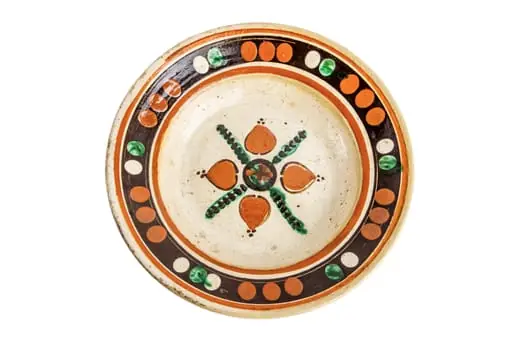 Formă tronconică; fond alb; culori: verde; roșu - cărămiziu; maro; În centrul farfuriei este amplasată o cruce în X de culoare verde, între brațele crucii sînt amplasate patru petale sub formă de inimă de culoare roșie - cărămiziu care sugerează o floare. Pe perete într-o bandă circulară de culoare maro sînt dispuse grupuri de puncte de culoare roșu - cărămiziu, albe și verzi alternînd cromatic. Sub buza vasului este amplasat un cerc de culoare cărămizie.
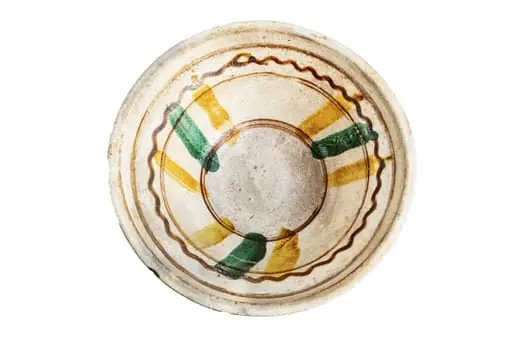 Formă tronconică; fond alb. În partea centrală este amplasat un cerc de culoare maro. Pe peretele vasului sînt amplasate trei grupuri decorative formate din trei linii: două de culoare galbenă și una verde, dispuse oblic, trasate cu pensula. În planul următor este amplasat un val circular și un cerc, ambele de culoare maro. Folosită la decorarea interiorului țărănesc în așa numita - cameră bună.
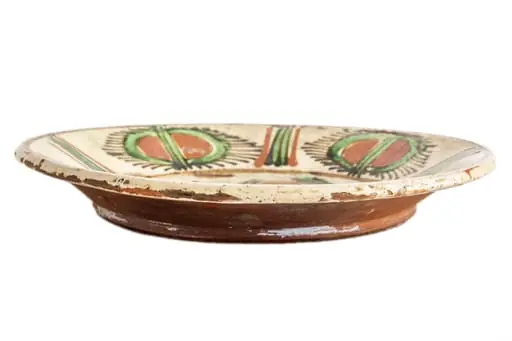 Formă tronconică; fond allb; în centrul farfuriei este amplasată o floare cruciformă cu două frunze de culoare cărămizie supradimensionate, înscrisă într-un cerc de culoare cărămizie. Pe peretele vasului sînt dispuse patru flori cu corole ovoidale colorate în roșu - cărămiziu și verde, cu petale de culoare maro, separate de grupuri de linii paralele de culoare verde și cărămizie. Sub buza vasului este amplasat un cerc de culoare cărămizie.
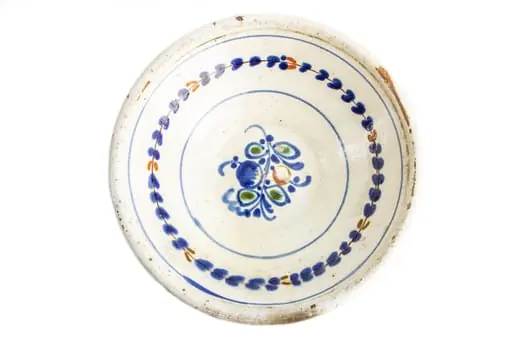 Formă tronconică; fond alb; culori: albastru, verde, cărămiziu; în centrul farfuriei este amplasat un buchet din flori albastre și una de culoare cărămizie, cu frunze verzi, înscris într-un cerc de culoare albastră. Pe perete este amplasat un vrej circular cu frunze albastre și cîteva de culoare cărămizie. Sub buză este dispus un cerc albastru.
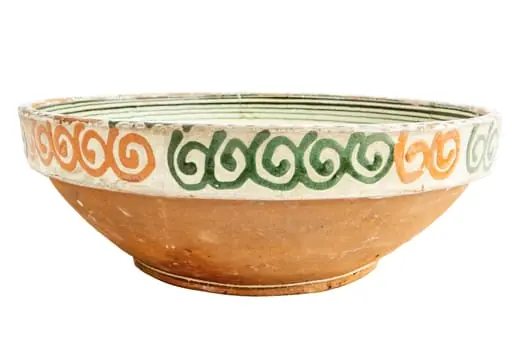 Formă tronconică; fond alb. În centru un grup de pete de culoare verde, galbenă, portocalie, cărămizie, realizat prin stropire cu pensula este încadrat de o bandă circulară jirăvită cu gaița, de culoare verde și de un val circular cărămiziu. Buza vasului decorată cu un val de culoare verde. Folosită la decorarea interiorului țărănesc în așa numita - cameră bună.
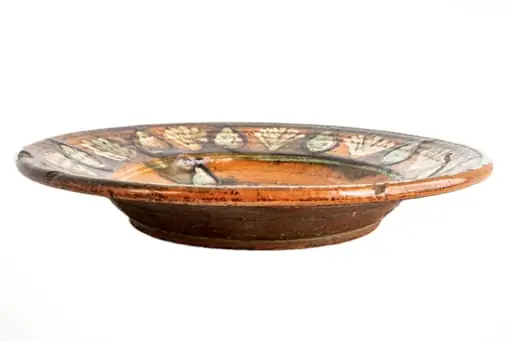 Formă tronconică; fond roșu - cărămiziu; culori: brun, alb, verde. În centru farfuriei este amplasată o floare cu trei petale cu tijă lungă, dreaptă și patru petale de culoare alb verzui; perete farfuriei decorat cu un șir de flori stilizate de culoare albă cu petale dispuse sub formă de evantai, alternînd decorativ cu frunze ovoidale de culoare verde încadrate de două cercuri de culoare brun închis.
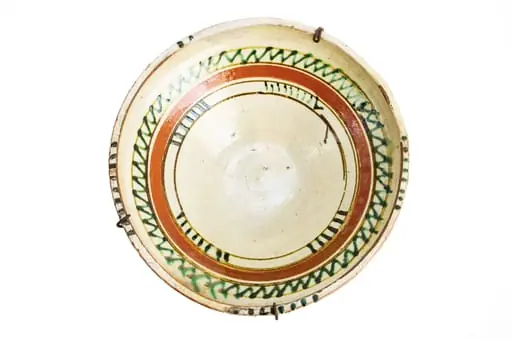 Formă tronconică; fond alb; decorul amplasat pe pereții vasului constă într-un cerc de culoare maro care are în exterior grupuri de linii verzi dispuse oblic; în planul următor o bandă circulară de culoare cărămizie încadrată de o linie circulară în zig-zag de culoare verde. Folosită la decorarea interiorului țărănesc în așa numita - cameră bună.
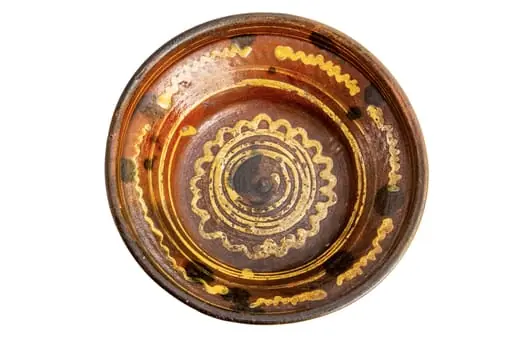 Formă tronconică; fond cărămiziu; culori: galben, verde, brun. În centru este amplasată o spirală de culoare galbenă trasată cu cornul înscrisă într-un val circular de culoare similară care sugerează un soare; pe perete strachinei sînt amplasate șase segmente de linie vălurită de culoare galbenă și pete de culoare brună.
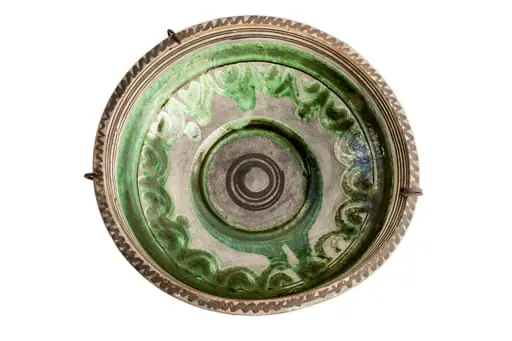 Formă tronconică; fond alb; culori: verde, maro; în centrul farfuriei este amplasată o spirală de culoare maro înscrisă într-un cerc de culoare verde cu culoare intinsă, scursă. Pe perete sînt amplasate semicercuri de culoare verde, cu contur dublu orientate către centrul farfuriei. Sub buză sînt amplasate două cercuri de culoare maro; buza decorată cu un zig -zag de culoare similară. Culorile sînt scurse.