Artwork
Formă tronconică; fond alb. Decorul amplasat în centrul farfuriei, este reprezentat de trei flori stilizate și două frunze, de culoare albastră. Pe umărul vasului într-un registru circular delimitat de linii albastre sînt amplasate ramuri de brad de culoare albastră și verde alternînd cromatic. Pe laterale se disting două toarte. Folosită la decorarea interiorului țărănesc în așa numita - cameră bună.
Formă tronconică; fond alb. Decorul amplasat în centrul farfuriei, este reprezentat de trei flori stilizate și două frunze, de culoare albastră. Pe umărul vasului într-un registru circular delimitat de linii albastre sînt amplasate ramuri de brad de culoare albastră și verde alternînd cromatic. Pe laterale se disting două toarte. Folosită la decorarea interiorului țărănesc în așa numita - cameră bună. is a print by Unknown. It dates from 1850 and is held in the collection of the Romanian Peasant Museum. A modest clay bowl featuring two small side handles, a smooth pale interior and a weathered exterior.
About this work
Overview
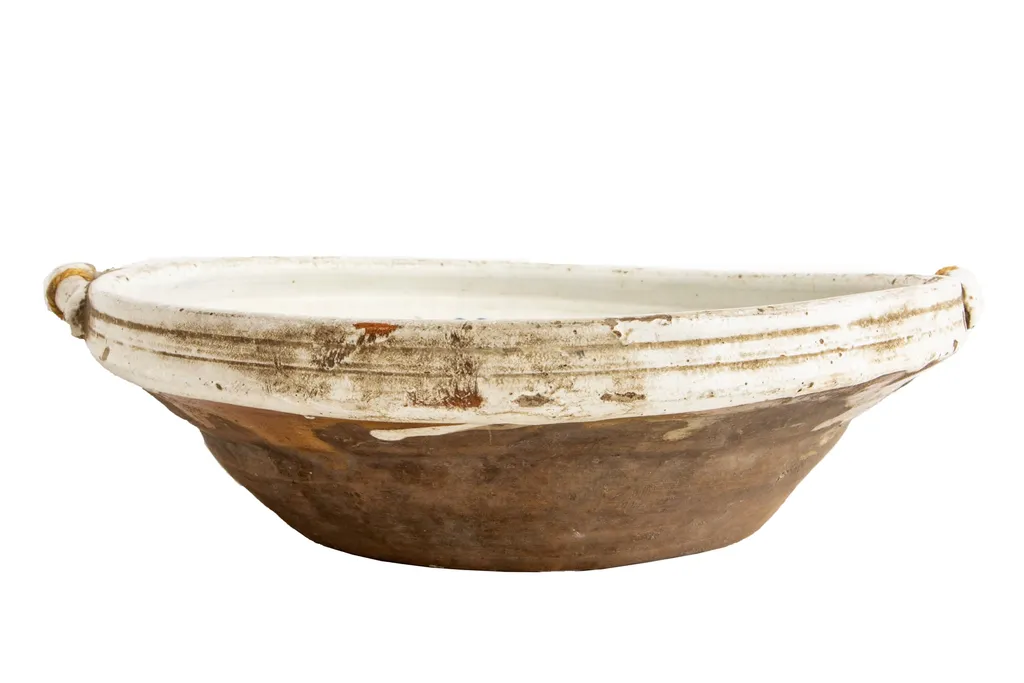
A modest clay bowl featuring two small side handles, a smooth pale interior and a weathered exterior. The rim is marked by a white band with faint linear decoration. The vessel shows typical signs of use, including chips and accumulated dirt, indicating it functioned as a utilitarian object in a domestic setting.
Subject & Meaning
The central motif consists of three stylised blue flowers accompanied by two blue leaves, arranged within a circular field. Around the shoulder, alternating blue and green fir‑branch motifs are set within a blue‑lined circular register, while the lateral sides display two decorative bands. These simple vegetal symbols reflect traditional folk decorative vocabulary.
Technique & Style
Crafted from low‑temperature fired clay, the bowl’s surface was painted with mineral pigments, primarily blues and greens, applied in a flat, stylised manner. The decorative scheme follows a geometric arrangement typical of rural folk pottery, with a limited palette and repetitive motifs that emphasize symmetry and balance.
History & Provenance
The piece originates from a rural Romanian context, where such bowls were employed in the so‑called "cameră bună," a room designated for receiving guests. Its provenance is linked to the ethnographic collections of the Museum of Ethnography, which documents everyday household objects from the region.
Context
In traditional Romanian village life, functional ceramics often bore modest decorative programs that conveyed local aesthetic preferences without compromising practicality. The use of blue and green pigments aligns with regional colour conventions, while the floral and fir‑branch motifs echo natural surroundings and agricultural cycles.
Artist & collection

 Domestic Scene
 Giacomo and Cardinal Marco, investing Andrea, Abbot of San Zeno, with his Benefice
 The Nymph of Fontainebleau
 Portrait of a Woman
 Madonna and Child with Saints in the Enclosed Garden
 Venus and Minerva
 Family Group of Four on Sofa
 Wall painting from Room H of the Villa of P. Fannius Synistor at Boscoreale
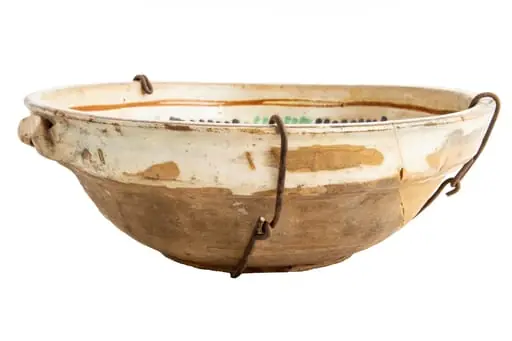 Formă tronconică; fond alb; pe fundul vasului este amplasată o spirală de culoare cărămizie încadrată de patru ramuri de brad; două de culoare albastră, una cărămizie și una verde. Sub buza vasului într-o bandă circulară delimitată de cercuri de culoare cărămizie sînt amplasate grupuri de linii de culoare albastră, verde, cărămizie, dispuse oblic, alternînd cromatic. Folosită la decorarea interiorului țărănesc în așa numita - cameră bună.
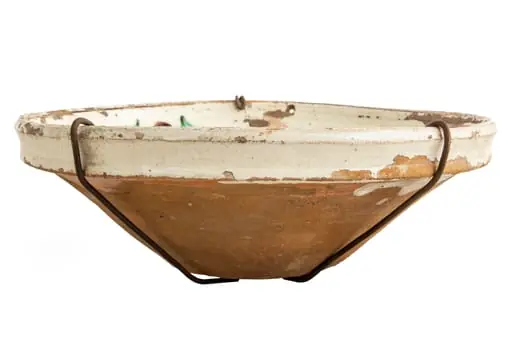 Formă tronconică; fond alb. Pe fundul farfuriei este amplasată o frunză stilizată; pe peretele vasului decorul constă în trei grupuri de frunze; fiecare grup este compus din două frunze verzi și una de culoare maro. Pe fundul farfuriei smalțul este sărit. Folosită la decorarea interiorului țărănesc în așa numita - cameră bună.
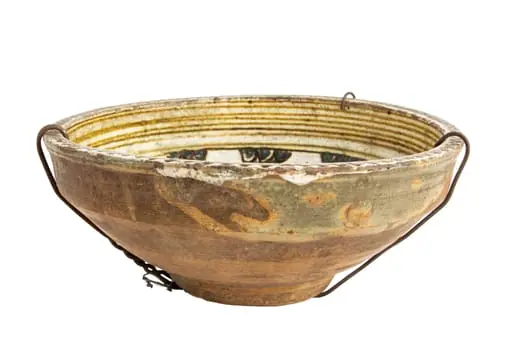 Formă tronconică; fond alb. Decorul, pictat pe fond alb și amplasat în centrul farfuriei, este reprezentat de o spirală dispusă central, de culoare maro încadrată de un soare stilizat cu șase raze. Pe peretele vasului este amplasat un soare de culoare albă cu nouă raze. Între razele soarelui sînt amplasate triunghiuri de culoare maro închis formate din alăturarea unor semicercuri. Sub buza vasului sînt amplasate mai multe cercuri concentrice de culoare maro. Buza farfuriei este decorată cu un val de culoare maro Folosită la decorarea interiorului țărănesc în așa numita - cameră bună.
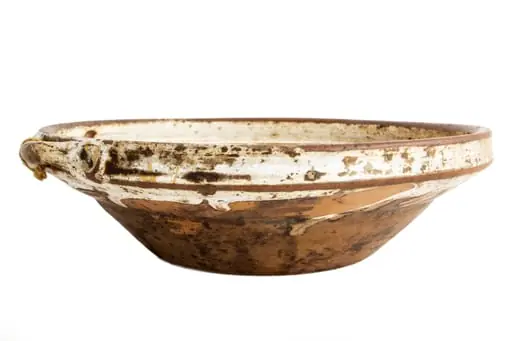 Formă tronconică; fond alb; în centrul vasului este amplasat un buchet de flori format din trei flori de floarea soarelui și doi boboci de culoare albastră încadrat de un vrej cu frunze de culoare verde și albastră dispus circular într-o bandă de culoare cărămizie; în planul următor este amplasată o bandă circulară de culoare albă. Sub buza vasului într-o bandă circulară delimitată de două cercuri de culoare albă este amplasat un vrej similar cu cel descris mai sus. Folosită la decorarea interiorului țărănesc în așa numita - cameră bună.
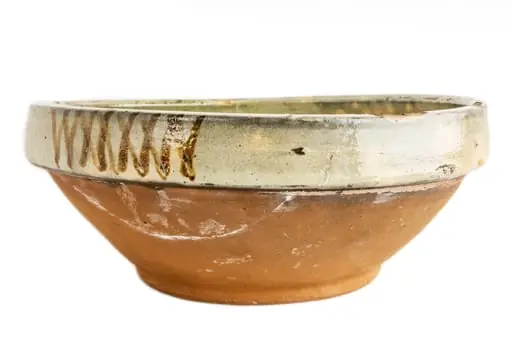 Formă tronconică; fond alb - cenușiu; în centru este amplasată o floare cu petale verzi peste care a fost suprapusă o alta cu petale de culoare cărămizie; sub buza vasului este dispus un cerc de culoare maro. În exterior sub buza vasului pe un fond alb sînt amplasate romburi de culoare maro cu galben. Folosită la decorarea interiorului țărănesc în așa numita - cameră bună.
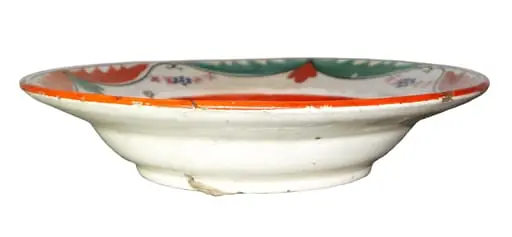 Obiectul are o formă tronconică cu baza mică în partea inferioară; pe spatele farfuriei se găsește o gaură pentru sfoara cu ajutorul căreia se atârnă pe perete. Piesa dispune de motive decorative vegetale, florale și geometrice realizate prin pictare, situate între două cercuri concentrice, unul la buza farfuriei, celălalt câțiva centrimetri mai jos; pe fundul farfuriei avem, de asemenea, motive decorative florale și vegetale. Motivele decorative (din partea superioară) reprezintă frunze, flori, "X"-uri și linii curbe asemănătoare acoladelor sau cârceilor de viță de vie, fiind pictate de jur-împrejurul suprafeței respective. Fundul farfuriei este decorat cu un trandafir mare cu frunze, plus alte două flori mai mici. Culoarea (fondul) piesei este albă iar pictura este realizată cu verde deschis, albastru, ocru, roz, galben și negru
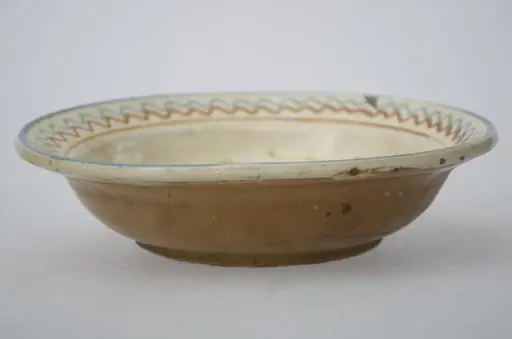 Farfurie de formă tronconică, mult adâncită cu marginile evazate. Smălțuită pe ambele fețe. Central decor floral cu "floarea soarelui" și "nu mă uita"; pe margine două cercuri ce încadrează două linii în val. Cromatică: fond: alb; motive: verde, albastru, bej, maro, brun, galben.