Artwork
Formă tronconică; fond cărămiziu; decorul amplasat pe toată suprafața constă într-o spirală de culoare albă dublată discret de una de culoare verde. Buza vasului este decorată cu un val circular de culoare albă. Folosită la decorarea interiorului țărănesc în așa numita - cameră bună.
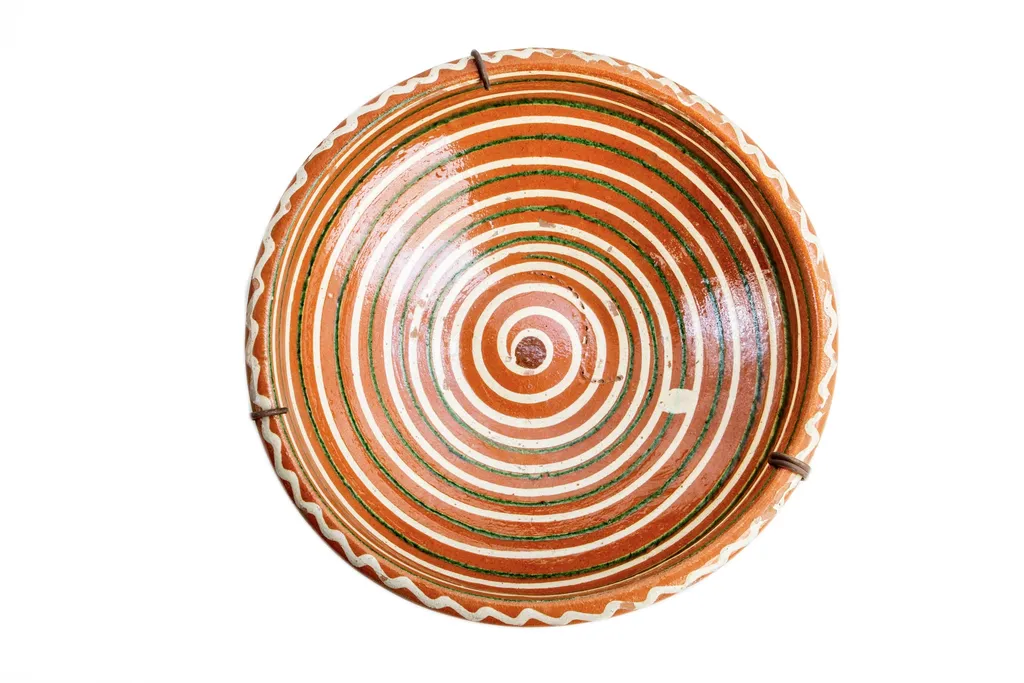
Formă tronconică; fond cărămiziu; decorul amplasat pe toată suprafața constă într-o spirală de culoare albă dublată discret de una de culoare verde. Buza vasului este decorată cu un val circular de culoare albă. Folosită la decorarea interiorului țărănesc în așa numita - cameră bună. is a print by Unknown. It dates from 1850 and is held in the collection of the Romanian Peasant Museum. A hand-formed ceramic bowl with a rounded, conical shape and a muted brick-red body.
About this work
Overview
The piece shows signs of age and use, with faded pigments but intact form, suggesting daily domestic function rather than ceremonial display.
A hand-formed ceramic bowl with a rounded, conical shape and a muted brick-red body. Its interior surface is entirely covered by a continuous white spiral, subtly reinforced by a thinner green line running parallel. The rim features a single undulating band of white paint, contrasting gently with the earthy tones. The piece shows signs of age and use, with faded pigments but intact form, suggesting daily domestic function rather than ceremonial display.
Subject & Meaning
The spiral motif, recurring across the interior, likely reflects traditional symbolic patterns tied to continuity, protection, or cosmic order in rural Romanian households. Its placement within the 'cameră bună'—the best room of the home—implies cultural significance beyond utility, possibly serving as a visual anchor for domestic rituals or seasonal observances. The repetition of the design suggests inherited aesthetic knowledge passed through generations.
Technique & Style
The vessel was wheel-thrown or hand-built with coarse clay, then fired at low temperatures. Decoration was applied with natural pigments using a brush or stick, with the spiral executed in freehand, showing slight irregularities that affirm its artisanal origin. The white and green lines were painted with precision yet without mechanical symmetry, preserving the human touch. The glaze is absent, leaving the surface porous and matte.
History & Provenance
Produced in the late 19th or early 20th century, likely in a rural workshop in Transylvania or Moldavia, this bowl was part of a broader tradition of domestic ceramics used in peasant homes. Its survival suggests it was valued enough to be preserved, possibly within a family lineage. Similar examples are held in regional ethnographic collections, though this specific piece’s exact origin remains undocumented.
Context
In rural Romanian households, such vessels were not merely functional but embedded in social customs. The 'cameră bună' was reserved for guests and special occasions, making the bowl’s decorative quality a marker of household pride. Its spiral design aligns with motifs found in embroidery, woodcarving, and wall paintings of the same regions, indicating a cohesive visual language across crafts.
Legacy
This bowl exemplifies a vanishing tradition of utilitarian artistry rooted in local materials and inherited patterns. While mass production replaced such handmade items in the 20th century, surviving examples like this one remain vital to understanding pre-industrial domestic life. Institutions like the Museum of Ethnography preserve these objects not as curiosities, but as evidence of everyday cultural expression.
Artist & collection

 Domestic Scene
 Giacomo and Cardinal Marco, investing Andrea, Abbot of San Zeno, with his Benefice
 The Nymph of Fontainebleau
 Portrait of a Woman
 Madonna and Child with Saints in the Enclosed Garden
 Venus and Minerva
 Family Group of Four on Sofa
 Wall painting from Room H of the Villa of P. Fannius Synistor at Boscoreale
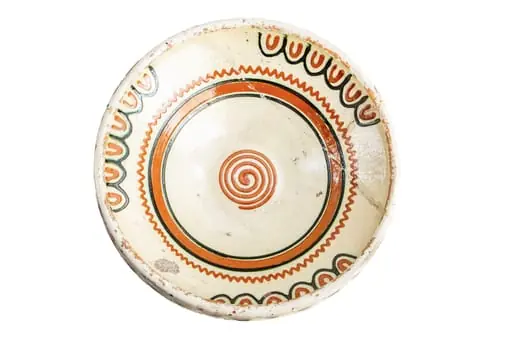 Formă tronconică; fond alb. În centru vasului este amplasată o spirală de culoare cărămizie încadrată de o bandă și un val circular de aceeași culoare. Sub buza vasului sînt amplasate trei grupuri de semicercuri de culoare verde închis, fiecare semicerc are în interior un altul, mai mic de culoare cărămizie. Sub buza vasului, la exterior este amplasat un val circular de culoare verde decorat cu cercuri de culoare cărămizie. Folosită la decorarea interiorului țărănesc în așa numita - cameră bună.
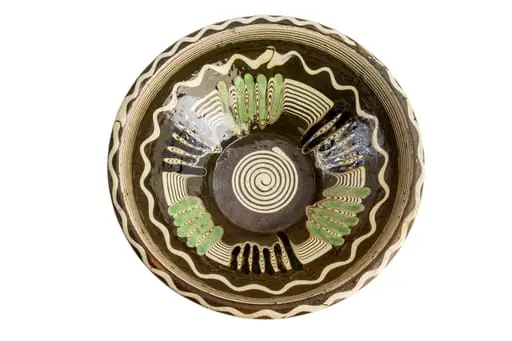 Formă tronconică; fond brun închis; culori: alb, verde. În centrul vasului este amplasată o spirală de culoare albă. Pe peretele vasului în partea inferioră a vasului sînt amplasate grupuri de semicercuri de culoare albă, paralele, jirăvite cu gaița și decorate cu grupuri de linii oblice de culoare verde jirăvite și ele. Sub buza farfuriei este dispus un vrej circular de culoare albă. Buza vasului decorată cu un val circular. Folosită la decorarea interiorului țărănesc în așa numita - cameră bună.
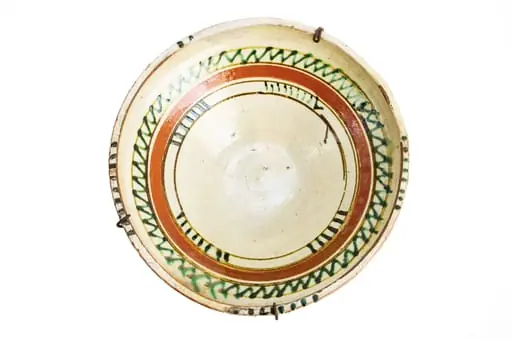 Formă tronconică; fond alb; decorul amplasat pe pereții vasului constă într-un cerc de culoare maro care are în exterior grupuri de linii verzi dispuse oblic; în planul următor o bandă circulară de culoare cărămizie încadrată de o linie circulară în zig-zag de culoare verde. Folosită la decorarea interiorului țărănesc în așa numita - cameră bună.
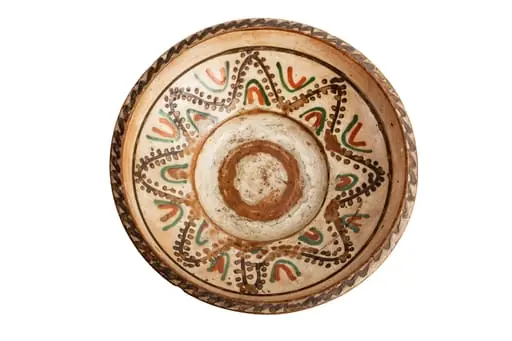 Formă tronconică; fond alb fildeșiu; pe fundul vasului, în centru este amplasată o bandă circulară de culoare cărămizie; pe umerii vasului, este reprezentată o stea cu opt raze, de culoare maro cu contururile dublate de puncte de culoare similară; între razele stelei sînt amplasate unghiuri cu contur dublu: verde și cărămiziu; întreaga compoziție este înscrisă într-un cerc. Buza vasului este decorată cu val circular de culoare brun închis. Piesa reprezintă una dintre primele achiziții ale lui Alexandru Tzigara Samurcaș. Folosită la decorarea interiorului țărănesc în așa numita - cameră bună.
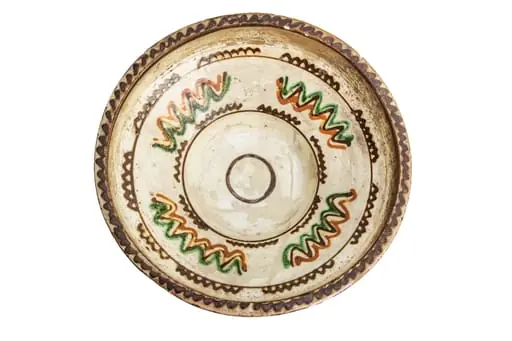 Formă tronconică; fond alb fildeșiu; pe fundul vasului este amplasat un cerc de culoare maro; pereții sînt decorați cu patru segmente de linii în zig - zag cu contururi triple: verde, maro și cărămiziu; întreaga compoziție este înscrisă într-un cerc de culoare maro care are în exterior nouă segmente de linie vălurită de culoare maro. Buza este decorată cu un val circular de culoare maro închis. Piesa reprezintă una dintre primele achiziții ale lui Alexandru Tzigara Samurcaș. Folosită la decorarea interiorului țărănesc în așa numita - cameră bună.
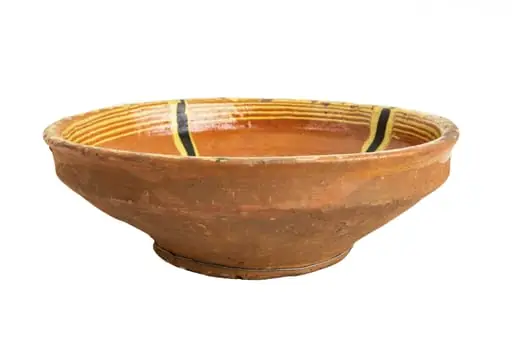 Formă tronconică; fond cărămiziu. Pe fundul vasului, în centru este amplasată o spirală de culoare galbenă încadrată de o serie de cercuri concentrice subțiri de aceeași culoare. Pe peretele vasului sînt dispuse vertical patru linii de culoare brună cu contururi galbene. Buza vasului este decorată cu un val circular de culoare galbenă.
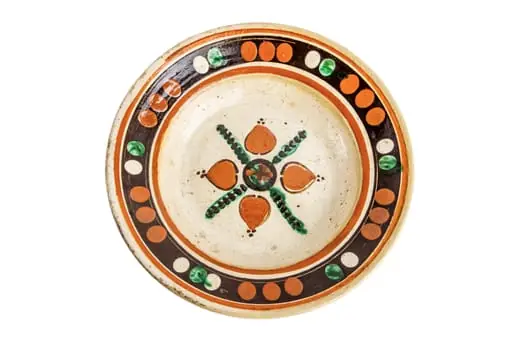 Formă tronconică; fond alb; culori: verde; roșu - cărămiziu; maro; În centrul farfuriei este amplasată o cruce în X de culoare verde, între brațele crucii sînt amplasate patru petale sub formă de inimă de culoare roșie - cărămiziu care sugerează o floare. Pe perete într-o bandă circulară de culoare maro sînt dispuse grupuri de puncte de culoare roșu - cărămiziu, albe și verzi alternînd cromatic. Sub buza vasului este amplasat un cerc de culoare cărămizie.
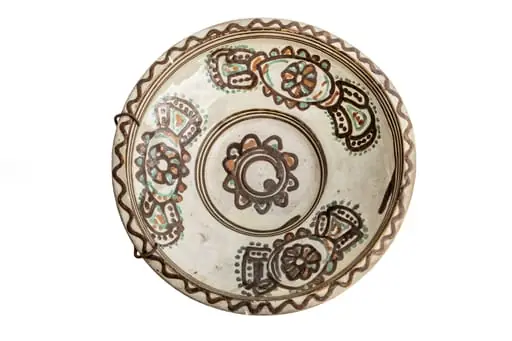 Formă tronconică; fond alb fildeșiu; pe fundul vasului este amplasată o floare stilizată cu petale cărămizii și verzi înscrisă într-o spirală de culoare maro. Pe pereții vasului sînt amplasate trei compoziții florale compuse dintr-o floare circulară cu petale cărămizii și verzi încadrată de doi boboci de floare stilizați. Buza este decorată cu un val circular de culoare maro închis. Piesa reprezintă una dintre primele achiziții ale lui Alexandru Tzigara Samurcaș. Folosită la decorarea interiorului țărănesc în așa numita - cameră bună.
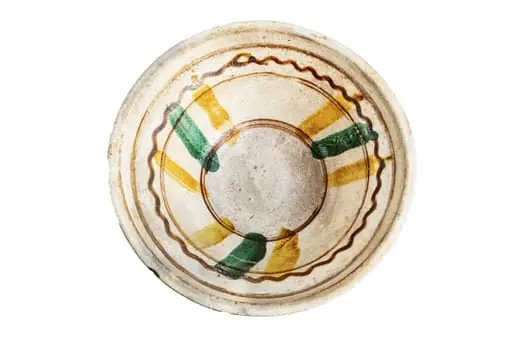 Formă tronconică; fond alb. În partea centrală este amplasat un cerc de culoare maro. Pe peretele vasului sînt amplasate trei grupuri decorative formate din trei linii: două de culoare galbenă și una verde, dispuse oblic, trasate cu pensula. În planul următor este amplasat un val circular și un cerc, ambele de culoare maro. Folosită la decorarea interiorului țărănesc în așa numita - cameră bună.
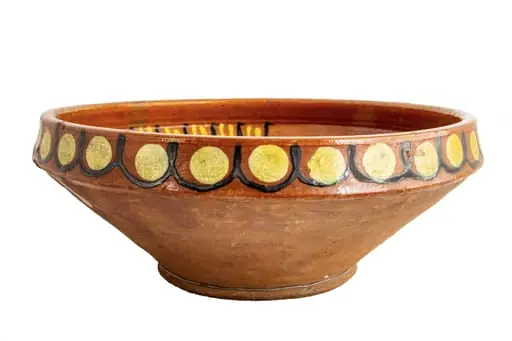 Formă tronconică; fond cărămiziu. Decorul constă într-o spirală de culoare galbenă amplasată central pe fundul vasului, o bandă circulară de culoare galbenă încadrată de două cercuri de culoare brun închis și o linie circulară în zig -zag de culoare galbenă. Pe peretele vasului sub buză sînt dispuse trei grupuri de semicercuri cu conturul exterior de culoare brun închis; cel înterior fiind de culoare galbenă. La exterior sub buză este amplasat un șir de semicercuri de culoare brun închis; fiecare semicerc are în interior un cerc de culoare galbenă. Folosită la decorarea interiorului țărănesc în așa numita - cameră bună.