Artwork
Fucie
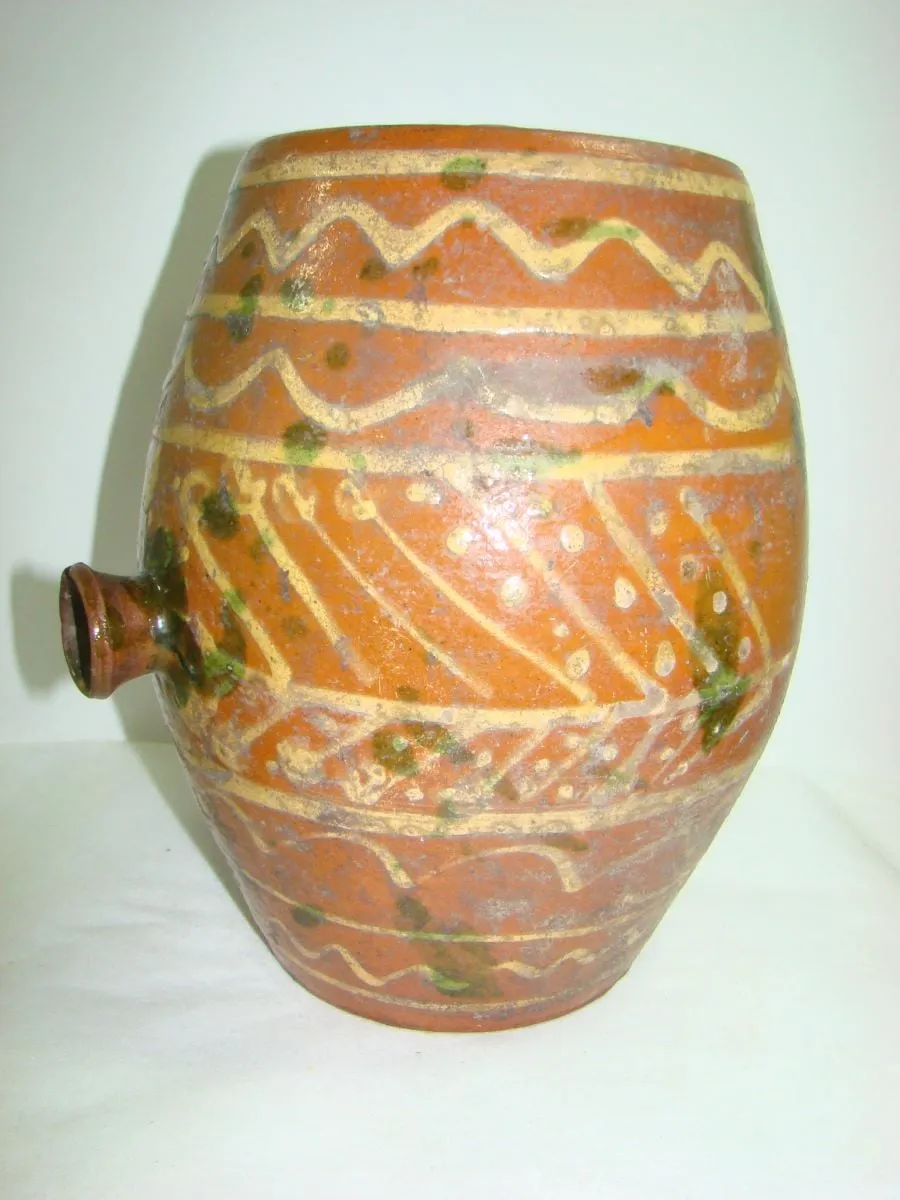
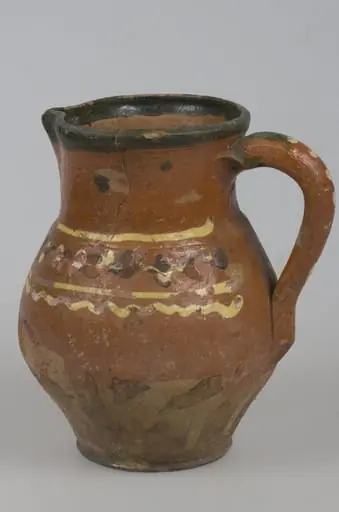
Fucie is a photography by Unknown. It dates from 1850 and is held in the collection of the "Dimitrie Gusti" National Village Museum. A small ceramic vessel with a single spout, this object displays a predominantly orange body marked by horizontal bands of yellow and white.
About this work
Overview
A small ceramic vessel with a single spout, this object displays a predominantly orange body marked by horizontal bands of yellow and white.
A small ceramic vessel with a single spout, this object displays a predominantly orange body marked by horizontal bands of yellow and white. Decorative elements include dots, zigzags, and linear motifs in green, yellow, and white, applied with precision. Surface wear and subtle cracking suggest age, indicating prolonged use or burial. Its form and ornamentation align with traditions of prehistoric or early historic ceramic production.
Subject & Meaning
No figurative imagery is present; decoration relies on abstract geometric patterns. Such designs likely held symbolic or cultural significance, possibly denoting group identity, ritual function, or cosmological beliefs. The repetition of lines and dots may reflect natural phenomena or ancestral motifs, common in non-literate societies where visual language conveyed meaning beyond utility.
Technique & Style
The vessel was hand-formed and fired, with pigments applied before or after firing to create contrast. Patterns are meticulously rendered, suggesting the use of fine tools or brushes. The color palette—limited to earth tones and mineral-based pigments—reflects locally available materials. Surface treatment shows deliberate control, indicating skilled craftsmanship and established stylistic conventions.
History & Provenance
Though exact origin is unconfirmed, the vessel’s aesthetic resembles artifacts from regions with rich ceramic traditions, such as the Balkans, Anatolia, or the Near East. Its resemblance to pieces in the Museum of Ethnography suggests possible acquisition through early 20th-century ethnographic collections. No documented provenance is provided, but its condition implies it was excavated or preserved in a non-urban context.
Context
This object belongs to a broader category of utilitarian ceramics that also served ceremonial or social roles. Similar vessels appear in archaeological contexts dating from the Neolithic through the Bronze Age. The presence of decorative motifs, rather than purely functional forms, signals a society where aesthetic expression was integrated into daily or ritual life, beyond mere storage or transport.
Legacy
Though not attributed to a named culture or artist, the vessel contributes to understanding early material culture and the development of decorative arts. Its preservation allows comparison with contemporaneous ceramics, aiding in tracing regional stylistic evolution. It stands as a quiet testament to the skill and symbolic intent of prehistoric potters.
Artist & collection
Museum
"Dimitrie Gusti" National Village Museum
Continue through works from the same source collection.
 Domestic Scene
 Giacomo and Cardinal Marco, investing Andrea, Abbot of San Zeno, with his Benefice
 The Nymph of Fontainebleau
 Portrait of a Woman
 Madonna and Child with Saints in the Enclosed Garden
 Venus and Minerva
 Family Group of Four on Sofa
 Wall painting from Room H of the Villa of P. Fannius Synistor at Boscoreale
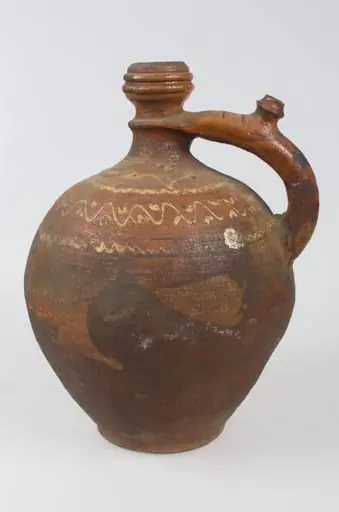 Vas de formă bitronconică prevăzut cun un gât ușor alungit și cu buză pe care se identifică două brâuri profilate. Pe toarta de formă semicirculară se identifică un orificiu pentru consumarea lichidului (”țâță”). Toarta pleacă din zona mediană a orificiului de umplere și se unește cu corpul vasului pe zona diametrului maxim. Vasul prezintă smalț la exterior cu urme de degradare. Decorul se identifică la baza gâtului și constă din motive geometrice: linii curbe, brâuri și motive vegetale. Cromatică: fond: cărămiziu: motive: crem; maron închis
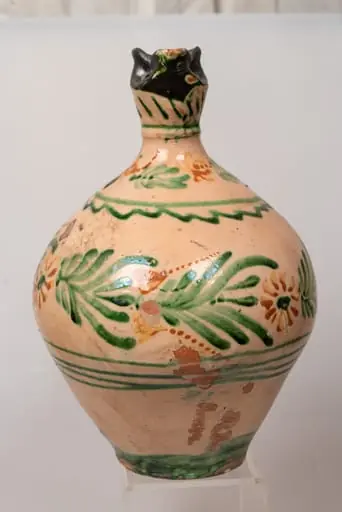 Piesă cu corp sfericl bombat, cu gât profilat, cu gât și gură îngustă, bilobată, cu cior. Din pântecul vasului pornește o toartă tubulară cu orificiu pronunțat pentru băut (cu țâță), care se unește cu vasul sub buza acestuia. Fața exterioară a ulciorului este angobată cu un strat de humă albă, peste care este pictat decorul, cu pensula și cu cornul, astfel: pe partea superioară a vasului, între două grupări de linii concentrice apare o bandă decorată cu motiv floral (o floare rotundă cu multe petale) alternând cu motivul fitomorf caracteristic centrului: frunze alungite, de culoare verde. Pe cant, delimitată de banda decorativă de pe burta vasului de către două linii concentrice, realizate drept și în valuri, este dispusă o bandă decorativă mai îngustă, cu motiv floral și motiv fitomorf delimitat de gât de un brâu colorat. Sub buza bilobată sunt realizate o serie de linii oblice paralele pictate, care continuă pe toată suprafața torții. Fundul vasului este marcat cu o bandă lată orizontală, pictată. Cromatica: alb, maro, verde. Vasul este acoperit cu un strat de smalț transparent.
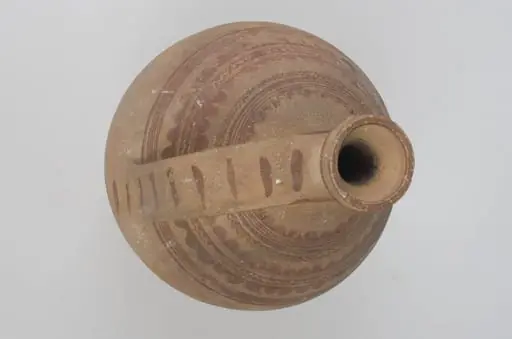 Vas de formă ovoidală, cu gât lung și buza ușor înălțată. De gât este atașată o toartă care se unește cu corpul în zona diametrului maxim. Vasul este decorat pe umeri cu motive geometrice împărțite în trei registre: primul registru este format dintr-o linie în val pictată cu degetul peste care se suprapun o bandă de linii drepte și două linii subțiri în val; al doilea registru este format tot dintr-o linie în val pictată cu degetul întretăiată de mai multe linii drepte, peste una dintre acestea, mai lată, se suprapune o linie în val. Al treilea registru este format dintr-o bandă de linii drepte. Toarta este ornamentată cu linii scurte paralele orizontale. Cromatică: fond: cărămiziu; motive: roșu
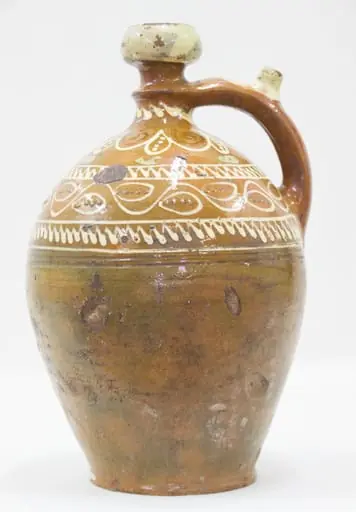 Ulcior de formă bitronconică cu gura îngustă și rotundă, cu o toartă și un orificiu pentru scurgerea lichidului, smălțuit și decorat pe jumătatea superioară cu motive vegetale (ghirlande) și geometrice (spirale; patru cercuri concentrice cu o linie șerpuită între ele).Cromatică: maro (fond), decor - galben, bej, alb, verde. Jumătatea inferioară a obiectului este nesmălțuită.
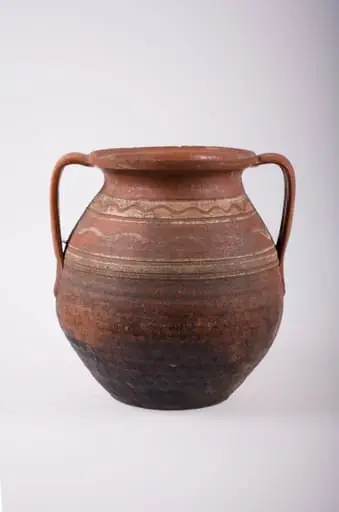 Oala bombată cu două toarte late, aplatizate, dispuse de o parte și de alta a gurii vasului; buză evazată; decorată în exterior cu motive geometrice: linii, linii vălurite pe un registru de cromatică albă. Cromatică: fond: maro; motive: alb-gălbui. Smălțuită pe gura vasului, interior și pe mânerul vasului.
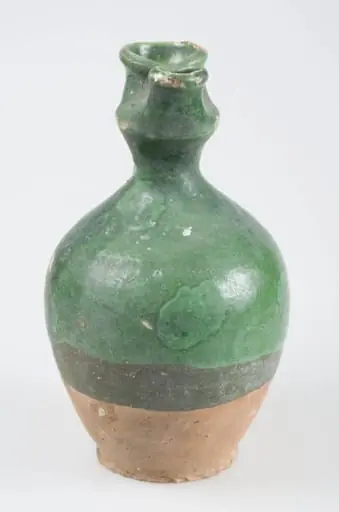 Ulcior mic de formă sferică smălțuit pe jumătatea superioară din suprafața exterioară. Vaul prezintă gură largă, bilobată și evazată, cu ciur în interior. Vasul are "țâță" pentru băut poziționat la jumătatea torții. Decorul este realizat prin stropirea cu smalț, formând linii și puncte neregulate. Cromatică: maro deschis; verde (trei nuanțe).
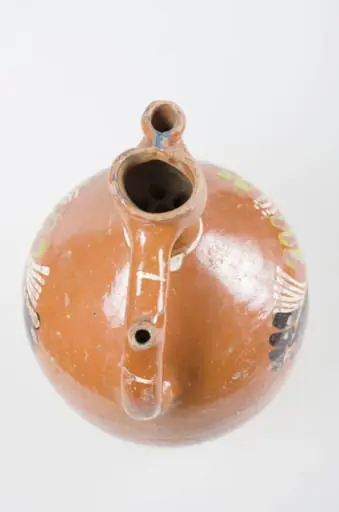 Ulcior mic cu corpul de formă sferică, smălțuit (80-85% din suprafața exterioară). Prezintă un orificiu lângă gură (pentru turnat) și unul pe mâner (pentru băut - ”țâță”). Este ornamentat cu motive geometrice: linii drepte și curbe și motive fitomorfe (flori și frunze). Cromatică: fond: maro deschis; motive: alb; negru; verde; albastru.
 Vas de lut de mici dimensiuni, bombat, cu gât lung și puțin evazat, cu gură largă și cioc de scurgere. Toarta pornește de sub gură și coboară până în zona diametrului maxim al vasului. Este smălțuit în interior și exterior. Decorul dispus pe umărul vasului este format din: motive florale: o cunună din frunze încadrată de motive geometrice: o linie circulară în partea superioară și o linie circulară și una în val în partea inferioară. Buza vasului este vopsită în interior și exterior. Toarta este decorată cu puncte de culoare albă. Cromatică: fond: cărămiziu; motive: alb; verde; negru.
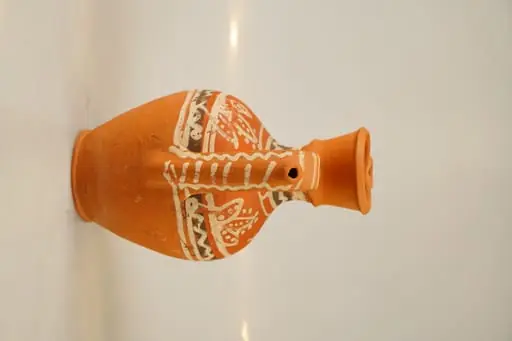 Vas mic cu corp tronconic bombat în jumătatea superioară, cu gât îngust subțire, gură cu ciur și cu buză bilobată; este prevăzut cu o toartă laterală de prindere, cu țâță, cu puncte de inserție la gât și în zona diametrului maxim al corpului. Decorul este realizat prin pictare cu pensula cu angobă albă și maro și se compune din motive geometrice și fitomorfe stilizate: două dungi de culoare maro, cu câte o linie albă ondulată pictată peste ele, dispuse circular, decorează gâtul vasului și corpul acestuia în zona diametrului maxim; linii circulare albe, neglijent realizate; trei grupuri de câte trei frunze cu contur alb, decorate cu puncte albe, dispuse în jumătatea superioară a corpului vasului, separate de câte un motiv format din două linii albe intersectate în formă de X, cu câte un punct alb între brațe. Toarta vasului este decorată cu două linii ondulate verticale și linii orizontale de culoare albă. Vasul nu este smălțuit.