Artwork
Ulcior mic cu corpul de formă sferică, smălțuit (80-85% din suprafața exterioară). Prezintă un orificiu lângă gură (pentru turnat) și unul pe mâner (pentru băut - ”țâță”). Este ornamentat cu motive geometrice: linii drepte și curbe și motive fitomorfe (flori și frunze). Cromatică: fond: maro deschis; motive: alb; negru; verde; albastru.
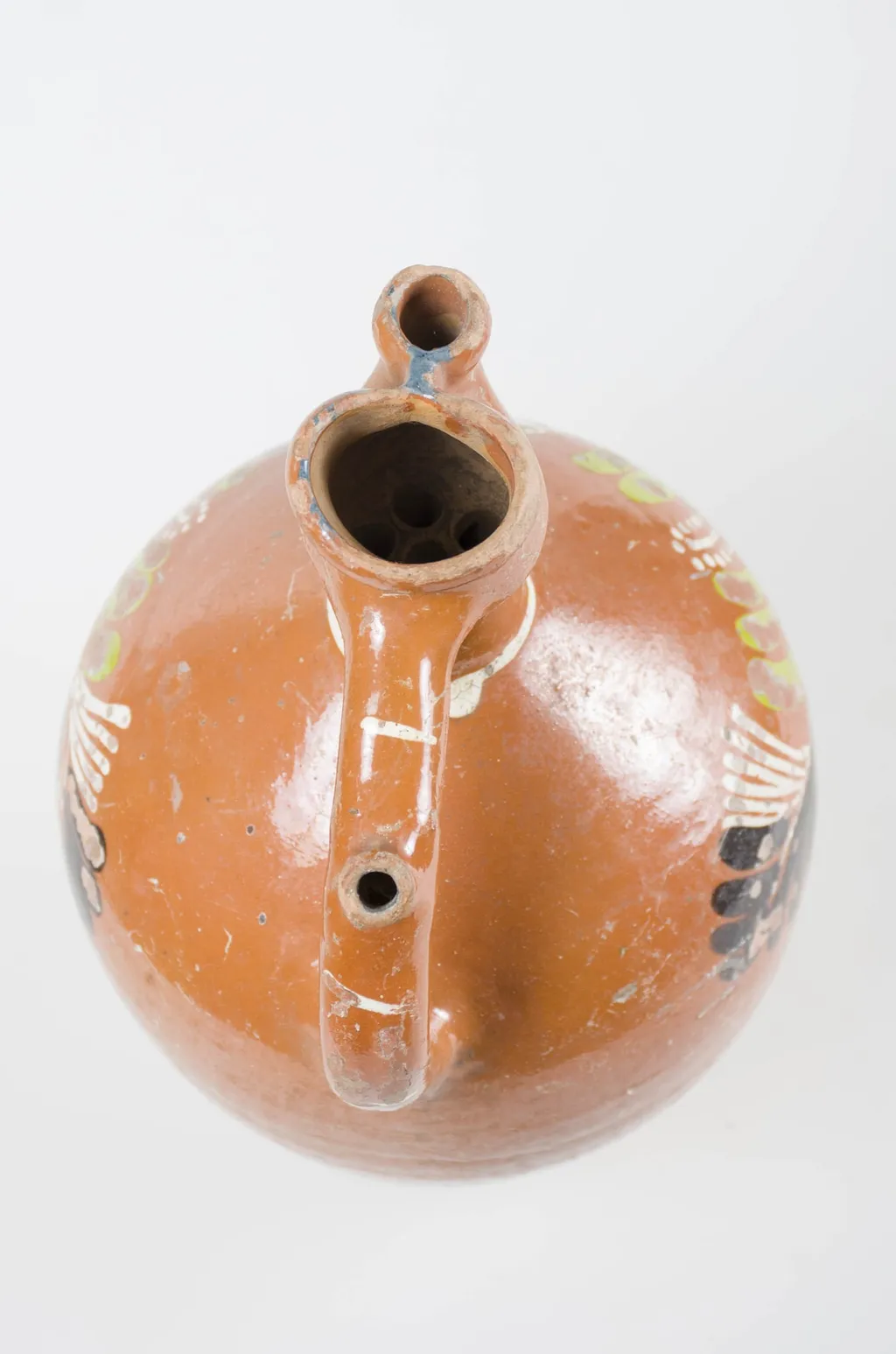
Ulcior mic cu corpul de formă sferică, smălțuit (80-85% din suprafața exterioară). Prezintă un orificiu lângă gură (pentru turnat) și unul pe mâner (pentru băut - ”țâță”). Este ornamentat cu motive geometrice: linii drepte și curbe și motive fitomorfe (flori și frunze). Cromatică: fond: maro deschis; motive: alb; negru; verde; albastru. is a photography by Unknown. It dates from 1850 and is held in the collection of the ASTRA National Museum Complex. The object is a modest clay vessel with a spherical body, glazed over roughly eighty to eighty‑five percent of its exterior.
About this work
Overview
The object is a modest clay vessel with a spherical body, glazed over roughly eighty to eighty‑five percent of its exterior. It features a pouring aperture near the rim and a small opening on the handle, traditionally used for drinking. The pot is finished in a light brown glaze, accented with simple geometric and plant‑like motifs rendered in white, black, green and blue.
Subject & Meaning
The decorative program combines straight and curved lines with stylised floral and foliage forms, reflecting a utilitarian object that also serves a symbolic or aesthetic function. The inclusion of a drinking hole on the handle suggests a ritual or communal use, where the vessel could be passed and sipped directly, integrating practical design with modest ornamentation.
Technique & Style
Crafted from earthenware, the pot was shaped by hand and subsequently glazed, leaving most of the surface covered while leaving the decorative zones exposed. The glaze’s orange‑brown base provides a muted backdrop for the contrasting pigments. The applied motifs are executed in low relief or painted application, employing a limited palette typical of regional folk pottery.
Context
Such vessels are characteristic of everyday domestic ware in traditional Romanian ethnographic settings, where functional pottery often bears simple yet deliberate decoration. The geometric and phytomorphic patterns align with local aesthetic conventions, while the dual openings indicate a design adapted for both pouring and direct consumption, hinting at communal drinking practices.
Artist & collection

 Domestic Scene
 Giacomo and Cardinal Marco, investing Andrea, Abbot of San Zeno, with his Benefice
 The Nymph of Fontainebleau
 Portrait of a Woman
 Madonna and Child with Saints in the Enclosed Garden
 Venus and Minerva
 Family Group of Four on Sofa
 Wall painting from Room H of the Villa of P. Fannius Synistor at Boscoreale
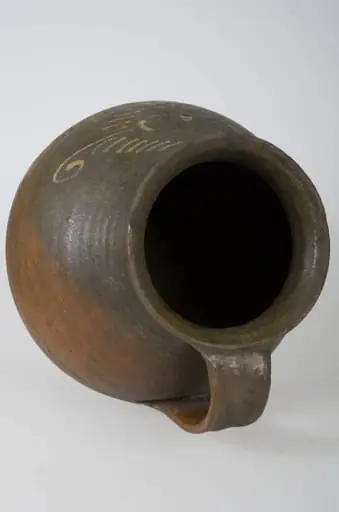 Vas de formă ovoidală bombat în partea mediană, cu buză dreaptă și ieșită ușor în afară, smălțuit. Prezintă o toartă lată ce unește gura vasului cu partea de diametru maxim. Decorații în plan frontal, ilustând o floare cu petale sugerate de linii verzi, ce radiază dintr-un punct alb. Motivul central este încadrat de linii albe paralele orizontale, ce crează forma unui romb. Cromatică: fond: brun; motive; alb; verde.
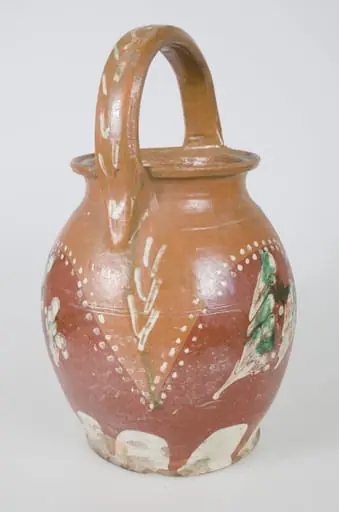 Vas smălțuit de formă ovoidală, bombat la mijloc, gât scurt cu buza dreaptă și evazată. Prevăzut cu o toartă semicirculară care pornește din buză, peste gură, și se prinde diametral opus (mănușar). Pe toartă este prezent motivul bradului realizat din linii albe unite în forma literei ”V”, înșiruite una după alta. Pe corpul vasului se găsesc trei registre circulare convexe, conturate cu câte două șiruri de puncte albe. În interiorul registrelor sunt decorații cu motive florale-vegetale stilizate. Între registre se găsesc câte trei decorații cu motivul bradului. La bază este conturat cu un șir de semicerucri pline. Cromatică: fond: cărămiziu; motive: brun; verde; alb.
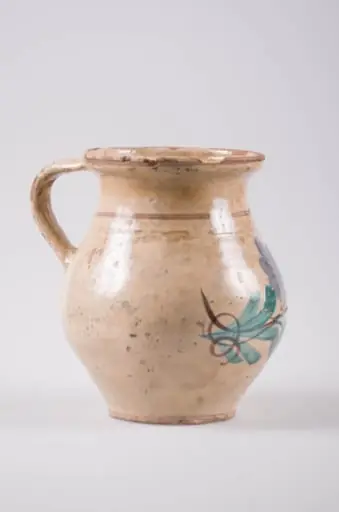 Oală de formă bitronconică de culoare bej. Decorul este reprezentat de motive florale: floarea este încadrată de linii albe realizate cu degetul; motive vegetale, motive geometrice: în partea superioară decorație circulară, linii. Prezintă toartă curbată. Smălțuită. Cromatică: fond: bej; motive: verde; albastru; maroniu.
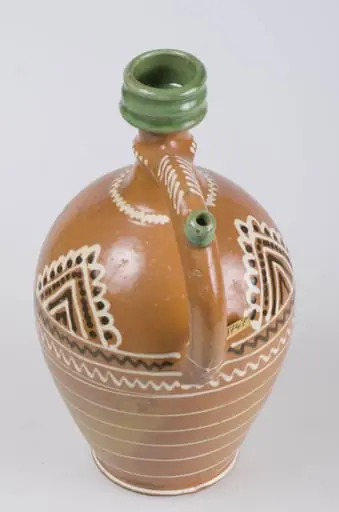 Vasul este zvelt și înalt, cu baza îngustă ce se lărgește spre pântecul vasului situat în partea de sus a lui, gâtul subțire, buza vasului largă, în trei trepte suprapuse, smălțuită verde. Până spre pântecul vasului, de la bază, opt linii circulare, paralele (în ultimele două a fost pictat motivul valului). Pe pântecul vasului decor geometric în alb și maro închis. Gâtul vasului marcat de un zig-zag alb. Toarta este decorată cu puncte și linii albe. Cromatică: maro; verde; alb.
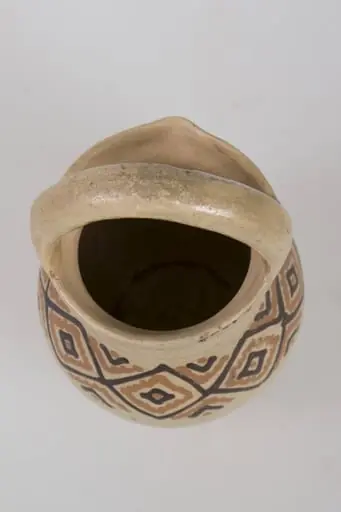 Mănușar cu corp sferoidal și gura largă. Prezintă o toartă peste gură. Decorul este geometric: linii drepte și ondulate pictate alternant în culorile crem și maro reprezentând litera ”V” și ”V” întors, puncte maro, și motivul rombului. Prezintă cioc ușor reliefat. Smălțuit la interior și exterior. Cromatică: fundal alb; maro deschis, maro închis.
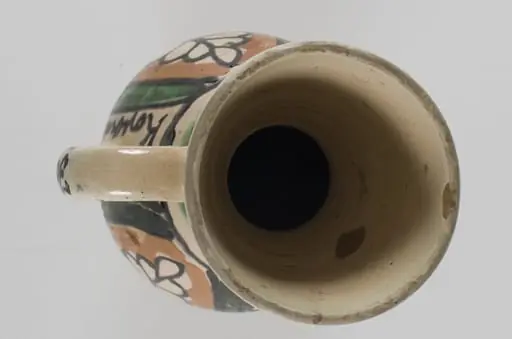 Cană cu gât lung, cu buza evazată și o toartă. Este smălțuită în interior și în exterior. Prezintă decor pe toată suprafața cu motive fitomorfe, motive florale stilizate și motive geometrice: linie, linie ondulată, punct, tablă de șah. Pe toartă scrie ”Jozsa Janos”, iar pe corp, chiar lângă toartă, scrie ”Korond 1974”. Cromatică: fond: alb; motive: bej, maro, verde, negru.
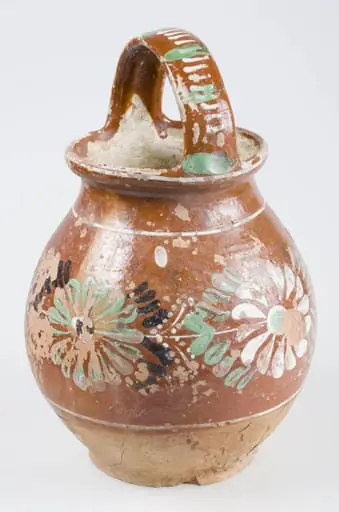 Oală de formă bitronconică modelată la roată, arsă, pictată cu pensula și smălțuită. Vasul prezintă o toartă dispusă diametral pe gură, denumită mănușă. Vasul prezintă smălțuire pe 2/3 din exterior, peste care este aplicat decorul. Ornamentația este realizată cu ajutorul motivelor geometrice, floarale și vegetale. Pe corpul vasului sunt aplicate trei linii orizontale la distanțe egale una față de cealaltă. Linia din mijloc are rolul de a face încadrarea modelului, linia trecând exact prin mijlocul modelului. Astfel între celelalte două linii este încadrat un rând format din flori cu petale mari, fiecare floare fiind înconjurată de un rând de petale, delimitata de câte două frunze. Pe mănușă sunt aplicate linii verticale, scurte cât lățimea acesteia. Vasul prezintă angobare și smălțuire la interior. Cromatică: cărămiziu; alb; verde; albastru.