Artwork
Fudō Myōō with Four Attendants, Outlined in Seed Syllables
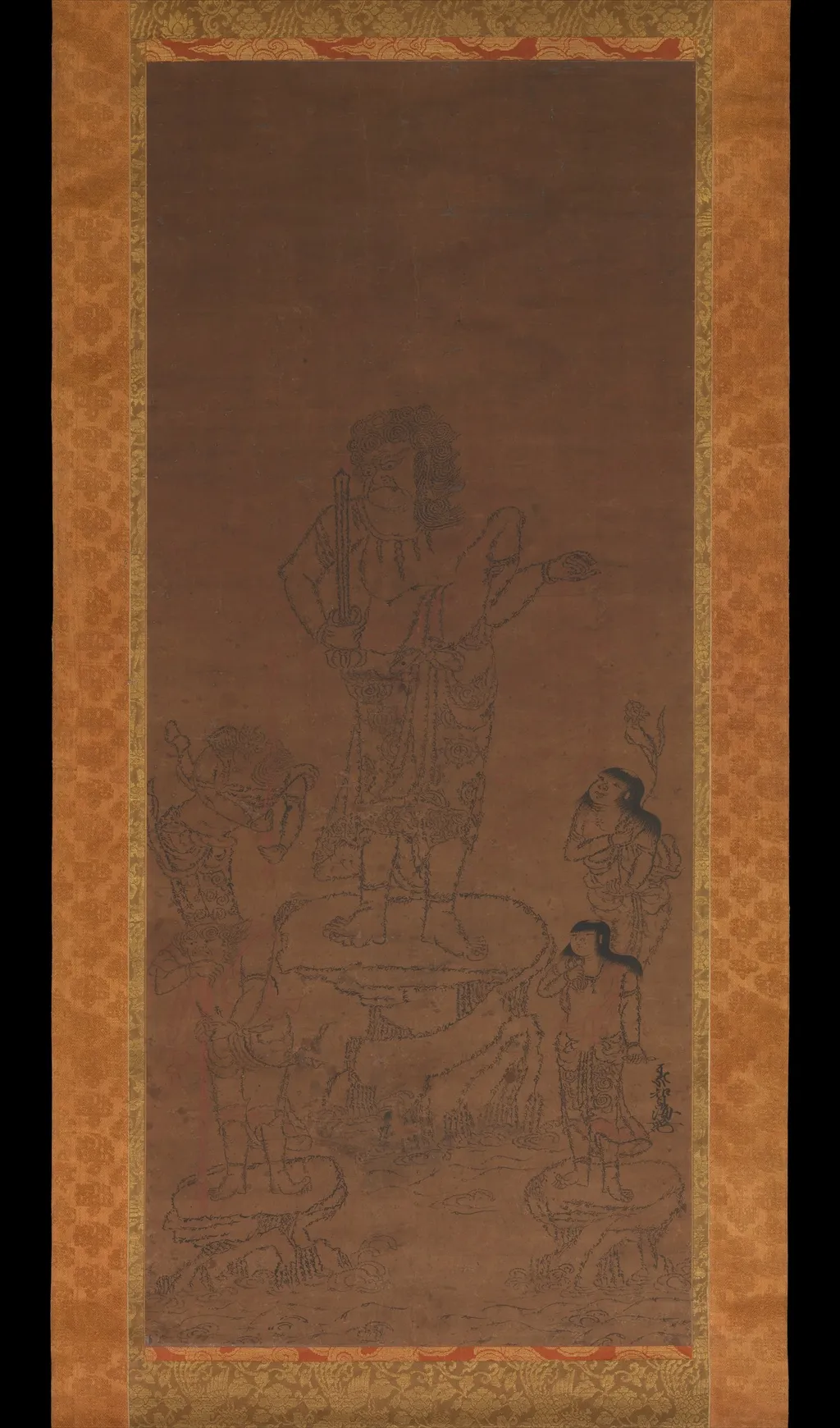
Fudō Myōō with Four Attendants, Outlined in Seed Syllables is an unspecified painting. It dates from 1449 and is held in the collection of the Metropolitan Museum of Art.
About this work
Overview
Fudō Myōō with Four Attendants, Outlined in Seed Syllables is a painted depiction of the Buddhist guardian deity Fudō Myōō flanked by four subordinate figures.
Fudō Myōō with Four Attendants, Outlined in Seed Syllables is a painted depiction of the Buddhist guardian deity Fudō Myōō flanked by four subordinate figures. The central figure stands upright, grasping a sword in one hand and a rope in the other, while the surrounding attendants assume distinct postures and expressions. The composition is distinguished by an overlay of seed syllables that trace the outlines of the forms.
Subject & Meaning
The central deity, Fudō Myōō, embodies immovable strength and the power to cut through illusion, symbolized by the sword and the binding rope. The four attendants, each rendered with individualized gestures, serve as extensions of the deity’s protective function, suggesting a collective guardianship. The inclusion of seed syllables—scriptural characters believed to contain intrinsic spiritual potency—adds a layer of esoteric meaning to the visual narrative.
Technique & Style
The painting employs a linear approach in which the primary contours of figures are defined by seed syllables, a practice that merges calligraphic elements with pictorial representation. This method creates a textured surface where textual symbols double as visual lines, reinforcing the connection between word and image. The overall style reflects a synthesis of devotional iconography and a codified symbolic language.
History & Provenance
The work is catalogued as a painting rather than a scroll or sculpture, indicating it was likely produced for a religious setting or private devotional use. No specific date, artist, or collection history is provided, leaving its chronological and geographic origins open to further scholarly investigation.
Context
Fudō Myōō is a prominent figure in Japanese esoteric Buddhism, often invoked for protection and the removal of obstacles. The use of seed syllables aligns with the tradition of mandala painting, where scriptural fragments are integrated into visual compositions to convey hidden doctrinal content. This piece therefore situates itself within a broader practice of integrating textual and visual meditation aids.
Artist & collection