Artwork
Gajendramoksha
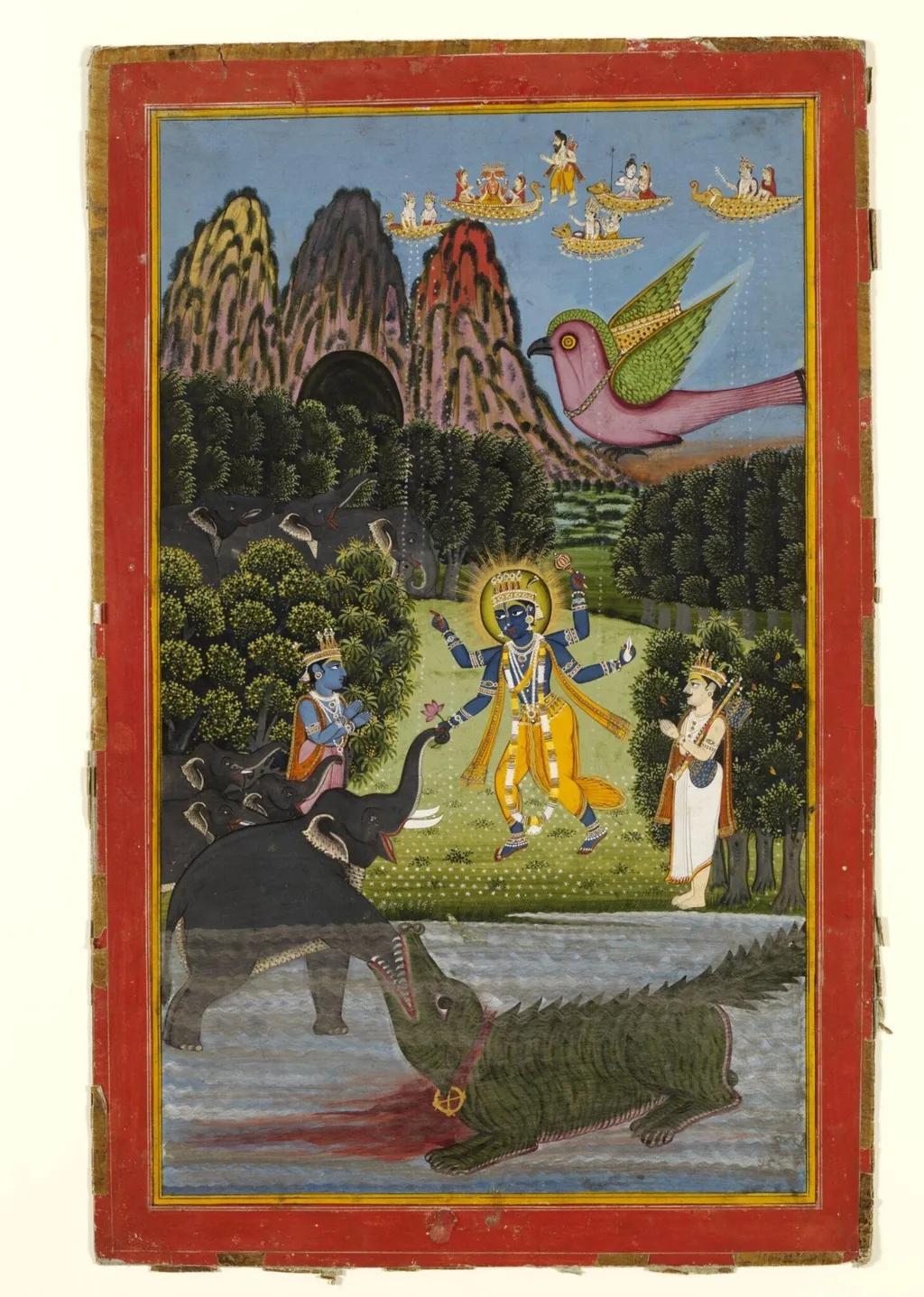
Gajendramoksha is a paint painting by Unknown. It dates from 1850 and is held in the collection of the Victoria and Albert Museum.
About this work
Overview
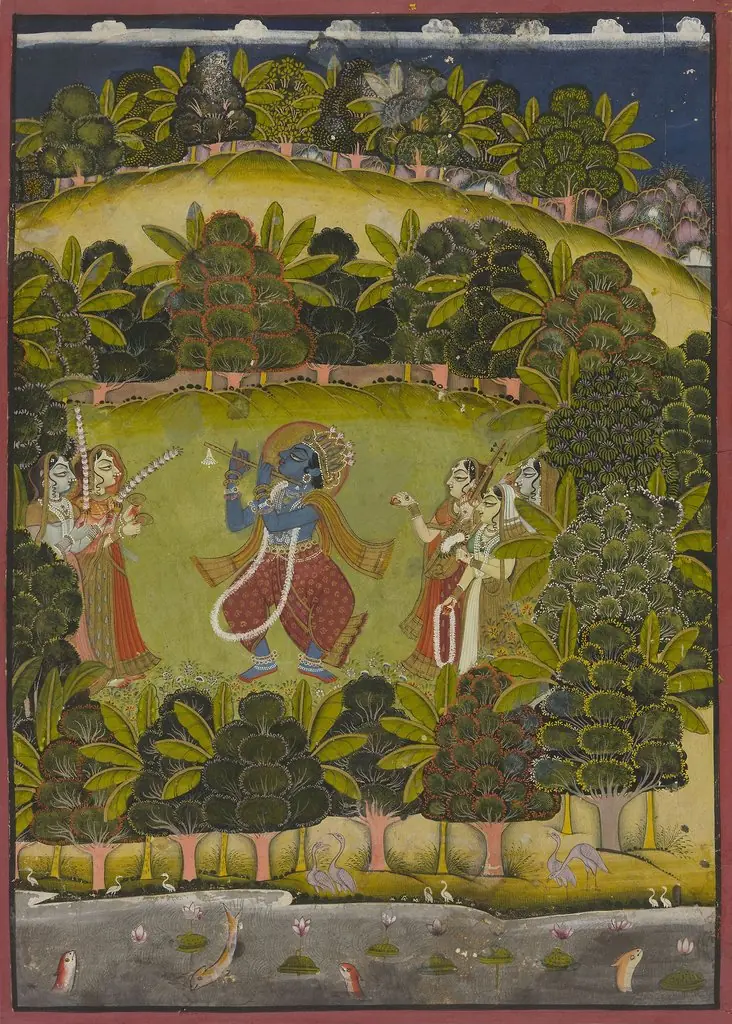
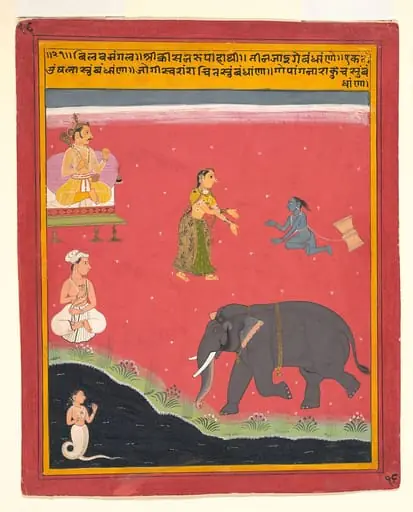
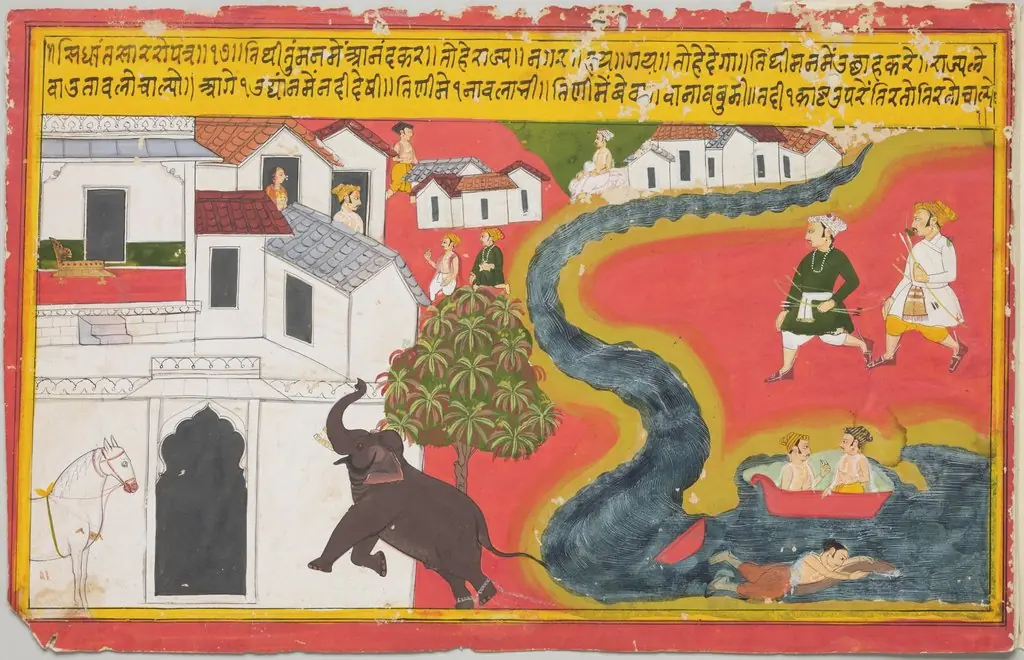
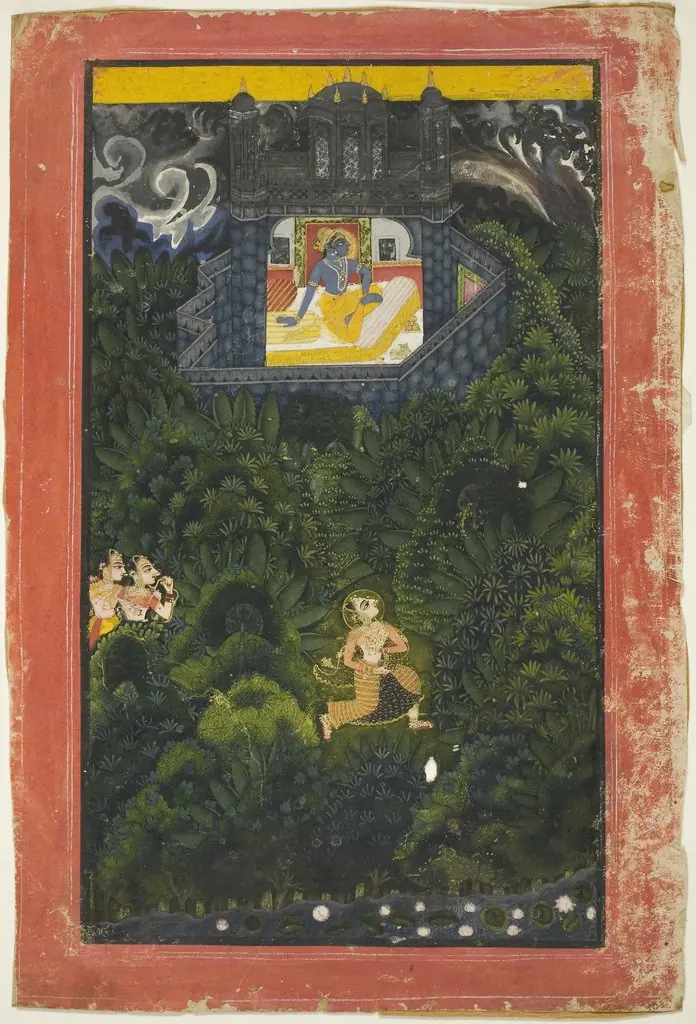
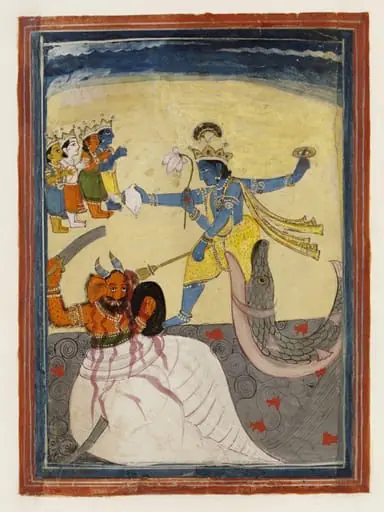
Created around 1850, this vertically oriented painting illustrates the Hindu legend of Gajendra Moksha, in which the elephant king is rescued from a crocodile’s grip by the deity Vishnu. The composition fills a single, tall canvas and presents a complex tableau of figures, animals, and landscape elements.
Subject & Meaning
At the centre, a blue‑skinned deity with a golden halo and multiple arms performs a dance, signifying divine intervention. To his right stands a figure in white and orange, while on the left a similarly attired figure sits astride an elephant engaged in combat with a crocodile. The narrative conveys the triumph of divine mercy over suffering.
Technique & Style
The work employs vivid pigments—blue, yellow, orange, pink and green—to delineate characters and natural surroundings. The use of a halo, multiple limbs, and stylised animal forms reflects traditional Indian iconography, while the crowded composition and bright colour contrasts suggest a mid‑nineteenth‑century courtly aesthetic.
History & Provenance
The painting entered the Indian Department of the Victoria and Albert Museum in the mid‑20th century as part of the bequest of Mrs. G. Clark. It has remained in the museum’s collection since that donation and has not been reclaimed by the donor’s estate.
Context
Gajendra Moksha is a well‑known episode from the Bhagavata Purana, frequently depicted in Indian art to illustrate devotion and divine rescue. The inclusion of Vishnu’s mount Garuda, represented as a large pink bird with green wings, aligns the piece with conventional visual conventions of the period.
Artist & collection

 Domestic Scene
 Giacomo and Cardinal Marco, investing Andrea, Abbot of San Zeno, with his Benefice
 The Nymph of Fontainebleau
 Portrait of a Woman
 Madonna and Child with Saints in the Enclosed Garden
 Venus and Minerva
 Family Group of Four on Sofa
 Wall painting from Room H of the Villa of P. Fannius Synistor at Boscoreale