Artwork
Gauri Ragini
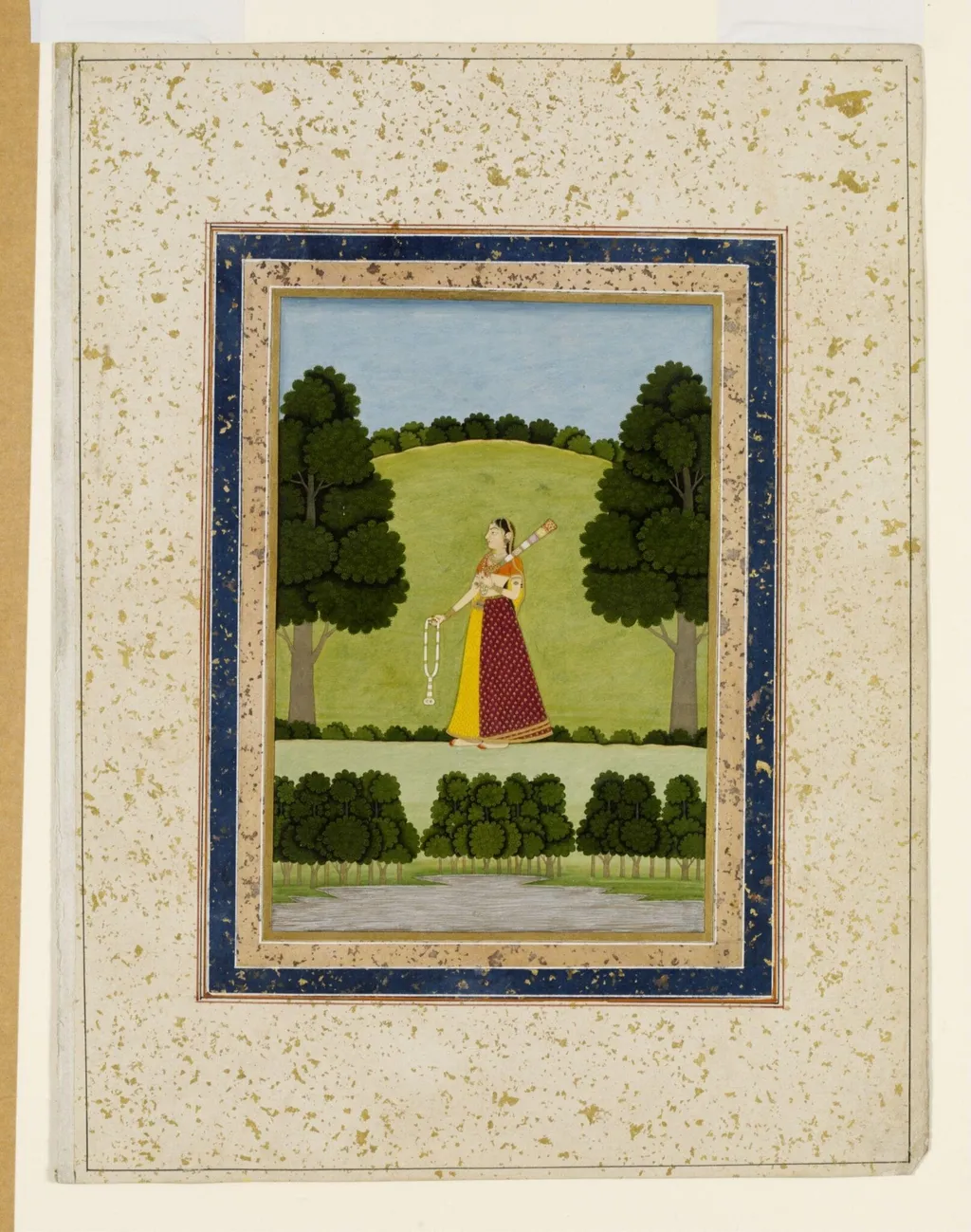
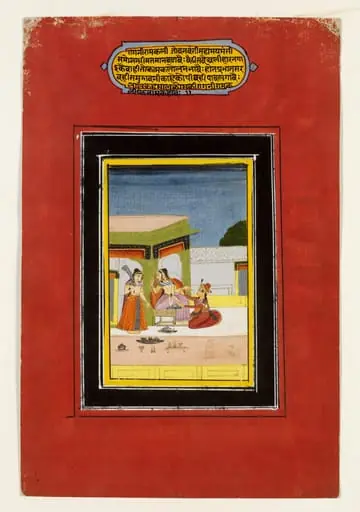
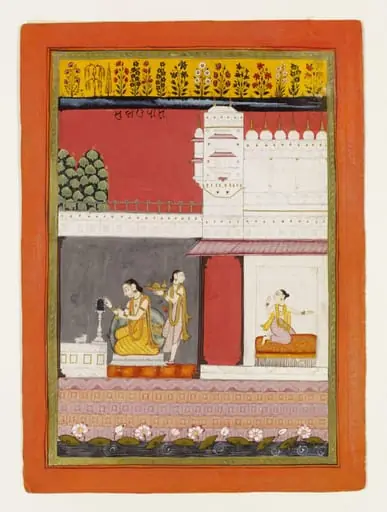
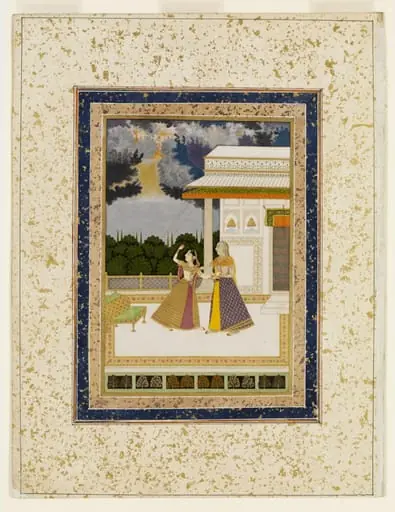
Gauri Ragini is a paint painting by the Romanticist artist Unknown. It dates from 1760 and is held in the collection of the Victoria and Albert Museum. Created around 1760, this painting is an example of Rajasthani miniature art, executed in opaque watercolor and gold on paper.
About this work
Overview
Created around 1760, this painting is an example of Rajasthani miniature art, executed in opaque watercolor and gold on paper.
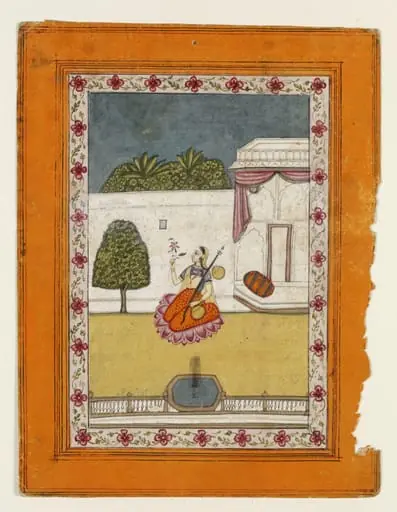
Created around 1760, this painting is an example of Rajasthani miniature art, executed in opaque watercolor and gold on paper. It illustrates the musical mode Gauri Ragini, part of a larger tradition linking ragas to visual imagery. The composition centers on a solitary female figure in a natural setting, framed by an ornate border that elevates the scene beyond mere illustration into a meditative space.
Subject & Meaning
The figure represents the personification of Gauri Ragini, a raga associated with morning and devotional mood. She holds a flower fly-whisk and a string with a small bell, symbols of ritual and musical invocation. Her presence in a quiet forest clearing beside a river suggests a sacred, contemplative moment, aligning the auditory experience of the raga with a visual narrative of stillness and grace.
Technique & Style
The artist employed bold, saturated hues—yellow, red, emerald green, and cobalt blue—layered with fine brushwork and metallic gold accents to define texture and light. The figures and landscape are rendered with stylized precision, avoiding naturalistic depth in favor of flattened planes and decorative patterning. The intricate border, often seen in Rajasthani manuscripts, frames the scene as a sacred vignette.
History & Provenance
This work likely originated in a royal atelier in Rajasthan, possibly Jaipur or Kishangarh, where the tradition of raga-painting flourished under patronage. It was part of a series illustrating musical modes, commissioned for courtly use or devotional study. Its survival suggests it was carefully preserved, possibly within a noble collection or temple archive.
Context
Raga-paintings emerged in the 17th and 18th centuries as a fusion of North Indian music and visual art, reflecting spiritual and aesthetic ideals. Gauri Ragini, linked to the goddess Parvati and the dawn, was often depicted with serene, regal figures in natural settings. This painting aligns with similar works portraying Radha and other divine consorts, reinforcing a symbolic language connecting music, devotion, and feminine grace.
Legacy
Though lesser known than later colonial-era works, such paintings preserved a sophisticated system of symbolic representation unique to pre-modern India. They influenced later regional styles and remain important for understanding how abstract musical concepts were made tangible through visual culture, offering insight into the interplay of sound, ritual, and image in Indian aesthetics.
Artist & collection

 Domestic Scene
 Giacomo and Cardinal Marco, investing Andrea, Abbot of San Zeno, with his Benefice
 The Nymph of Fontainebleau
 Portrait of a Woman
 Madonna and Child with Saints in the Enclosed Garden
 Venus and Minerva
 Family Group of Four on Sofa
 Wall painting from Room H of the Villa of P. Fannius Synistor at Boscoreale