Artwork
Kamodini Ragini
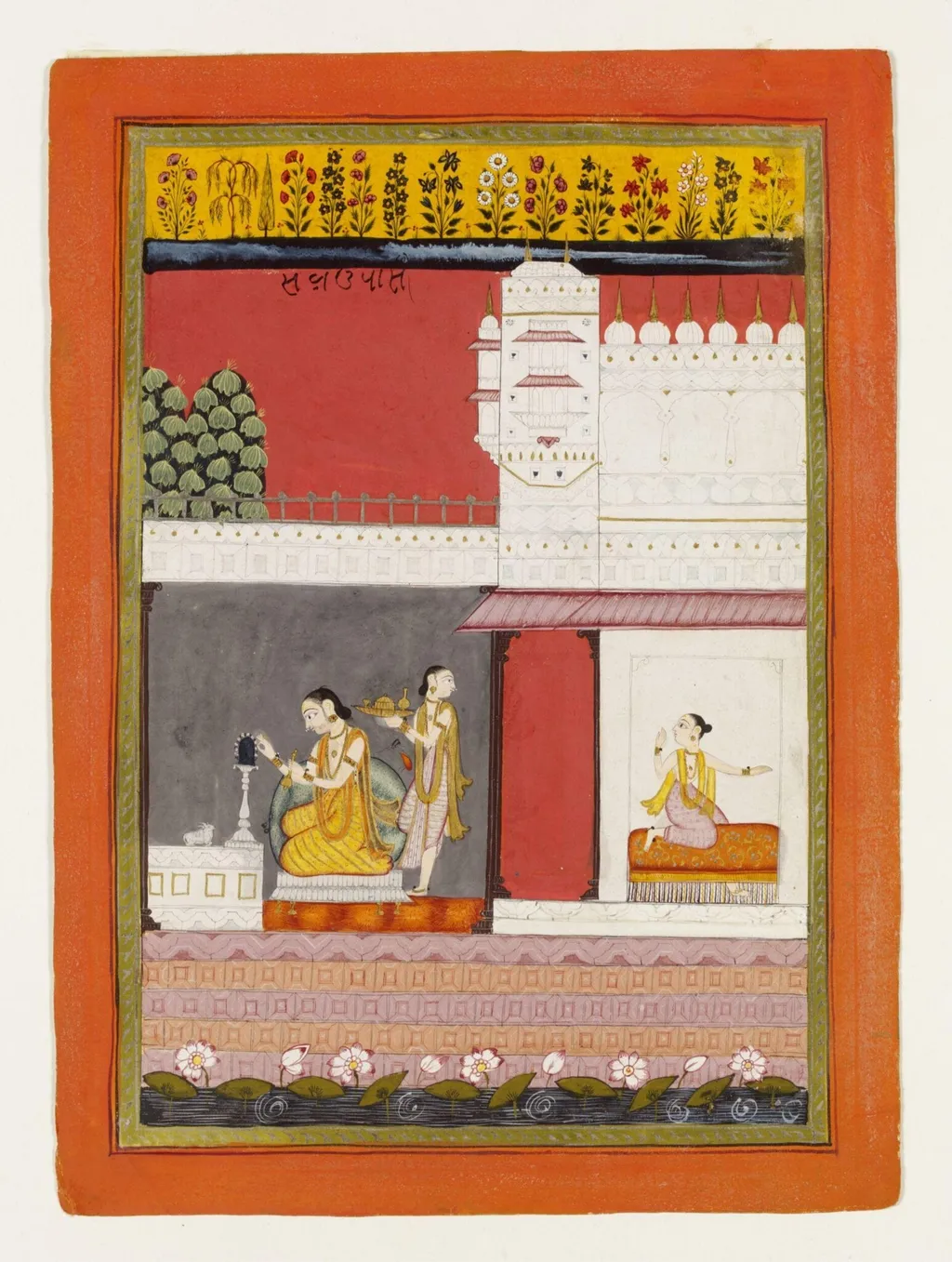
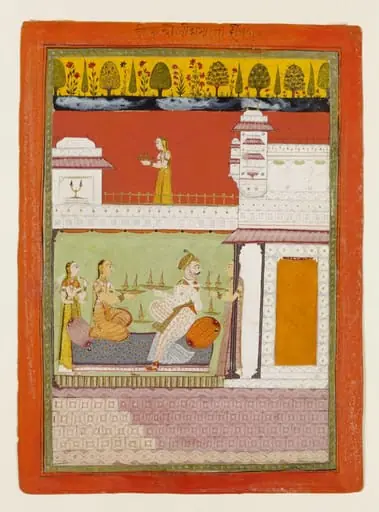
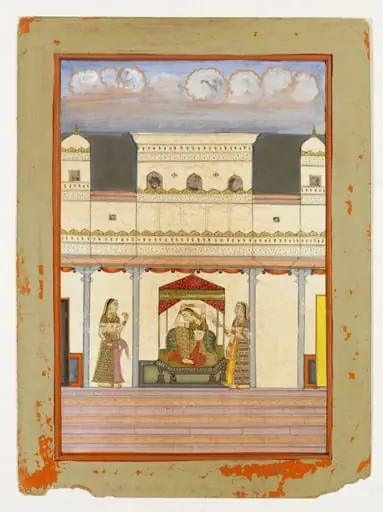
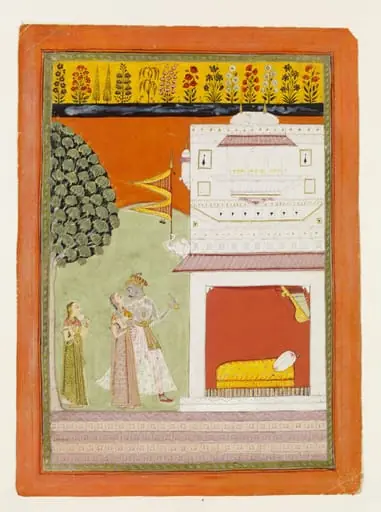
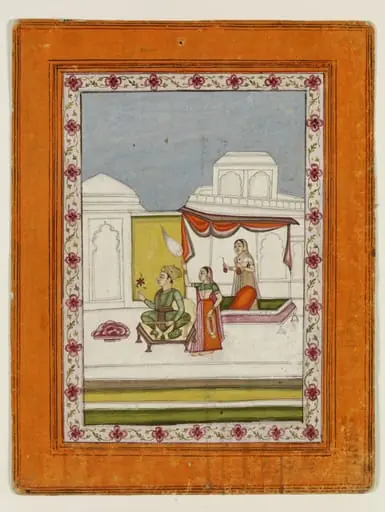
Kamodini Ragini is a paint painting by the Baroque artist Unknown. It dates from 1680 and is held in the collection of the Victoria and Albert Museum. This 1680 painting on paper belongs to a Ragamala series that visually interprets the musical mode Kamod ragini.
About this work
Overview
Executed in a North Indian miniature style, it portrays a devotional scene set in a walled courtyard with architectural elements and natural features.
This 1680 painting on paper belongs to a Ragamala series that visually interprets the musical mode Kamod ragini. Executed in a North Indian miniature style, it portrays a devotional scene set in a walled courtyard with architectural elements and natural features. The work is cataloged alongside other pieces from the same corpus, including IS. 64-1952, and reflects the aesthetic conventions of Rajput court painting rather than European Baroque traditions.
Subject & Meaning
The central figure, a woman, is shown in worship before a lingam, a symbolic representation of Shiva, with a small bull nearby—his traditional vahana. To her right, a man offers a tray, likely containing ritual items, while another woman observes from a seated position. The scene suggests a private, intimate act of devotion, possibly illustrating the emotional resonance attributed to the Kamod ragini, which evokes longing and spiritual yearning.
Technique & Style
The painting employs bold, precise outlines and saturated pigments typical of Rajput miniatures. Colors are applied flatly with minimal shading, emphasizing pattern and form over illusionistic depth. The red sky, green foliage, and white tower create a stylized landscape, while the architectural details—red door, elevated platform—frame the figures within a contained, symbolic space.
History & Provenance
This work originates from a larger set of Ragamala paintings commissioned by a Rajput court, likely in the late 17th century. It shares stylistic and thematic links with other known examples in the series, including IS. 64-1952. Its survival and cataloging suggest it was preserved within royal collections before entering institutional holdings, though its exact provenance prior to modern acquisition remains undocumented.
Context
Ragamala paintings emerged in North India as visual companions to musical modes, linking emotion, time of day, and divine symbolism. Kamod ragini, associated with evening and devotion, was often depicted through scenes of worship or solitude. These works were not merely decorative but served as aids to contemplation, reflecting the integration of music, poetry, and spirituality in courtly culture.
Legacy
Though not widely known outside specialist circles, this painting exemplifies the sophisticated synthesis of music, religion, and visual art in early modern India. It contributes to the understanding of how abstract musical concepts were rendered tangible through iconography, influencing later regional traditions and scholarly studies of Indian miniature painting.
Artist & collection

 Domestic Scene
 Giacomo and Cardinal Marco, investing Andrea, Abbot of San Zeno, with his Benefice
 The Nymph of Fontainebleau
 Portrait of a Woman
 Madonna and Child with Saints in the Enclosed Garden
 Venus and Minerva
 Family Group of Four on Sofa
 Wall painting from Room H of the Villa of P. Fannius Synistor at Boscoreale