Artwork
Gemälde, Schwarzwald, um 1860
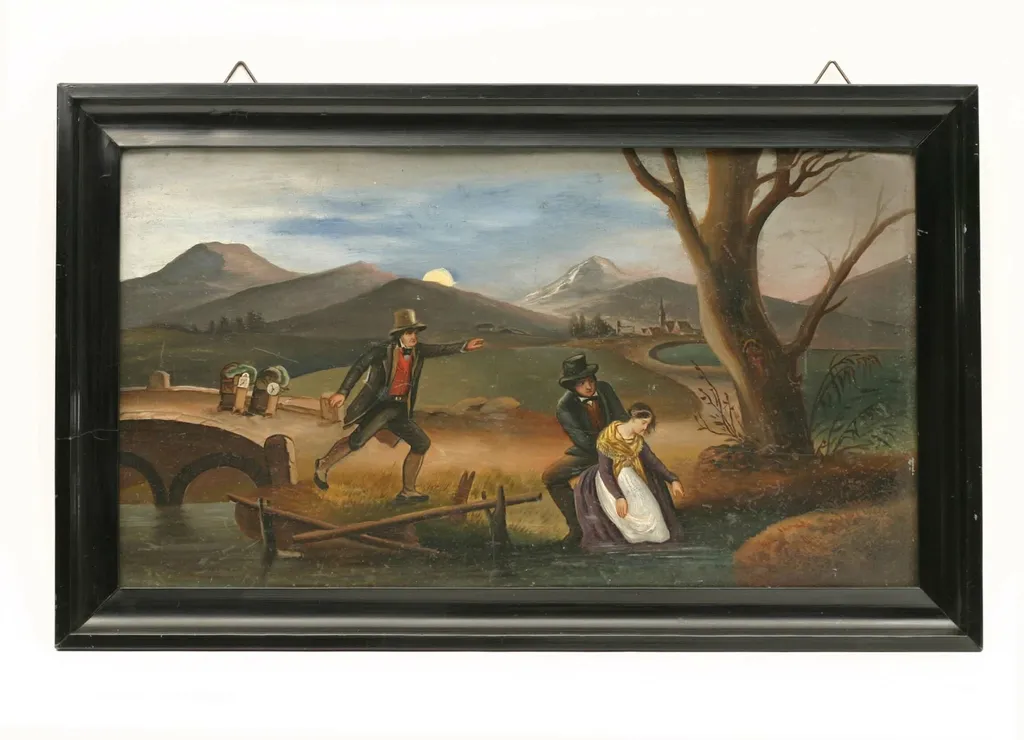
Gemälde, Schwarzwald, um 1860 is a drawing by the Impressionist artist Unknown. It dates from 1860 and is held in the collection of the German Clock Museum. This undated painting from around 1860 depicts a quiet rural moment in the Black Forest region.
About this work
Overview
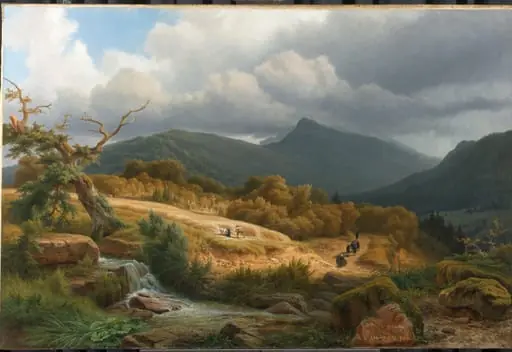
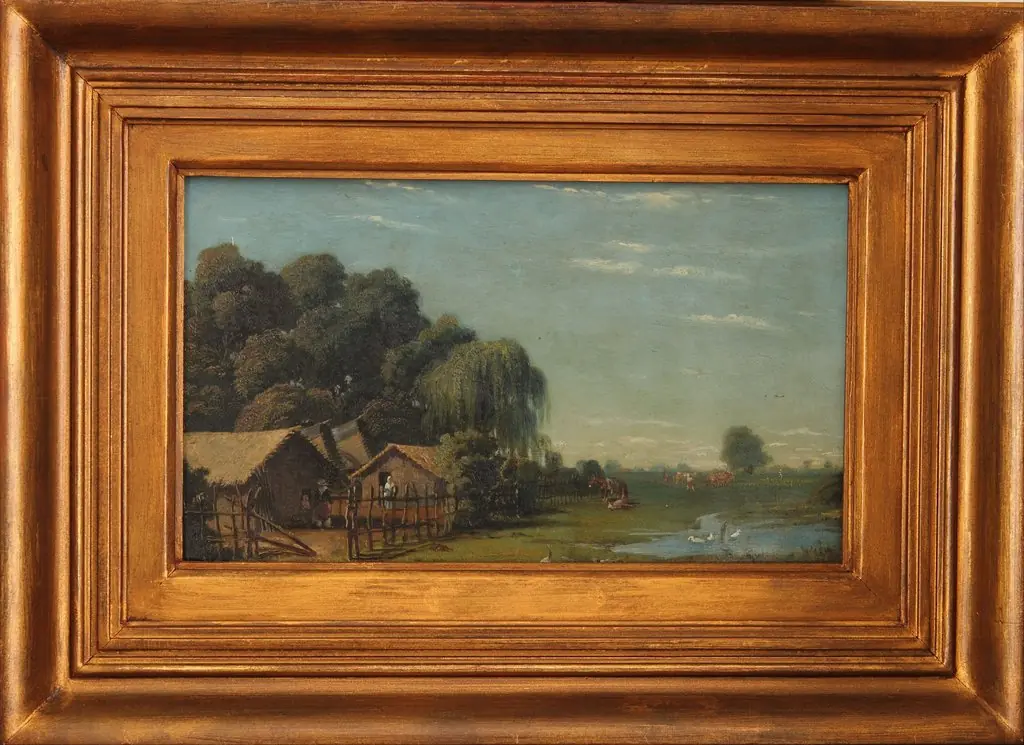
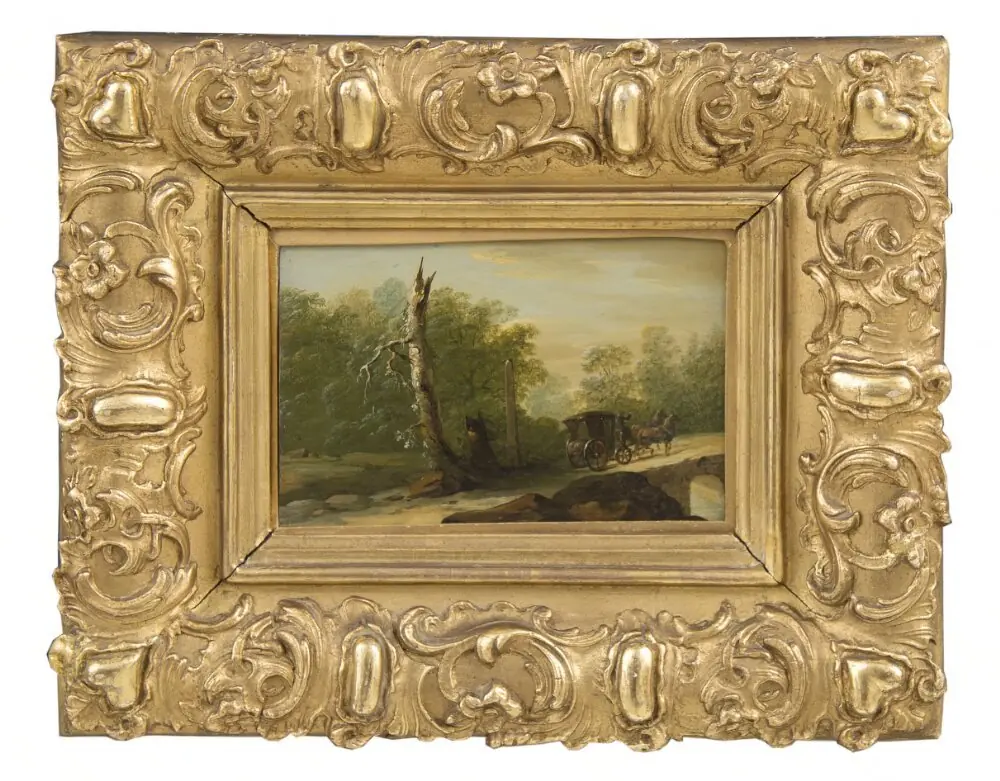
Two figures stand beside a wagon in the distance, and the landscape unfolds in gentle, rolling hills beneath a soft, overcast sky.
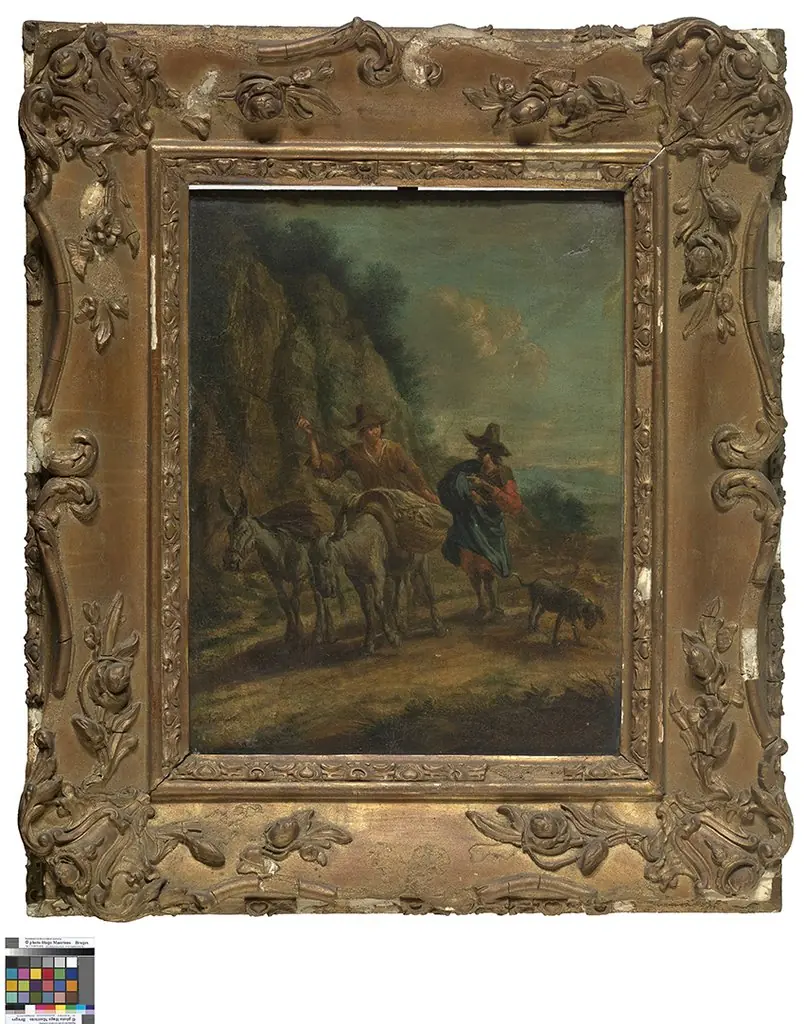
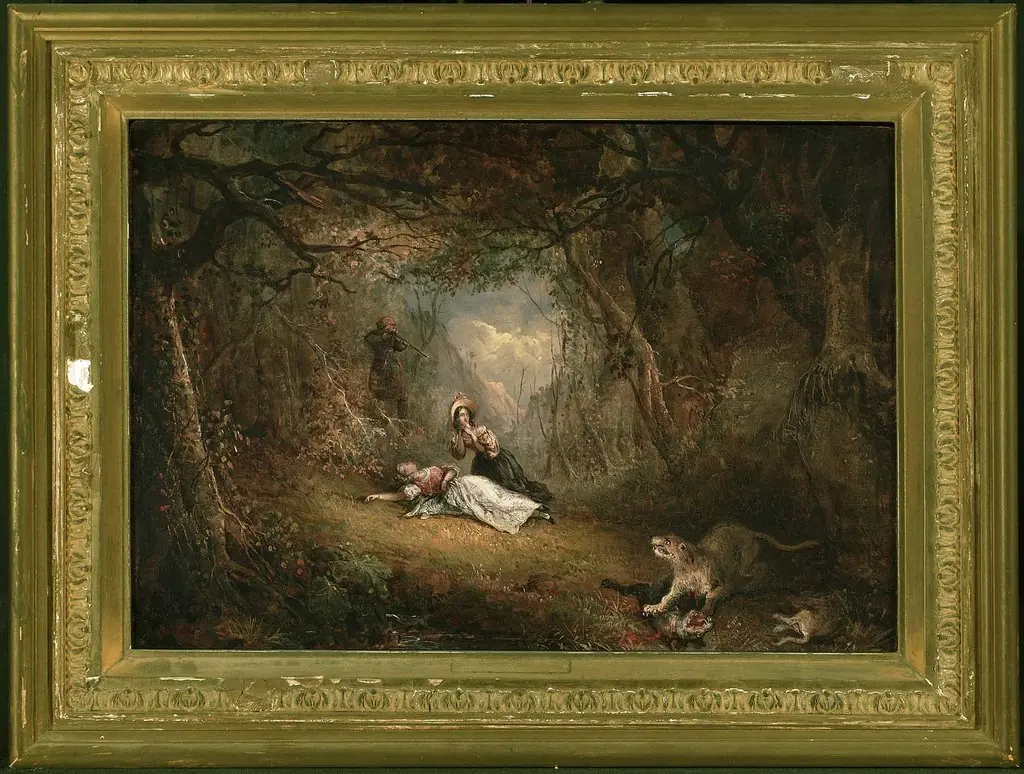
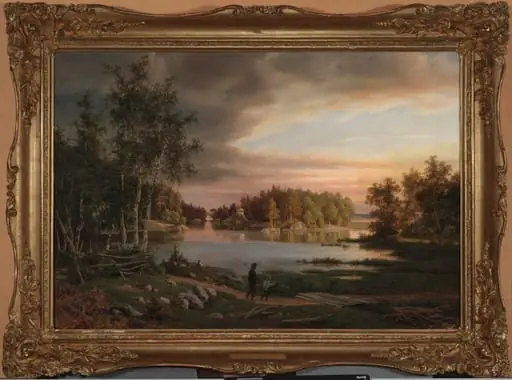
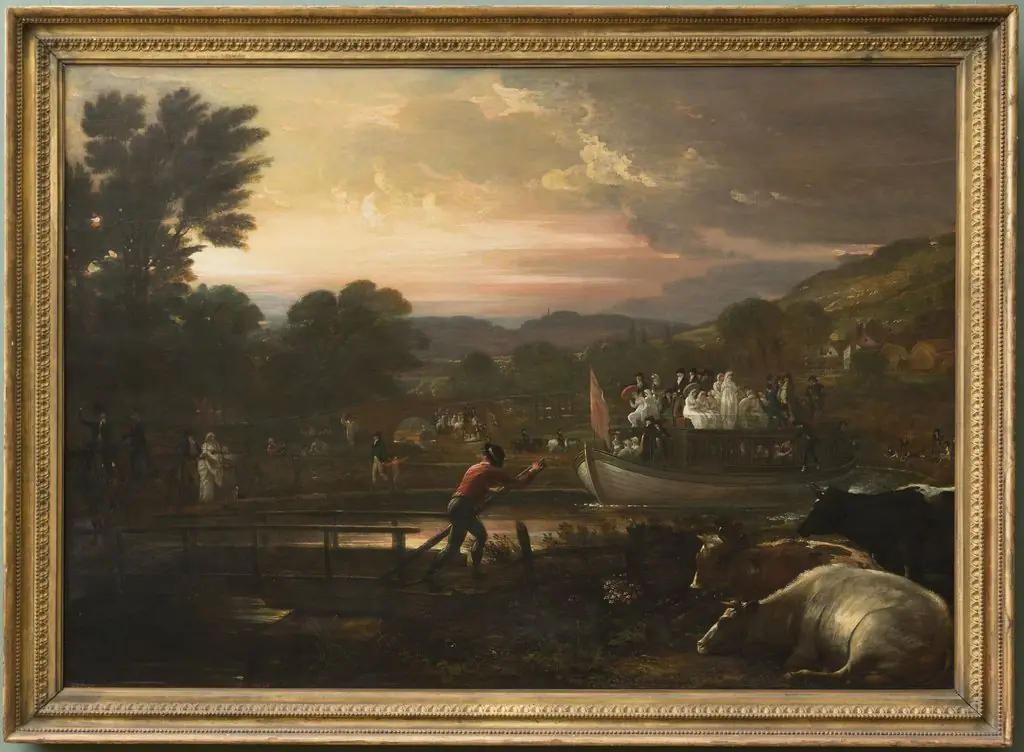
This undated painting from around 1860 depicts a quiet rural moment in the Black Forest region. A man in a red vest and hat pursues another near a narrow bridge, while a woman sits on the ground nearby, head bowed. Two figures stand beside a wagon in the distance, and the landscape unfolds in gentle, rolling hills beneath a soft, overcast sky. The composition avoids dramatic tension, favoring instead a subdued observation of ordinary life.
Subject & Meaning
The scene captures an unexplained, fleeting interaction in a village setting—perhaps a dispute, a chase, or a moment of domestic tension. The woman’s downward gaze suggests quiet observation or resignation, while the distant figures near the wagon imply a broader community context. No clear narrative is given, allowing the viewer to interpret the moment as a fragment of daily existence rather than a staged event.
Technique & Style
The painting employs muted, earthy tones with subtle contrasts to ground the scene in realism. Brushwork is restrained, avoiding flourish or idealization. Light falls evenly across the landscape, softening edges and reinforcing the sense of quietude. The figures are rendered with minimal detail, emphasizing their integration into the environment rather than individual identity.
History & Provenance
The work is attributed to an anonymous artist active in the Black Forest region during the mid-19th century. No documented exhibition history or collector lineage is known. Its survival suggests it was likely kept within a local family or community, reflecting regional taste rather than metropolitan artistic trends of the period.
Context
Created during the rise of Realism in European art, this painting aligns with a broader shift toward depicting rural labor and ordinary life without romanticization. While urban centers embraced grand historical or social themes, regional artists often recorded local customs and quiet moments, preserving a visual record of rural Germany outside the influence of academic traditions.
Legacy
Though not widely exhibited or reproduced, the painting contributes to a quieter strand of 19th-century German art that valued observation over spectacle. It reflects how regional identity and everyday rhythms were preserved in visual form, offering insight into the lives of non-elite communities during a time of rapid industrial and cultural change.
Artist & collection

 Domestic Scene
 Giacomo and Cardinal Marco, investing Andrea, Abbot of San Zeno, with his Benefice
 The Nymph of Fontainebleau
 Portrait of a Woman
 Madonna and Child with Saints in the Enclosed Garden
 Venus and Minerva
 Family Group of Four on Sofa
 Wall painting from Room H of the Villa of P. Fannius Synistor at Boscoreale