Artwork
Costa del Rio de la Plata
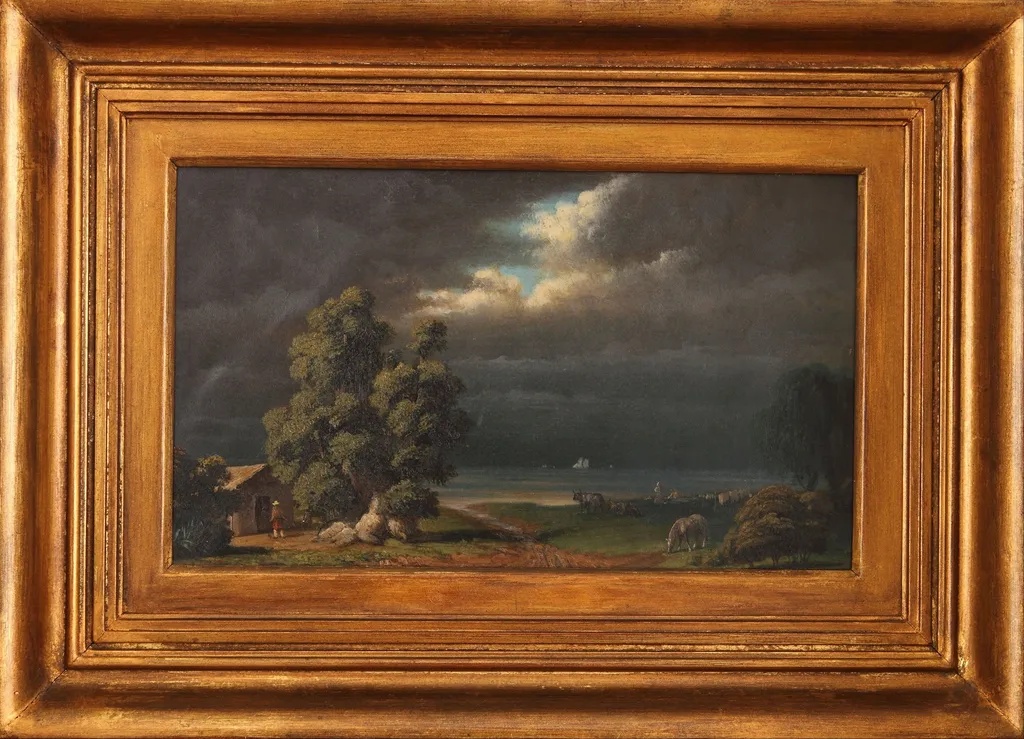
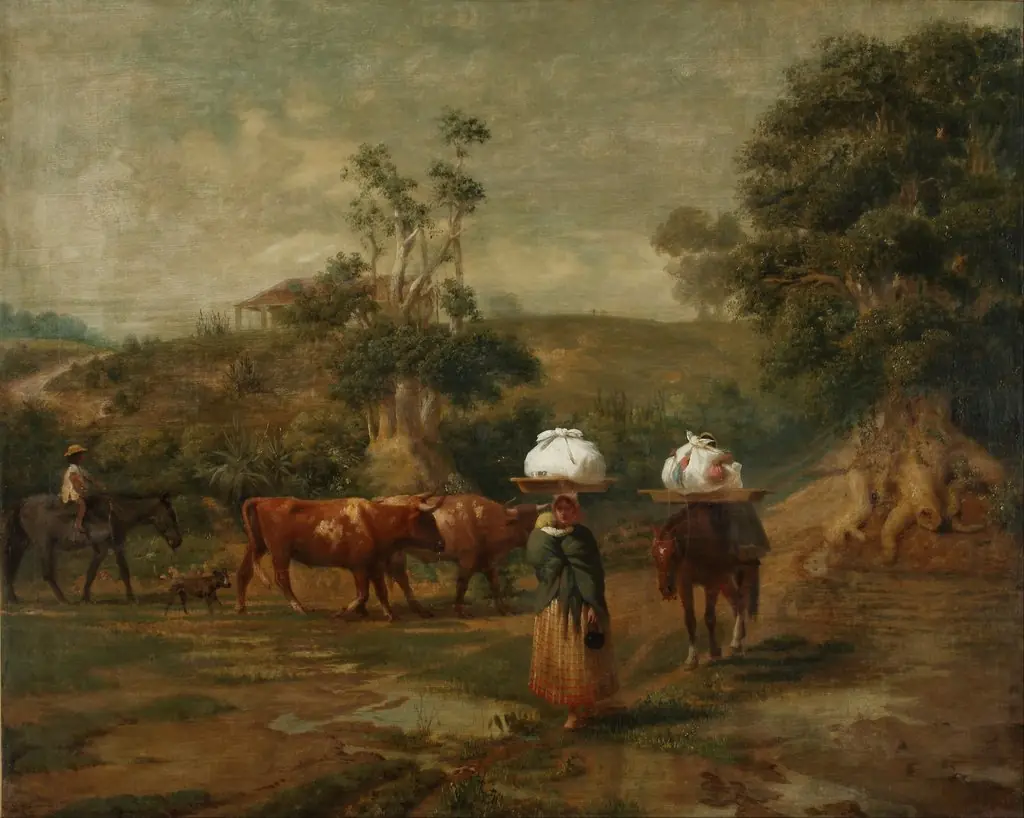
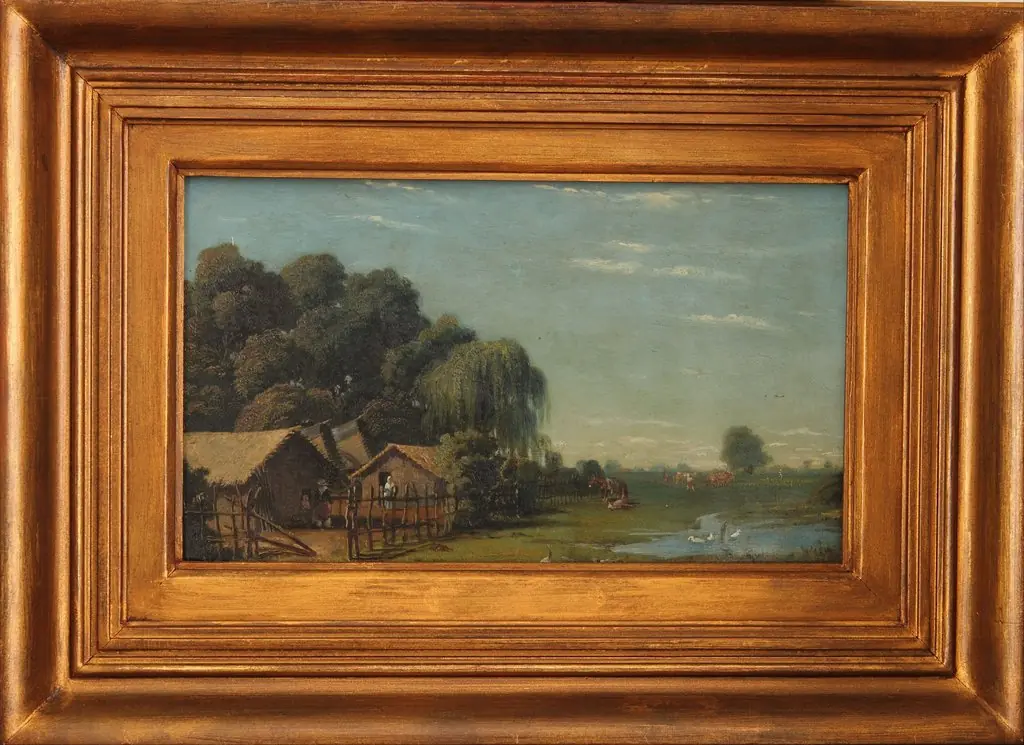
Costa del Rio de la Plata is an oil painting by Prilidiano Pueyrredón. It dates from 1850 and is held in the collection of the National Museum of Fine Arts, Argentina.
About this work
Overview
As one of Argentina’s earliest recognized painters, he combined artistic training with an engineer’s precision.
Prilidiano Pueyrredón painted *Costa del Rio de la Plata* circa 1850 on a copper support, a less common choice that allowed for fine detail and a smooth, luminous surface. As one of Argentina’s earliest recognized painters, he combined artistic training with an engineer’s precision. The work captures a quiet stretch of the riverbank, blending observation with atmospheric mood, and now resides in the National Museum of Fine Arts in Buenos Aires.
Subject & Meaning
The scene presents a tranquil riverside in the Río de la Plata region, where human presence is minimal: a solitary figure in red, a small structure, and a few animals suggest quiet rural life. The composition avoids grandeur, instead emphasizing the dignity of ordinary landscapes. The interplay between the calm water and the brooding sky implies a moment of transition—perhaps before a storm or at day’s end—evoking stillness rather than narrative.
Technique & Style
Pueyrredón employed chiaroscuro to model forms and deepen spatial recession, using the copper’s reflective quality to enhance subtle shifts in light. The brushwork is controlled yet expressive, particularly in the rendering of clouds and foliage. The palette favors muted earth tones contrasted with the vivid red of the figure and patches of pale sky, guiding the viewer’s gaze toward the horizon while maintaining a sense of atmospheric cohesion.
History & Provenance
Created during Argentina’s early national period, the painting was likely made for private or institutional collectors interested in documenting local scenery. It entered the National Museum of Fine Arts in Buenos Aires in the late 19th or early 20th century, where it remains as part of the foundational collection of Argentine art. Its survival and preservation reflect its early recognition as a significant work of national visual culture.
Context
In mid-19th-century Argentina, artists like Pueyrredón were among the first to turn from European subjects to local landscapes and customs. This work aligns with the costumbrista movement, which valued everyday life as worthy of artistic attention. While European traditions influenced his technique, his choice of subject—unadorned, regional terrain—helped define a distinct Argentine visual identity during a time of nation-building.
Legacy
*Costa del Rio de la Plata* stands as an early example of Argentine landscape painting that prioritized observation over idealization. It influenced later generations who sought to portray the nation’s geography with authenticity. Though not widely exhibited today, its presence in the national museum underscores its role in establishing a visual record of Argentina’s natural and cultural environment during its formative years.
Artist & collection
Artist
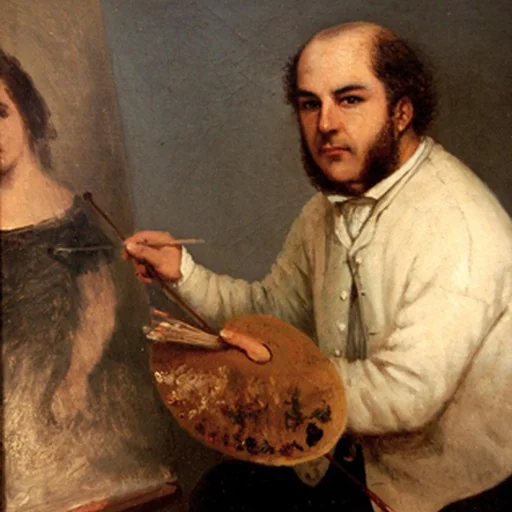
Prilidiano Pueyrredón (January 24, 1823 – November 3, 1870) was an Argentine painter, architect and engineer. One of the country's first prominent painters, he was known for his costumbrist sensibility and preference for everyday themes.

Museum
National Museum of Fine Arts, Argentina
Continue through works from the same source collection.