Artwork
God of Plague
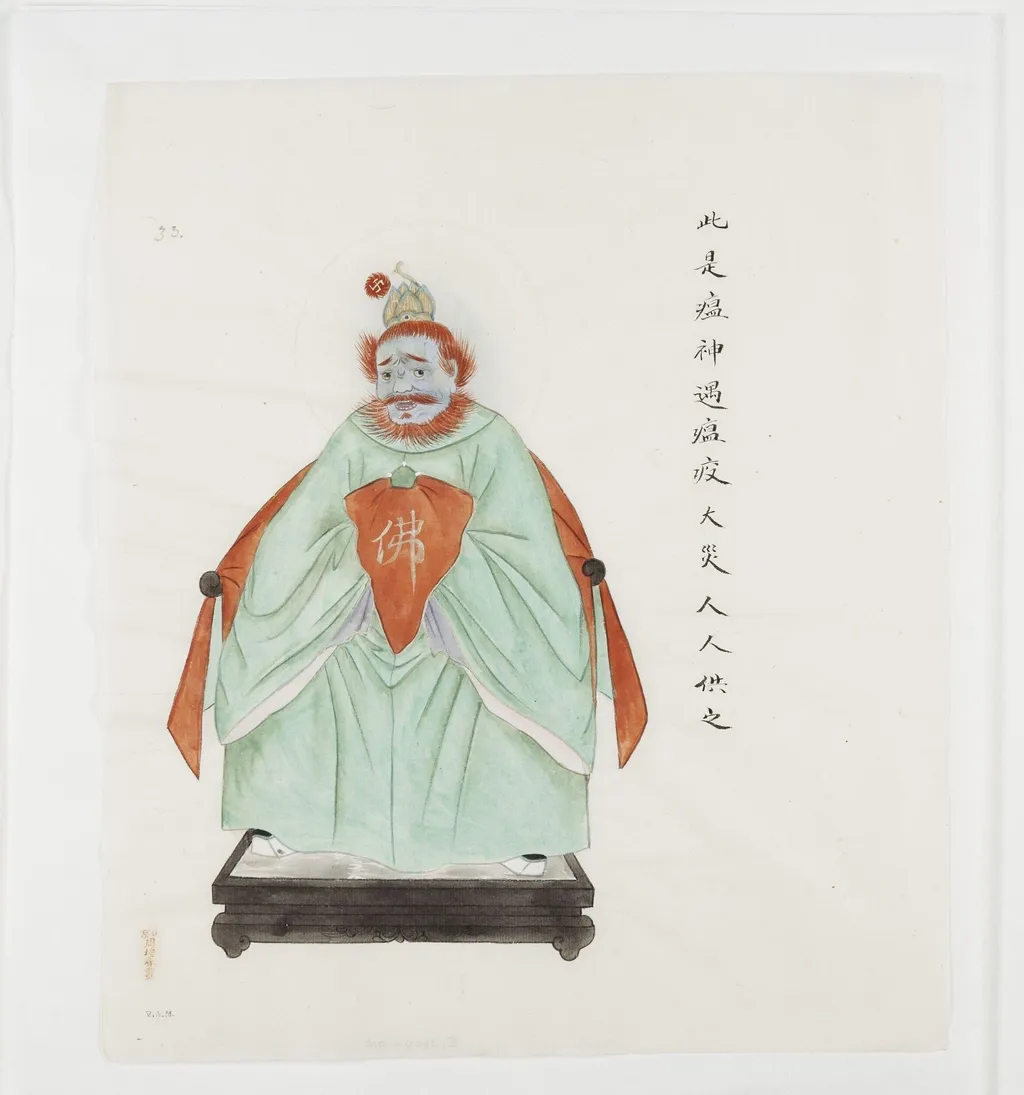
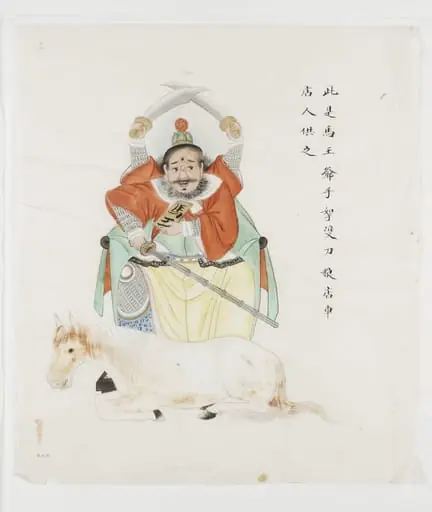
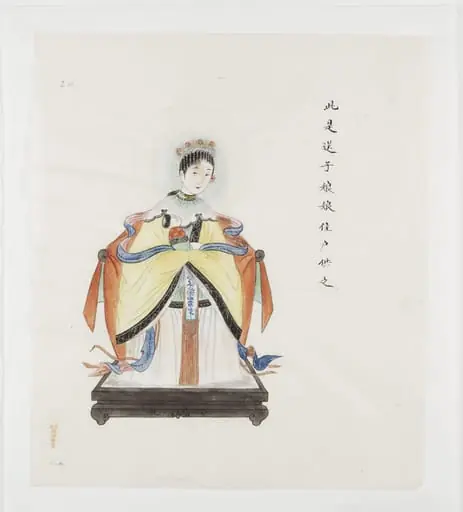
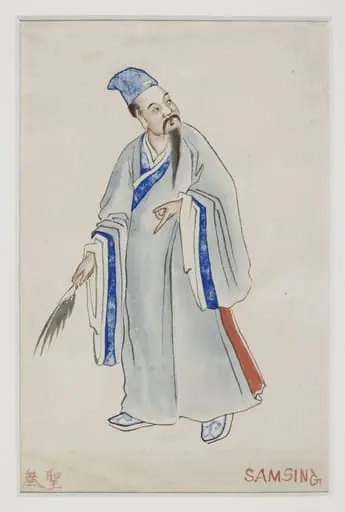
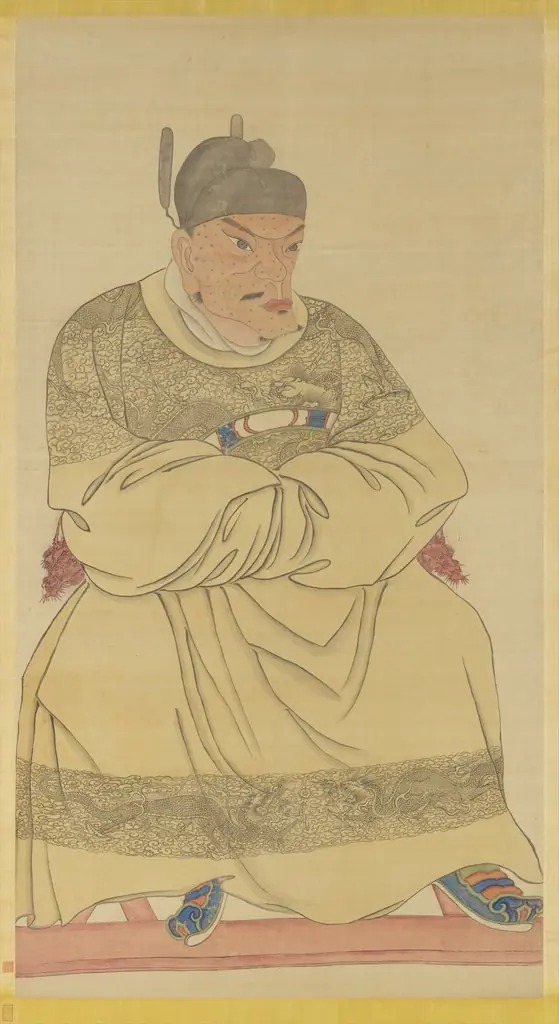
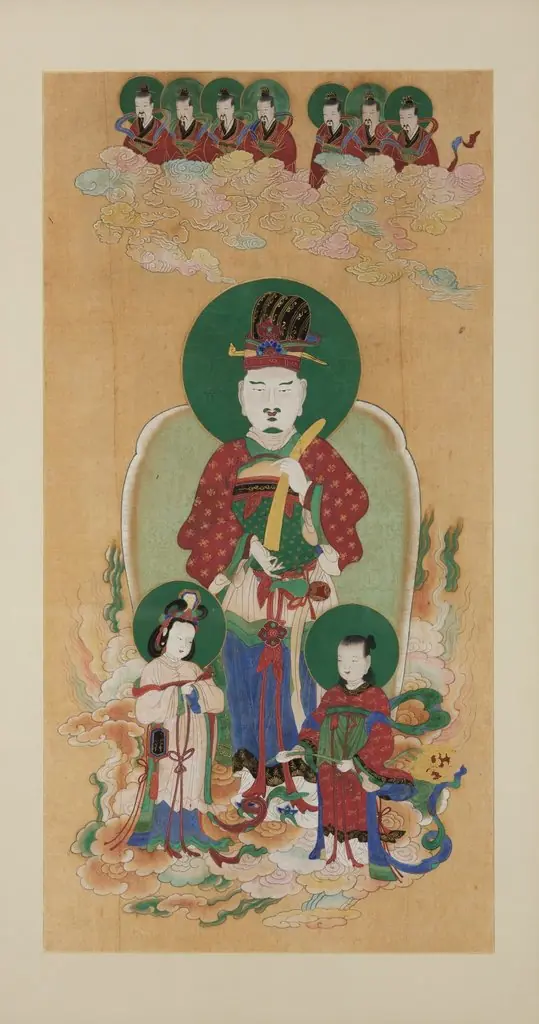
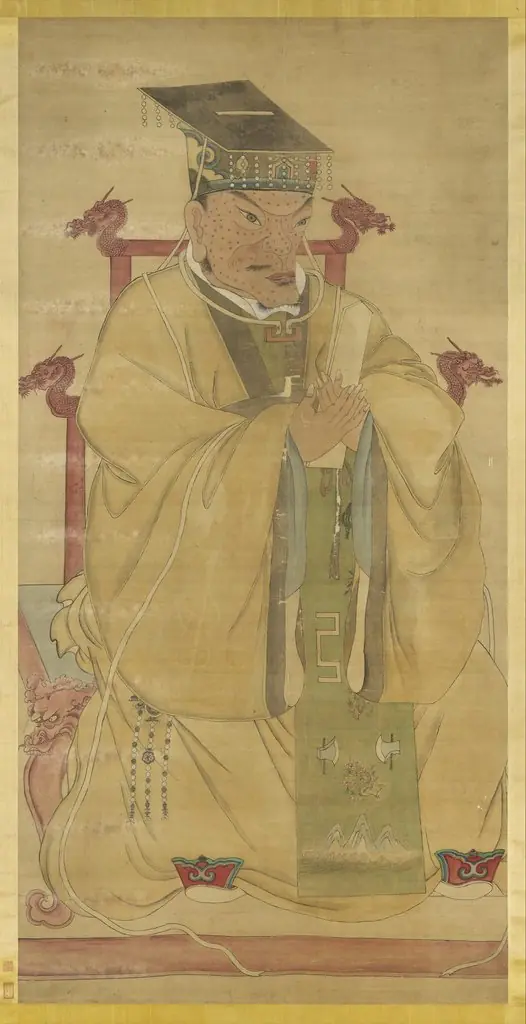
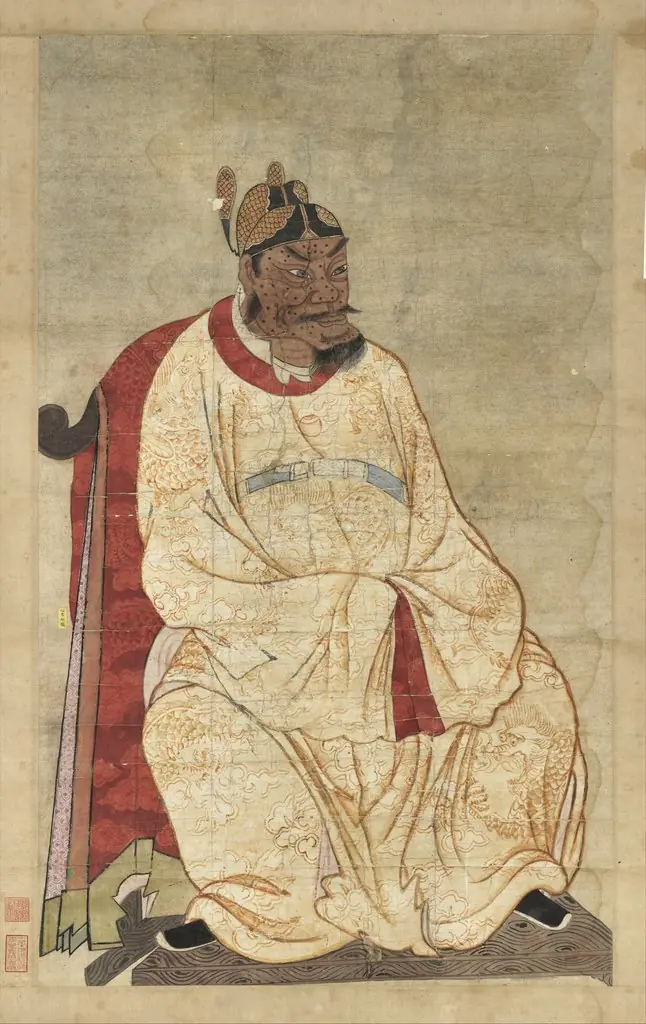
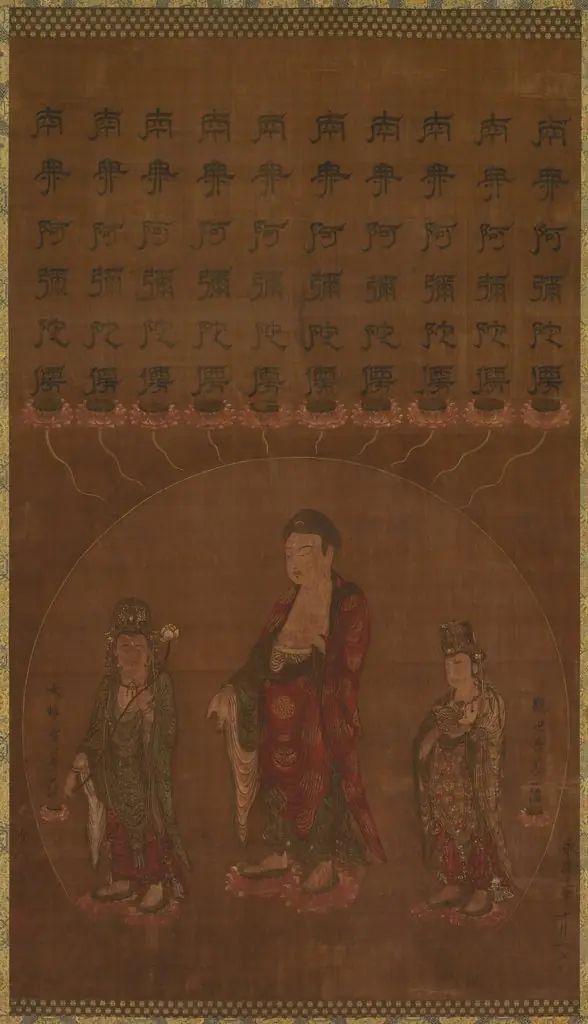
God of Plague is a paint painting by Unknown. It dates from 1900 and is held in the collection of the Victoria and Albert Museum. This vertical scroll painting presents a seated deity rendered in vivid pigments on silk or paper.
About this work
Overview
A red cloth draped across the lap bears a small emblem, and the background remains unadorned except for a vertical column of Chinese script.
This vertical scroll painting presents a seated deity rendered in vivid pigments on silk or paper. The figure’s elongated white beard and intense gaze dominate the composition, while its attire—a green robe edged in red and a tall, conical headdress—signals an elevated status within Chinese folk tradition. A red cloth draped across the lap bears a small emblem, and the background remains unadorned except for a vertical column of Chinese script.
Subject & Meaning
The figure embodies a household protector venerated in local religious practice, often invoked to avert disease or misfortune. Its blue-tinged complexion and red facial hair mark it as distinct from mortal representations, while the triangular cloth and circular token may symbolize talismanic authority. The accompanying inscription likely names the deity or records a dedicatory prayer, reinforcing its role as an intermediary between the domestic sphere and the divine.
Technique & Style
Executed with assured, economical brushwork, the painting relies on flat expanses of saturated color rather than gradation or shadow. Outlines are crisp, separating the deity’s garments from the plain ground, while facial features are delineated with minimal modeling. The bold chromatic contrasts—blue skin, green robe, red accents—heighten the figure’s visual immediacy, aligning with the direct, functional aesthetic of folk devotional art.
History & Provenance
Acquired in 1910 from the collection of Mrs. Amherst-Law, the work forms part of a larger series of 155 drawings or paintings documenting regional deities. Its maker’s mark, located in the lower left, suggests production within a workshop or lineage specializing in such imagery. The series entered institutional holdings as an ethnographic record, preserving practices of domestic worship that might otherwise have faded from written histories.
Context
Paintings of this type served as focal points in household shrines, where they were displayed alongside offerings to solicit protection. The deity’s attributes—color symbolism, inscribed prayers—reflect syncretic traditions blending Daoist, Buddhist, and local folk elements. Such images were typically commissioned from artisans rather than court artists, emphasizing accessibility and ritual efficacy over fine-art refinement.
Legacy
Though created for private devotion, the painting now offers insight into the visual culture of non-elite religious practice. Its inclusion in a major museum collection underscores shifting perceptions of folk art, once dismissed as mere craft but increasingly recognized for its role in shaping communal identity. The series to which it belongs remains a critical resource for scholars tracing the evolution of Chinese vernacular iconography.
Artist & collection

 Domestic Scene
 Giacomo and Cardinal Marco, investing Andrea, Abbot of San Zeno, with his Benefice
 The Nymph of Fontainebleau
 Portrait of a Woman
 Madonna and Child with Saints in the Enclosed Garden
 Venus and Minerva
 Family Group of Four on Sofa
 Wall painting from Room H of the Villa of P. Fannius Synistor at Boscoreale