Artwork
Guangxi Grain Boat
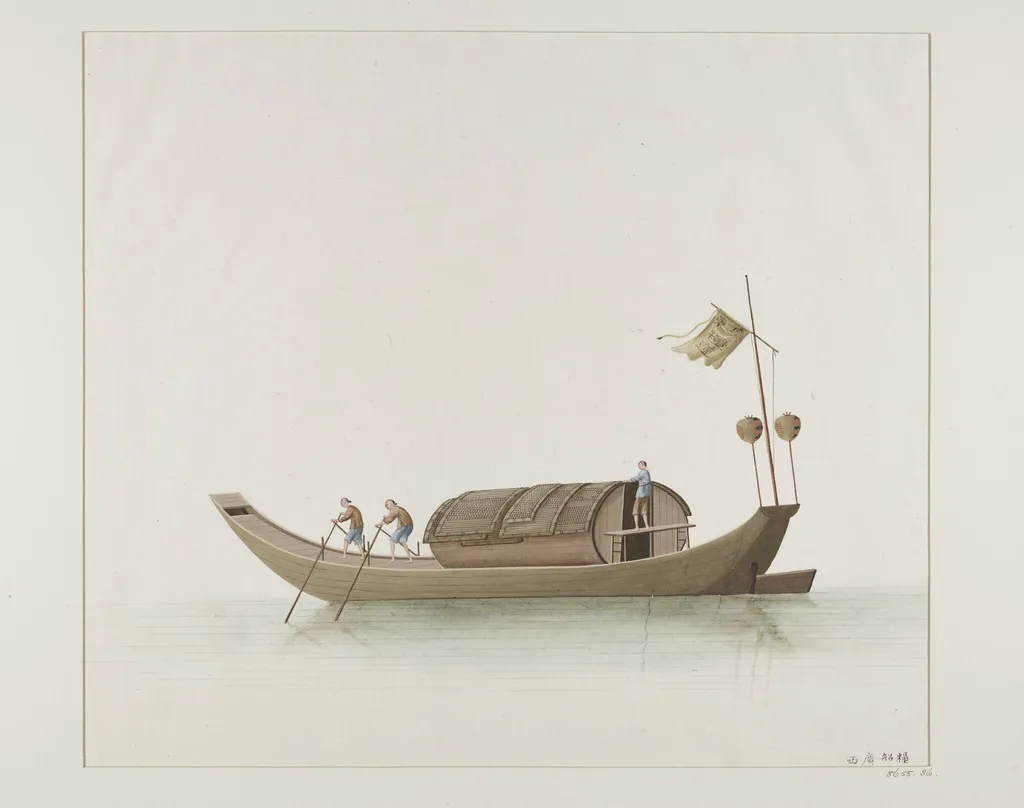
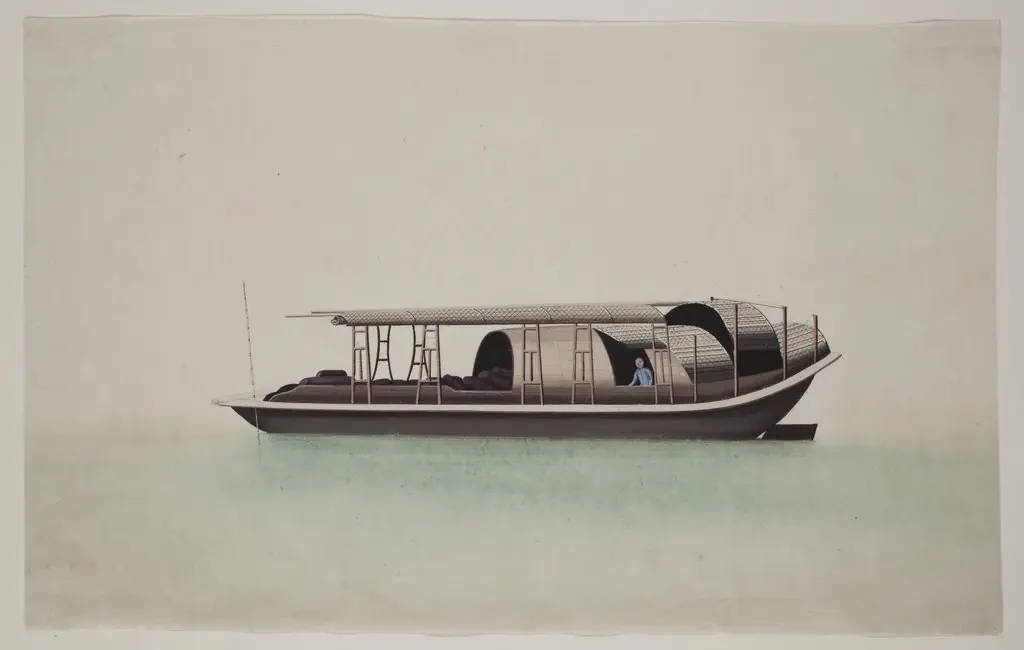
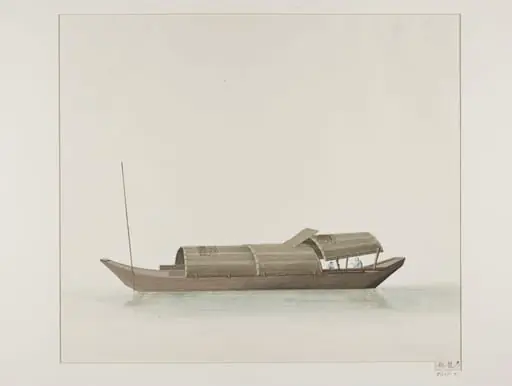
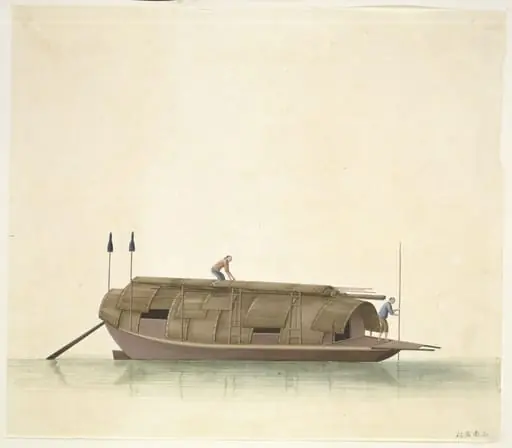
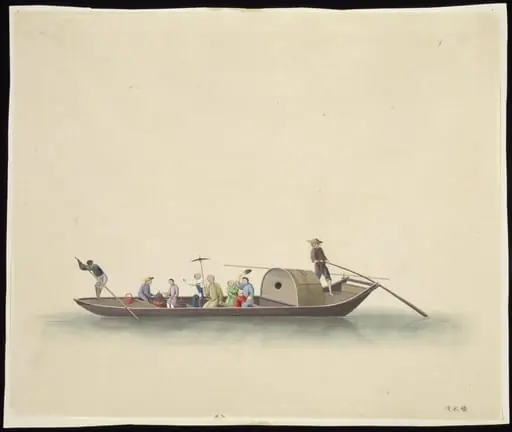
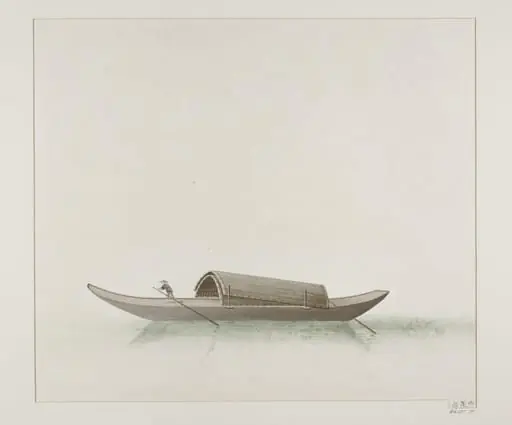
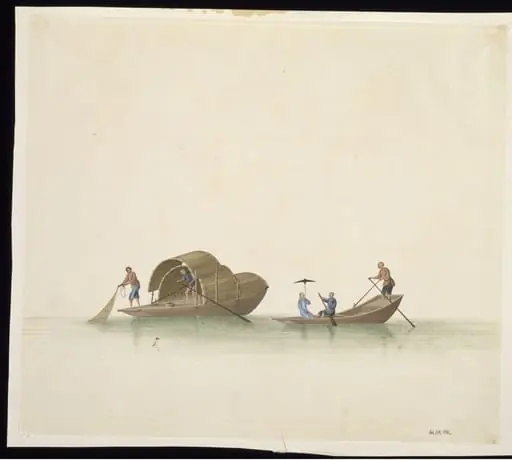
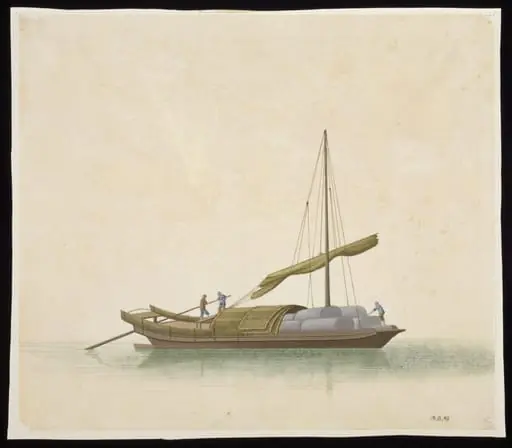
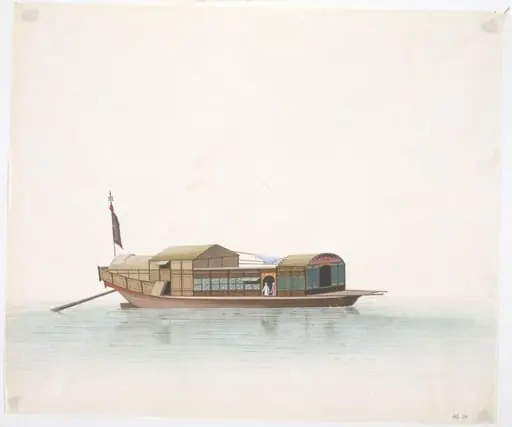
Guangxi Grain Boat is a paint painting by the Romanticist artist Unknown. It dates from 1810 and is held in the collection of the Victoria and Albert Museum. Created in 1810, this rectangular painting portrays a modest river ferry at night on the Pearl River.
About this work
Overview
A long, flat vessel with a circular, covered cabin drifts on calm water, its stern marked by a flag bearing Chinese characters and two lanterns.
Created in 1810, this rectangular painting portrays a modest river ferry at night on the Pearl River. A long, flat vessel with a circular, covered cabin drifts on calm water, its stern marked by a flag bearing Chinese characters and two lanterns. Two men in simple attire push the boat with long poles while a third stands at the bow, holding a rope. The palette is muted, dominated by soft browns and greens that convey a tranquil yet active scene.
Subject & Meaning
The work records a nighttime ferry crossing, illustrating the bustling traffic that characterized the Pearl River during the early nineteenth century. The presence of multiple crew members and the illuminated flag suggest both functional utility and a degree of ceremonial display, reflecting the importance of river transport for local commerce and communication. The calm water and gentle lighting emphasize the routine nature of such voyages amid a densely populated waterway.
Technique & Style
Executed in ink and watercolor on paper, the painting employs delicate brushwork to render the boat’s curved cabin walls and the faint reflections on the water’s surface. Linear perspective is minimal; instead, the composition relies on flat planes of muted earth tones to suggest depth. The lanterns and flag are highlighted with subtle washes, providing focal points that guide the viewer’s eye across the scene without overt dramatization.
History & Provenance
Originally one page of a fifty‑sheet folio that catalogued various vessels navigating the Pearl River, the image was likely produced as a commercial souvenir for travelers. The folio’s pages have been separated and are now listed under catalog numbers 8655:1 to 51. The painting’s provenance traces back to early nineteenth‑century Chinese print culture, where such albums served both documentary and decorative purposes for domestic and foreign audiences.
Artist & collection

 Domestic Scene
 Giacomo and Cardinal Marco, investing Andrea, Abbot of San Zeno, with his Benefice
 The Nymph of Fontainebleau
 Portrait of a Woman
 Madonna and Child with Saints in the Enclosed Garden
 Venus and Minerva
 Family Group of Four on Sofa
 Wall painting from Room H of the Villa of P. Fannius Synistor at Boscoreale