Artwork
Gunny Maker
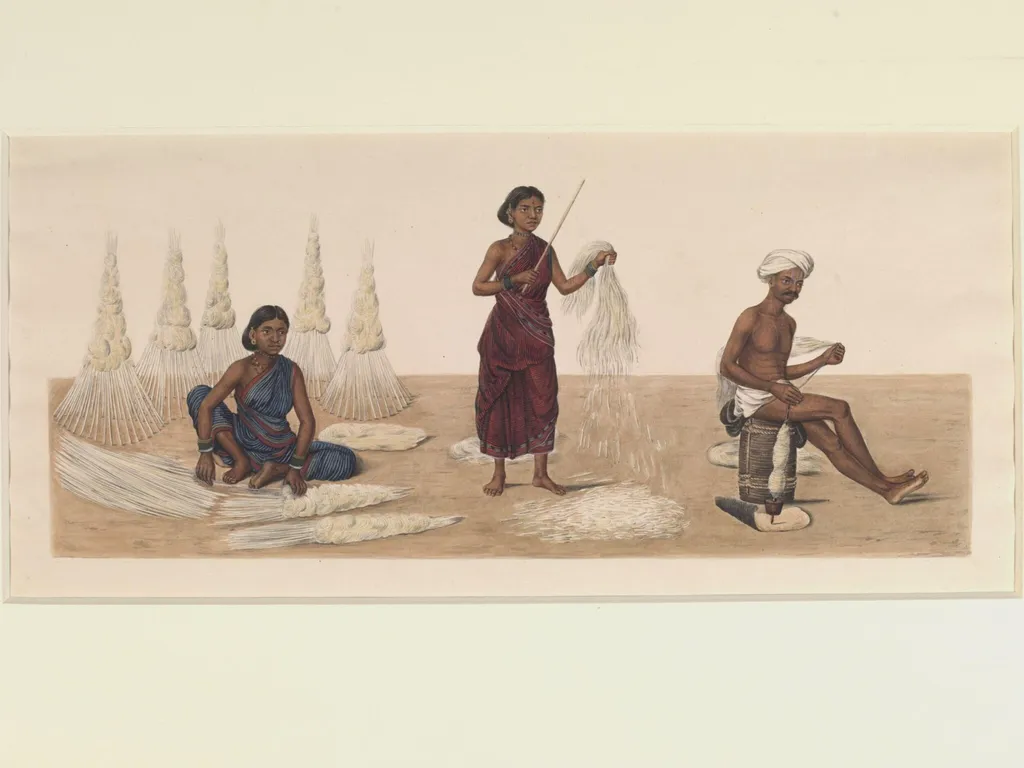
Gunny Maker is a paint painting by the Realist artist Unknown. It dates from 1840 and is held in the collection of the Victoria and Albert Museum.
About this work
Overview
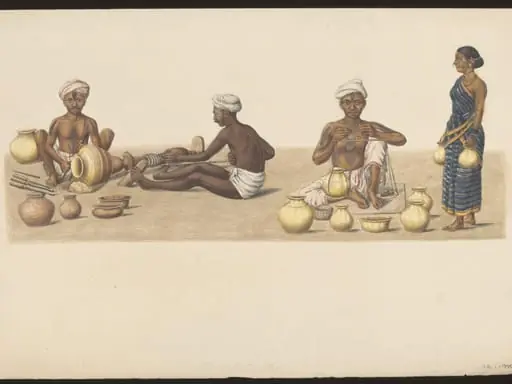
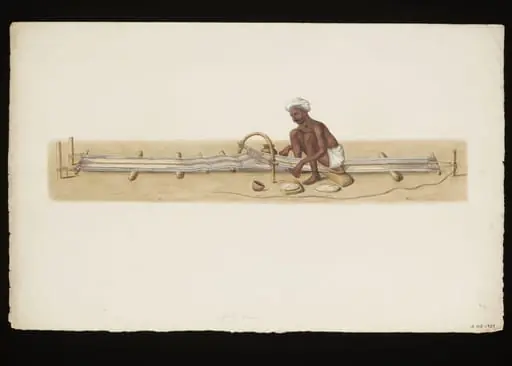
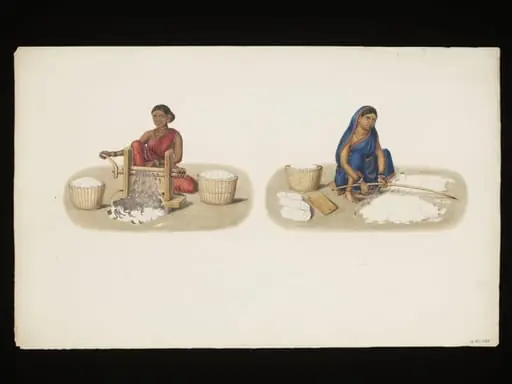
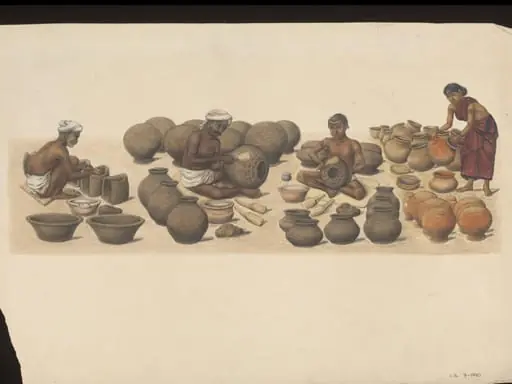
Created in 1840 by an unidentified artist, it portrays three individuals engaged in the laborious process of preparing jute fibers into rope or sacks.
The painting *Gunny Maker* is one of sixteen works documenting manual trades in early 19th-century Britain. Created in 1840 by an unidentified artist, it portrays three individuals engaged in the laborious process of preparing jute fibers into rope or sacks. The composition emphasizes quiet concentration over dramatic action, presenting work as a sustained, unglamorous routine. The muted palette and unadorned setting reflect the ordinary conditions of industrial labor at the time.
Subject & Meaning
The scene captures the collaborative nature of fiber processing, with each figure performing a distinct step in the craft: twisting, spreading, and winding. The woman at the center holds a long strand, suggesting she guides the tension, while the others handle raw material and tools. No narrative or symbolism is imposed; the meaning lies in the unembellished depiction of skilled labor, valuing the dignity of routine work without romanticizing it.
Technique & Style
The artist rendered the coarse texture of jute with delicate brushwork, creating a tactile sense of fibrous strands that appear slightly fuzzy and uneven. Colors are restrained—earthy browns, faded blues, and off-whites—enhancing the realism of the workshop environment. Light falls evenly, avoiding dramatic shadows, which reinforces the documentary tone. The figures are rendered with minimal detail, focusing attention on their actions rather than individual identity.
History & Provenance
The painting’s origin is tied to a series commissioned to record traditional trades, likely for educational or archival purposes. Its creator remains anonymous, a common trait among such documentary works of the period. The work entered institutional collections in the 20th century, though its exact path from 1840 to present is undocumented. It is now held in a public collection, where it serves as a record of pre-industrial labor practices.
Context
In the 1840s, Britain’s textile industry relied heavily on manual processing of jute, particularly in eastern regions like Dundee. While mechanization was advancing, many tasks still required skilled handwork. This painting reflects a moment of transition, preserving a craft soon to be displaced by factory machinery. Similar works from the era were often produced for civic or philanthropic institutions seeking to document the working class.
Legacy
Though not widely exhibited, *Gunny Maker* contributes to a broader visual archive of 19th-century labor. Its quiet realism offers insight into the physicality and rhythm of pre-industrial craftsmanship. It stands as a quiet counterpoint to more celebrated genre paintings, reminding viewers of the unseen labor underpinning industrial economies. Its value lies in its unvarnished testimony to everyday work.
Artist & collection

 Domestic Scene
 Giacomo and Cardinal Marco, investing Andrea, Abbot of San Zeno, with his Benefice
 The Nymph of Fontainebleau
 Portrait of a Woman
 Madonna and Child with Saints in the Enclosed Garden
 Venus and Minerva
 Family Group of Four on Sofa
 Wall painting from Room H of the Villa of P. Fannius Synistor at Boscoreale