Artwork
Brass pot makers
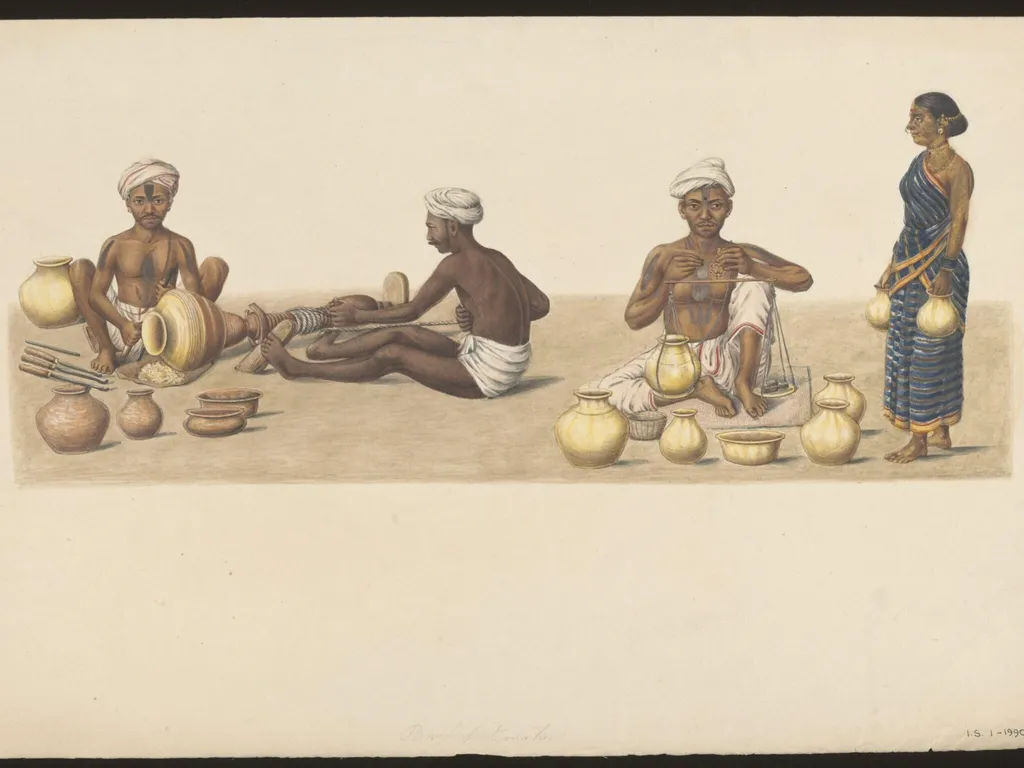
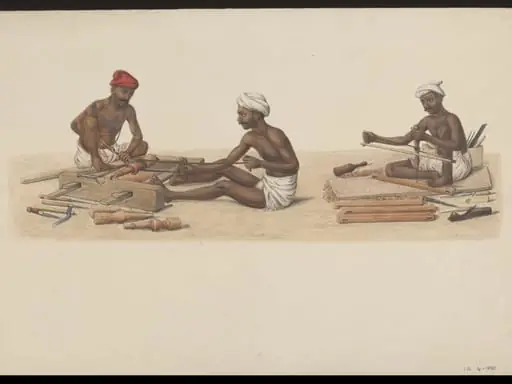
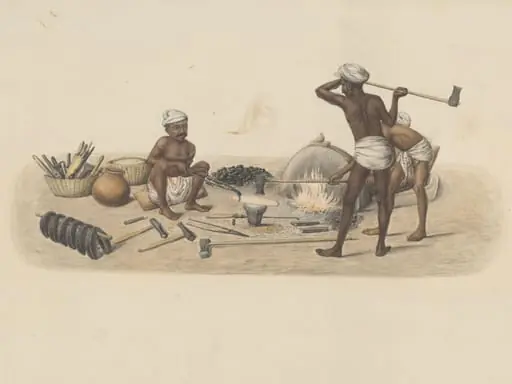
Brass pot makers is a paint painting by the Realist artist Unknown. It dates from 1840 and is held in the collection of the Victoria and Albert Museum. This oil painting, dated circa 1840, portrays three laborers engaged in the craft of shaping brass vessels over a fire.
About this work
Overview
This oil painting, dated circa 1840, portrays three laborers engaged in the craft of shaping brass vessels over a fire.
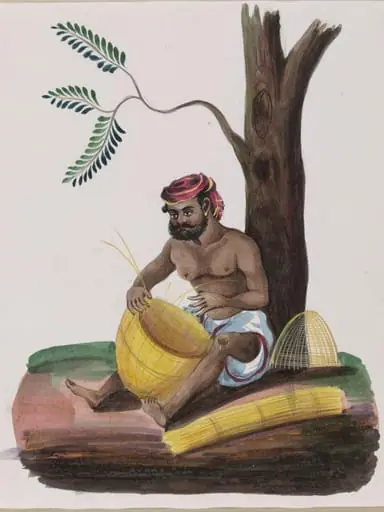
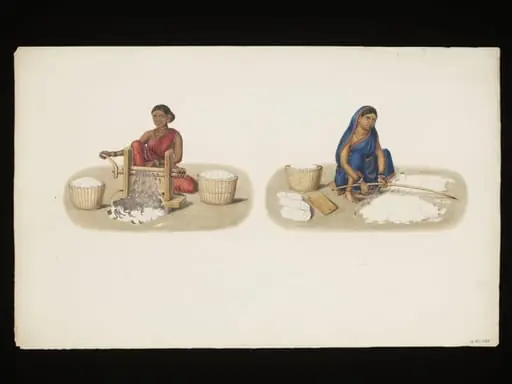
This oil painting, dated circa 1840, portrays three laborers engaged in the craft of shaping brass vessels over a fire. Created by an unidentified artist, it belongs to a series of sixteen works documenting occupational trades. The absence of a signature or documented provenance leaves its origin and authorship unresolved, lending it the character of an anonymous record from daily life in the early 19th century.
Subject & Meaning
The scene captures the physical intensity of brassworking, with workers focused on hammering molten metal into pots. Their exertion is rendered through sweat-slicked skin and strained postures, emphasizing the manual labor behind utilitarian objects. The composition avoids idealization, presenting the trade as a grounded, unromanticized act of survival and skill, reflecting broader societal interest in documenting working-class life during the Industrial era.
Technique & Style
The artist employs strong chiaroscuro to isolate the figures and glowing metal against a deep, shadowed background. Warm tones in the brass and skin contrast with cool, receding darkness, heightening the sense of heat and concentration. Brushwork is direct and unembellished, prioritizing clarity of action over decorative flourish, suggesting a documentary intent rather than artistic showmanship.
History & Provenance
The painting’s origins remain undocumented; no records confirm its commission, location of creation, or early ownership. Its survival as part of a thematic series implies it may have been produced for educational or ethnographic purposes, possibly in Britain or its colonies. The lack of attribution is not unusual for such genre works, which were often valued for their subject over their maker.
Context
Created during a period of growing interest in industrial and artisanal labor, the painting aligns with broader 19th-century efforts to catalog trades threatened by mechanization. Similar series were compiled by institutions and reformers seeking to preserve knowledge of traditional skills. This work contributes to that archive, offering a quiet testament to craftsmanship before widespread factory production.
Legacy
Though unsigned and unattributed, the painting endures as a representative example of occupational documentation in 19th-century art. Its preservation in institutional collections underscores its value as a historical record rather than a celebrated artwork. It continues to inform studies of labor, material culture, and the visual representation of craft in an era of rapid social change.
Artist & collection

 Domestic Scene
 Giacomo and Cardinal Marco, investing Andrea, Abbot of San Zeno, with his Benefice
 The Nymph of Fontainebleau
 Portrait of a Woman
 Madonna and Child with Saints in the Enclosed Garden
 Venus and Minerva
 Family Group of Four on Sofa
 Wall painting from Room H of the Villa of P. Fannius Synistor at Boscoreale