Artwork
Cotton maker
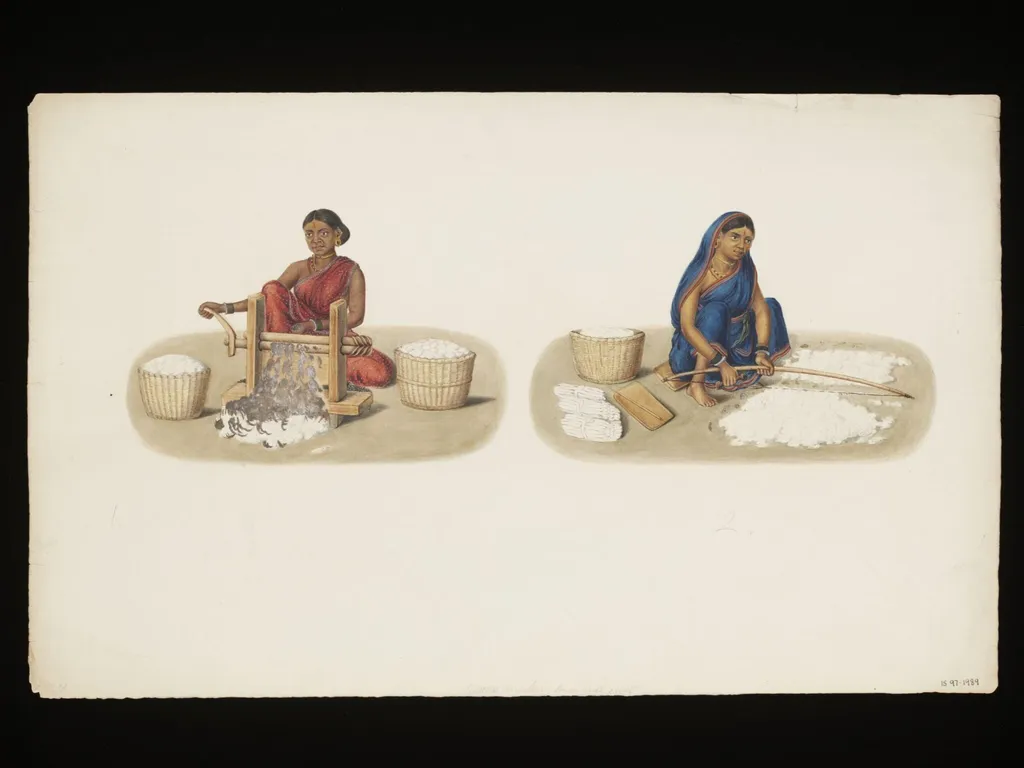
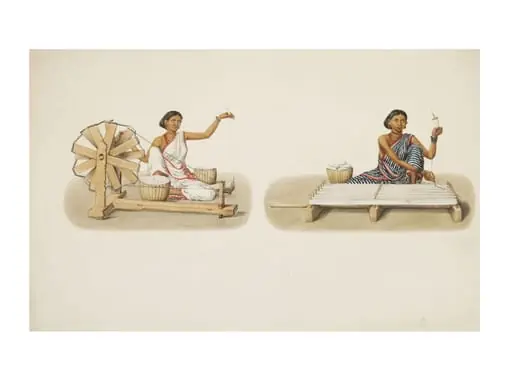
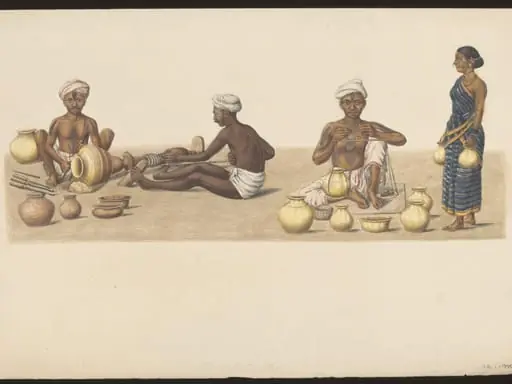
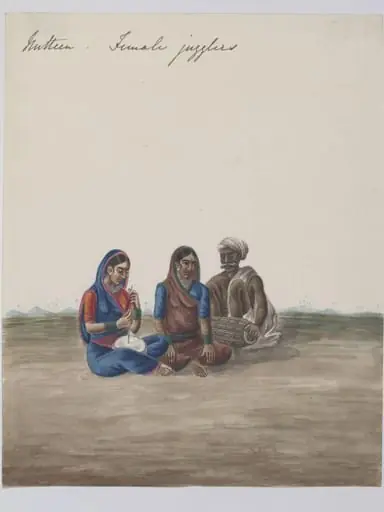
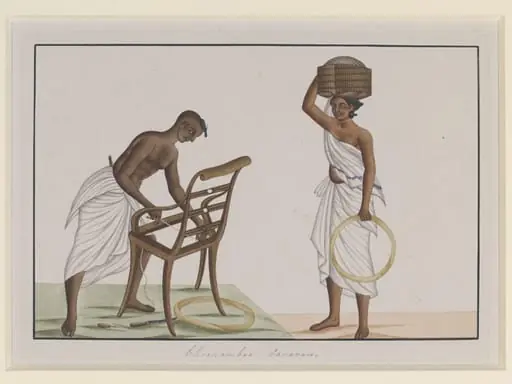
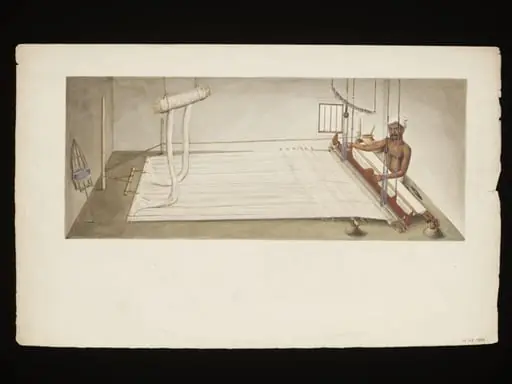
Cotton maker is a paint painting by the Realist artist Unknown. It dates from 1840 and is held in the collection of the Victoria and Albert Museum. This painting is part of a series of sixteen scenes documenting everyday trades, capturing the quiet rhythm of labor in a domestic setting.
About this work
Overview
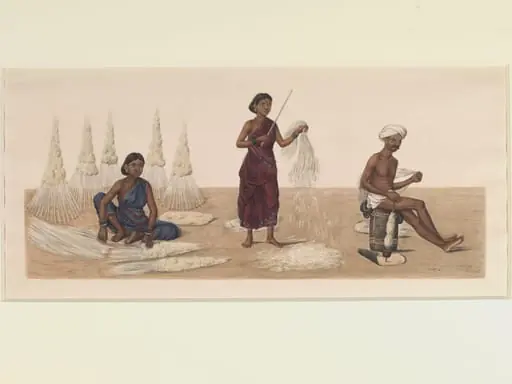
This painting is part of a series of sixteen scenes documenting everyday trades, capturing the quiet rhythm of labor in a domestic setting. It portrays two women engaged in the manual processing of cotton, rendered with restrained detail and a focus on routine activity rather than dramatic spectacle. The composition avoids idealization, presenting work as a grounded, repetitive act.
Subject & Meaning
The two figures represent the division of tasks in cotton preparation: one spins raw fibers into thread using a traditional wheel, while the other fluffs and spreads raw cotton on the ground with a stick. Their actions reflect a division of labor common in rural households. The absence of hierarchy or grandeur emphasizes the dignity of unglamorous, essential work.
Technique & Style
The artist employs soft, muted tones and gentle brushwork to convey texture and light without embellishment. Tools and clothing are rendered with precision but without ornamentation, reinforcing the scene’s authenticity. The figures sit on woven mats, their saris rendered in subtle hues that blend with the earthy surroundings, enhancing the sense of quiet endurance.
History & Provenance
Created as part of a larger cycle documenting regional occupations, the work likely originated in the 19th century in a context where ethnographic observation was gaining artistic traction. Its survival suggests it was preserved within a private or institutional collection focused on vernacular culture, though its exact origin remains undocumented.
Context
The painting aligns with broader 19th-century trends that turned artistic attention toward laboring classes, paralleling Romanticism’s interest in ordinary life. Unlike grand historical or mythological subjects, this work values the unnoticed rhythms of domestic industry, reflecting a shift in cultural priorities toward authenticity and social observation.
Legacy
As one of a limited series on labor, it contributes to a historical record of pre-industrial textile work in South Asia. Its quiet realism offers insight into gendered roles and material culture, influencing later documentation of craft traditions. It remains a modest but significant artifact in the study of everyday visual history.
Artist & collection

 Domestic Scene
 Giacomo and Cardinal Marco, investing Andrea, Abbot of San Zeno, with his Benefice
 The Nymph of Fontainebleau
 Portrait of a Woman
 Madonna and Child with Saints in the Enclosed Garden
 Venus and Minerva
 Family Group of Four on Sofa
 Wall painting from Room H of the Villa of P. Fannius Synistor at Boscoreale