Artwork
Hanuman and Ravana
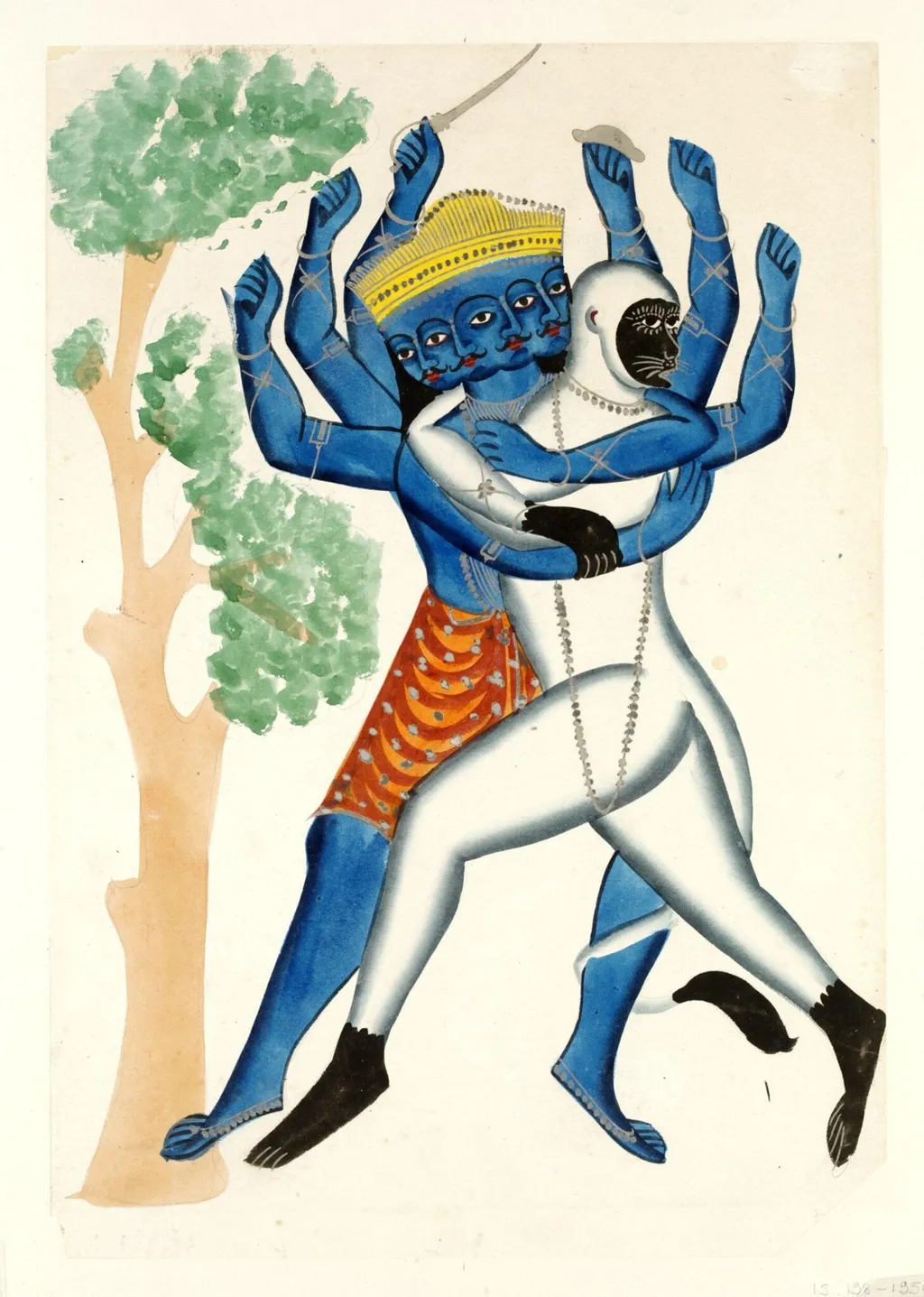
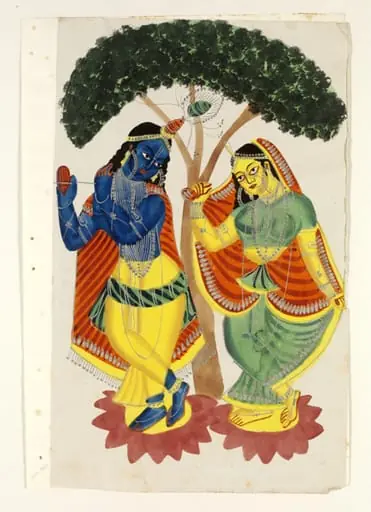
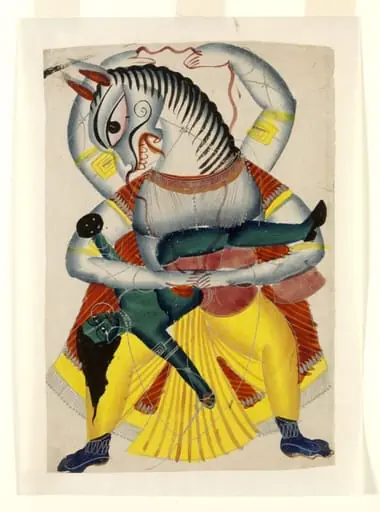
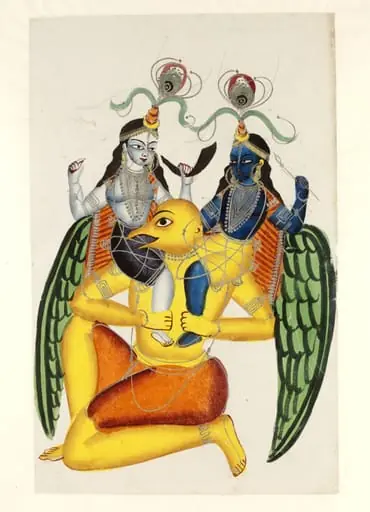
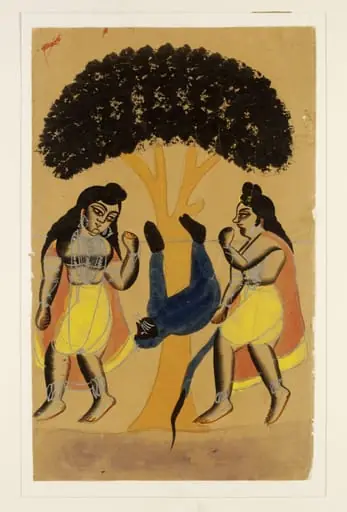
Hanuman and Ravana is a paint painting by the Romanticist artist Unknown. It dates from 1830 and is held in the collection of the Victoria and Albert Museum. Created in 1830, this opaque watercolor portrays a dramatic encounter between the Hindu deity Hanuman and the demon king Ravana.
About this work
Overview
Created in 1830, this opaque watercolor portrays a dramatic encounter between the Hindu deity Hanuman and the demon king Ravana. Set before a sparse forest scene containing a single tree, the composition isolates the two combatants, emphasizing their contrasting forms and colors. The work measures a modest size typical of Kalighat panel paintings, intended for popular devotional display.
Subject & Meaning
The struggle visualizes the triumph of devotion and righteousness over hubris, a theme resonant in regional religious narratives.
The image draws directly from the Ramayana, where Hanuman, the monkey‑god, confronts Ravana, the ten‑headed ruler of Lanka. Hanuman’s pale grey flesh and multiple arms convey his divine vigor, while Ravana’s blue skin, crown, and multiple weapons signal his formidable, otherworldly status. The struggle visualizes the triumph of devotion and righteousness over hubris, a theme resonant in regional religious narratives.
Technique & Style
Executed in opaque watercolor with tin‑alloy accents, the painting employs the bold outlines and simplified forms characteristic of the Kalighat school that flourished in early‑19th‑century Calcutta. Vivid pigments—blue, grey, red and gold—are applied with rapid brushstrokes, while metallic highlights delineate necklaces and ear ornaments. The minimal background and flat color fields focus attention on the figures, reflecting a folk‑art aesthetic adapted for urban audiences.
History & Provenance
The work originates from artists who migrated from rural Bengal to the bustling Kalighat district, where they produced inexpensive prints for a growing market amid shifting colonial influences. Though the specific creator remains unidentified, the piece exemplifies the period’s syncretic visual culture, merging traditional mythological content with the commercial demands of a colonial port city.
Artist & collection

 Domestic Scene
 Giacomo and Cardinal Marco, investing Andrea, Abbot of San Zeno, with his Benefice
 The Nymph of Fontainebleau
 Portrait of a Woman
 Madonna and Child with Saints in the Enclosed Garden
 Venus and Minerva
 Family Group of Four on Sofa
 Wall painting from Room H of the Villa of P. Fannius Synistor at Boscoreale