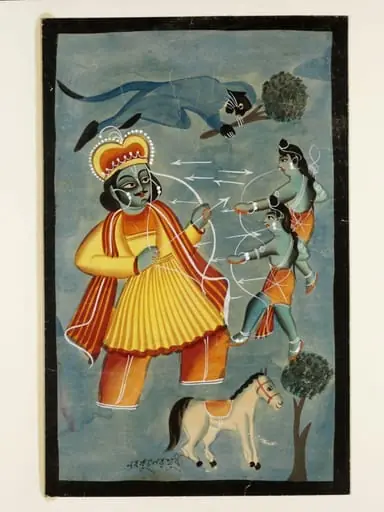
Artwork
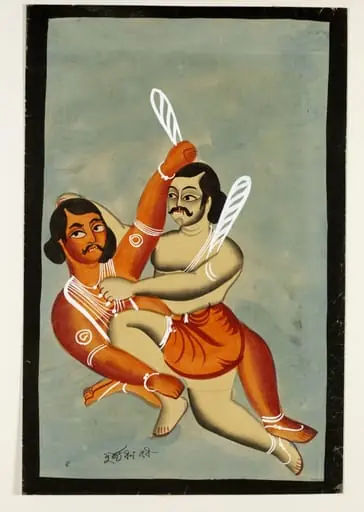
Lakshmana and Indrajit
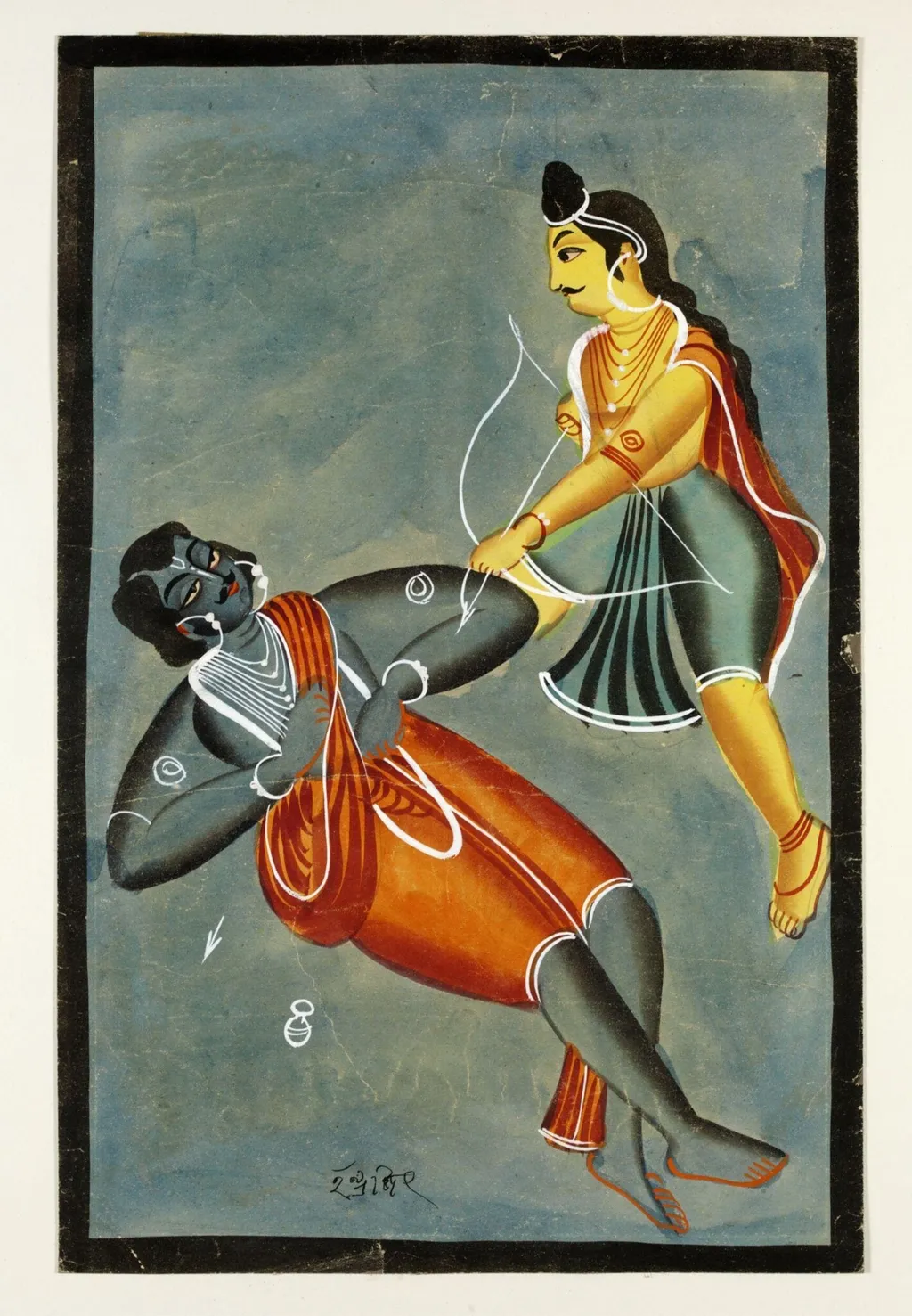
Lakshmana and Indrajit is a paint painting by the Impressionist artist Unknown. It dates from 1885 and is held in the collection of the Victoria and Albert Museum.
About this work
Overview
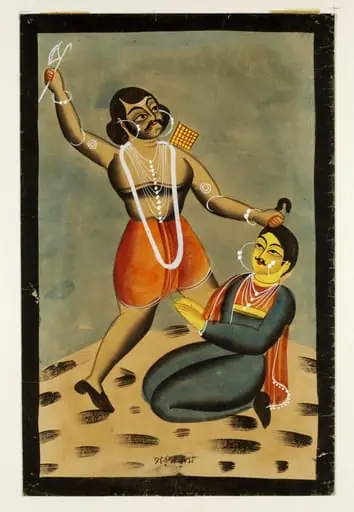
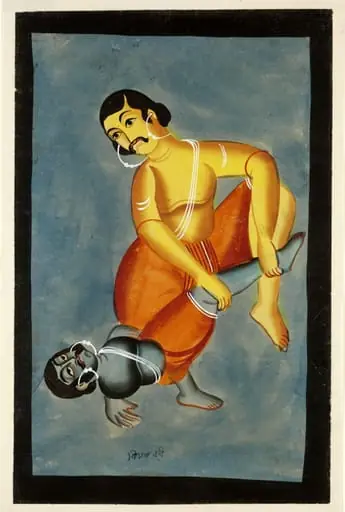
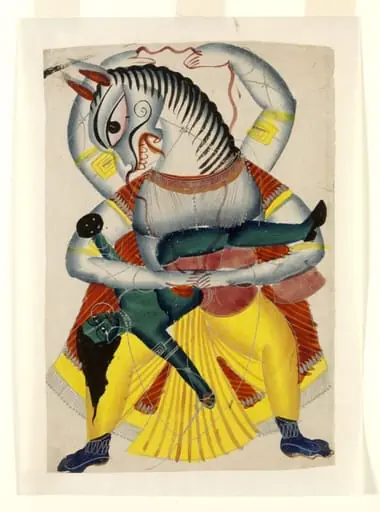
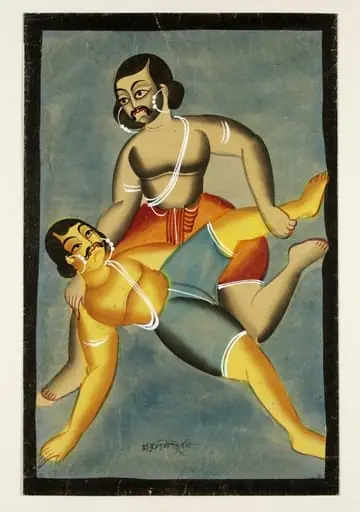
Created in 1885, this opaque watercolor on paper portrays a moment from the Ramayana in which Lakshmana strikes down Indrajit, the son of the demon king Ravana. The composition is rendered in vivid, flat hues against a muted blue‑gray backdrop, emphasizing the dramatic encounter between the two warriors.
Subject & Meaning
The scene captures the climactic battle between Lakshmana, the loyal brother of Rama, and Indrajit, a formidable opponent celebrated for his magical prowess. By illustrating Lakshmana’s victory, the work reflects themes of dharma and the triumph of righteousness over evil within the epic narrative.
Technique & Style
Executed in opaque watercolor, the piece employs bold outlines and simplified forms characteristic of the Kalighat school of painting. The figures are dressed in striking, patterned garments—orange and white for the fallen figure, red‑yellow sash and white skirt for the victor—rendered in flat, saturated colors that enhance the visual impact.
History & Provenance
The painting entered the collection in 1894 through the acquisition from Miss M. Steele. Steele’s mother, a Sanskrit scholar at Cambridge, had inherited the work, and family tradition suggests the grandmother may have collected such images during a stay in India, linking the piece to a broader diaspora of Indian visual culture.
Context
Kalighat paintings emerged in 19th‑century Calcutta as popular prints that depicted mythological and everyday scenes for a wide audience. This work aligns with that tradition, using accessible visual language to convey a well‑known episode from Hindu scripture, thereby bridging devotional narrative and commercial art.
Artist & collection

 Domestic Scene
 Giacomo and Cardinal Marco, investing Andrea, Abbot of San Zeno, with his Benefice
 The Nymph of Fontainebleau
 Portrait of a Woman
 Madonna and Child with Saints in the Enclosed Garden
 Venus and Minerva
 Family Group of Four on Sofa
 Wall painting from Room H of the Villa of P. Fannius Synistor at Boscoreale